

Lipoprotein(a) and the Hidden Heart Risk Revolution: 60 Years After Discovery, Cardiology Gets Its First Real Drugs in 2026
For sixty years, cardiology has been hunting a ghost. A particle in human blood, present in almost every adult, almost never measured in routine practice, that predicts heart attack and stroke independently of cholesterol, blood pressure, diabetes, and smoking. The particle is lipoprotein(a), pronounced "lipoprotein little a" and abbreviated Lp(a). It was discovered in 1963 by a Norwegian physician working alone in a basement laboratory. For most of the half century that followed, no drug could lower it. In 2026, that is about to change.
Presented By Our Partners



Three large Phase 3 trials, enrolling more than 25,000 patients across six continents, are now reading out or approaching their primary endpoints. Two of them test gene silencing therapies that cut Lp(a) by more than 80 percent with a few injections per year. A third tests an oral small molecule that disassembles the particle before it can form. If any of these trials show that lowering Lp(a) reduces heart attack and stroke, cardiology will have its first new risk factor target since the statin era began in 1987.
The story of how lipoprotein(a) moved from a Scandinavian curiosity to a billion dollar pharmaceutical battleground is one of the most instructive in modern medicine. It is also one of the most personal. Roughly one in five adults globally carries elevated Lp(a). The trait is almost entirely inherited. Most people with high Lp(a) have no idea they have it, because the test is not part of any standard lipid panel in the United States. The cardiology community has spent decades arguing about what to do with a number that, until very recently, could not be moved.
The Norwegian Discovery That Took Sixty Years to Become a Drug Target
In 1963, Kare Berg, a young geneticist at the University of Oslo, was studying serum protein variation in healthy Norwegians using a technique called immunoelectrophoresis. He noticed a precipitin line that did not match any known lipoprotein. He named it the Lp antigen and assigned it the lowercase letter "a" to distinguish it from variants in the major lipoproteins. The discovery was published in Acta Pathologica et Microbiologica Scandinavica and quickly catalogued as a curiosity of human genetics.
It would take twenty four years before molecular biology caught up. In 1987, a team led by Richard Lawn at Genentech, working with John McLean and Eve Tomlinson, cloned the gene for apolipoprotein(a), the protein that makes Lp(a) different from ordinary LDL. The paper, published in Nature, was a bombshell. Apolipoprotein(a) was an evolutionary descendant of plasminogen, the central protein in the blood clot dissolving system. The molecular machinery of fibrinolysis had been duplicated, mutated, and reattached to a fatty particle.
That structural twist explained why Lp(a) seemed to do two contradictory things at once. It carried cholesterol, which could deposit in arterial walls and accelerate atherosclerosis. It also looked enough like plasminogen to interfere with the clot dissolving system, raising the risk of acute thrombosis on top of those atherosclerotic plaques. Lp(a) was, in effect, a lipid particle wearing a coagulation costume.
For three more decades, the field debated whether Lp(a) was truly causal or merely correlated with cardiovascular disease. The argument was finally settled by genetics.
The Mendelian Verdict
In 2009, two landmark papers appeared in adjacent issues of the New England Journal of Medicine and JAMA. The first, by Robert Clarke and colleagues from the Procardis consortium, examined common variants in the LPA gene that determined Lp(a) levels and found a clean dose dependent relationship between genetically predicted Lp(a) and coronary disease. The second, by Pia Kamstrup and colleagues from the Copenhagen General Population Study, used a Mendelian randomization design across more than 50,000 participants to demonstrate that the variants raising Lp(a) raised heart attack risk at exactly the magnitude predicted by the observed levels.
Mendelian randomization is the closest thing biology has to a randomized controlled trial baked into the human genome. Because LPA variants are randomly assigned at conception and are unrelated to lifestyle, diet, or socioeconomic confounders, an association between the variant and disease is a powerful argument for causality. The Copenhagen and Procardis papers made Lp(a) one of the most genetically well validated cardiovascular risk factors ever described. By the mid 2010s, most cardiology research groups had stopped arguing about whether Lp(a) caused heart disease. The remaining question was what to do about it.
The Particle, the Isoforms, and the Inherited Lottery
Lipoprotein(a) is structurally an LDL particle with a single molecule of apolipoprotein(a) bolted to its surface by a disulfide bond. The size of that apolipoprotein(a) varies enormously between individuals because the LPA gene contains a repeated structural motif called kringle IV type 2. People can carry anywhere from a handful to more than forty copies of this kringle, and the number of repeats correlates inversely with Lp(a) plasma concentration. Short isoforms are produced and secreted efficiently by the liver and lead to high Lp(a) levels. Long isoforms are partially degraded inside the hepatocyte and result in low circulating Lp(a).
The clinical implication is striking. A person’s Lp(a) level is roughly 80 to 90 percent heritable. Diet, exercise, and weight loss barely move it. By age five, a child’s Lp(a) has reached approximately adult concentrations. The trait is set at birth and travels through life with the patient.
Population studies estimate that roughly 20 percent of the global population has Lp(a) above 50 milligrams per deciliter, the threshold most consensus statements now associate with elevated cardiovascular risk. That works out to about 1.4 billion people. African ancestry populations tend to carry higher mean Lp(a) than European ancestry populations, though within every ancestry the distribution is wide. South Asian populations carry an especially worrying combination of higher Lp(a) on average and earlier coronary disease.
The Aortic Valve Connection
Until 2013, Lp(a) was thought of as a coronary risk factor. Then a series of papers from Iceland, the Netherlands, and the Mayo Clinic established a second target organ: the aortic valve. The CHARGE Extracoronary Calcium Working Group, led by George Thanassoulis and James Engert, performed a genome wide association study on aortic valve calcification and found that the strongest signal in the entire genome sat in the LPA region. A follow up Mendelian randomization confirmed that LPA variants causing high Lp(a) also caused calcific aortic stenosis, the most common reason older adults need valve replacement.
Featured Partner
Invest in the Infrastructure Behind Modern Medicine
As healthcare expands beyond hospital walls, the buildings and campuses supporting that shift are generating compelling returns for investors who move early. The Healthcare Real Estate Fund offers qualified investors direct access to a curated portfolio of medical office, outpatient, and specialty care facilities.
Learn More →
Subsequent work by Kang Madsen and Borge Nordestgaard in the Copenhagen General Population Study found that the highest Lp(a) quintile carried roughly a threefold increased risk of aortic valve stenosis compared with the lowest quintile. The Marlene Williams group at Johns Hopkins later showed that Lp(a) accelerates the osteogenic transition of valve interstitial cells, providing a plausible mechanism. For the first time, a circulating lipoprotein had been shown to drive a structural heart disease that surgeons spend billions of dollars repairing.
Why Statins, PCSK9 Inhibitors, and Diet Failed
For most of the modern lipid era, the question of how to lower Lp(a) had a depressing answer: you could not. Statins, the most widely prescribed cardiovascular drug in history, slightly raise Lp(a) on average, by perhaps 5 to 10 percent in pooled analyses. Diet has almost no effect. Lifestyle interventions that dramatically lower LDL fail to budge Lp(a). Even bariatric surgery, which transforms metabolic health on almost every parameter, leaves Lp(a) largely unchanged.
The two interventions that did work were neither scalable nor benign. Niacin at high doses lowers Lp(a) by perhaps 20 to 25 percent, but the AIM-HIGH and HPS2-THRIVE trials showed no cardiovascular benefit and significant harm, ending the era of niacin enthusiasm. Lipoprotein apheresis, a dialysis like procedure that physically filters Lp(a) and LDL from plasma, lowers Lp(a) acutely but requires weekly or biweekly sessions and is reserved for a small population in Europe and Japan. PCSK9 inhibitors, the most powerful LDL lowering drugs ever developed, lower Lp(a) by only 20 to 30 percent, far less than they lower LDL, and post hoc analyses of the FOURIER and ODYSSEY OUTCOMES trials suggested that part of the cardiovascular benefit of PCSK9 inhibition may come from this modest Lp(a) reduction.
By the mid 2010s, cardiologists were stuck. They could identify patients at high genetic risk with a single blood test. They could not change the number.
The RNA Revolution
The unlock came from oligonucleotide therapeutics, the broader drug class that includes mipomersen for familial hypercholesterolemia, nusinersen for spinal muscular atrophy, and inclisiran for LDL lowering. These drugs use short synthetic RNA strands to either degrade messenger RNA before it is translated into protein, in the case of antisense oligonucleotides, or to recruit the natural RNA interference machinery to do the same job more efficiently, in the case of small interfering RNAs. Because both strategies target a specific messenger RNA, they can shut down production of a single protein with extraordinary precision.
Apolipoprotein(a) was a near perfect target. It is produced almost exclusively in the liver, the tissue that oligonucleotide drugs naturally accumulate in. It has no obvious essential physiologic function in adults, since people born with very low Lp(a) seem entirely healthy. And it is, by virtue of its kringle repeat structure, sequence rich enough to design highly specific oligonucleotides against it.
The first major proof of concept was published in the New England Journal of Medicine in 2020 by Sotirios Tsimikas, the University of California San Diego cardiologist who has spent his career on Lp(a). The drug, then called AKCEA-APO(a)-LRx and now known as pelacarsen, was a GalNAc conjugated antisense oligonucleotide that delivered the active payload directly to hepatocytes through the asialoglycoprotein receptor. In the Phase 2 dose ranging trial, pelacarsen lowered Lp(a) by 35 to 80 percent depending on dose, with the highest doses bringing more than 98 percent of participants below the 50 milligrams per deciliter threshold. Side effects were dominated by injection site reactions.
The cardiology field exhaled. Lp(a) could be lowered. The remaining question was whether lowering it would reduce events.
Pelacarsen, Olpasiran, and Lepodisiran: The 2026 Pipeline
Three drugs now anchor the Lp(a) pipeline.
Pelacarsen, developed originally by Ionis and Akcea and now licensed to Novartis, is the antisense oligonucleotide that Tsimikas led to Phase 2. Its Phase 3 outcomes trial, HORIZON Lp(a), randomized 8,323 patients with established cardiovascular disease and Lp(a) above 70 milligrams per deciliter to monthly subcutaneous pelacarsen or placebo. The trial’s primary endpoint is the composite of cardiovascular death, nonfatal myocardial infarction, nonfatal stroke, and urgent coronary revascularization. HORIZON Lp(a) is the longest running Lp(a) outcomes trial and its readout, expected in 2026 or early 2027, will be the most consequential cardiology event of the decade.
Olpasiran, developed by Arrowhead and licensed to Amgen, takes the small interfering RNA approach. The Phase 2 OCEAN(a)-DOSE trial, published in JAMA in 2022 by Michelle O’Donoghue and colleagues, randomized 281 patients to one of several doses of olpasiran every 12 weeks. The highest dose lowered Lp(a) by 101 percent at week 36, which is to say it brought Lp(a) below the lower limit of detection. The Phase 3 OCEAN(a)-Outcomes trial enrolled more than 7,000 patients with established cardiovascular disease and Lp(a) above 200 nanomoles per liter and is expected to read out in 2026 or 2027.
Lepodisiran, developed by Eli Lilly, is also a small interfering RNA, with a structural twist that allows even less frequent dosing. The Phase 1 trial, published in JAMA in 2023 by Steven Nissen and colleagues at the Cleveland Clinic, showed that a single dose lowered Lp(a) by more than 94 percent and the effect persisted for nearly a year. The Phase 3 ACCLAIM-Lp(a) trial is enrolling roughly 12,500 patients with established cardiovascular disease and is the largest of the three. Its readout is expected later than the other two but will provide the most statistical power.
If any of these trials shows clear cardiovascular benefit, the landscape changes. If two or three show benefit, the standard of care for any patient with elevated Lp(a) and established cardiovascular disease will be reshaped within months of approval.
Beyond Injections: The Oral Future
Even if Phase 3 readouts succeed, monthly or quarterly subcutaneous injections are a meaningful adherence barrier for asymptomatic primary prevention. A second generation of Lp(a) drugs is already moving through trials and uses small molecules rather than oligonucleotides. The most advanced is muvalaplin, developed by Eli Lilly, which is taken as a once daily oral pill. Muvalaplin works by binding apolipoprotein(a) and preventing it from physically attaching to LDL, so the particle never forms. The Phase 1 trial published in JAMA in 2023 by Stephen Nicholls and colleagues, and the Phase 2 trial KRAKEN published in 2024, showed that muvalaplin lowers Lp(a) by 65 to 85 percent depending on dose, with a clean safety profile.
If muvalaplin succeeds in Phase 3, the path opens to a future in which primary care physicians screen every adult for Lp(a) once in a lifetime and start an oral medication on those with elevated levels, much as the field has done for statins and LDL.
What Cardiologists Are Doing Right Now
In 2026, the practical translation of Lp(a) science is incomplete but emerging. The European Atherosclerosis Society and the National Lipid Association in the United States both recommend that every adult have Lp(a) measured at least once in a lifetime. The American College of Cardiology and American Heart Association lipid guidelines now describe Lp(a) above 50 milligrams per deciliter as a risk enhancing factor that justifies more aggressive LDL lowering in primary prevention. The European Society of Cardiology guidelines go further and use Lp(a) as a formal input to cascade screening of family members.
Until the outcomes trials read out, the management of confirmed elevated Lp(a) remains indirect. Cardiologists treat aggressively to LDL targets, often pushing patients toward PCSK9 inhibitors or inclisiran to maximize the modest 20 to 30 percent Lp(a) reduction those drugs provide on top of profound LDL lowering. Blood pressure, glycemic, and lifestyle targets are pursued more strictly. Aspirin is sometimes considered earlier. Cascade screening of first degree relatives is increasingly the norm in dedicated lipid clinics, since elevated Lp(a) is essentially a dominant trait.
For patients with severe aortic stenosis driven by elevated Lp(a), there is no medical therapy yet that has been shown to slow valve progression. Surgical or transcatheter valve replacement remains the only definitive intervention.
What This Means For You
If you have not had your lipoprotein(a) measured, the most important step you can take in 2026 is to ask. Lp(a) is a single test, performed once in a lifetime in most cases, and the result will define your cardiovascular trajectory more than almost any other modifiable or measurable risk factor.
If your level is below 30 milligrams per deciliter, you are at low Lp(a) attributable risk and can largely ignore the particle in your decision making. If your level is between 30 and 50 milligrams per deciliter, you are in a gray zone where conversations with a cardiologist about additional LDL lowering and aggressive blood pressure management become important. If your level is above 50 milligrams per deciliter, and especially above 100, you carry inherited cardiovascular risk that justifies earlier and more intensive prevention, careful family screening, and possibly enrollment in one of the active Phase 3 outcomes trials.
For now, the highest yield interventions for someone with elevated Lp(a) are the same interventions that benefit any high risk patient, applied earlier and more intensively. Drive LDL as low as you reasonably can, ideally to below 55 milligrams per deciliter in the presence of established cardiovascular disease. Treat blood pressure to a systolic in the 110s if tolerated. Keep apolipoprotein B in range. Exercise, sleep, and metabolic health all matter at the margins, even if they do not change Lp(a) itself.
Most importantly, recognize that the science is finally moving. Within the next 18 to 36 months, the field expects definitive evidence on whether lowering Lp(a) reduces heart attack and stroke. If those trials succeed, a particle that has spent sixty years hiding inside the human genome will become one of the most consequential drug targets in cardiovascular medicine. The patients who know their Lp(a) number will be the first to benefit.


Similar Posts

Biological Aging Reversal in 2026: Gut Bacteria, NAD+ Balance, and Epigenetic Clocks Point the Way
Three landmark studies in late 2025 and early 2026 reveal that gut bacteria, cellular NAD+ balance, and epigenetic clock acceleration are key drivers of biological aging and, in animal models,…
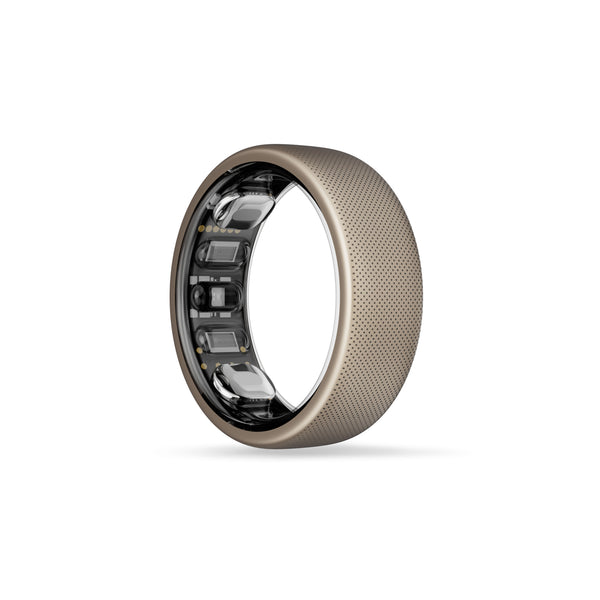
Amazfit Helio Ring: Affordable Titanium Smart Ring with EDA Stress Sensing
A titanium alloy smart ring offering heart rate, HRV, SpO2, skin temperature, sleep staging, and electrodermal activity (EDA) stress sensing at $149.99 when bundled with an Amazfit watch or $299.99…
The Art of Not Aging: New Science Reveals That Museums, Music, and Reading Slow Your Biological Clock as Powerfully as Exercise
A landmark UCL study of 3,556 adults finds that regular arts engagement, such as reading, music, museum visits, and theater, slows biological aging by 4%, an effect size identical to…

The Daily Rounds: Longevity & Health Care Brief | May 19, 2026
🔬 Senolytic Decelerates Muscle Epigenetic Age by 68% — BI01 administration in aging skeletal muscle produced dramatic DNAmAGE deceleration, linking senolytic therapy directly to measurable epigenetic rejuvenation in tissue. ⌚ Wearable Monitors Four Biomarkers for 21 Days Without a Battery — UC Irvine's IREM-W2MS3 continuously tracks glucose, cortisol, lactate, and urea in sweat for three weeks, representing a new frontier in ambient metabolic monitoring. 🤖 Insilico Medicine Signs $2.75 Billion AI Discovery Deal With Eli Lilly — One of the largest AI-pharma partnerships ever signals pharmaceutical industry commitment to generative biology as a primary discovery engine. 😴 Irregular Bedtimes Tied to 2.57x Higher Liver Cirrhosis Risk — A study of 88,000 adults confirms that sleep timing regularity, not just duration, is independently linked to disease risk across 172 conditions. 🦠 Kimchi Probiotic Clears Microplastics Before They Reach Organs — Korean researchers identify a fermented-food bacterium that binds microplastics in the gut and promotes excretion, offering a dietary approach to reducing plastic body burden.

Vitruvian Trainer+: Adaptive Resistance Technology and the Science of Progressive Overload at Home
A floor-based smart cable machine delivering up to 440 pounds of adaptive resistance with AI-driven programming. Can a platform the size of a yoga mat replace the barbell for serious…
Naked Labs 3D Body Scanner: Full-Body 3D Scanning and Visual Body Composition at Home
A number on a scale cannot show you where your body is changing. A 3D scan can show you exactly where you are gaining muscle and losing fat, down to…
