
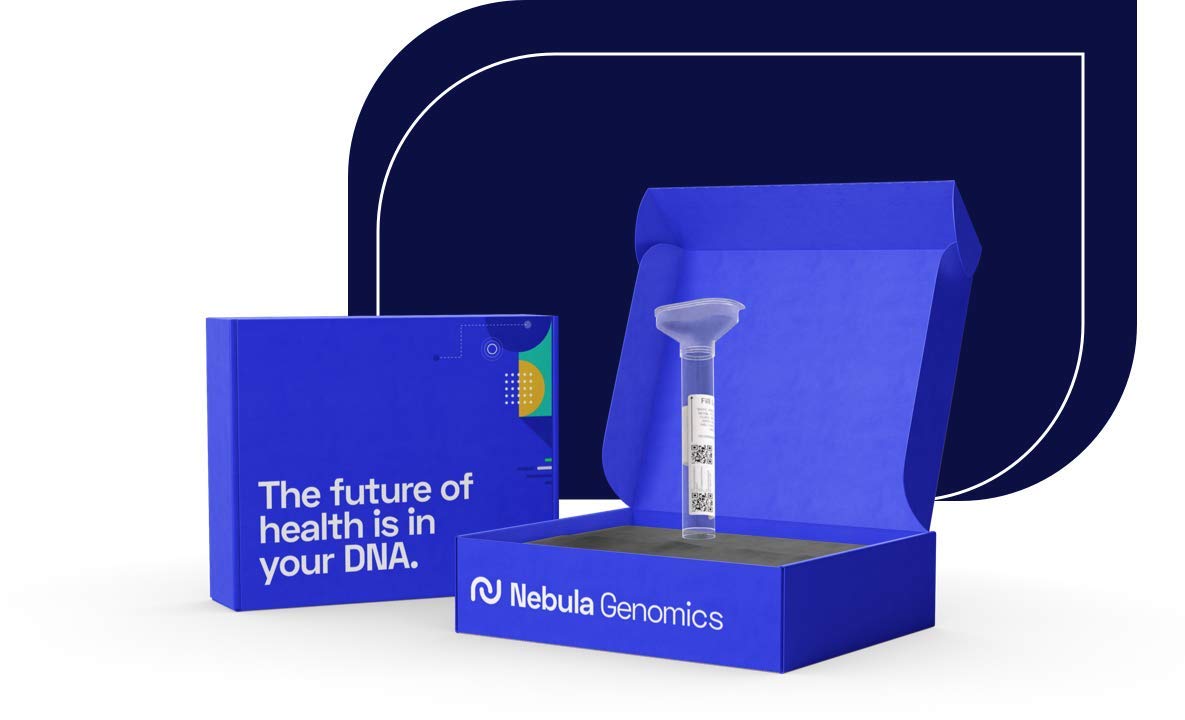
Nebula Genomics (DNA Complete) Review: Whole Genome and Privacy
Whole genome sequencing reads far more of your DNA than the cheap tests do. The harder question is who else gets to read it.
Presented By Our Partners


In 2013, a team at the Whitehead Institute in Cambridge, Massachusetts, took genomes from public sequencing projects, shared without names, and set out to find the people behind them. They needed no hacking, only free genealogy websites. By reading short repeating patterns on the Y chromosome and matching them to surname databases, then combining a surname with an age and a state, they traced the identities of multiple participants in public sequencing projects (Science, 2013). An anonymous genome, it turned out, was a contradiction in terms.
Nebula Genomics was built on the promise that it had absorbed that lesson. The company sells consumer whole genome sequencing, reading DNA far more completely than the genotyping chips behind tests like 23andMe, and its scientists, including Harvard Medical School geneticist George Church, published on data privacy in personal genomics in Nature Biotechnology in 2019. ProPhase Labs acquired Nebula in August 2021, and in November 2024 ProPhase launched DNA Complete, a direct-to-consumer testing subsidiary whose kits are sold through Nebula’s website. As of October 2026, nebula.org sells whole genome sequencing under the DNA Complete name.
Then came the irony. Nebula has been accused, in a lawsuit reported by Bloomberg Law, of sharing DNA data with Meta and Google for advertising, and the Nebula user who brought it has been allowed to proceed. Those are allegations, not findings. But for a company whose pitch was privacy, they change the question a buyer has to ask.
The short answer: Nebula Genomics, now sold as DNA Complete by ProPhase Labs, offers consumer whole genome sequencing, which reads far more of your DNA than ancestry chips and catches rare variants chips miss. It is a reasonable choice for curious, data-literate buyers, but any health finding needs clinical confirmation, and an unresolved privacy lawsuit and corporate-ownership changes are real risks.
- Best for: people who want a complete raw genome for research, reanalysis, or curiosity, and who will confirm anything medical through a clinician.
- Not for: anyone who needs a medical answer about hereditary cancer or heart risk, or anyone unwilling to accept privacy and corporate-ownership risk.
- Price (October 2026): Nebula’s DNA Complete shop advertised a promotional kit price of $199; we could not confirm the standard price or what it includes.
- Regulatory status: consumer test; we found no FDA authorization for Nebula or DNA Complete health reports.
- Evidence: Strong for whole genome sequencing as a method; limited for this product, with no peer-reviewed accuracy study of Nebula or DNA Complete found.
What Is Nebula Genomics, and Is It Now DNA Complete?
Nebula Genomics is a consumer whole genome sequencing company owned by ProPhase Labs, which acquired it in August 2021 for about $14.6 million, according to GenomeWeb. In November 2024, ProPhase launched DNA Complete, a direct-to-consumer DNA testing subsidiary. As of October 2026, Nebula’s website sells its whole genome test under the DNA Complete name, so the two names now describe the same service.
Older reviews and search results still use the Nebula Genomics name, which is why you will see both. Nebula’s homepage pitches whole genome sequencing for everyone, its blog explains 30x whole genome sequencing, and the DNA Complete pages and shop live on nebula.org. ProPhase’s own announcement framed DNA Complete as a new subsidiary for direct-to-consumer genetic testing, and trade coverage reported that the launch lifted ProPhase shares.
The scientific roots run deep. Nebula-affiliated researchers, with George Church of Harvard Medical School, published a 2019 commentary in Nature Biotechnology titled “Data privacy in the age of personal genomics,” and a 2021 paper in Nature Computational Science described a system combining homomorphic encryption, secure multi-party computation, and blockchain auditability that could run queries on the encrypted genomes of hundreds of thousands of people. That is serious privacy engineering on paper. Whether the consumer product lived up to it is the question the lawsuit raises.
Some details in older versions of this review, including specific prices for 30x and 100x tests, turnaround times, file sizes, and laboratory accreditations, could not be verified for this update and have been removed. Check the current offer on nebula.org before you buy.
How Does Whole Genome Sequencing Work?
Whole genome sequencing reads your DNA directly rather than checking a preselected list of positions. The lab extracts DNA from your sample, breaks it into millions of short fragments, reads each fragment’s letters, and uses software to align those reads against a reference human genome. Where your letters differ from the reference, the software calls a variant.
Picture your genome as a library of about 3 billion letters. A genotyping chip, the technology behind tests like 23andMe, is like a librarian who checks a preselected set of pages for known typos and ignores everything else. Whole genome sequencing photocopies the entire library in overlapping snippets, then reassembles it by matching each snippet to a master copy. Typos on pages nobody thought to check become visible.
That master copy was itself unfinished until recently. The Telomere-to-Telomere Consortium published the first complete sequence of a human genome in 2022, 3.055 billion base pairs, filling the roughly 8 percent that the reference had left unfinished since its first release in 2000, and adding nearly 200 million base pairs including 1,956 gene predictions (Science, 2022). Every consumer genome is still read against references like these, which is one reason some difficult regions remain hard to interpret.
Depth is the other key idea. When a lab says it sequenced at 30x, it means each position in your genome was covered, on average, by about 30 separate reads. Because any single read can contain errors, many overlapping reads let the software distinguish a real variant from a sequencing glitch. Depth is not the same as interpretation, though. A perfectly read genome still has to be compared with databases of known variants, and most of the differences in any person’s genome have no known effect at all.
How Accurate Is Nebula Genomics? What the Research Shows
No peer-reviewed study of Nebula’s or DNA Complete’s own accuracy turned up in PubMed for this review. The strongest evidence instead compares methods: sequencing is far more reliable than genotyping chips for rare, medically important variants, but any consumer result, including raw data, needs clinical confirmation before it guides a health decision.
Why chips fail where it matters. In a 2021 BMJ study of 49,908 UK Biobank participants with both chip and sequencing data, chips agreed with sequencing more than 99 percent of the time for common variants. For very rare variants, present in fewer than 0.001 percent of people, only 16 percent of 4,757 chip-detected results were confirmed by sequencing. For rare disease-causing variants in the BRCA1 and BRCA2 cancer genes, chips had a sensitivity of 34.6 percent and a positive predictive value of 4.2 percent: most positives were false and most true variants were missed. People with a chip-positive result had no clear excess of BRCA-related cancers (odds ratio 1.31, confidence interval 0.99 to 1.71), while people whose variant was confirmed by sequencing had four times the odds (odds ratio 4.05). Among 21 people who shared consumer chip data through the Personal Genome Project, 20 had at least one false-positive rare pathogenic variant. The authors’ conclusion was blunt: chips are extremely unreliable for very rare pathogenic variants. This is the strongest argument for sequencing.
Why raw data still needs a lab. A 2018 study in Genetics in Medicine reviewed 49 patient samples sent to Ambry Genetics for confirmation of variants first reported in direct-to-consumer raw data: 40 percent of the variants were false positives, and some variants labeled “increased risk” in raw data or by a third-party interpretation service were classified as benign by clinical laboratories. That study looked at genotyping raw data, not whole genome sequencing, and Ambry is a commercial clinical lab. Still, the lesson travels: a consumer file is a starting point, not a diagnosis.
How often genetic screening finds something that matters. In the Healthy Nevada Project, which screened 26,906 participants, 1.33 percent carried a disease-causing or likely disease-causing variant for one of three conditions the CDC considers most actionable: hereditary breast and ovarian cancer, Lynch syndrome, and familial hypercholesterolemia. Ninety percent of these carriers had not been previously identified, and only 25.2 percent reported a relevant family history (Nature Medicine, 2020). That was a health-system screening program with clinical follow-up, not a consumer whole genome product, but it shows what population genetic screening can surface that family history misses.
What happens when healthy people get their genomes. The MedSeq pilot trial randomized 100 generally healthy adults aged 40 to 65 to a family history report alone or with an interpreted whole genome report. Eleven of the 50 sequenced patients (22 percent) received a new result indicating risk for a single-gene disease, but only 2 (4 percent) showed signs of the predicted condition. Primary care physicians recommended new clinical actions for 34 percent of sequenced patients versus 16 percent of the family history group, and the authors concluded that sequencing revealed findings of uncertain clinical utility (Annals of Internal Medicine, 2017). The genome is full of signals; most are not alarms.
For the variants that clinical labs consider worth reporting even when no one asked, the American College of Medical Genetics and Genomics maintains a list of genes for secondary findings in clinical exome and genome sequencing, updated as version 3.2 in 2023 (Genetics in Medicine, 2023). A consumer report that flags one of these genes is exactly the kind of result that belongs in front of a genetic counselor. For a framework on reading health-test claims, see our explainer on what “clinically validated” actually means.
Featured Partner
Invest in the Infrastructure Behind Modern Medicine
As healthcare expands beyond hospital walls, the buildings and campuses supporting that shift are generating compelling returns for investors who move early. The Healthcare Real Estate Fund offers qualified investors direct access to a curated portfolio of medical office, outpatient, and specialty care facilities.
Learn More →
What Nebula Genomics Gets Right
Nebula gets the method right. Whole genome sequencing reads rare variants that chips routinely get wrong, it produces data that can be reanalyzed as science advances, and the company’s scientists took genetic privacy seriously in print.
It reads what chips miss. The BMJ data are the core of the case: for the rare, high-impact variants that matter most for cancer and heart risk, sequencing is the reliable method and consumer chips are not. If you are going to look at your own genome at all, sequencing is the version less likely to produce a false alarm or a false reassurance.
The data can keep paying off. A sequenced genome is a fixed record that new knowledge can be applied to. When researchers link a new variant to disease, the information to check for it is already in a whole genome file, while a chip only ever contains the positions it was designed to test. The 2022 completion of the human reference genome is a reminder that the interpretive tools are still improving.
It surfaces risks family history misses. In the Healthy Nevada Project, about three in four carriers of actionable variants reported no relevant family history. Sequencing is one way to find those people before disease does.
Its scientists thought hard about privacy. The Nebula-affiliated 2019 and 2021 papers proposed concrete technical safeguards, from encrypted computation to auditable data access. That intellectual seriousness is real, even as the lawsuit tests how it translated into the consumer experience.
Where Nebula Genomics Falls Short
Nebula falls short on everything after the sequencing: no published validation of its own accuracy, health reports that are not FDA-authorized, interpretation that can overwhelm, an unresolved privacy lawsuit, and the general risk that any genetics company can change hands.
No product-specific validation. We found peer-reviewed papers by Nebula scientists on privacy, but no peer-reviewed study validating the accuracy of Nebula’s or DNA Complete’s variant calls or reports. Sequencing as a method is strong; this company’s execution of it has not been independently published.
Reports are informational, not diagnostic. We found no FDA authorization for Nebula or DNA Complete health reports. Treat any medically meaningful result as a lead to confirm through a clinician-ordered test, not as a diagnosis. The 40 percent false-positive rate in confirmed direct-to-consumer raw data is the cautionary number to remember.
More data, more ambiguity. The MedSeq trial found that sequencing healthy adults generated findings of uncertain utility and prompted extra clinical actions of unclear value. Millions of variants with unknown significance can produce anxiety rather than insight, especially without a genetic counselor.
Owners change, and genomes are forever. Nebula has already changed hands once, to ProPhase Labs, a publicly traded company. Your password can be changed; your genome cannot. If a genetics company is sold or fails, your data can change hands too, as 23andMe’s customers learned in 2025, when a judge approved the sale of 23andMe and its DNA data to a nonprofit led by its founder for $305 million, according to NPR and BNN Bloomberg. Before you send a sample anywhere, read what the privacy policy says about a sale or bankruptcy.
Is Nebula Genomics Safe? The Privacy Lawsuit Explained
A Nebula user has sued the company, alleging that it shared DNA data with Meta and Google for advertising, and the case has been allowed to proceed rather than dismissed. As of October 2026, we found no final ruling. These are allegations, not proven facts, but they matter for anyone weighing Nebula’s privacy promise.
Bloomberg Law reported the core accusation under the headline “Nebula Accused of Sharing DNA Data With Meta, Google For Ads,” and later reported that the Nebula user could proceed with the genetic privacy lawsuit. Genetic privacy suits against other companies show the outcome is not foregone: in 2023, a federal appeals court affirmed the dismissal of a “bare bones” lawsuit brought under Illinois’s Genetic Information Privacy Act, according to a Duane Morris class action defense blog. Each case turns on its own facts and claims.
Why would advertising companies ever touch genetic data? We could not confirm the specific mechanism alleged in this case. In general, many websites embed tracking code from ad platforms that reports which pages a visitor views; on most sites that is mundane, but on a site where pages describe genetic results, the same kind of tool could reveal something deeply personal. What actually happened at Nebula, and whether it broke the law, is for the court to decide.
Genetic privacy is uniquely hard because DNA is shared with relatives who never consented. In a 2018 Science study of genomic data from 1.28 million consumer genomics customers, researchers projected that about 60 percent of searches for people of European descent would find a third cousin or closer match, enough in principle to identify them, and that the technique could soon implicate nearly any US individual of European descent. When you share your genome, you also share fragments of your family’s.
Practical steps: read the current privacy policy before buying, especially sections on research use, third-party sharing, and what happens in a sale. Decline optional research consent unless you understand it. Download your raw data if the service allows, then consider deleting it from the platform. And use a privacy-focused browser setup when viewing results on any health website.
Nebula Genomics vs 23andMe vs AncestryDNA vs Clinical Genetic Testing
Nebula sequences your whole genome; 23andMe uses a genotyping chip that checks a preselected set of positions, an approach that works for ancestry but is unreliable for very rare medical variants; AncestryDNA is built around ancestry and relative matching. Clinician-ordered genetic testing is the route to a medical answer. Choose by question: ancestry, curiosity, or care.
| Feature | Nebula Genomics (DNA Complete) | 23andMe | AncestryDNA | Clinician-ordered genetic testing |
|---|---|---|---|---|
| What it reads | Whole genome sequencing | Genotyping chip of preselected positions | Ancestry-focused consumer DNA test | Sequencing of genes chosen for your clinical question |
| Rare high-impact variants | Detectable; confirm clinically | Consumer chips unreliable for very rare variants (BMJ, 2021) | Not designed for medical variant detection | Designed for this, with clinical reporting |
| Best for | Complete raw data, reanalysis, curiosity | Ancestry and consumer health reports | Ancestry and relative matching | A medical decision |
| Recent corporate or legal event | Privacy lawsuit allowed to proceed; owned by ProPhase Labs since 2021 | Court-approved sale in 2025 to a founder-led nonprofit | None reviewed here | Varies by laboratory |
23andMe and AncestryDNA are the mass-market defaults, and for ancestry and finding relatives, their matching databases are the point. For rare medical variants, the BMJ evidence on consumer chips is sobering. If your real question is hereditary cancer or heart risk, a clinician-ordered test of the kind covered in our Color Health review is built for that purpose and comes with clinical reporting.
Your genome is fixed at birth; your biology is not. If you are more interested in how you are aging than in what you inherited, epigenetic tests such as TruDiagnostic TruAge measure a different layer, and our epigenetics and aging reviews cover the field.
How Much Does Nebula Genomics (DNA Complete) Cost, and Is It HSA/FSA Eligible?
As of October 2026, Nebula’s DNA Complete shop advertised a promotional kit price of $199, labeled as exclusive creator pricing. Healthcare Discovery could not confirm the standard price, the sequencing depth included at that price, or whether ongoing membership fees apply. We found no insurance coverage pathway for consumer orders.
Before buying, confirm four things on the current product page: the sequencing depth, whether raw data download is included, whether any reports require a subscription, and how to delete your data and sample. Promotional prices change, and older reviews online quote figures that may no longer apply.
A test you order yourself is a consumer purchase, so do not expect your health plan to pay for it. Whether an HSA or FSA will reimburse one depends on your plan and on how the test is classified, so check with your plan administrator before assuming eligibility. If your clinician orders genetic testing for a medical reason, that is a different pathway, often with insurance coverage and genetic counseling attached.
Who Should Use Nebula Genomics, and Who Should Skip It?
Nebula suits data-literate people who want a complete genome to explore and reanalyze, and who accept the privacy and corporate risks. It is the wrong choice for anyone seeking a medical answer, anyone whose main interest is ancestry matching, and anyone uncomfortable with an unresolved privacy lawsuit.
Reasonable candidates:
- Curious, technically minded people who want their full genome as a long-term personal dataset.
- People who plan to bring any concerning finding to a genetic counselor or physician for clinical confirmation.
- Researchers and hobbyists who want sequencing data rather than chip data.
Better served by something else:
- Anyone with a personal or family history of early cancer, very high cholesterol, or sudden cardiac death: ask your clinician about clinical genetic testing and counseling.
- People mainly interested in ancestry and finding relatives: larger genotyping databases are built for that.
- Anyone for whom the privacy allegations or past ownership changes are a dealbreaker.
If you need a genetic counselor or physician to interpret results, the Healthcare Discovery doctor directory lists clinicians by state and specialty.
What This Means for You
Your genome is the starting position in a long game against the Four Villains of Health and Longevity. The three conditions in the Healthy Nevada Project map straight onto two of them: hereditary breast, ovarian, and Lynch syndrome cancers are the Rogue Hijacker written into DNA, and familial hypercholesterolemia is the Silent Assassin’s inheritance, dangerously high cholesterol written into the genes. Finding these early is where sequencing earns its keep, and the Nevada data show that most carriers have no idea.
But a genome is a forecast, not a fate. For most people, most of the time, the Five Pillars of Nutrition, Sleep, Movement, Breath, and Mindset shape far more of what happens than any single variant. The MedSeq trial is the useful corrective: a fifth of healthy adults got a new genetic risk result, and almost none had the predicted disease. Use your genome to ask better questions, then let a clinician confirm anything that would change your care.
And treat the data like the irreplaceable asset it is. The 2013 surname study and the 2018 relative-matching study show that genetic privacy extends to your family, and the Nebula lawsuit shows that even privacy-minded companies can face hard questions. Read the policy, keep a copy of your data, and decide deliberately who else should ever see it.
Frequently Asked Questions
Is Nebula Genomics the Same as DNA Complete?
Effectively, yes. ProPhase Labs acquired Nebula Genomics in August 2021, and in November 2024 it launched DNA Complete, a direct-to-consumer DNA testing subsidiary. As of October 2026, Nebula’s website sells its whole genome sequencing under the DNA Complete name, with the DNA Complete shop hosted on nebula.org. Older reviews and search results still use the Nebula Genomics name.
Is Nebula Genomics Safe for My Privacy?
It carries real questions. A Nebula user has sued the company, alleging that DNA data was shared with Meta and Google for advertising, and the case has been allowed to proceed; as of October 2026 we found no final ruling. Read the current privacy policy, decline optional research consent you do not understand, and consider deleting your data after downloading it.
How Much Does Nebula Genomics Cost?
As of October 2026, Nebula’s DNA Complete shop advertised a promotional kit price of $199, labeled exclusive creator pricing. Healthcare Discovery could not confirm the standard price, the sequencing depth included, or whether ongoing membership fees apply. Check the current product page for depth, raw data access, subscription terms, and data deletion options before buying.
Nebula Genomics vs 23andMe: Which Is Better?
They answer different questions. Nebula sequences your whole genome, which is far more reliable for rare medical variants; a 2021 BMJ study found consumer genotyping chips had only 4.2 percent positive predictive value for rare BRCA variants. 23andMe uses a genotyping chip and suits ancestry and consumer reports. For any medical decision, confirm results with clinician-ordered testing.
Can I Trust Health Results From Whole Genome Sequencing?
Treat them as leads, not diagnoses. In a 2018 study, 40 percent of variants from direct-to-consumer raw data sent for clinical confirmation were false positives, and in the MedSeq trial most new genetic risk findings in healthy adults did not match any actual disease. Bring meaningful findings to a genetic counselor or physician for confirmation in a clinical laboratory.
Who Owns Nebula Genomics?
ProPhase Labs, a publicly traded company, has owned Nebula Genomics since acquiring it in August 2021 for about $14.6 million, according to GenomeWeb. In November 2024, ProPhase launched DNA Complete as its direct-to-consumer genetic testing subsidiary. Because genetics companies can be sold, as 23andMe was in 2025, check what the privacy policy says about a change of ownership.
Sources
- Gymrek M, et al. Identifying personal genomes by surname inference. Science, 2013. DOI
- Grishin D, Obbad K, Church GM. Data privacy in the age of personal genomics. Nature Biotechnology, 2019. DOI
- Grishin D, et al. Citizen-centered, auditable and privacy-preserving population genomics. Nature Computational Science, 2021. DOI
- GenomeWeb. ProPhase Labs acquires personal genome sequencing firm Nebula Genomics for $14.6M, 2021. GenomeWeb
- ProPhase Labs. ProPhase Labs acquires whole genome sequencing company, Nebula Genomics (press release exhibit), 2021. SEC
- ProPhase Labs. ProPhase Labs launches DNA Complete, transforming direct-to-consumer genetic testing (company announcement), November 2024. Stock Titan
- Seeking Alpha. ProPhase Labs launches direct-to-consumer DNA testing subsidiary, shares climb, 2024. Seeking Alpha
- Bloomberg Law. Nebula accused of sharing DNA data with Meta, Google for ads. Bloomberg Law
- Bloomberg Law. Nebula Genomics user can proceed with genetic privacy lawsuit. Bloomberg Law
- Duane Morris Class Action Defense Blog. Seventh Circuit affirms dismissal of “bare bones” lawsuit brought under Illinois Genetic Information Privacy Act, 2023. Duane Morris
- Nurk S, et al. The complete sequence of a human genome. Science, 2022. DOI
- Weedon MN, et al. Use of SNP chips to detect rare pathogenic variants: retrospective, population based diagnostic evaluation. BMJ, 2021. DOI
- Tandy-Connor S, et al. False-positive results released by direct-to-consumer genetic tests highlight the importance of clinical confirmation testing for appropriate patient care. Genetics in Medicine, 2018. DOI
- Grzymski JJ, et al. Population genetic screening efficiently identifies carriers of autosomal dominant diseases. Nature Medicine, 2020. DOI
- Vassy JL, et al. The impact of whole-genome sequencing on the primary care and outcomes of healthy adult patients: a pilot randomized trial. Annals of Internal Medicine, 2017. DOI
- Miller DT, et al. ACMG SF v3.2 list for reporting of secondary findings in clinical exome and genome sequencing. Genetics in Medicine, 2023. DOI
- Erlich Y, et al. Identity inference of genomic data using long-range familial searches. Science, 2018. DOI
- NPR. Judge OKs sale of 23andMe and its trove of DNA data to a nonprofit led by its founder, June 2025. NPR via KPBS
- BNN Bloomberg. Anne Wojcicki’s nonprofit gets court approval to buy 23andMe for $305 million, July 2025. BNN Bloomberg
- Nebula Genomics. DNA Complete kit shop (manufacturer page). Nebula
Nebula Genomics at a glance
- FDA status
- Wellness device, no clearance
Pricing verified October 20, 2026. Maintained in the Healthcare Discovery device database and updated automatically.


Similar Posts

The 12-Hour Calm: What the 2025 Cold Water Immersion Evidence Really Says About Stress, Sleep, and Recovery
A 2025 PLOS One meta-analysis shows cold water immersion can cut stress for about 12 hours and aid sleep and recovery. Here is what the science says and how to…

Senolytics in 2026: How the Science of Killing Zombie Cells Reached Its First Human Proof of Concept
A decade of senolytic research is converging into something new. Inside the Mayo Clinic dasatinib quercetin work, the AFFIRM-LITE fisetin trial, Rubedo’s March 2026 Phase 1 readout of RLS-1496, and…

The Polygenic Era: How Risk Scores Built From Millions of Genetic Variants Are Reshaping Preventive Medicine in 2026
For two decades after the Human Genome Project, the promise of personalized medicine outran the data. In 2026, that gap is finally closing. Polygenic risk scores built from millions of…
Hyperice Venom 2 Back Review: Heat and Vibration Therapy for Back Pain Relief and Recovery
The Venom 2 Back combines targeted heat with vibration therapy in a wearable wrap designed for the most common pain site in the human body. Presented By Our Partners Low…
OpenAI and ChatGPT Healthcare Breakthroughs: Every Medical and Drug Discovery Move Since 2024
Every dated OpenAI and ChatGPT health move since 2024, from ChatGPT Health and GPT-Rosalind to a randomized trial in Kenya, with an evidence level for each result.

Myokines and the Muscle Brain Axis: What 2026 Research Reveals About Strength Training and Longevity
New 2026 research on myokines, the signaling proteins released by contracting muscle, shows why strength training is a cognitive intervention. Here is what the science reveals about irisin, cathepsin B,…
