
OpenAI and ChatGPT Healthcare Breakthroughs: Every Medical and Drug Discovery Move Since 2024
OpenAI went from backing health startups in 2024 to shipping ChatGPT Health, a life sciences model and two health acquisitions in 2026. This timeline logs every dated health and biology move we could source, and how far each result has been proven.
Presented By Our Partners


The short answer: OpenAI builds general GPT models and points them at health through ChatGPT Health, clinician tools, the GPT-Rosalind life sciences model and pharma partnerships. Its best-tested result is a randomized trial in Kenya, run by outside researchers with no OpenAI authors, where a GPT-4o tool improved clinical notes but did not reduce 14-day treatment failure. A peer-reviewed Science study found an OpenAI model outperformed physician baselines on hard diagnostic cases, but no prospective outcome trial has followed yet. We found no drug candidate credited to OpenAI models with human trial results.
- Tier: Tier 1, frontier lab
- Own models: Yes: the GPT series, GPT-Rosalind for life sciences and GPT-4b micro for protein engineering
- Own wet lab: None found
- First health move: February 2024, when the OpenAI Startup Fund co-led a $70 million round in Ambience Healthcare (earliest dated move we could source)
- Furthest result so far: Tested in people, Clinical care (randomized trial by outside researchers; primary outcome not met)
- Key partners: Sanofi, Formation Bio, Moderna, Novo Nordisk, Color Health, Penda Health, Boston Children’s Hospital, Retro Biosciences; investee Chai Discovery
What Has OpenAI Done in Healthcare?
OpenAI has built consumer and clinician health products on its general models, released a dedicated life sciences model, and bought two health companies in 2026. Most of its health evidence so far measures answers and documentation, not patient outcomes.
The consumer side arrived in January 2026. OpenAI launched ChatGPT Health, a separate space where people can connect medical records and wellness apps through the data company b.well, according to HLTH, and announced a ChatGPT tool for clinicians, as Axios reported. Days later it bought Torch, a medical records startup, for a reported $100 million, per Storyboard18.
The science side runs through GPT-Rosalind, a model for life sciences research that OpenAI launched on April 16, 2026, as Axios reported. In October 2026 OpenAI bought Orchestra Bio, a startup that puts AI agents into drug programs; AI Weekly reported the agents are being folded into GPT-Rosalind. Earlier, OpenAI built GPT-4b micro, a protein engineering model, with the longevity company Retro Biosciences, as The Decoder and TechCrunch reported in January 2025.
OpenAI also grades itself. It released the HealthBench benchmark in May 2025 and, in 2026, HealthBench Professional, on which it says ChatGPT for Clinicians outperformed doctors, as The Decoder reported. Those results are company-reported. The outside studies below carry more weight, and the one that measured patient outcomes found no difference.
OpenAI Healthcare Timeline: Every Move Since 2024
Entries are newest first. Deals, launches and investments are labeled “Not a result.” Figures marked “reported” come from the named outlet.
| Date | Move | Type | Evidence level | Source |
|---|---|---|---|---|
| Oct 2026 | Acquired Orchestra Bio, a startup that puts AI agents into drug programs; the agents are being folded into GPT-Rosalind | Acquisition | Not a result | Crypto Briefing |
| Jun 26, 2026 | Randomized trial of a GPT-4o decision support tool in 16 Kenyan primary care clinics, run by outside researchers with Penda Health: better notes, no drop in 14-day treatment failure | Result | Tested in people, Clinical care | PMID 42362867 |
| Jun 25, 2026 | OpenAI and Boston Children’s Hospital researchers report 18 new rare disease diagnoses in 376 unsolved cases using an AI-assisted genome reanalysis workflow | Result | Peer-reviewed, Clinical care | PMID 42529462 |
| Apr 30, 2026 | Harvard, Beth Israel Deaconess and Stanford study in Science: an OpenAI model outperformed physician baselines on hard diagnostic cases and emergency room second opinions | Result | Peer-reviewed, Clinical care | PMID 42060751 |
| Apr 2026 | HealthBench Professional: OpenAI says ChatGPT for Clinicians outperformed physicians on clinical tasks, even when the physicians had unlimited time and web access | Result | Company-reported, Clinical care | arXiv |
| Apr 16, 2026 | Launched GPT-Rosalind, a model for life sciences research and drug discovery | Model | Not a result | Axios |
| Apr 14, 2026 | Novo Nordisk partnership to use OpenAI models in drug discovery and operations | Partnership | Not a result | BioPharm International |
| Jan 27, 2026 | Released Prism, an AI workspace for scientific research and writing | Product | Not a result | Engadget |
| Jan 12, 2026 | Acquired Torch, a medical records startup, for a reported $100 million, to power ChatGPT Health | Acquisition | Not a result | SiliconANGLE |
| Jan 8, 2026 | Launched ChatGPT Health, a health space that can connect medical records and wellness apps through b.well | Product | Not a result | HLTH |
| Jan 8, 2026 | Announced a ChatGPT tool for doctors | Product | Not a result | Axios |
| Dec 15, 2025 | Chai Discovery, which TechCrunch calls OpenAI-backed, raised a $130 million Series B at a $1.3 billion valuation | Investment | Not a result | TechCrunch |
| Jul 2025 | OpenAI and Penda Health study of an AI Consult copilot across about 40,000 patient visits: 16% fewer diagnostic errors reported | Result | Company-reported, Clinical care | OpenAI |
| May 2025 | Released HealthBench, a benchmark for evaluating AI models on health conversations | Result | Company-reported, Research tool | OpenAI |
| Jan 2025 | Revealed GPT-4b micro, a protein engineering model built with longevity company Retro Biosciences to redesign proteins used to make stem cells | Model | Not a result | The Decoder |
| Jun 19, 2024 | Color Health launched a cancer copilot built with OpenAI to speed cancer treatment planning | Partnership | Not a result | HLTH |
| May 22, 2024 | Partnered with Sanofi and Formation Bio on AI-powered drug discovery | Partnership | Not a result | HLTH |
| Apr 2024 | Moderna described broad use of OpenAI’s custom GPTs across the company | Partnership | Not a result | HLTH |
| Feb 6, 2024 | OpenAI Startup Fund co-led a $70 million round in Ambience Healthcare, an AI documentation company (earliest dated health move we could source) | Investment | Not a result | TechCrunch |
OpenAI’s Biggest Results, and How Far Each Has Been Proven
OpenAI’s best-tested result is a randomized trial run by outside researchers, and it did not meet its primary outcome. Its other strong results are peer-reviewed but retrospective or benchmark based, and one of them has OpenAI authors.
A GPT-4o copilot in Kenyan primary care. In a cluster-randomized trial at 16 Penda Health clinics, 103 clinical officers were randomized to work with or without an AI Consult tool running GPT-4o, and 9,691 patients were enrolled. Treatment failure within 14 days occurred in 2.2% of patients in the AI arm and 2.0% in the control arm (adjusted odds ratio 0.77, 95% confidence interval 0.55 to 1.08), so the primary outcome did not differ. The adjusted estimate leaned toward the AI arm, but the trial was powered for a halving of failures and cannot rule out a small benefit or harm. Notes were better in the AI arm: officers were more likely to record an appropriate diagnosis (adjusted odds ratio 1.74, 95% confidence interval 1.28 to 2.36), according to the full text. No serious adverse events were judged related to the tool (PMID 42362867). Company ties: Penda Health staff are co-authors; no author lists OpenAI. An earlier OpenAI and Penda study of about 40,000 visits reported 16% fewer diagnostic errors, as Gigazine summarized; that figure is company-reported. Evidence level: Tested in people. Stage: Clinical care. What would prove it next: a trial large enough to detect changes in hospitalization or death; simulations cited by the authors suggest that could take more than 100,000 patients.
Featured Partner
Invest in the Infrastructure Behind Modern Medicine
As healthcare expands beyond hospital walls, the buildings and campuses supporting that shift are generating compelling returns for investors who move early. The Healthcare Real Estate Fund offers qualified investors direct access to a curated portfolio of medical office, outpatient, and specialty care facilities.
Learn More →
An OpenAI model on physician reasoning tasks. Researchers from Harvard, Beth Israel Deaconess, Stanford and other centers, with no OpenAI authors, tested a large language model on hard diagnostic cases across five experiments against a baseline of hundreds of physicians, and on second opinions for randomly selected emergency room patients. The model outperformed physician baselines in all experiments, the Science abstract states (PMID 42060751); eMarketer covered it as an OpenAI model. One co-author lists Microsoft. Evidence level: Peer-reviewed. Stage: Clinical care. What would prove it next: the prospective trials the authors call for, with the model used during real care.
Rare disease diagnoses from old genomes. OpenAI and Boston Children’s Hospital researchers fed clinician notes, phenotype terms and variant tables to an AI workflow and had experts review its hypotheses. Across four cohorts, it led to 18 new confirmed diagnoses in 376 unsolved cases (4.8%), returned to families (PMID 42529462). The study was retrospective, and four of its authors list OpenAI, so it is not independent. Evidence level: Peer-reviewed. Stage: Clinical care. What would prove it next: the prospective multicenter evaluation with comparator baselines that the authors recommend.
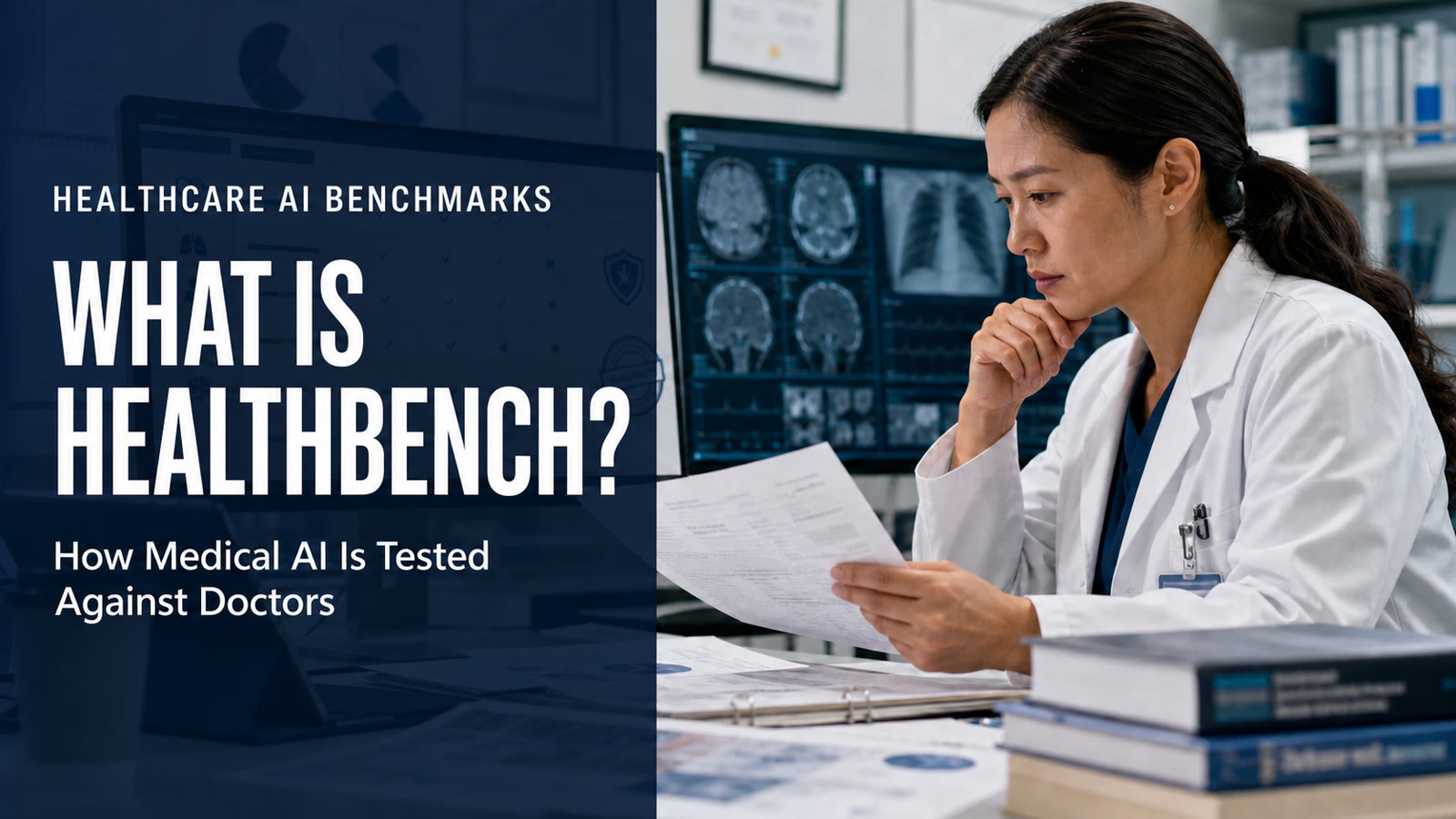
HealthBench scores. OpenAI says ChatGPT for Clinicians outperformed physicians on HealthBench Professional clinical tasks, even when the physicians had unlimited time and web access, per The Decoder and the preprint. OpenAI wrote the benchmark, ran the tests and built the product. Evidence level: Company-reported. Stage: Clinical care. What would prove it next: independent groups reproducing the scores and testing whether they track patient outcomes. Our HealthBench explainer covers the method.
GPT-Rosalind and GPT-4b micro. Both are research tools for biology. We found no peer-reviewed paper on either in PubMed on October 28, 2026. Evidence level: Announced for GPT-Rosalind; GPT-4b micro results reported so far are company-reported. Stage: Research tool. What would prove it next: a peer-reviewed paper or a partner naming a drug program that moved faster because of the model.
Who OpenAI Works With
OpenAI works mostly through partners and minority stakes, not its own drug programs. Pharma partners include Moderna, which described broad use of OpenAI’s GPTs in April 2024 (HLTH), Sanofi and Formation Bio from May 2024, and Novo Nordisk from April 2026 (BioPharm International).
On the care side, Color Health built a cancer copilot with OpenAI in 2024, Penda Health deployed the AI Consult tool in Kenya, and Boston Children’s Hospital ran the rare disease study. OpenAI’s money went to Ambience Healthcare in 2024 and to Chai Discovery, which TechCrunch described as OpenAI-backed when it raised its Series B in December 2025. Its two health acquisitions are Torch, a medical records startup, and Orchestra Bio, which builds AI agents for drug programs. We found no report of an OpenAI wet lab.
What to Watch Next
- A prospective trial in which clinicians use an OpenAI reasoning model during live diagnosis, with patient outcomes as the endpoint.
- Any peer-reviewed paper on GPT-Rosalind, or a partner naming a drug program it shortened, with the time saved.
- Whether Orchestra Bio’s agents report measured timeline or cost savings on named drug programs inside GPT-Rosalind.
- Independent reproduction of HealthBench Professional scores by a group with no OpenAI ties.
- Safety and accuracy data on ChatGPT Health from outside researchers, such as error rates on connected medical records.
Related: see the full AI healthcare breakthroughs tracker, how Anthropic and Claude compare, the record of Microsoft, which also distributes OpenAI models, in Microsoft healthcare AI, our analysis of the Orchestra Bio deal and the HYPE Index methodology.
What This Means for You
If you are a patient, ChatGPT Health can help you read records and prepare questions, but no trial has shown that it improves your health. The best trial so far found a GPT-4o tool made clinicians’ notes better without lowering short-term treatment failure. Use it to prepare for a visit, not to replace one.
If you work in research or care, OpenAI tools are arriving through ChatGPT for clinicians, GPT-Rosalind and partners you may already use. Ask which model version was tested, on which tasks, and whether the result came from OpenAI or an independent group. Better notes and higher benchmark scores have not yet translated into better patient outcomes in a trial.
Compiled by Healthcare Discovery from company announcements, named news reports and PubMed. Every PMID on this page was checked against PubMed on October 28, 2026, and the full text of the Kenya trial was read in PubMed Central. Evidence levels follow the scale explained in our AI healthcare breakthroughs tracker. Healthcare Discovery uses AI research tools from several companies on this page, including OpenAI, Anthropic and Google models; no company listed reviewed or paid for this page.
What has OpenAI done in healthcare?
OpenAI launched ChatGPT Health and a tool for doctors in January 2026, bought the medical records startup Torch, released the GPT-Rosalind life sciences model in April 2026 and bought Orchestra Bio in October 2026. It also partners with Sanofi, Formation Bio, Moderna and Novo Nordisk and has backed Chai Discovery.
Has ChatGPT been tested in a clinical trial?
Yes. A GPT-4o decision support tool was tested in a randomized trial in 16 Kenyan primary care clinics with 9,691 patients, run by outside researchers with Penda Health and published in Nature Medicine in 2026. Notes improved, but 14-day treatment failure did not fall (2.2% versus 2.0%).
Is ChatGPT used in drug discovery?
OpenAI offers GPT-Rosalind, a model for life sciences research, and works with Sanofi, Formation Bio, Moderna and Novo Nordisk. No drug candidate designed with OpenAI models had a published human trial result that we could find as of October 2026.
Is an OpenAI model better than doctors at diagnosis?
In a peer-reviewed Science study by Harvard, Beth Israel Deaconess and Stanford researchers, an OpenAI model outperformed physician baselines on hard diagnostic cases and emergency room second opinions. The authors call for prospective trials in real patient care before drawing conclusions about outcomes.
Does OpenAI have its own biology lab?
We found no report of one. OpenAI works through partners such as Retro Biosciences and pharma companies, and its 2026 health acquisitions, Torch and Orchestra Bio, build records software and AI agents rather than run labs.
Has an AI-designed drug been approved?
Not as of October 2026. AI-discovered molecules are in human trials, but none has reached FDA approval, and none of them is credited to OpenAI models.
Sources
- Agweyu A, et al. Generative AI-enabled clinical decision support system in primary care: a pragmatic, cluster-randomized trial. Nature Medicine, 2026. PMID 42362867
- Jaech A, et al. LLM-Assisted Reanalysis of Unsolved Rare Disease Genomes Increases Diagnostic Yield. NEJM AI, 2026. PMID 42529462
- Brodeur PG, et al. Performance of a large language model on the reasoning tasks of a physician. Science, 2026. PMID 42060751
- Crypto Briefing. OpenAI acquires biotech startup Orchestra Bio to push into drug development, October 2026. Crypto Briefing
- AI Weekly. OpenAI Buys Orchestra Bio, Folds Drug-Dev Agents Into Rosalind, October 2026. AI Weekly
- eMarketer. OpenAI vs. doctors study tests limits of marketing diagnostic AI, 2026. eMarketer
- arXiv. HealthBench Professional: Evaluating Large Language Models on Real Clinician Chats, April 2026. arXiv
- The Decoder. OpenAI says its new ChatGPT for Clinicians outperforms doctors on clinical tasks even when they have unlimited time and web access, 2026. The Decoder
- Axios. OpenAI launches new AI model for life sciences research, April 2026. Axios
- BioPharm International. Novo Nordisk partners with OpenAI for drug discovery, April 2026. BioPharm International
- Engadget. OpenAI releases Prism, a Claude Code-like app for scientific research, January 2026. Engadget
- SiliconANGLE. OpenAI buys Torch to bring unified medical data to ChatGPT Health, January 2026. SiliconANGLE
- Storyboard18. OpenAI purchases Torch in $100 million deal to enhance medical AI capabilities, January 2026. Storyboard18
- HLTH. OpenAI launches ChatGPT Health with b.well to connect medical records and wellness apps, January 2026. HLTH
- Axios. ChatGPT unveils new health tool for doctors, January 2026. Axios
- TechCrunch. OpenAI-backed biotech firm Chai Discovery raises $130M Series B at $1.3B valuation, December 2025. TechCrunch
- OpenAI. AI clinical copilot with Penda Health, July 2025. OpenAI
- Gigazine. OpenAI research reveals that doctors who use AI make 16% fewer diagnostic errors, July 2025. Gigazine
- OpenAI. Introducing HealthBench, May 2025. OpenAI
- The Decoder. OpenAI’s new GPT-4b micro model optimizes proteins for longevity research, January 2025. The Decoder
- TechCrunch. OpenAI is trying to extend human life, with help from a longevity startup, January 2025. TechCrunch
- HLTH. OpenAI, Color Health launch cancer copilot tool to expedite cancer treatment, June 2024. HLTH
- HLTH. Sanofi, Formation Bio and OpenAI partner on AI-powered drug discovery, May 2024. HLTH
- HLTH. At Moderna, OpenAI’s GPTs are changing almost everything, April 2024. HLTH
- TechCrunch. Ambience Healthcare raises $70M for its AI assistant, led by OpenAI and Kleiner Perkins, February 2024. TechCrunch


Similar Posts
COROS APEX 4: Alpine Grade GPS Watch With Zero Lag Mapping and Mountain Sport Analytics
COROS’s mountain sport watch delivers ultra precise dual frequency GPS, instant offline map rendering, and training analytics purpose built for trail runners, climbers, and ski mountaineers at $429 to $479…
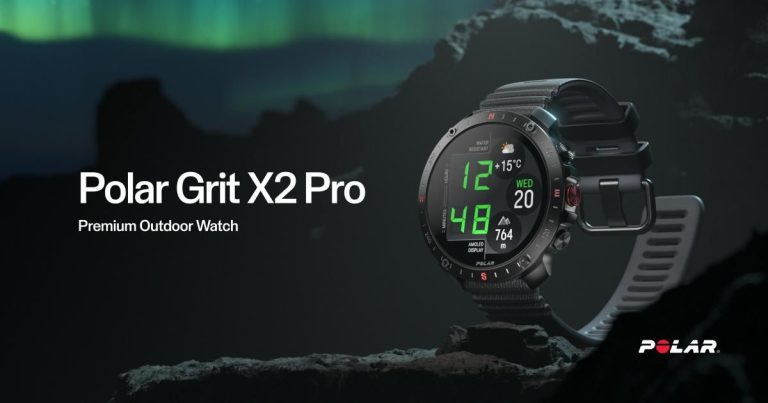
Polar Grit X2 Pro Review 2026: Price, Battery, Accuracy, HSA/FSA Status
Polar Grit X2 Pro first look: price, what studies of Polar watches show about resting heart rate, HRV, sleep and calorie accuracy, FDA status and HSA/FSA.
Garmin Epix Pro Gen 2: AMOLED Endurance Watch With FDA Cleared ECG and Advanced Navigation
Garmin’s premium AMOLED multisport watch pairs FDA cleared atrial fibrillation screening with deep training analytics, multi band GPS, and expedition grade durability in a display that finally matches the data…
Willow Go Wearable Breast Pump: Affordable Hands-Free Pumping with App Tracking
The wearable breast pump category was born from a simple observation: the technology meant to help mothers sustain breastfeeding was itself a barrier to breastfeeding. Willow Go brings that innovation…
COROS PACE 4: Ultralight AMOLED Running Watch With Long Battery and Training Analytics at $249
COROS’s lightest GPS watch combines an AMOLED display, 38 hour GPS battery, and comprehensive training analytics in a 37 gram package that redefines what runners can expect at $249 with…
Dexcom Stelo: The First Over-the-Counter Continuous Glucose Monitor
For the first time in history, anyone can buy a continuous glucose monitor without a prescription. What this means for the future of preventive metabolic health. Presented By Our Partners…
