
The Brain-Strength Connection: Why 2026 Research Is Making Resistance Training a Front-Line Therapy for Cognitive Aging
For most of the last century, resistance training was understood as something you did for muscle. Athletes built it for performance. Older adults trained it to delay frailty. Physical therapists prescribed it after injury. The brain, in this picture, was a passive beneficiary. Stronger muscles meant fewer falls, less hospitalization, and a slightly better quality of life. That was the framework, and it held for decades.
Presented By Our Partners



That framework is now coming apart. A wave of research culminating in 2026 is positioning resistance training not as a peripheral health behavior but as one of the most powerful interventions ever documented for the aging brain. The story has shifted from muscle to messaging. From sarcopenia prevention to cognitive preservation. From a "good for you" recommendation to what some researchers are now describing as the single most underprescribed therapy in geriatric medicine.
The science behind this shift is rigorous, mechanistically rich, and, most importantly, actionable. What follows is a tour through the research that is reshaping how cardiologists, neurologists, and longevity clinicians are thinking about strength. And, at the end, a practical playbook rooted in the four fundamentals of health: nutrition, movement, recovery, and breath.
The Myokine Revolution
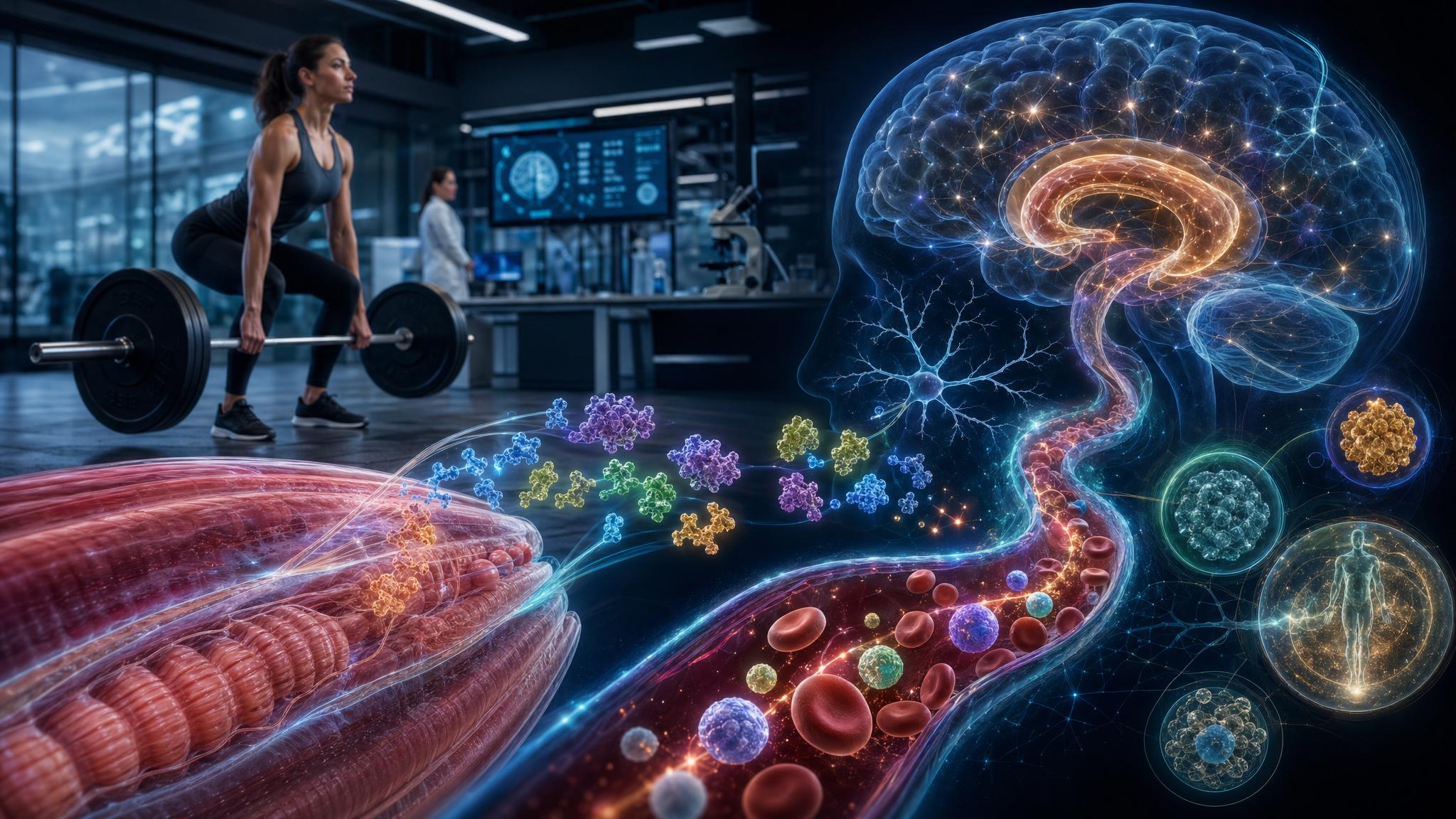
The clearest mechanistic shift came from the discovery that contracting muscle is not just a mechanical structure. It is an endocrine organ. When skeletal muscle contracts under load, it releases hundreds of signaling molecules called myokines into the bloodstream. These molecules travel to distant tissues, including the brain, and exert effects that look remarkably similar to those of pharmaceutical agents being developed for cognitive aging.
Bente Pedersen at the University of Copenhagen first described this phenomenon nearly two decades ago, but the catalog of identified myokines has exploded since. By 2026, the most studied member of this family is irisin, a peptide cleaved from the membrane protein FNDC5 during muscle contraction. Work by Bruce Spiegelman at Harvard and Christiane Wrann at Massachusetts General Hospital has shown that irisin crosses the blood-brain barrier, activates expression of brain-derived neurotrophic factor, and protects hippocampal neurons in models of Alzheimer’s disease.
A second myokine, cathepsin B, was identified by Henriette van Praag at Florida Atlantic University as a mediator linking exercise to adult neurogenesis. Studies in 2025 and 2026 have shown that cathepsin B levels rise more robustly in response to resistance training than to steady state cardio in older adults, a finding that helps explain why strength training appears to produce outsized cognitive effects per minute of effort.
The picture that emerges is striking. Muscle, when challenged with resistance, releases a cocktail of signaling molecules that promote synaptic plasticity, neurogenesis, and resistance to amyloid pathology. This is not metaphor. It is now well-mapped biochemistry.
What the Human Trials Show
Mechanism is interesting. Outcomes are what matter. And the human trial data in this space has matured rapidly.
The SMART trial, conducted by Maria Fiatarone Singh at the University of Sydney and published in the Journal of the American Geriatrics Society, randomized older adults with mild cognitive impairment to high-intensity progressive resistance training, computerized cognitive training, both, or sham exercise. Eighteen months later, the resistance training group showed significant improvements in global cognition that persisted for years after the intervention ended. MRI follow-up demonstrated preservation of hippocampal volume, the brain region that shrinks most reliably in Alzheimer’s disease.
The MEDEX trial at the University of Exeter extended these findings to a larger cohort and added biomarker analysis. Participants who completed a six-month resistance training protocol showed reductions in plasma neurofilament light chain, a marker of axonal injury, alongside improvements in processing speed and executive function. The reductions in neurofilament light were dose-dependent, meaning that participants who completed more training showed more biomarker improvement.
Teresa Liu-Ambrose at the University of British Columbia has published a series of trials over the last decade showing that twice-weekly resistance training in older women improves selective attention, conflict resolution, and associative memory. Her group’s MRI work demonstrates that these cognitive improvements track with measurable changes in white matter integrity and prefrontal cortical thickness.
By 2026, the convergent evidence is hard to dismiss. Resistance training, in the dose range studied across these trials, produces cognitive benefits in older adults that rival or exceed any pharmacological intervention currently approved for mild cognitive impairment.
Why Strength Specifically
It is reasonable to ask why resistance training in particular appears to produce these effects. Aerobic exercise, after all, has been the more studied modality and has its own substantial cognitive evidence base.
The answer appears to involve multiple parallel mechanisms. Heavy resistance work produces large, sharp spikes in growth hormone, insulin-like growth factor 1, and testosterone, hormones that all influence brain function. The mechanical loading of resistance training appears to stimulate myokine release with different kinetics than steady state cardio, producing larger surges of irisin and cathepsin B per session. Strength training also drives improvements in insulin sensitivity that are mediated through muscle, and insulin resistance in the brain is increasingly recognized as a central feature of Alzheimer’s pathology.
Featured Partner
Invest in the Infrastructure Behind Modern Medicine
As healthcare expands beyond hospital walls, the buildings and campuses supporting that shift are generating compelling returns for investors who move early. The Healthcare Real Estate Fund offers qualified investors direct access to a curated portfolio of medical office, outpatient, and specialty care facilities.
Learn More →
There is also a structural argument. Muscle mass and strength are independent predictors of cerebral blood flow in older adults. Stronger people, on average, have better perfused brains, and cerebral hypoperfusion is one of the earliest detectable changes in late-onset dementia.
This does not mean cardio is unnecessary. It means resistance training is doing something distinct and complementary, and it has been undervalued in standard exercise prescriptions for older adults for decades.
The Dose Question
How much is enough? The trial literature is converging on a workable answer.
Most positive trials used a protocol of two to three sessions per week, sixty minutes per session, with multi-joint compound movements performed at moderate to high intensity. Loads in the range of seventy to eighty-five percent of one-repetition maximum, performed for six to twelve repetitions across two to four sets, capture most of the protocols used in successful trials. The full session typically covered six to eight exercises across major muscle groups.
This is not a casual recommendation. It is a serious training stimulus, and one of the recurring findings in the trial literature is that intensity matters. Light resistance protocols, while better than nothing, produce smaller cognitive effects than moderate to high intensity work. This finding is consistent with the myokine biology. The signaling molecules that mediate brain effects are released in proportion to the effort and load applied to muscle.
For sedentary older adults, the practical implication is that supervised progression matters. The cognitive benefits accrue when training is challenging enough to drive adaptation, not when it is comfortable enough to feel safe forever.
The Bridge to the Fundamentals
Here is where the science becomes practical. Resistance training does not exist in isolation. Its cognitive effects are amplified or blunted by the other fundamentals of health: nutrition, recovery, and breath. Treating any one of these in isolation is the most common mistake in the longevity literature.
The interaction with nutrition is now well mapped. Protein intake of approximately 1.2 to 1.6 grams per kilogram of body weight per day is required to maximize the muscle protein synthesis response to training in older adults. This is meaningfully higher than the current RDA, and most older adults consume far less. Stuart Phillips at McMaster University has shown that distributing this protein across three meals, with at least thirty grams per meal, optimizes muscle synthesis better than back-loading protein into a single dinner. The clinical implication is direct. Without adequate protein, resistance training produces a diminished version of its potential effects.
The interaction with recovery is equally important. Resistance training produces measurable disturbance in muscle and connective tissue. Repair happens during sleep, particularly during deep slow-wave sleep, when growth hormone pulses are largest. Older adults who train hard but sleep poorly show blunted myokine responses and slower strength gains. This is one reason that sleep regularity, not just sleep duration, has emerged as an independent predictor of training adaptation.
The interaction with breath is more subtle but increasingly studied. Resistance training is a sympathetic stressor. Heart rate, blood pressure, and catecholamine release all rise during a heavy set. Recovery from this stressor depends on parasympathetic activation, mediated through the vagus nerve. Slow nasal breathing in the minutes after a training session accelerates the return to a parasympathetic state, and there is emerging evidence that this faster recovery improves subsequent training adaptation. The fundamentals are not separate fields. They are one biological system seen from different angles.
The Cardiology Question
A common concern, particularly among older adults with cardiovascular risk factors, is whether heavy resistance training is safe for the heart. The data here are now reassuring.
A series of meta-analyses published over the last three years, drawing on tens of thousands of participants, have shown that resistance training in older adults, including those with hypertension and stable coronary artery disease, is associated with reductions in blood pressure, improvements in endothelial function, and lower cardiovascular event rates over follow-up periods of five to ten years. The Mayo Clinic group has been particularly active in characterizing the cardiovascular profile of resistance training, and their current position statement is that strength training is not just safe in cardiac patients, it is therapeutic.
There are real contraindications, of course. Uncontrolled hypertension, recent myocardial infarction, and unstable angina all require medical clearance and supervised progression. But for the vast majority of older adults, the cardiovascular risk of resistance training is markedly lower than the cardiovascular risk of remaining sedentary.
Cognitive Aging as a Modifiable System
The integration of this research with the broader cognitive aging literature has produced what may be the most important conceptual shift of the last decade. Dementia is no longer being framed as an inevitable consequence of aging. The Lancet Commission on dementia prevention now estimates that close to half of dementia cases worldwide are attributable to modifiable risk factors, and the modifiable list has been steadily growing.
Physical inactivity, particularly the absence of resistance training, is one of the most heavily weighted of these factors. Hearing loss, hypertension, depression, diabetes, smoking, social isolation, air pollution, traumatic brain injury, excessive alcohol, and obesity round out the list. What is striking about this catalog is that nearly all of these factors interact with the four fundamentals of health. Movement modifies most of them directly. Sleep modifies several. Nutrition and breath are deeply implicated in cardiovascular and metabolic risk.
The practical takeaway is that cognitive aging is a modifiable system. The brain does not age in isolation from the body that carries it.
What This Means For Your Practice
The evidence is now strong enough to act on, and the action items are concrete.
First, treat resistance training as non-optional. Two to three sessions per week, focused on compound movements performed at meaningful intensity, is the dose range that the trial literature supports for cognitive benefit. If you are sedentary, start with supervised progression. A certified strength coach or a physical therapist trained in older adult exercise can save you years of inefficient effort and reduce injury risk dramatically.
Second, prioritize protein. For most adults over fifty, the practical target is thirty to forty grams of high-quality protein at each of three meals, with the highest protein meal placed within a few hours of training. Whey, eggs, dairy, fish, poultry, lean red meat, and well-combined plant proteins all work. The total daily intake matters more than the source, but the distribution across the day matters more than most people realize.
Third, sleep is not optional recovery. Treat it as part of the training stimulus. Aim for seven to nine hours, with consistent timing across the week. If you are training hard and sleeping poorly, the cognitive and muscular adaptations you are working for will not show up.
Fourth, build a downregulation practice. After hard training, even five minutes of slow nasal breathing, with an extended exhale, accelerates parasympathetic recovery. This is not a wellness ritual. It is a measurable physiological intervention that improves recovery between sessions and likely improves the cumulative training adaptation.
Fifth, do not wait until your sixties to start. The strength reserves you build in your forties and fifties are what you spend in your seventies and eighties. Sarcopenia is a slow-moving emergency, and the cognitive interactions described here begin well before the brain shows any clinical signs of decline.
The science is converging. The mechanisms are mapped. The trials are published. The brain-strength connection is no longer a hypothesis. It is, increasingly, the most consequential and most underused tool in the longevity toolkit.
The evening choice is yours. The barbell, kettlebell, or resistance band on the other side of the room is, in the most literal biochemical sense, also a tool for your hippocampus.


Similar Posts

Elysium Index: An Accessible Entry Point to Epigenetic Age Testing
Backed by Nobel Prize-winning science and priced at $299, the Elysium Index measures biological age through DNA methylation. Is this the most accessible on-ramp to epigenetic health tracking? Presented By…

The Daily Rounds: Longevity & Health Care Brief | May 3, 2026
🧠 Alzheimer's "Death Switch" Identified — Scientists found a toxic protein pair that triggers neuron destruction, with a compound that breaks it apart slowing disease progression in laboratory models. ❤️ Gene Silencing Cuts LDL 50% Without Statins — DNA-based PPRH molecules silence the PCSK9 gene, offering a new cardiovascular treatment pathway for the millions who cannot tolerate statins. ⚠️ Rapamycin Caution for Exercising Adults — The RAPA-EX-01 randomized trial found weekly rapamycin supplementation blunted functional fitness gains in older adults, raising important questions for longevity enthusiasts combining the drug with exercise. 🦠 Gut Bacteria Drive Inflammatory Depression Pathway — Harvard researchers traced a hidden mechanism in which a gut bacterium interacting with a common environmental pollutant produces a molecule that triggers cytokine-driven inflammation linked to major depressive disorder. 🐕 Immune Bloodhounds Hunt Solid Tumors — Stanford engineered NK cells with metabolite-sensing receptors that navigate to and infiltrate solid tumors, addressing a longstanding barrier to immunotherapy for solid cancers.
InsideTracker InnerAge 2.0: Blood Biomarker Testing for Biological Age
A blood biomarker testing platform that calculates your biological age from 20 blood markers, then delivers personalized nutrition and lifestyle recommendations to close the gap between your chronological and biological…

The Longevity Toolkit Takes Shape: AI Drug Discovery, Biological Age Clocks, and Microbiome Science Converge
A generative AI-designed drug has delivered clinical proof in a Phase IIa trial, while new biological age clocks and microbiome science are completing the precision longevity toolkit. Here is what…

The NAD+ Question: What the Science Actually Shows About Longevity’s Most Hyped Supplement
The wellness industry is selling NAD+ pills and IV infusions as longevity interventions. On May 11, 2026, NPR asked what the science actually shows. We went deeper: tracing the biology,…
WHOOP 5.0: ECG, Blood Pressure Insights, and Pace of Aging in the Most Advanced Recovery Platform Yet
WHOOP’s latest generation adds ECG, blood pressure insights, and a proprietary Pace of Aging metric to its recovery coaching platform, transforming a fitness tool into a longevity monitoring system. Presented…
