
Ultrahuman Ring Air Review: US Ban, Accuracy, and Metabolic Claims
The Ultrahuman Ring Air promised to tie your sleep to your blood sugar with no subscription; a patent fight pushed it off the US market, and its metabolic promise rests on thinner evidence than the pitch suggests.
Presented By Our Partners



The most consequential verdict on the Ultrahuman Ring Air did not come from a sleep lab. It came from the US International Trade Commission, a federal agency that referees trade disputes, and it had nothing to do with how well the ring reads a heartbeat. Oura, the Finnish maker of the most heavily studied smart ring on the market, accused Ultrahuman of copying its patented technology. The commission sided with Oura, and in October 2025 a US import ban on Ultrahuman’s rings took effect.
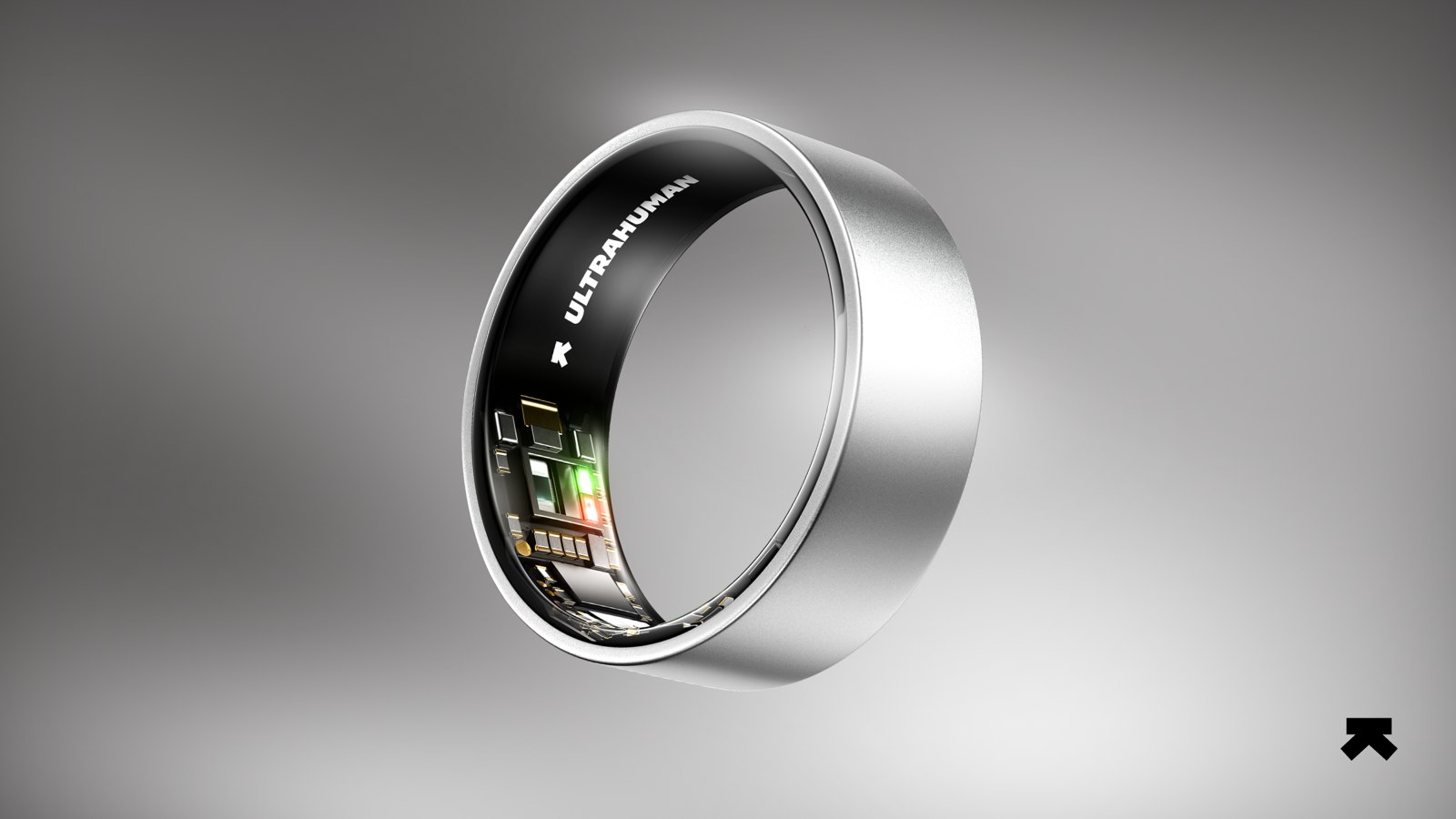
The Ultrahuman Ring Air is a subscription-free smart ring made by Ultrahuman, a company based in Bengaluru, India, that tracks sleep, heart rate and recovery and pairs with the company’s glucose monitoring program. As of October 2026, it is still sold in other markets. In the US, it is stuck on the wrong side of the border.
What came back to America in March 2026 was a different product, the redesigned Ring Pro. That leaves three questions. Can you buy a Ring Air? What happens if you own one? And what do its metabolic claims rest on?
The short answer: The Ultrahuman Ring Air, from India’s Ultrahuman, is a subscription-free smart ring for sleep, heart rate and recovery that pairs with the company’s glucose monitoring program. As of October 2026, a US import ban from Oura’s patent case keeps it off the US market, no independent study has validated it, and its metabolic claims rest on company-run research. Outside the US, it is a reasonable but unproven buy.
- Best for: buyers outside the US who want a ring with no subscription and are curious about pairing sleep data with an Ultrahuman glucose sensor.
- Not for: US buyers, anyone who needs independently validated sleep or heart data, or anyone managing diabetes.
- Price (October 2026): not confirmed; no subscription for the ring; the glucose program is sold separately.
- Regulatory status: no FDA clearance found; sold as a consumer wellness device, and barred from US import by an ITC order in Oura’s patent case.
- Evidence: Limited; no independent validation of the Ring Air in PubMed, and Ultrahuman’s two published studies are company-authored and observational.
What Is the Ultrahuman Ring Air?
The Ultrahuman Ring Air is a consumer smart ring from Ultrahuman Healthcare that estimates sleep, heart rate, heart rate variability and activity from sensors inside the band, with no subscription required. It preceded the company’s third-generation Ring Pro. Its distinguishing pitch is a connection to Ultrahuman’s separate glucose monitoring program, first sold as M1 and now as M2 Live.
Ultrahuman is led by chief executive Mohit Kumar, an author on both of the company’s peer-reviewed papers we found in PubMed. Its glucose business reached the US first: the M1 Live program launched there in February 2024, and the company later introduced M2 Live, a no-prescription glucose tracking platform built on Abbott’s Lingo sensor.
Earlier versions of this review listed a weight, a titanium shell, a water resistance rating, a battery life range, and a 95 percent sleep accuracy figure described as independently verified. We could not confirm any of those from a credible source in October 2026, and we found no study behind the accuracy figure, so all of it is gone. What Ultrahuman’s own research confirms is that the ring’s fitness estimates are built on heart rate derived from photoplethysmography, the optical pulse sensing used across the category.
Can your doctor see this data? Partly, if you share it. Ultrahuman can pull your medical records into its app; no clinician portal confirmed.
Can You Buy the Ultrahuman Ring Air in the US?
Not through official channels, as far as we could find. A US International Trade Commission order in Oura’s patent case has blocked imports of Ultrahuman’s rings since October 2025. Ultrahuman returned to the US in March 2026 with a redesigned Ring Pro, but we found no credible report that the Ring Air itself has been cleared to come back.
The fight began when Oura filed an ITC action against three rival ring makers: Ultrahuman, RingConn and Circular. The commission found for Oura; Bloomberg Law reported that the win turned partly on Oura’s proof of US jobs, the domestic industry showing these trade cases require. Ultrahuman tried to stop the ban and failed, according to Law360. Its appeal is docketed at the US Court of Appeals for the Federal Circuit as Ultrahuman Healthcare Pvt. Ltd. v. ITC, No. 26-1083. As of October 2026, we found no report of a decision.
The defendants then split. RingConn agreed to pay Oura royalties, according to Wareable, and stayed available to US buyers. We did not find a reported outcome for Circular. Ultrahuman fought on: it also sued Oura in India, and an Indian court has reinstated that suit, according to Athletech News.
Its route back to American customers ran through engineering rather than litigation. Kumar described to Wareable how the company engineered around Oura’s patent; US Customs and Border Protection cleared the redesigned Ring Pro, and Ultrahuman opened US preorders in March 2026. Launch coverage put the Ring Pro at $479 with a 15-day battery life.
The Ring Air was not part of that return. When Ultrahuman released a Diesel designer edition, Wareable noted that the US was still absent from the launch list. Some reseller and parcel-forwarding sites advertise Ring Air units, including 2026 editions, for delivery to the US; we could not confirm from a credible source that any are official US sales.
I Already Own an Ultrahuman Ring Air. What Does the Patent Fight Mean for Me?
Your ring should keep working. The ITC’s remedy is aimed at bringing rings into the country, not at rings already on fingers, and Ultrahuman confirmed after the ruling that it would keep supporting existing customers. The open questions are practical: how replacements and warranty claims are handled, and what happens to long-term support if the appeal fails.
In October 2025, as the ban took hold, Gadgets and Wearables reported that Ultrahuman had confirmed continued support, and a new ring, following the ITC ruling. Nothing we found suggests owners must stop using rings they have.
We found no credible report on how Ultrahuman handles US warranty claims for the Ring Air when a replacement would itself have to cross the border. If you depend on your ring, ask support how a defect claim would work, keep your proof of purchase, and check the app’s data export options. A Federal Circuit reversal could reopen the door for the Ring Air; an affirmance would leave the Ring Pro as Ultrahuman’s US path.
How Does the Ultrahuman Ring Air Work?
Like other smart rings, the Ring Air shines light into the finger and measures how much returns as blood pulses beneath it, a method called photoplethysmography. Software turns that pulse signal, plus movement and temperature, into estimates of heart rate, heart rate variability, sleep stages and recovery. The ring does not measure glucose.
Every heartbeat launches a pressure wave through the arteries. By the time it reaches a finger, it arrives as a faint swelling of the tiny vessels under the skin, and that extra blood absorbs a little more light. An LED inside the ring flashes into the tissue, a photodiode records what scatters back, and stitched together those flickers become a pulse waveform. The finger’s dense small vessels are why hospital oximeters clip to fingertips, and a sleeping hand gives long stretches of clean signal.
The gaps between beats are where recovery scores come from. A healthy heart at rest does not keep metronome time: the interval stretches and shrinks with each breath, steered largely by the vagus nerve, the body’s brake on heart rate. More variation usually means the brake is engaged and the body is restoring itself. Rings report this as heart rate variability, and it anchors most morning readiness scores.
Temperature adds a slower rhythm. As you drift off, vessels in the hands open to shed core heat, and the fingers warm. In a 2026 Sleep Medicine study from the National University of Singapore, researchers tracked this with a ring (an Oura) in 42 adolescents and 45 older adults and checked it against EEG. In the adolescents, finger temperature climbed about 4.7°C on average, and the rise finished a few minutes before EEG-confirmed sleep onset. The finger announces sleep before the brain has fully arrived.
Then comes the part no ring does directly. Sleep stages are defined by brain waves, which a ring cannot read. A lab scores deep, light and REM sleep from scalp electrodes; a ring infers them from heart rhythm, movement and temperature, using algorithms trained against lab recordings. The inference can be good. It remains an inference. Glucose needs a separate instrument entirely: a small adhesive sensor with a fine filament under the skin, which Ultrahuman sells through its glucose program. How the app combines the two streams today is software we could not verify.
Featured Partner
Invest in the Infrastructure Behind Modern Medicine
As healthcare expands beyond hospital walls, the buildings and campuses supporting that shift are generating compelling returns for investors who move early. The Healthcare Real Estate Fund offers qualified investors direct access to a curated portfolio of medical office, outpatient, and specialty care facilities.
Learn More →
How Accurate Is the Ultrahuman Ring Air? What the Research Shows
No one has independently tested it. A PubMed search in October 2026 found no peer-reviewed study validating the Ring Air against polysomnography or an ECG. Studies of other rings show the form factor can measure overnight heart rate and total sleep well in healthy adults, but accuracy varies sharply by brand, by age and by metric.
The company’s own research. In a 2026 Frontiers in Digital Health paper, Ultrahuman scientists analyzed a ring feature called Cardio Age, an estimate of cardiorespiratory fitness age, in 442 users over 12 months. The average estimated cardiovascular age came out 1.84 years younger than actual age, and 82.6 percent of users were rated younger. Better sleep and more daily steps tracked with younger estimates. Every author worked for Ultrahuman, the design was retrospective, and the abstract reports no comparison against laboratory-measured VO2 max or any clinical outcome. The number moves with lifestyle. That does not show it is correct.
The best case for rings, from Oura. In a 2024 Sleep Medicine study of 96 generally healthy adults in Japan aged 20 to 70, contributing 421,045 thirty-second epochs across up to three nights of polysomnography, an Oura Ring Gen3 matched the lab on total, light and deep sleep and was 91.7 percent accurate at separating sleep from wake; its weak spot was wakefulness, with only 73.0 to 74.6 percent of wake epochs correctly labeled. At Brigham and Women’s Hospital, 35 healthy adults aged 20 to 50 spent a night in the lab, and the Oura ring’s sensitivity for individual stages ran 76.0 to 79.5 percent (Sensors, 2024). A 2025 OTO Open meta-analysis of six studies with 388 participants found no significant difference between Oura and medical-grade sleep studies for total sleep time.
Overnight heart data. In a 2025 Physiological Reports study, 13 healthy adults wore an ECG reference and several consumer devices for a combined 536 nights; the Oura Ring Gen 4 reached a concordance of 0.99 with the ECG for overnight HRV and an average error of 5.96 percent, the best of five devices. The fine print matters. A 2024 Sensors analysis of 92 younger and 22 older adults found accurate HRV required discarding noisy segments and averaging over at least 30 minutes, and more than half of older participants still exceeded 10 percent error.
Brand and age change the answer. At Charité University Medicine Berlin, three commercial rings (Oura, SleepOn and Circul) were tested in a sleep clinic population. Four-stage accuracy was 53.18 percent for Oura, 50.48 percent for SleepOn and 35.06 percent for Circul, and individual-night errors were large enough that the authors ruled out clinical use (Scientific Reports, 2025). In a 2026 University of Massachusetts study of 19 adults aged 56 to 80, an Oura ring underestimated total sleep by 75.5 minutes and overestimated deep sleep by 71.5 minutes (Sleep Advances, 2026). A 2026 Behavioral Sleep Medicine meta-analysis of 16 studies concluded that wearables overestimate total sleep, underestimate time awake after falling asleep, and that no device was consistently best.
Temperature and blood oxygen. Finger temperature tracks real physiology: in a 2019 BMC Women’s Health pilot of 22 women, nightly ring temperature ran 0.30°C higher in the luteal phase than the follicular phase, and the best algorithm detected ovulation with 83.3 percent sensitivity, though two authors worked for Oura. Blood oxygen is shakier. In a 2026 Duke University study, an Apple Watch Series 7 and a clinical Masimo fingertip oximeter both overestimated oxygen saturation during induced hypoxia; below 88 percent, the error was 5.82 percent for the watch and 3.52 percent for the Masimo (JMIR Formative Research, 2026).
The lesson is blunt: Oura’s numbers belong to Oura, and Charité shows a different ring in the same lab can perform far worse. For help reading these studies, see our analysis of what a sleep score can and cannot tell you.
What Do the Ultrahuman Ring Air’s Metabolic Claims Rest On?
They rest on real physiology and thin product evidence. Sleep loss does impair glucose control, and people respond very differently to identical meals. But the only published study of Ultrahuman’s glucose platform is company-authored, observational and did not use the ring, and we found no trial showing the ring and sensor together improve anyone’s health.
The physiology is sound. In a 2010 study from Leiden University Medical Center, nine healthy adults slept a normal night once and a four-hour night once, then underwent a hyperinsulinemic euglycemic clamp, the reference test for insulin sensitivity. After the short night, the glucose infusion needed to hold blood sugar steady fell by about 25 percent, and both the liver and peripheral tissues had become less responsive to insulin (Journal of Clinical Endocrinology and Metabolism, 2010). Picture insulin as a key turning in a lock: after one bad night, the lock sticks. Nine people and one night is a small study, but a direct one, and it is the strongest argument for putting a sleep tracker and a glucose sensor in the same app.
Personal variation is real. In a 2015 Cell study, Weizmann Institute researchers monitored glucose for a week in 800 people, measured responses to 46,898 meals, and found high variability in responses to the same foods. An algorithm built on blood tests, diet, activity and gut microbes predicted individual responses, held up in a separate 100-person cohort, and guided a blinded randomized diet that lowered after-meal glucose. That is the premise behind every consumer glucose program, Ultrahuman’s included.
Ultrahuman’s own evidence is narrow. In a 2024 Scientific Reports study, Ultrahuman researchers gave the M1 monitor to 105 Indian adults, 53 with normal glucose control and 52 with prediabetes, for 14 days. Activity was measured with a Fitbit, not an Ultrahuman ring. The monitor separated the groups on average glucose, time in a tight 70 to 110 mg/dL range, and variability, and the app’s metabolic score correlated inversely with lab markers of dysglycemia and insulin resistance, including HbA1c. All four authors worked for Ultrahuman. The score tracked established markers in one population over two weeks; that cannot show following it improves health, even though the abstract concludes such scores “can positively influence glucose management.”
Spikes are normal. In a 2019 multicenter study, 153 healthy, nondiabetic people aged 7 to 80 wore a blinded Dexcom G6 for up to 10 days. Mean glucose was 98 to 99 mg/dL in every age group except those over 60, at 104, and the median participant spent 2.1 percent of the day, about 30 minutes, above 140 mg/dL (Journal of Clinical Endocrinology and Metabolism, 2019). An app that treats every peak as a warning can produce anxiety faster than insight.
What is missing. We found no randomized trial in PubMed testing whether Ultrahuman’s ring and glucose sensor together improve weight, HbA1c, sleep or any clinical outcome. An earlier version of this review cited a 2023 Cell Metabolism study on sleep and next-day glucose; the DOI it gave belongs to an unrelated paper on gut bacteria and depression, so it has been removed. Because M2 Live needs no prescription, it is a wellness tool rather than diabetes care, and anyone with diabetes or prediabetes should make monitoring decisions with a clinician. For another no-prescription option, see our review of the Dexcom Stelo over-the-counter CGM.
What the Ultrahuman Ring Air Gets Right
The Ring Air gets the business model and the central idea right: no subscription for the ring’s features, and a serious attempt to connect sleep and recovery with glucose, two systems physiology says are coupled. Ultrahuman also publishes some research in peer-reviewed journals, which many wearable companies never do.
No subscription. Coverage has consistently described the Ring Air as the subscription-free alternative to Oura. Over years of wear, a membership adds up; Ultrahuman removes that cost for the ring itself.
The right question. Most rings stop at a sleep score. Ultrahuman asks what that sleep did to your metabolism the next day, the question the Leiden clamp study suggests is worth asking.
A form factor that works. The best ring studies show the finger can deliver overnight heart rate and HRV that closely track an ECG. That is a property of the category, not proof for this ring, but the Ring Air starts with a good signal.
Where the Ultrahuman Ring Air Falls Short
The Ring Air falls short on availability, evidence and certainty. US buyers cannot get it through official channels, no independent study has validated its readings, its metabolic claims lean on company research that did not involve the ring, and an unresolved appeal leaves owners guessing.
Shut out of the US. As of October 2026, we found no official US sales. The Ultrahuman ring Americans can buy is the Ring Pro, at a reported $479.
No independent validation. Without a published comparison against polysomnography and ECG, the Ring Air’s sleep stages and HRV are unverified.
Evidence written by the seller. Both Ultrahuman papers were authored entirely by employees, including the chief executive; one was retrospective, and the other measured activity with a competitor’s tracker. A fitness age that rates 82.6 percent of users younger than their birthdays is pleasant to read, but no one has tested whether it predicts heart health.
The metabolic package costs extra. The glucose sensor is a separate, recurring purchase whose current price we could not confirm. The subscription-free label applies to the ring, not to the full metabolic experience.
Legal limbo. A pending appeal and the Indian lawsuit mean the rules could still change.
Ultrahuman Ring Air vs Oura Ring 5 vs RingConn Gen 2 vs Amazfit Helio vs Circular Ring 2
For US buyers, the real question is what to buy instead. The Oura Ring 5 has the deepest research lineage, the RingConn Gen 2 adds sleep apnea monitoring and settled with Oura, the Amazfit Helio is cheapest, and the Circular Ring 2 adds an ECG.
| Ring (as of October 2026) | US availability | Upfront price | Ongoing fee | Standout feature | Oura patent case | Peer-reviewed validation of this model |
|---|---|---|---|---|---|---|
| Ultrahuman Ring Air | No official US sales found | Not confirmed | None for the ring; glucose sensor extra | Pairs with Ultrahuman glucose program | Import ban in effect; appeal pending | None independent; company studies only |
| Oura Ring 5 | Yes | From $399 | Membership for full features | Deepest research lineage | Oura holds the patent | None found for Ring 5; Gen3 and Gen 4 tested |
| RingConn Gen 2 | Yes | Not confirmed | Not confirmed | Sleep apnea monitoring | Agreed to pay Oura royalties | None found |
| Amazfit Helio Ring | Yes | $199 after a price cut | None | Lowest price; stress sensing | Not among the companies named | None found |
| Circular Ring 2 | Not confirmed in this review | Not confirmed | Not confirmed | ECG for rhythm checks | Named in Oura’s ITC action; outcome not found | None found |
The Oura Ring 5 is the safest pick on evidence: its predecessors are the rings behind the 96-person sleep lab study and the 0.99 HRV concordance above, though no study has yet tested the Ring 5 itself. The RingConn Gen 2 suits anyone interested in overnight breathing, and its royalty deal removes the legal cloud hanging over Ultrahuman. The Amazfit Helio Ring, cut to $199 according to Tom’s Guide, is the cheapest way to try a ring with no subscription. The Circular Ring 2 adds on-demand ECG, but Circular was also named in Oura’s ITC action and we could not confirm how that ended, so check US availability before ordering. None of the four pairs with Ultrahuman’s glucose program; for metabolic tracking, you would add a standalone glucose sensor.
How Much Does the Ultrahuman Ring Air Cost, and Is It HSA/FSA Eligible?
As of October 2026, we could not confirm a current Ring Air price from a credible source. The ring needs no subscription, but the glucose program is a separate purchase whose pricing we also could not confirm. In the US, Ultrahuman’s available ring is the Ring Pro, reported at $479. We found no confirmation of HSA or FSA eligibility.
Earlier versions of this review quoted a Ring Air price and an older Oura membership comparison; we could not verify them, so they are gone. Outside the US, check Ultrahuman’s official regional store.
Think in total cost. A subscription-free ring saves a recurring fee, but the metabolic pitch depends on glucose sensors bought repeatedly. For US buyers, a gray-market Ring Air adds an import that may not clear the border and no clear warranty path. If you hope to use pretax health account funds, ask your plan administrator first.
Who Should Buy the Ultrahuman Ring Air, and Who Should Skip It?
Consider the Ring Air only if Ultrahuman sells it officially where you live, you want no subscription, and you can treat its numbers as unverified. US buyers, people managing diabetes, and anyone who needs validated data should look elsewhere.
Consider it if:
- You live where Ultrahuman or an authorized retailer sells the Ring Air.
- Avoiding a monthly membership matters more to you than published validation.
- You use, or plan to use, Ultrahuman’s glucose program and want one app.
Skip it if:
- You are in the US. Buy the Ring Pro if you want Ultrahuman, or one of the alternatives above.
- You want sleep and heart data backed by independent lab testing.
- You have diabetes or prediabetes; glucose decisions belong with your care team.
- You are an older adult who wants precise sleep staging; ring accuracy appears to drop with age.
- You have loud snoring, gasping at night, palpitations or daytime exhaustion. Those call for a clinician, not a consumer ring.
What This Means for You
The idea inside the Ring Air deserves to outlive the patent fight. Your metabolism does not run on its own clock. A short night leaves insulin working against a sticky lock the next morning, with effects that ripple into appetite, energy and the glucose curve after breakfast. That coupling is how the Energy Arsonist, metabolic dysfunction, gains ground, and over years it feeds the Silent Assassin, cardiovascular disease. Our overview of the Four Villains of Health and Longevity explains how these threats compound.
The Five Pillars are where the leverage sits. Sleep comes first, because the clamp data show how quickly one bad night reaches glucose regulation. Nutrition is where personal variation matters most. Movement is the other half: working muscle pulls glucose out of the blood, and a walk is still the cheapest metabolic intervention there is. Mindset matters too, because a healthy body produces glucose peaks, and a ring that turns each one into an alarm can harm your peace of mind more than it helps your metabolism.
You do not need this ring to act on any of that. Choose one you can legally buy, support and trust, try a glucose sensor for a few weeks if you are curious, and look for patterns rather than verdicts. Browse our nutrition and metabolic health device reviews for more options. We will update this review if the Federal Circuit rules, the Ring Air returns to the US, or an independent validation study appears.
Frequently Asked Questions
Can You Buy the Ultrahuman Ring Air in the US?
Not through official channels, as of October 2026. A US International Trade Commission order in Oura’s patent case has blocked imports of Ultrahuman’s rings since October 2025. Ultrahuman returned to the US in March 2026 with a redesigned Ring Pro, reported at $479, after it cleared US Customs. We found no credible report that the Ring Air itself has been cleared to return, and imported units may lack US warranty support.
Will My Ultrahuman Ring Air Stop Working Because of the Oura Ban?
Nothing we found suggests it will. The ITC order targets imports, not rings people already own, and Ultrahuman confirmed after the ruling that it would continue supporting existing customers. The open questions are warranty replacements, which would have to be imported, and long-term support if Ultrahuman loses its pending Federal Circuit appeal. Ask Ultrahuman support how a defect claim would be handled and keep your proof of purchase.
Does the Ultrahuman Ring Air Require a Subscription?
No. The Ring Air is widely described as a subscription-free alternative to Oura, so its tracking features carry no monthly fee. The metabolic features are a different story: glucose data come from Ultrahuman’s separate glucose monitoring program, currently M2 Live built on Abbott’s Lingo sensor, which is an additional purchase. We could not confirm current pricing for either the ring or the glucose program as of October 2026.
Does the Ultrahuman Ring Air Measure Blood Sugar?
No. The ring reads pulse, movement and other signals from the finger; it cannot sample glucose. Glucose readings come from a separate continuous glucose monitor sensor worn on the body and sold through Ultrahuman’s M2 Live program, which needs no prescription. People with diabetes or prediabetes should make glucose monitoring decisions with a clinician rather than relying on a wellness app.
How Accurate Is the Ultrahuman Ring Air?
Its accuracy is unknown. As of October 2026, PubMed contained no independent study validating the Ring Air against polysomnography or an ECG, and an earlier 95 percent sleep accuracy claim could not be verified. Research on other rings shows strong results for total sleep and overnight HRV in healthy adults, but a 2025 Charité study found four-stage accuracy ranging from 53.18 percent to 35.06 percent depending on the brand.
Ultrahuman Ring Air vs Oura Ring 5: Which Is Better?
For US buyers, the Oura Ring 5 by default, because the Ring Air is blocked from US import. On evidence, Oura also leads: earlier Oura rings have been tested against polysomnography and ECG in multiple independent studies, while the Ring Air has none. The Ring Air’s advantages are no subscription and pairing with Ultrahuman’s glucose program, which matter mainly to buyers outside the US.
Sources
- Shanmugam A, et al. Wearable-derived cardiovascular fitness age and its lifestyle correlates in 442 adults. Frontiers in Digital Health, 2026. DOI
- Chaudhry M, et al. Metabolic health tracking using Ultrahuman M1 continuous glucose monitoring platform in non- and pre-diabetic Indians: a multi-armed observational study. Scientific Reports, 2024. DOI
- Svensson T, et al. Validity and reliability of the Oura Ring Generation 3 with Oura sleep staging algorithm 2.0 when compared to multi-night ambulatory polysomnography. Sleep Medicine, 2024. DOI
- Robbins R, et al. Accuracy of three commercial wearable devices for sleep tracking in healthy adults. Sensors, 2024. DOI
- Khan, et al. The Oura Ring versus medical-grade sleep studies: a systematic review and meta-analysis. OTO Open, 2025. DOI
- Dial MB, et al. Validation of nocturnal resting heart rate and heart rate variability in consumer wearables. Physiological Reports, 2025. DOI
- Liang, Yilmaz, Soon. Deriving accurate nocturnal heart rate, rMSSD and frequency HRV from the Oura Ring. Sensors, 2024. DOI
- Herberger S, et al. Performance of wearable finger ring trackers for diagnostic sleep measurement in the clinical context. Scientific Reports, 2025. DOI
- Searles ME, et al. Performance evaluation of consumer sleep-tracking wearables and nearables in healthy young and older adults. Sleep Advances, 2026. DOI
- Agostinho, et al. Are wearable sleep-tracking devices reliable alternatives to polysomnography? A systematic review and meta-analysis. Behavioral Sleep Medicine, 2026. DOI
- Jouvencel, et al. Distal skin temperature stabilization is tightly coupled with sleep onset across structured and free-living conditions. Sleep Medicine, 2026. DOI
- Maijala A, et al. Nocturnal finger skin temperature in menstrual cycle tracking: ambulatory pilot study using a wearable Oura ring. BMC Women’s Health, 2019. DOI
- Jiang Y, et al. Performance of wearable pulse oximetry during controlled hypoxia induction: instrument validation study. JMIR Formative Research, 2026. DOI
- Donga E, et al. A single night of partial sleep deprivation induces insulin resistance in multiple metabolic pathways in healthy subjects. Journal of Clinical Endocrinology and Metabolism, 2010. DOI
- Zeevi D, et al. Personalized nutrition by prediction of glycemic responses. Cell, 2015. DOI
- Shah VN, et al. Continuous glucose monitoring profiles in healthy nondiabetic participants: a multicenter prospective study. Journal of Clinical Endocrinology and Metabolism, 2019. DOI
- Fitt Insider. Oura files ITC action against Ultrahuman, RingConn and Circular for patent infringement (press release). Fitt Insider
- Bloomberg Law. Oura’s ITC win bars rivals’ smart rings on proof of US jobs. Bloomberg Law
- Inc42. Patent infringement: US ITC’s ban on Ultrahuman comes into effect. Inc42
- Law360. Ultrahuman loses bids to halt ITC order in Oura patent case. Law360
- Ultrahuman Healthcare Pvt. Ltd. v. ITC, No. 26-1083 (Fed. Cir.), docket. Justia Dockets
- Wareable. RingConn agrees to pay royalties following US import ban, while rival Ultrahuman continues legal fight. Wareable
- Athletech News. India court reinstates Ultrahuman patent suit against Oura. Athletech News
- Gadgets and Wearables. Ultrahuman confirms support and new ring after ITC ruling, October 22, 2025. Gadgets and Wearables
- Wareable. Exclusive: CEO Mohit Kumar on engineering around Oura’s patent. Wareable
- Mezha. Ultrahuman reenters US market after CBP clears Ring Pro. Mezha
- TechCrunch. Ultrahuman ramps up U.S. push with Ring Pro as Oura tightens grip, March 24, 2026. TechCrunch
- Hub71 Explorer. Ultrahuman launches $479 Ring Pro with 15-day battery life to re-enter US market after Oura patent dispute. Hub71
- Wareable. The subscription-free smart ring gets a designer makeover, but the US is still absent from the launch list. Wareable
- Gadgets and Wearables. Glucose monitoring reimagined: Ultrahuman M1 Live now available in the US, February 24, 2024. Gadgets and Wearables
- TechRepublic. India’s Ultrahuman launches no-prescription glucose tracking platform in the US. TechRepublic
- T2 Online. Ultrahuman launches M2 Live with Abbott’s Lingo glucose sensor. T2 Online
- Tom’s Guide. The Amazfit Helio is my favorite smart ring: here’s why its sudden price drop is a problem. Tom’s Guide
Ultrahuman Ring Air at a glance
- Subscription
- None required
- Form factor
- Smart ring
- FDA status
- Wellness device, no clearance
Maintained in the Healthcare Discovery device database and updated automatically.


Similar Posts

The Protein Threshold for Aging Muscle: Why Adults Over 40 Need More Than Government Guidelines Suggest
Twenty years of research from Stuart Phillips, Donald Layman, and the PROT-AGE consortium has produced one of the cleanest signals in nutrition science: adults over 40 need more protein than…

Sleep Regularity Beats Duration: Why When You Sleep May Matter More Than How Long
A 60,977-person UK Biobank study found that sleep regularity predicts all-cause mortality more powerfully than sleep duration. Inside the science of the Sleep Regularity Index, social jet lag, slow-wave sleep,…
Polar Grit X2 Pro Review 2026: Price, Battery, Accuracy, HSA/FSA Status
Polar Grit X2 Pro first look: price, what studies of Polar watches show about resting heart rate, HRV, sleep and calorie accuracy, FDA status and HSA/FSA.
Ultrahuman Ring Pro Review 2026: $479 Price, 15-Day Battery, No Subscription, HSA/FSA Status
Ultrahuman Ring Pro first look: $479 with no subscription and a 15-day battery, what ring studies show about its sleep, HRV and AFib check, the Oura lawsuit, and HSA/FSA status.
AI-Designed Drugs Are Entering Human Trials: Inside the Quiet Pharmaceutical Revolution of 2026
For the first time in pharmaceutical history, molecules designed almost entirely by artificial intelligence are surviving Phase 2 trials in real patients. From Insilico’s rentosertib to Isomorphic Labs’ multi-billion dollar…
Hyperice Hypervolt 2 Pro: Smart Percussive Therapy with HyperSmart Sensor Technology
The best massage gun is the one that adapts to what your body needs, not the one that simply delivers the most force. Presented By Our Partners Percussive therapy has…
