
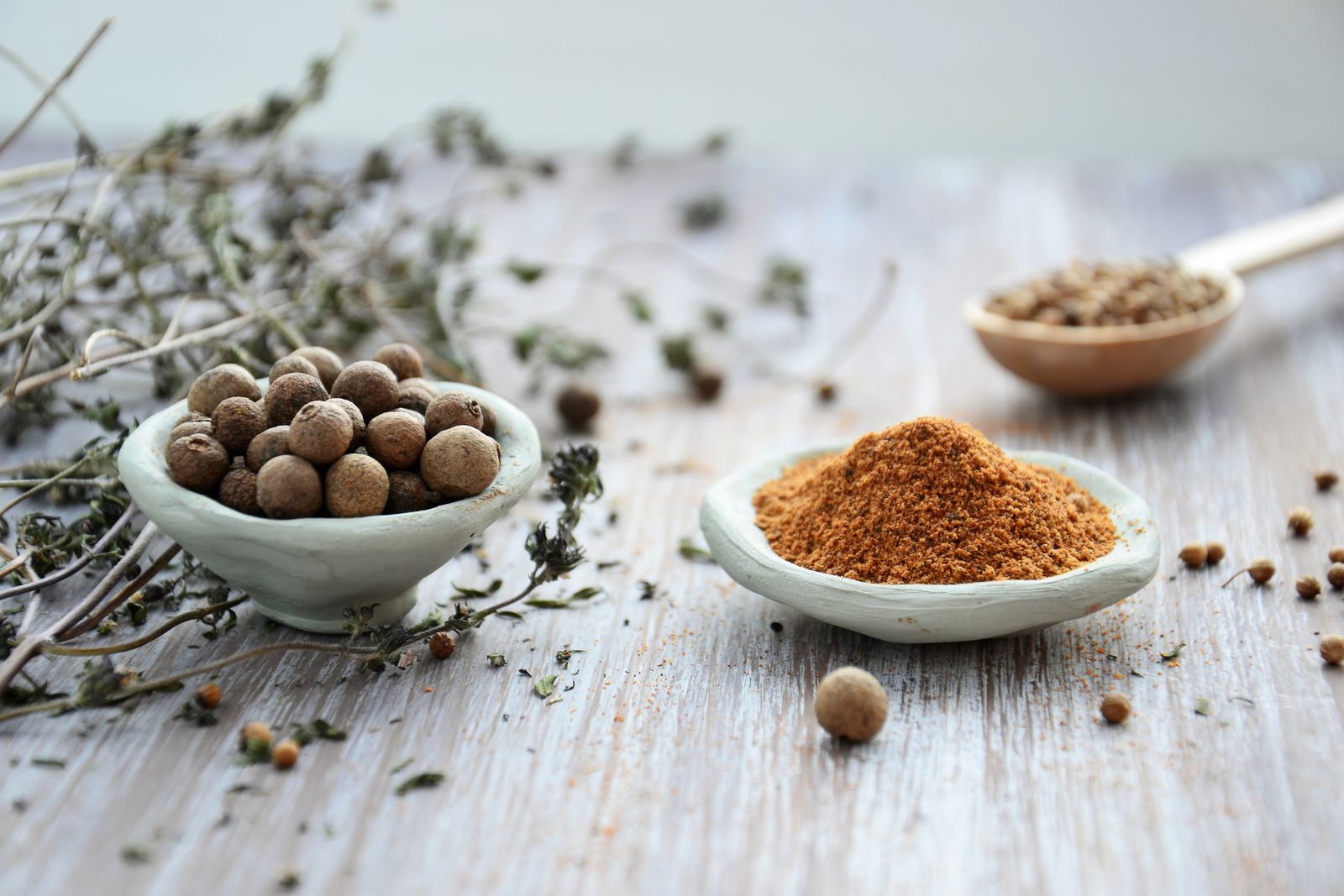
Does Curcumin Need Black Pepper? Preliminary Evidence, 4 Studies Reviewed
Black pepper raises curcumin blood levels. Nobody has shown that higher blood levels raise the clinical effect.
Presented By Our Partners


Piperine, the active alkaloid in black pepper, increased curcumin bioavailability about 20-fold in a small 1998 human pharmacokinetic study (PMID 9619120), and that single figure, often rendered as “2,000 percent,” has anchored a quarter century of label copy. In a more recent 16-person open-label crossover, a water-dispersible turmeric extract at 250 mg reached a curcuminoid peak concentration of 74.56 ng/mL versus 22.75 ng/mL for a curcuminoid-piperine reference (PMID 38702159). Both studies are about what reaches the blood. Neither, and no other trial in this evidence set, compares branded forms on a clinical outcome.
What the absorption studies measure
Plain curcumin is poorly absorbed, rapidly conjugated in the gut wall and liver, and cleared quickly; the NIH NCCIH fact sheet notes this directly and observes that studies have used formulations designed to raise absorption. The pharmacokinetic literature answers one question well: does form X put more curcuminoids in plasma than form Y over 24 hours in fasted healthy volunteers? Piperine does, by inhibiting the intestinal enzymes and transporters that clear curcumin. Phytosome complexes bound to phosphatidylcholine do. Water-dispersible, micellar and nanoparticle preparations do, and the 2024 crossover found the water-dispersible extract outperformed even the piperine reference on Cmax (PMID 38702159). These are reproducible findings. They are also surrogate findings, and the HYPE Index stage classifier places them at stage 2: randomized data on a marker, not an outcome.
| Study | Design | Finding | What it does not show |
|---|---|---|---|
| PMID 9619120 (1998) | Small human PK study, piperine with curcumin | About 20-fold increase in curcumin bioavailability | Any clinical effect of the higher level |
| PMID 38702159 (2024) | 16-person open-label crossover | Water-dispersible extract 250 mg: Cmax 74.56 ng/mL versus 22.75 ng/mL for curcuminoid-piperine reference | Open-label; 24-hour PK; no efficacy endpoint |
| PMID 37574203 (2023) | Systematic review of 21 RCTs on muscle and joint health | Reported a 250 mg water-dispersible extract as most effective | Very high heterogeneity; emphasis on one branded product; no effect sizes in abstract |
| PMID 39969338 (2024) | Meta-analysis of 7 RCTs in fatty liver | Phytosomal curcumin lowered BMI 0.72 and body fat 2.04 points | No comparison against plain curcumin or other forms |
Following the money
Most bioavailability trials are run or funded by the manufacturer of the form being tested, are open-label, and are rarely replicated independently. That is not unusual for ingredient science, but it shapes what gets measured. A manufacturer has every incentive to run a 24-hour pharmacokinetic crossover against a plain or piperine reference, because it is cheap, fast and almost guaranteed to produce a multiple. It has very little incentive to run a 12-week trial of its form against a competitor’s on knee pain, because the result might be a tie. The chain of hype drifts at the step from PK paper to label: a 20-fold plasma increase becomes “20 times more effective,” a claim no trial has tested. The clinical trials that do exist mostly use one branded form each, so efficacy meta-analyses pool forms rather than compare them.
Featured Partner
Invest in the Infrastructure Behind Modern Medicine
As healthcare expands beyond hospital walls, the buildings and campuses supporting that shift are generating compelling returns for investors who move early. The Healthcare Real Estate Fund offers qualified investors direct access to a curated portfolio of medical office, outpatient, and specialty care facilities.
Learn More →
The cost of higher absorption
Higher systemic exposure is not free. Piperine raises curcumin levels by inhibiting intestinal CYP3A4 and P-glycoprotein, and it raises the levels of every other drug cleared by those routes, including tacrolimus, cyclosporine, phenytoin, propranolol, theophylline and some statins. The US Drug-Induced Liver Injury Network series of 10 turmeric-associated liver injury cases found piperine in 3 of the 7 products chemically tested (PMID 36252717), and the NCCIH fact sheet now ties its liver injury note to higher-absorption products. Whether more curcumin in the blood means more risk is unproven, but it is the obvious hypothesis, and it is not on any label.
What we do not know
No head-to-head efficacy trial between forms exists. Whether higher plasma curcumin raises liver injury risk is unknown. The relationship between plasma curcuminoid levels and tissue levels at the joint, gut or brain is largely unmeasured in humans. The 1998 piperine study was small and the 2024 crossover enrolled 16 fasted healthy volunteers over 24 hours, not patients over months. Independent replication of most branded-form PK claims is lacking.
Doses used in studies
These are doses reported by the named sources, not recommendations.
| Source | Dose reported | Context |
|---|---|---|
| PMID 38702159 | 250 mg water-dispersible turmeric extract, single dose, versus a curcuminoid-piperine reference | 16-person PK crossover |
| Examine curcumin page | 500 to 1,500 mg per day of curcuminoids, often paired with piperine or in phytosome, micellar or nanoparticle forms | Independent summary of human trials |
| Thorne Meriva-SF label | 1,000 mg curcumin phytosome per day (2 capsules of 500 mg) | Retail phytosomal product |
The forms comparison, interaction table and all ten HYPE Index scores are in the hub: Curcumin Review 2026: Evidence Grade, Best Form, Side Effects. The liver data are examined in Curcumin Side Effects: The Science vs the Hype.


Similar Posts
The Daily Rounds: Longevity & Health Care Brief | June 5, 2026
🤖 Daraxonrasib Nearly Doubles Pancreatic Cancer Survival — A pivotal Phase 3 NEJM trial showed the first RAS inhibitor extending median survival from 6.7 to 13.2 months, cutting death risk by 60% in a cancer with historically grim odds. 🦠 Colon Cancer Immunotherapy Achieves 33-Month Remission — NEOPRISM-CRC showed pre-surgery pembrolizumab kept 59% of MMR-deficient patients cancer-free at nearly three years, with zero recurrences among responders. 🔬 4-Week Diet Shift Reduces Biological Age Markers in Older Adults — A low-fat, plant-forward diet reduced biological age estimates across 20 biomarkers in adults aged 65 to 75 after just four weeks. 🥗 GLP-1 Drugs Trigger Nutritional Deficiencies Within 12 Months — Major health organizations now recommend structured dietary monitoring for all GLP-1 patients to prevent protein, vitamin D, and mineral deficits that may offset weight-loss benefits. 😴 Circadian Amplitude Is the New Sleep Treatment Target — Updated guidelines shift focus from sleep duration alone to strengthening biological clock signal strength through light exposure, meal timing, and new pharmacological tools.

The 95 Percent Warning: What Healthcare AI Must Learn From Prior Authorization Appeals
When nearly every appealed skilled-nursing denial is reversed, the lesson for healthcare AI is clear: authorization systems must be judged by completed care, not processing speed.

How Adrian Woolfson Is Helping Medicine Move From Reading DNA to Writing It
Adrian Woolfson trained under a Nobel laureate at Cambridge, ran global oncology programs at the world’s largest pharmaceutical companies, and led research and development at Sangamo Therapeutics during the first…
Supersapiens: Real-Time Glucose Monitoring System Built for Athletic Performance
The first continuous glucose monitoring system designed specifically for athletes, powered by Abbott’s Libre Sense biosensor, providing real-time fueling data during training and racing with integration into Garmin, Wahoo, TrainingPeaks,…

Your Thymus Didn’t Retire: Two Nature Studies Show This Overlooked Organ Predicts 50% Lower Death Risk
Two papers published in Nature in March 2026 used AI-powered CT analysis across 27,000 adults to show that thymic health predicts 50% lower all-cause mortality, 63% lower cardiovascular death, and…
The Naked Mole Rat’s Longevity Secret Just Got Transferred to Mice. Humans May Be Next.
University of Rochester researchers transferred the naked mole rat’s longevity gene, nmrHAS2, into mice and produced animals with 34% less cancer, lower inflammaging markers, healthier guts, and a 4.4% longer…
