
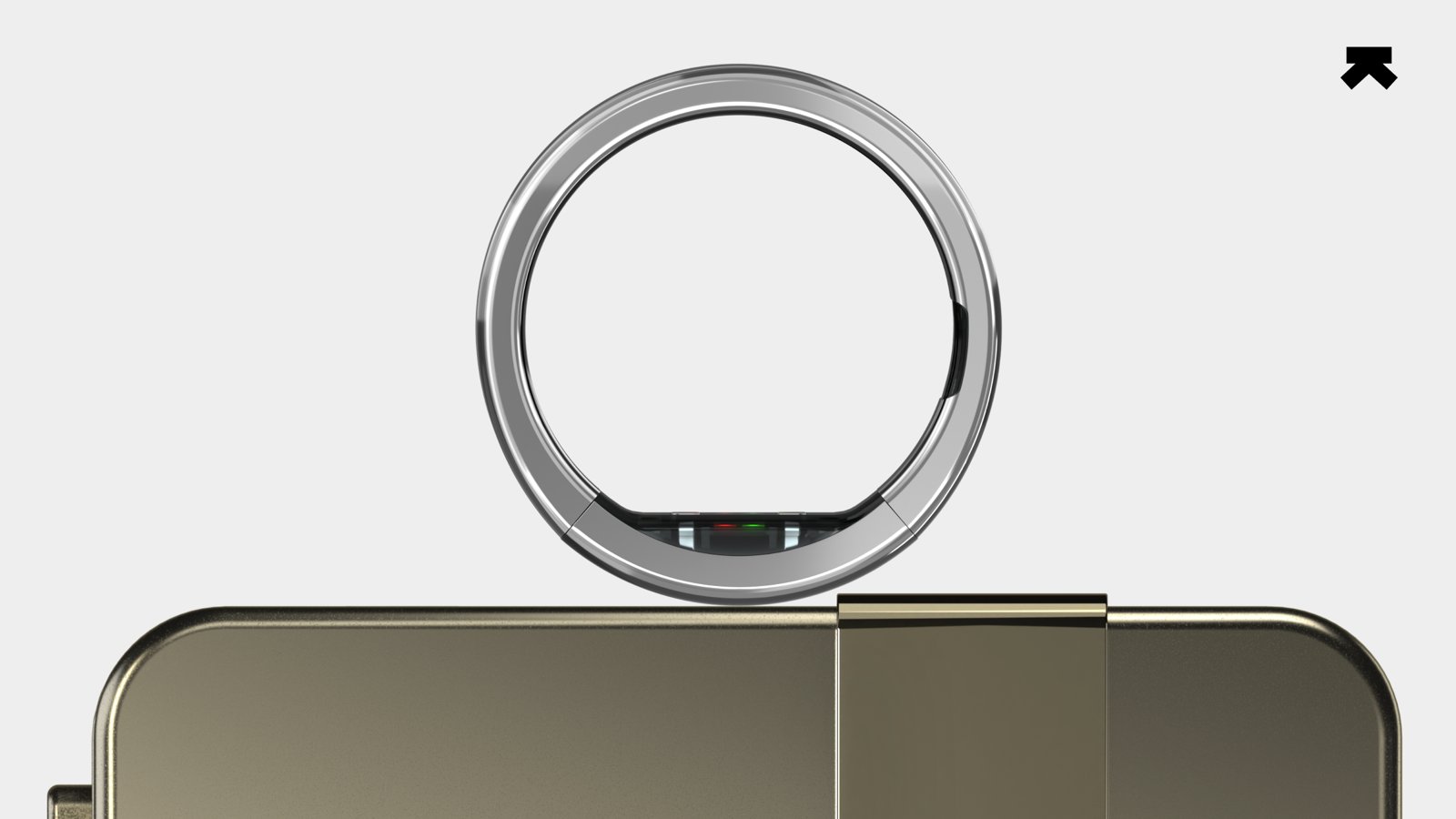
Ultrahuman Ring Pro Review 2026: $479 Price, 15-Day Battery, No Subscription, HSA/FSA Status
Ultrahuman’s comeback ring promises 15 days on a charge, no subscription and an on-demand heart rhythm check. The battery claim is easy to believe; the health claims rest almost entirely on studies of other rings.
Presented By Our Partners



Ultrahuman unveiled the Ring Pro in February 2026 while it was still barred from the US market after a patent fight with Oura (TechCrunch). After US Customs cleared the redesigned ring, US pre-orders opened in March 2026 at $479 with no subscription (Ultrahuman, TechCrunch). On October 22, 2026, Oura filed a new lawsuit seeking to block US sales again (TechCrunch), and Ultrahuman says the ring stays on sale (the5krunner).
First look. No peer-reviewed study has tested the Ultrahuman Ring Pro, and we found no independent validation of any Ultrahuman ring against a sleep lab, ECG or reference oximeter; a PubMed search on October 27, 2026 found one company-authored observational paper. The accuracy section therefore leans on studies of other finger rings, mostly Oura, which use similar sensors. Ultrahuman’s own algorithms may perform better or worse.
The short answer: The Ultrahuman Ring Pro is a $479 titanium smart ring with up to 15 days of battery, a charging case and no subscription. Finger rings as a category track sleep versus wake and overnight heart rate well, with sleep detection above 94 percent in a 96-person polysomnography study of Oura. But no study has tested Ultrahuman’s own sleep, heart rate variability or rhythm algorithms, so treat its numbers as trends.
- Best for: people who want a screen-free sleep and recovery tracker without a monthly fee, and who hate charging devices.
- Not for: anyone who wants independently validated accuracy, a continuous AFib monitor, or certainty about long-term US availability while the Oura case is pending.
- Price (October 2026): $479, no subscription.
- Regulatory status: TechCrunch reported in July 2024 that Ultrahuman’s AFib detection for the Ring Air received FDA approval; it is built with FibriCheck. We found no FDA clearance specific to the Ring Pro or its Heart Scan feature. Sleep, recovery and Jade AI features are wellness tools.
- Evidence: Moderate for finger-ring sleep and overnight heart rate as a category; limited for sleep stages and heart rate variability in older adults; none published for the Ring Pro or for Ultrahuman’s algorithms specifically.
What Is the Ultrahuman Ring Pro?
The Ultrahuman Ring Pro is a titanium smart ring from Ultrahuman, an Indian wearables company, launched in 2026 as its third-generation ring. Like Ultrahuman’s earlier rings, it tracks sleep, heart rate, heart rate variability, skin temperature and activity, adds an on-demand Heart Scan rhythm check and an AI assistant called Jade, and charges from a case that stores extra power.
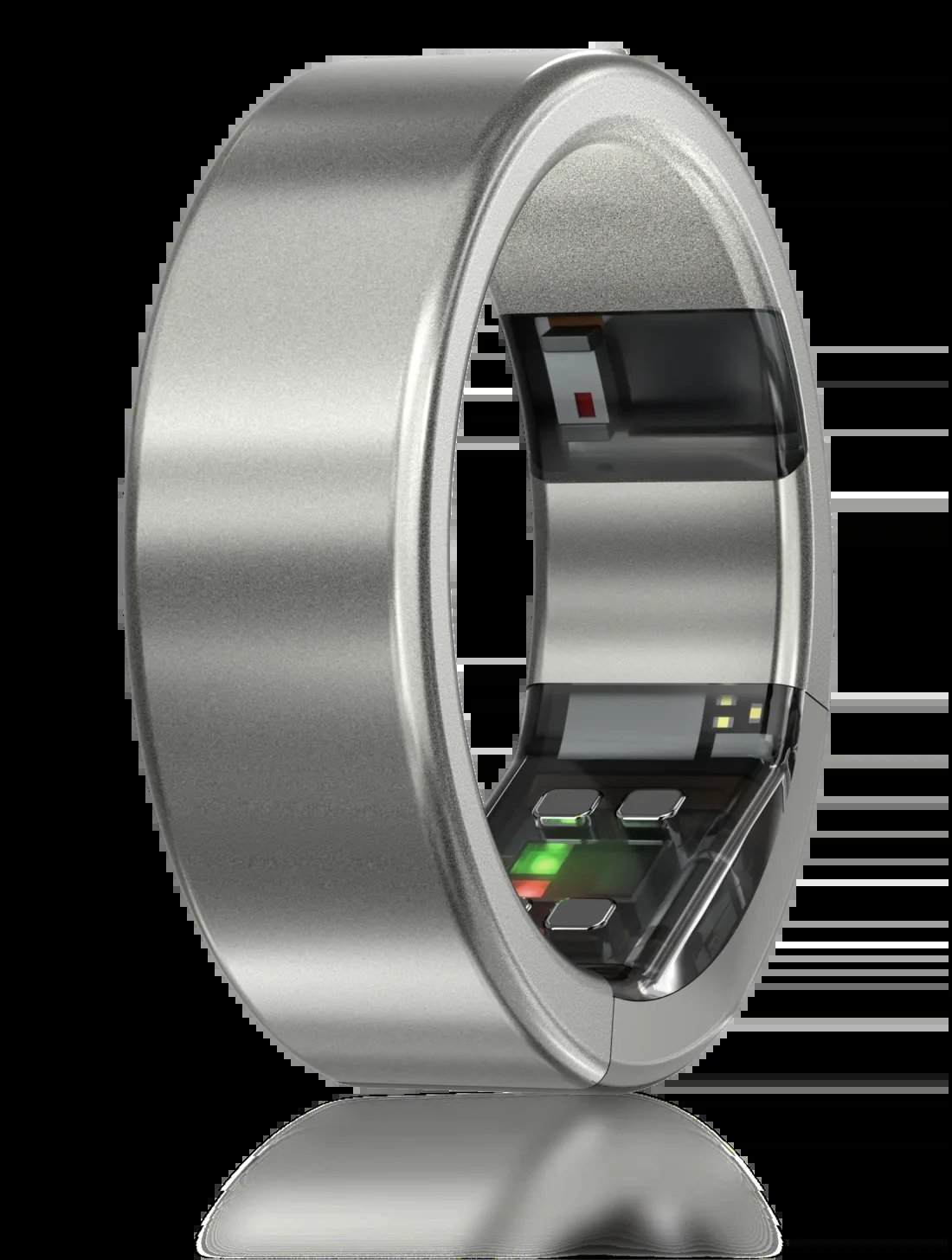
Ultrahuman’s launch release calls the 15-day battery category-defining and describes Jade as real-time biointelligence AI (Ultrahuman). Heart Scan is a 60-second on-demand rhythm check (Android Central), and Wareable reported that Ring Pro and Ring Air owners can now run free AFib spot checks through FibriCheck (Wareable).
Reviews are mixed. Digital Trends wrote that the Ring Pro makes every other smart ring look overpriced, while Engadget headlined that the future of smart rings looks a lot like its present, and T3 said superb battery life cannot hide its biggest problem. Notebookcheck’s first test results found major strengths and weaknesses.
Can your doctor see this data? Partly, if you share it. Ultrahuman can pull your medical records into its app; no clinician portal confirmed.
How Does the Ultrahuman Ring Pro Work?
The Ring Pro reads the body through light, temperature and motion at the base of the finger. Optical sensors on the inside of the band track each pulse for heart rate and heart rate variability, a temperature sensor tracks overnight skin temperature, and an accelerometer tracks movement, which together let the ring estimate sleep stages, recovery and activity.
The finger is a good place for these sensors. Arteries run close to the surface, the ring sits snugly, and at night your hand is still, so the pulse signal is often cleaner than at the wrist. That is why rings tend to do well on overnight heart rate and heart rate variability, and why most of their value comes from sleep.
Heart Scan works differently from a watch ECG. You hold still for 60 seconds while the optical sensor records the pulse, and an algorithm judges whether the rhythm looks like atrial fibrillation. Because it measures pulse rather than the heart’s electrical signal, it cannot show the ECG tracing a cardiologist would use to confirm a diagnosis.
How Accurate Is the Ultrahuman Ring Pro? What the Research Shows
No study has tested the Ring Pro or any Ultrahuman algorithm against a reference standard. Studies of other rings, mostly Oura, show sleep versus wake detection above 94 percent and overnight heart rate and heart rate variability close to ECG in younger adults, with weaker sleep staging in people with sleep disorders and in older adults.
Ultrahuman’s own research. The one Ultrahuman ring paper on PubMed analyzed 442 users over 12 months and found its Cardio Age estimate averaged 1.84 years younger than chronological age, with better sleep linked to younger scores. All seven authors work for Ultrahuman, the ring model is not stated, and the study did not test accuracy against any reference (PMID 42483428).
Sleep, from studies of Oura. In 96 adults tracked across 421,045 epochs of home polysomnography, the Oura Ring Gen3 detected sleep with 94.4 to 94.5 percent sensitivity and 73.0 to 74.6 percent specificity (PMID 38382312). A Brigham and Women’s study of 35 adults found sleep detection sensitivity of at least 95 percent for Oura, Fitbit and Apple, with Oura staging sensitivity of 76.0 to 79.5 percent (PMID 39460013), and a meta-analysis of six studies with 388 participants found Oura total sleep time within about 3 minutes of sleep studies on average (PMID 41230431). Results were weaker in harder groups: among sleep lab patients, four-stage accuracy was 53.18 percent for Oura (PMID 40108409), and in older adults Oura underestimated total sleep by 75.5 minutes and overestimated deep sleep by 71.5 minutes (PMID 41768372). A Singapore study of 60 adults found an EEG headband still beat the ring for staging (PMID 38087674).
Overnight heart rate and heart rate variability. Over 536 nights in 13 adults, the Oura Gen4 tracked nightly heart rate variability against ECG with a concordance of 0.99 and an average error of 5.96 percent, better than WHOOP and Polar in the same study (PMID 40834291). An earlier Oura-affiliated study of 49 adults found correlations of 0.996 for heart rate and 0.980 for heart rate variability (PMID 32217820). Age matters: in a study of 114 adults, more than half of those aged 45 and older had heart rate variability errors above 10 percent (PMID 39686012).
Featured Partner
Invest in the Infrastructure Behind Modern Medicine
As healthcare expands beyond hospital walls, the buildings and campuses supporting that shift are generating compelling returns for investors who move early. The Healthcare Real Estate Fund offers qualified investors direct access to a curated portfolio of medical office, outpatient, and specialty care facilities.
Learn More →
Temperature, oxygen and rhythm. Oura’s temperature method detected 96.4 percent of ovulations across 1,155 cycles in a study written by Oura staff (PMID 39889300). A different ring oximeter flagged obstructive sleep apnea with 87 percent sensitivity and 83 percent specificity in 207 adults (PMID 36003191), and a ring built for rhythm detection identified atrial fibrillation with 99.0 percent sensitivity and 94.3 percent specificity in 100 cardioversion patients (PMID 32348254). These show what ring sensors can do, not what the Ring Pro does.
Company ties: the Cardio Age paper is by Ultrahuman staff (PMID 42483428); the 2020 heart rate study and the ovulation study list Oura authors (PMID 32217820, PMID 39889300); the rhythm ring study lists authors from Sky Labs, the device’s maker (PMID 32348254); and one author of the sleep lab study works for Mentalab (PMID 40108409). Oura is also suing Ultrahuman. PubMed affiliations are not a full disclosure of funding or conflicts.
What the Ultrahuman Ring Pro Gets Right
The Ring Pro gets the practical things right: a battery that lasts about two weeks, no subscription on top of the price, and a form factor that suits overnight tracking, where finger rings as a category perform best.
Battery and charging. Up to 15 days on the ring, plus a charging case, means fewer gaps in sleep data. The Watches Geek headlined its review as the smart ring that lasts two months without a wall outlet, counting the case.
No membership fee. At $479 with no subscription, the Ring Pro costs less over two or three years than rings that charge a monthly fee, a point Tom’s Guide and Digital Trends both stressed.
A strong sensor position. Finger rings have some of the best overnight heart rate variability results of any consumer wearables (PMID 40834291), which makes recovery trends more meaningful than at the wrist.
Where the Ultrahuman Ring Pro Falls Short
The weaknesses are a total lack of independent validation for Ultrahuman’s algorithms, an AFib check that only works when you run it, sleep staging that weakens in older adults and people with sleep disorders, and legal uncertainty over US sales.
No independent evidence. Every accuracy figure above comes from other rings. Until researchers test the Ring Pro against polysomnography and ECG, its accuracy is borrowed, not shown.
Heart Scan is a spot check. A 60-second scan catches atrial fibrillation only if it is happening while you scan. Paroxysmal atrial fibrillation comes and goes, so a normal result does not rule it out, and a ring pulse reading cannot replace an ECG.
Sleep stages are estimates. Errors of more than an hour for total and deep sleep in older adults (PMID 41768372) and about 53 percent staging accuracy in sleep lab patients (PMID 40108409) mean stage breakdowns are rough.
US availability is contested. Ultrahuman returned to the US after a 2025 import ban, and Oura’s October 2026 suit asks a court to block the Ring Pro again. A court ruling could affect future sales.
Ultrahuman Ring Pro vs Oura Ring 5 vs Apple Watch Ultra 4 vs Pixel Watch 5
The Ring Pro’s closest rival is the Oura Ring 5, which has far more published research but charges a membership. Smartwatches such as the Apple Watch Ultra 4 and Pixel Watch 5 add screens, GPS and FDA-cleared continuous rhythm alerts, at the cost of nightly charging and more bulk in bed.
| Feature | Ultrahuman Ring Pro | Oura Ring 5 | Apple Watch Ultra 4 | Pixel Watch 5 |
|---|---|---|---|---|
| Form | Smart ring | Smart ring | Rugged smartwatch | Smartwatch |
| Phone | iPhone or Android | iPhone or Android | iPhone | Android |
| Rhythm check | 60-second Heart Scan; no Ring Pro FDA clearance found | Not verified for this review | FDA cleared alerts and ECG | FDA cleared alerts and ECG |
| Independent accuracy studies | None found | Many, on earlier generations | Many, on earlier models | Several, on earlier models |
| Subscription | None | Membership required for full features | None | Optional |
| Price (October 2026) | $479 | From $399, plus membership | $799 at launch | From $399 |
See our Oura Ring 5 price and blood pressure guide for the main rival, and our earlier look at the Ultrahuman Ring Air and its CGM integration. For watches, see our Apple Watch Ultra 4 review and Pixel Watch 5 review. For a rugged Android watch, see our Galaxy Watch Ultra 2 review. Every device we track is in our healthtech wearables guide.
How Much Does the Ultrahuman Ring Pro Cost, and Is It HSA or FSA Eligible?
The Ultrahuman Ring Pro costs $479 in the US with no subscription (Hub71). Ultrahuman runs an HSA and FSA page for US buyers (Ultrahuman), and the Ring Pro is listed with Flex, a service that handles HSA and FSA checkout (Flex), but we found no confirmation that it qualifies as a standard HSA or FSA purchase.
Checkout through a service like Flex may involve a short health survey and a letter of medical necessity. Ask your plan administrator before assuming it qualifies, and do not expect insurance to cover it.
Who Should Buy the Ultrahuman Ring Pro, and Who Should Skip It?
The Ring Pro suits people who want sleep and recovery trends from a comfortable ring, long battery life and no monthly fee, and who accept that its accuracy is inferred from other rings. It is a poor fit for anyone who needs validated numbers, continuous AFib screening or a diagnosis.
Good candidates:
- Sleep and recovery trackers who dislike wearing a watch in bed.
- People who forget to charge devices, or travel often.
- Buyers who want to avoid a subscription.
Better served by something else:
- Chest pain, fainting, or a racing heart with shortness of breath: that is an emergency. Call 911; do not run a ring scan.
- People at risk of atrial fibrillation: a watch with FDA-cleared continuous rhythm alerts and an ECG, or a clinician-ordered monitor, is a better tool.
- Anyone who suspects sleep apnea or insomnia: a sleep study, not a ring, gives a diagnosis.
- Buyers who want the most published research behind their ring: Oura has far more.
If a reading sends you looking for a sleep specialist or cardiologist, the Healthcare Discovery doctor directory lists clinicians by state and specialty.
What This Means for You
A smart ring’s real value is a steady record of how you sleep and recover, night after night. On that measure, the Ring Pro’s long battery and lack of a subscription are genuine advantages, because the best tracker is the one you keep wearing. For the wider picture of what drives heart risk, see our heart health evidence review.
What the Ring Pro lacks is proof. Treat its sleep stages, readiness scores and Cardio Age as trends, use Heart Scan as a prompt rather than reassurance, and see a clinician about any symptom that worries you. If independent validation matters most to you, wait for studies or choose a device that has them.
Compiled by Healthcare Discovery from the cited PubMed studies and Ultrahuman’s launch materials. Every PMID, study size and result on this page was checked against PubMed on October 27, 2026. Launch, price, legal and review details come from the named publications’ headlines and listings and were not independently tested. This is a first look; no Healthcare Discovery hands-on testing was done.
Is the Ultrahuman Ring Pro accurate?
No peer-reviewed study has tested the Ring Pro or any Ultrahuman algorithm against a sleep lab or ECG as of October 2026. Studies of other rings, mostly Oura, show sleep detection above 94 percent (PMID 38382312) and overnight heart rate variability close to ECG in younger adults (PMID 40834291).
Does the Ultrahuman Ring Pro need a subscription?
No. The Ring Pro costs $479 in the US with no subscription required.
How long does the Ultrahuman Ring Pro battery last?
Ultrahuman rates it at up to 15 days on the ring, and the charging case stores extra power. Healthcare Discovery has not tested battery life.
Can the Ultrahuman Ring Pro detect AFib?
Its Heart Scan feature runs a 60-second on-demand rhythm check built with FibriCheck. It only checks while you scan, and we found no FDA clearance specific to the Ring Pro. A normal result does not rule out atrial fibrillation.
Is the Ultrahuman Ring Pro HSA or FSA eligible?
Ultrahuman offers HSA and FSA payment options and the ring is listed with Flex, but we found no confirmation that it qualifies as a standard purchase. A letter of medical necessity may be needed, so check with your plan administrator.
Is the Ultrahuman Ring Pro still sold in the US?
Yes, as of late October 2026. Oura filed a new lawsuit on October 22, 2026 seeking to block US sales, and Ultrahuman says the Ring Pro remains on sale while the case proceeds.
Sources
- Shanmugam A, et al. Wearable-derived cardiovascular fitness age and its lifestyle correlates in 442 adults. Frontiers in Digital Health, 2026. PMID 42483428
- Svensson T, et al. Validity and reliability of the Oura Ring Generation 3 with Oura sleep staging algorithm 2.0 when compared to multi-night ambulatory polysomnography. Sleep Medicine, 2024. PMID 38382312
- Robbins R, et al. Accuracy of three commercial wearable devices for sleep tracking in healthy adults. Sensors, 2024. PMID 39460013
- Ong JL, et al. Selecting a sleep tracker from EEG-based, iteratively improved, low-cost multisensor, and actigraphy-only devices. Sleep Health, 2023. PMID 38087674
- Herberger S, et al. Performance of wearable finger ring trackers for diagnostic sleep measurement in the clinical context. Scientific Reports, 2025. PMID 40108409
- Searles ME, et al. Performance evaluation of consumer sleep-tracking wearables and nearables in healthy young and older adults. Sleep Advances, 2026. PMID 41768372
- Khan S, et al. The Oura Ring versus medical-grade sleep studies: a systematic review and meta-analysis. OTO Open, 2025. PMID 41230431
- Dial MB, et al. Validation of nocturnal resting heart rate and heart rate variability in consumer wearables. Physiological Reports, 2025. PMID 40834291
- Kinnunen H, et al. Feasible assessment of recovery and cardiovascular health: accuracy of nocturnal HR and HRV assessed via ring PPG in comparison to medical grade ECG. Physiological Measurement, 2020. PMID 32217820
- Liang T, et al. Deriving accurate nocturnal heart rate, rMSSD and frequency HRV from the Oura Ring. Sensors, 2024. PMID 39686012
- Thigpen N, et al. Oura Ring as a tool for ovulation detection: validation analysis. Journal of Medical Internet Research, 2025. PMID 39889300
- Zhao R, et al. Comparison of ring pulse oximetry using reflective photoplethysmography and PSG in the detection of OSA in Chinese adults: a pilot study. Nature and Science of Sleep, 2022. PMID 36003191
- Kwon S, et al. Detection of atrial fibrillation using a ring-type wearable device (CardioTracker) and deep learning analysis of photoplethysmography signals. Journal of Medical Internet Research, 2020. PMID 32348254
- Ultrahuman. Ultrahuman unveils Ring PRO, with category-defining 15-day battery and Jade, world’s first real-time biointelligence AI. Ultrahuman
- Ultrahuman. Ultrahuman is back in the US: Ring Pro open for pre-orders. Ultrahuman
- Ultrahuman. HSA and FSA. Ultrahuman
- Flex. Ultrahuman Ring Pro. Flex
- TechCrunch. Ultrahuman unveils new smart ring as it awaits U.S. clearance after Oura dispute, February 2026. TechCrunch
- TechCrunch. Ultrahuman ramps up U.S. push with Ring Pro as Oura tightens grip, March 2026. TechCrunch
- TechCrunch. Oura sues rival Ultrahuman again, threatening its U.S. smart ring comeback, October 2026. TechCrunch
- the5krunner. Ultrahuman says Ring Pro stays on US sale, October 2026. the5krunner
- TechCrunch. Ultrahuman’s smart ring gets FDA-approved AFib detection, July 2024. TechCrunch
- Android Central. Ultrahuman’s Heart Scan for Ring PRO needs only sixty seconds for crucial insights. Android Central
- Wareable. Ultrahuman smart ring users can now get free on-demand AFib spot checks. Wareable
- Hub71. Ultrahuman launches $479 Ring Pro with 15-day battery life to re-enter US market after Oura patent dispute. Hub71
- Engadget. Ultrahuman Ring Pro review: the future of smart rings looks a lot like its present. Engadget
- T3. Ultrahuman Ring Pro review: superb battery life can’t hide its biggest problem. T3
- Digital Trends. Ultrahuman Ring Pro is back in the US and it makes every other smart ring look overpriced. Digital Trends
- Notebookcheck. Ultrahuman Ring Pro: first test results reveal major strengths and weaknesses. Notebookcheck
- The Watches Geek. Ultrahuman Ring Pro review 2026: the smart ring that lasts two months without a wall outlet. The Watches Geek


Similar Posts

OpenAI, Anthropic and Google in Biotech: The 2026 Deal Tracker
Every verified life sciences move by OpenAI, Anthropic and Google in 2026, from Orchestra Bio and Coefficient Bio to Isomorphic Labs, Chai Discovery, Lila Sciences and the AI scientists, with…
Peri: First Wearable Device Purpose-Built for Perimenopause Symptom Tracking
A palm-sized adhesive sensor worn on the upper abdomen that continuously tracks hot flashes, night sweats, anxiety, sleep patterns, menstrual cycles, and activity levels to give women objective biometric data…

Whil Mindfulness: Enterprise-Grade Meditation and Resilience Training for the Workplace
How a purpose-built enterprise mindfulness platform differs from consumer meditation apps, and what the workplace wellness research actually supports Presented By Our Partners A 2025 analysis published by Carnegie Mellon…

Time-Restricted Eating in 2026: What Circadian Science Reveals About When You Eat
A new wave of circadian biology research from Satchin Panda, Courtney Peterson, and the NIH is reshaping how scientists think about meal timing. Time-restricted eating influences glucose, blood pressure, autophagy,…

The Daily Rounds: Longevity & Health Care Brief | April 29, 2026
🧫 Harvard Links Gut Bacteria to Depression via Inflammation: Morganella morganii produces a modified phospholipid that activates IL-6-driven immune inflammation, establishing a direct molecular pathway from gut bacteria to depression and creating new immune-targeted treatment targets. 🏥 FDA Launches Real-Time Clinical Trial Pilot: AstraZeneca and Amgen are feeding live trial data directly into FDA review systems in a landmark program that could compress cancer drug approval timelines by months and reshape how all clinical trials are conducted. 🌙 Fragmented Circadian Rhythms Accelerate Brain Shrinkage: Johns Hopkins researchers found that weaker daily rest-activity patterns in adults over 50 are directly tied to faster loss of memory-critical brain volume, making circadian health a modifiable and measurable neurodegeneration target. 😴 Chronic Insomnia Raises Dementia Risk by 40%: A six-year study of more than 2,700 adults links persistent insomnia to significantly greater amyloid buildup and white matter damage, reinforcing sleep quality as a primary dementia prevention strategy. 💰 Eli Lilly Bets $2.75 Billion on AI Drug Discovery: The massive Insilico Medicine commitment signals that major pharmaceutical companies now treat AI-designed drug candidates as legitimate pipeline assets, accelerating capital flow into the AI biotech sector ahead of critical Phase II readouts.
The 12-Hour Calm: What the 2025 Cold Water Immersion Evidence Really Says About Stress, Sleep, and Recovery
A 2025 PLOS One meta-analysis shows cold water immersion can cut stress for about 12 hours and aid sleep and recovery. Here is what the science says and how to…
