

The Ten Second Test: Why Balance Predicts How Long You Live, and Why Walking Alone Will Not Save It
Balance collapses before almost anything else does, and the ability to stand on one leg for ten seconds predicts survival. The uncomfortable part: the exercise most often prescribed to fix it has never been shown to work.
Presented By Our Partners



Stand on one leg. Do not hold anything. Count to ten.
If you cannot do it, you belong to a group that, in a twelve year Brazilian cohort study, died at nearly four times the rate of the group that could. Researchers followed 1,702 adults aged 51 to 75 and asked them to complete a ten second one legged stance. Roughly one in five failed. Over a median of seven years, 4.6 percent of those who passed died, compared with 17.5 percent of those who failed. After adjusting for age, sex, body mass index, and existing illness, the inability to hold the stance was still associated with an 84 percent higher risk of death from any cause (Araujo and colleagues, British Journal of Sports Medicine, 2022).
That is not a story about legs. It is a story about a whole physiology reporting in at once.
Balance Is Not a Skill. It Is a Status Report on Four Systems
Standing still is one of the most computationally demanding things the nervous system does, and it does it invisibly. Staying upright requires continuous negotiation between four systems working in millisecond coordination.
The vestibular system in the inner ear detects head position and acceleration. The visual system supplies a reference frame for where vertical actually is. The proprioceptive system, a dense web of position sensors in the joints, muscles, and feet, reports where the limbs are without looking. And the central nervous system integrates all three, predicts the next disturbance, and dispatches a correction before conscious awareness catches up.
Each of these degrades on its own schedule. Vestibular hair cells decline. Distance vision and contrast sensitivity fade. Peripheral nerve conduction slows, and in diabetic neuropathy it fails outright. Muscle power, distinct from raw strength, drops faster than strength does, which matters because balance recovery is a power problem measured in fractions of a second.
This is why balance is such a ruthless biomarker. It cannot be faked, and it cannot be compensated for by a single strong system. It is a composite score. When it slips, several systems are aging together, which is precisely why it tracks mortality rather than merely tracking falls.
The Stakes Are Not Abstract
According to the Centers for Disease Control and Prevention, more than one in four adults aged 65 and older falls each year, which works out to over 14 million Americans. Falls generate roughly three million emergency department visits annually and approximately one million hospitalizations. Around 319,000 older adults are hospitalized for hip fractures each year, and falls are the mechanism behind the overwhelming majority of hip fracture deaths. Falls are also the single most common cause of traumatic brain injury in this age group.
Fall death rates among older adults have risen sharply over the past decade, even as the same rates in younger populations have stayed comparatively flat. This is not a marginal problem at the edge of geriatrics. It is one of the largest preventable sources of lost independence in medicine.
The Standard Advice, and Why It Does Not Survive Contact With the Data
Open almost any consumer health guide on balance and you will find the same recommendation: walk more. Walking builds lower body strength, the reasoning goes, and lower body strength supports balance. It is safe, free, and it counts toward aerobic activity targets.
Every part of that reasoning is appealing. The trial evidence does not support the conclusion.
The definitive analysis is the 2019 Cochrane review led by Catherine Sherrington, which pooled 108 randomized trials of exercise for fall prevention in community dwelling older adults. It sorted interventions by type, and the results diverge sharply.
Programs built primarily on balance and functional exercises reduced the rate of falls by 24 percent, drawn from 39 studies and 7,920 participants. Cochrane graded that finding high certainty, its top tier. Programs combining multiple exercise types, typically balance and functional work plus resistance training, probably reduced falls by 34 percent. Tai chi reduced the number of people who fall by 20 percent, also rated high certainty.
And walking? The review’s conclusion is blunt. The authors state that they are uncertain of the effects of walking programs on the rate of falls and on the number of people who fall. After decades of trials, walking has not earned a verdict. It has earned a shrug.
It Gets Worse: Walking May Actively Dilute the Effect
This is the finding that should reframe the entire conversation, and it has been sitting in the literature for nearly twenty years.
When Sherrington’s team ran meta-regressions to identify which program features drove the largest reductions in falls, they found three variables that mattered. The largest effects came from programs that challenged balance, delivered a high total dose, and did not include a walking program (Sherrington and colleagues, Journal of the American Geriatrics Society, 2008). Programs meeting those criteria cut fall rates by roughly 42 percent. The 2011 update reached the same conclusion. The 2017 update, spanning 89 trials and nearly 20,000 participants, found that challenging balance combined with more than three hours per week of training explained 76 percent of the variation between trials and together produced a 39 percent reduction in falls.
Adding walking to a balance program did not add benefit. In the models, it subtracted from it.
The most direct evidence comes from a 1997 randomized placebo controlled trial. Researchers assigned 165 women with a history of upper limb fracture to either self paced brisk walking or upper limb exercises. The walking group gained a modest amount of bone mineral density. They also fell more. The excess risk of falls in the brisk walking group reached 15 per 100 person years (Ebrahim and colleagues, Age and Ageing, 1997). A separate randomized trial of six months of walk training in sedentary older women found no measurable improvement in postural control at all.
The Exposure Paradox
The mechanism behind this is not mysterious once stated plainly, and it deserves a name: the exposure paradox.
Walking increases the number of hours a person spends upright, mobile, and moving through unpredictable environments. That is exactly the exposure window in which falls occur. If the intervention raises exposure without raising the capacity to survive a perturbation, the arithmetic runs the wrong way. You have given someone more opportunities to fall without giving them a better recovery response.
Featured Partner
Invest in the Infrastructure Behind Modern Medicine
As healthcare expands beyond hospital walls, the buildings and campuses supporting that shift are generating compelling returns for investors who move early. The Healthcare Real Estate Fund offers qualified investors direct access to a curated portfolio of medical office, outpatient, and specialty care facilities.
Learn More →
Consider what walking actually trains. It is a rhythmic, largely predictable, sagittal plane activity. The body cycles through a movement pattern it has repeated hundreds of millions of times. The base of support stays wide. The center of mass follows a groove. Steady state gait is, neurologically speaking, close to automated.
Now consider what a fall actually is. Falls do not happen during steady state gait. They happen when steady state gait is interrupted: a trip on a curb, a slip on a wet tile, a misjudged step, a dog crossing the path. Trips alone account for somewhere between 29 and 53 percent of falls in older adults. In that moment, the body needs a fast, large, reactive step, applied in an unplanned direction, with enough limb power to arrest a center of mass that has already left the base of support.
Walking never rehearses that. It rehearses the opposite. The two capacities are neurologically distinct, and training one does not deliver the other.
What Actually Works: Three Rules
The intervention literature converges on three requirements. They are unglamorous and specific.
Rule one: the training must genuinely challenge balance. In the research coding schemes, this has a precise definition. The exercise is performed standing. It reduces the base of support, so feet together, then heel to toe, then one leg. It minimizes use of the hands for support. And it requires controlled movement of the center of mass, meaning you deliberately move to the edge of stability rather than parking in the middle of it. If it feels easy, it is not the intervention. The wobble is the stimulus.
Rule two: the dose must be at least three hours per week. This is where most people fail. The threshold is not casual. It is the level at which the meta-regression effects appear.
Rule three: it must be ongoing. Effective trial programs ran twelve weeks at minimum, and nearly a third ran a year or longer. Balance is a use it or lose it adaptation. It decays when training stops.
Here is the sobering part. When researchers surveyed 140 community fall prevention exercise programs across Canada and coded them against these three rules, 95 percent hit the balance challenge criterion. Only 11 percent delivered three hours per week. Just 6 percent, eight programs out of 140, met all three. The evidence is settled. The delivery is not.
The Best Studied Intervention Is Roughly 800 Years Old
In a 2018 randomized clinical trial published in JAMA Internal Medicine, 670 adults aged 70 and older with a history of falls or impaired mobility were assigned to one of three arms: a therapeutically tailored tai ji quan program, a multimodal exercise program combining aerobic, strength, balance, and flexibility work, or a stretching control.
The tai ji quan group reduced falls by 58 percent compared with stretching. More striking, it reduced falls by 31 percent compared with the multimodal exercise program, which was itself an evidence based, proven intervention (Li and colleagues, JAMA Internal Medicine, 2018).
Tai chi is not winning because it is ancient or serene. It is winning because it is a near perfect delivery vehicle for rule one. It is continuous weight shifting, single leg loading, rotational movement, and controlled center of mass excursion, performed slowly enough that the nervous system is forced to do the postural work rather than outsourcing it to momentum. It is balance training that happens to look like a discipline.
This is the bridge that defines our editorial thesis. An ancestral practice, refined over centuries by trial and error, outperforms a modern multimodal exercise prescription in a randomized controlled trial. The tradition encoded something real. The trial simply measured it.
The Missing Layer: Training the Recovery, Not Just the Stance
There is a newer and more provocative approach. If falls are caused by unexpected perturbations, why not train the response to unexpected perturbations directly?
Perturbation based balance training does exactly that. Participants are subjected to controlled, repeated slips and trips, typically on a specialized treadmill or with a safety harness, and their reactive stepping response is trained through repetition. Systematic reviews report reductions in laboratory induced falls of well over half, and reductions in real world falls that in some analyses approach 50 percent, achieved with substantially less training volume than conventional programs require.
The most encouraging detail in this literature: the capacity to learn reactive balance adaptation does not appear to decline meaningfully with age. The system is trainable. It has simply not been trained.
This modality is not yet widely available outside research settings and specialized physical therapy clinics, and the evidence base is younger than the balance training evidence base. But it points toward where fall prevention is heading, and it is a category worth asking a physical therapist about by name.
Why This Belongs in the Longevity Conversation
Balance failure is not a separate problem sitting off to the side of chronic disease. It sits downstream of the Four Villains of Health and Longevity, and it accelerates them.
The Mind Thief connection is the most direct. Postural control and gait draw on executive function, and the evidence for this is strong. Dual task gait performance, meaning how much your walking degrades when you are asked to count backward at the same time, predicts progression from mild cognitive impairment to dementia (Montero-Odasso and colleagues, JAMA Neurology, 2017). Clinicians have a saying rooted in real data: the person who stops walking to answer a question is at higher risk than the person who keeps walking. Motoric cognitive risk syndrome, defined by slow gait plus subjective memory complaint, is now recognized as a pre-dementia state. And because falls are the leading cause of traumatic brain injury in older adults, the arrow points both directions.
The Silent Assassin appears in the causal chain too. The 2022 World Falls Guidelines list orthostatic hypotension and cardiac rhythm disturbance among the domains that must be assessed in anyone at high fall risk (Montero-Odasso and colleagues, Age and Ageing, 2022). A fall is sometimes the first visible symptom of a cardiovascular problem that has been silent until the moment the floor arrives.
Then there is the cascade itself. A hip fracture triggers immobilization. Immobilization accelerates sarcopenia and insulin resistance, which is the Energy Arsonist’s preferred terrain. Deconditioning follows. And underneath all of it runs a psychological loop that is itself an independent risk factor: fear of falling. The 2022 World Falls Guidelines recommend formally assessing it, because fear drives activity restriction, activity restriction drives deconditioning, deconditioning drives real physical decline, and decline validates the fear. The spiral is self sealing, and it is often set in motion by a single fall that did no lasting orthopedic damage at all.
What This Means for You
None of this is an argument against walking. Walking has a deep and well established evidence base for cardiovascular health, metabolic control, and all cause mortality, and this publication has covered that evidence at length. Keep walking. Walking is not the problem.
The problem is the substitution. Walking is being prescribed as a balance intervention, and on that specific question, the evidence does not support it. Aerobic exercise and balance training are different prescriptions for different physiological problems. Doing one does not buy you the other.
A practical protocol, drawn from the three rules:
Test yourself honestly. Ten second one legged stance, no support, both sides. Do it near a countertop, not near a staircase. If you cannot hold it, that is information, not a verdict. It is one of the most trainable deficits in medicine.
Build the habit into friction points you already have. Single leg stance while brushing your teeth. Heel to toe walking down a hallway. Standing on one leg while the coffee brews. These are free, and they satisfy rule one if you resist the urge to hold on.
Then get serious about dose. Structured balance work, three hours per week, ongoing. Tai chi is the best evidenced delivery mechanism available to most people and is the highest leverage single change in this entire article. A twice weekly class plus home practice gets most people to the threshold.
Add resistance training, but do not let it substitute. Cochrane is explicit that resistance training without a balance component has uncertain effects on falls. It builds the engine. Balance training builds the steering. You need both. Our coverage of the strength training dose that lowers mortality and of grip strength as a longevity biomarker covers the engine side of this equation.
Audit the multipliers. Ask a physician or pharmacist to review medications that increase fall risk, including sedatives, antihypertensives, and anticholinergics. Get an eye exam, and be cautious with new multifocal lenses, which distort depth perception at exactly the moment you look down at a step. Ask about orthostatic hypotension if you feel lightheaded on standing.
Balance is the rare longevity variable that is both a powerful predictor and a fast responder. Most biomarkers take months to move. Postural control begins adapting within weeks. The ten second test is not a sentence. It is a starting line.
Frequently Asked Questions
Does the ten second one legged stance test prove that poor balance causes early death?
No. The Araujo study is observational, and the authors are explicit about this. It cannot establish causation, the cohort was composed of white Brazilians which limits generalizability, and data on falls history, physical activity, smoking, and diet were unavailable. What it establishes is that balance carries prognostic information beyond age, sex, body mass, and known illness. Balance is best understood as a readout of systemic aging rather than a lone cause of it.
Is walking bad for older adults?
No, and this is worth stating clearly. Walking has strong evidence for cardiovascular fitness, metabolic health, mood, and all cause mortality. The narrow claim is that walking has not been shown to prevent falls or improve postural control, and that in some trials in higher risk groups it has been associated with more falls. Walk for your heart and your metabolism. Train balance separately.
How much balance training do I actually need?
The evidence based target is at least three hours per week, ongoing, using exercises that genuinely challenge balance by narrowing the base of support and minimizing hand support. Programs shorter than twelve weeks show weaker effects, and effects fade once training stops.
Why does tai chi outperform general exercise programs?
Because it is, structurally, high quality balance training. It demands continuous weight shifting, single leg loading, and slow controlled movement of the center of mass to the limits of stability. In a 2018 randomized trial it reduced falls by 31 percent relative to a proven multimodal exercise program.
Is it too late to start if I am already unsteady?
No. Fall prevention trials show benefit in participants selected specifically for high fall risk, and the research on reactive balance suggests the capacity to learn balance recovery does not decline substantially with age. If you are already unsteady, train with supervision. Start near a countertop, and consider a referral to a physical therapist.
What is perturbation based balance training?
It is training that exposes you to controlled, repeated slips and trips in a safe environment so your nervous system learns the reactive stepping response that actually prevents a fall. It is currently limited mostly to research settings and specialized clinics, but the early fall reduction data are among the strongest in the field.
Should balance be tested at routine physicals?
The authors of the ten second stance study argue that it should be, and the 2022 World Falls Guidelines recommend that gait and balance be assessed as part of fall risk evaluation. It costs nothing, takes seconds, and no equipment is required. Most physicals still do not include it, so it is reasonable to ask for it.
For the broader case on movement and lifespan, see our reporting on what a decade of step count research actually shows, on VO2 max as the strongest single mortality predictor, and on why resistance training is becoming a front line therapy for cognitive aging.


Similar Posts

The Daily Rounds: Longevity & Health Care Brief | April 16, 2026
🔬 Senolytics Reduce Epigenetic Age: Lab data show senolytic compounds measurably lower biological age markers, with human pilot trials now exploring effects on mobility and cognition. 🧠 FTL1 Protein Drives Memory Decline: Scientists identified a specific protein that weakens brain cell connections with age, opening a new therapeutic target for cognitive preservation. 🤖 Novo Nordisk + OpenAI Partnership: The pharma giant is applying frontier AI to compress drug discovery timelines and accelerate patient access to novel medicines. 🦠 CAG-170 Bacteria Linked to Gut Health: A globally validated analysis found this rare bacterial group is a marker of health, producing B12 and stabilizing the gut ecosystem. 😴 Solar Jet Lag and Liver Cancer: A new federally backed study will probe whether circadian misalignment is an upstream cause of the most common form of liver cancer.
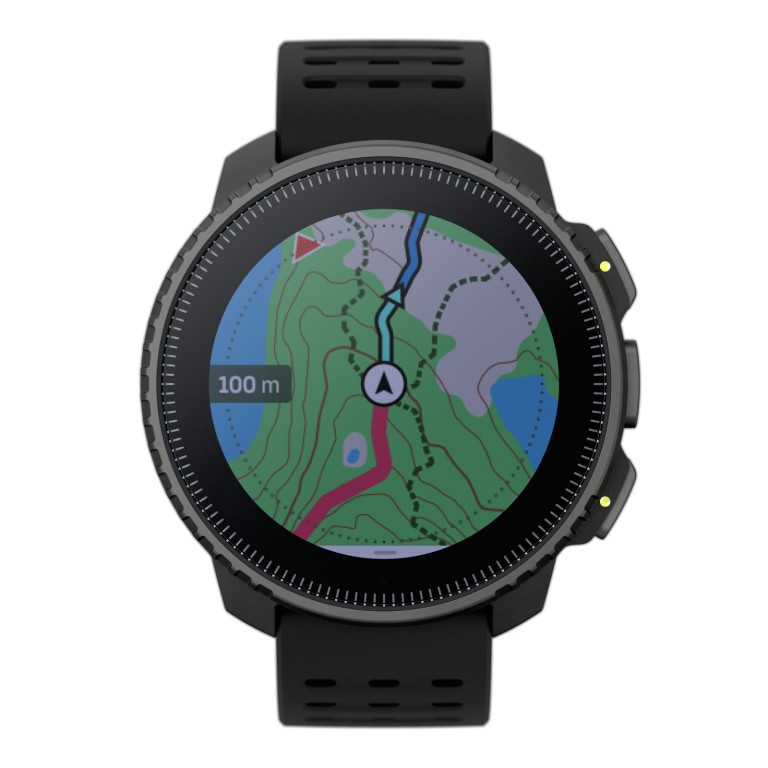
Suunto Vertical: Solar Charging Adventure Watch With Free Offline Maps and Dual Band GPS
Finland’s iconic outdoor watch brand delivers solar charging, dual band GPS, free offline topographic maps, and military grade durability in a package that spans $499 to $699 with no subscription…

The Missing Lipid: How Declining Phosphatidylcholine Shuts Down Your Cellular Power Grid
A landmark study from the Leibniz Institute on Aging identifies a specific membrane lipid as the upstream trigger for mitochondrial fragmentation — and shows that dietary intervention can reverse the…
The Daily Rounds: Longevity & Health Care Brief | June 14, 2026
🧠 Brain Plasticity Has No Age Ceiling — A 4,000-person, three-year UT Dallas study confirms cognitive performance can improve well into the 90s, making brain health a genuinely actionable target at every life stage. 🧠 Blood Cancer Mutations May Be a Missing Alzheimer's Mechanism — TET2, DNMT3A, and ASXL1 mutations in brain microglia create a destructive inflammatory environment in Alzheimer's tissue, opening a new door to both screening and repurposed cancer therapies. 🤖 A Vaccine Designed to End the Fentanyl Crisis — Scripps Research's cross-reactive fentanyl antibody platform blocks the drug before it reaches the brain and extends protection to designer analogs, with human trials already underway in 2026. 💪 GLP-1 Drugs Are Reducing Physical Activity, Not Increasing It — Fitbit data from ENDO 2026 shows step counts falling after GLP-1 initiation, making exercise counseling a critical and often missing element of metabolic treatment plans. 🥗 GLP-1 Drugs May Also Be Breast Cancer Prevention Tools — A 110,000-woman Penn Medicine cohort study found 30% lower breast cancer incidence in GLP-1 users, with a multisite prevention trial now being planned.

Airofit PRO Respiratory Trainer Review: App Guided Breathing Muscle Training for Athletes and Respiratory Health
The Airofit PRO combines adjustable respiratory resistance with real time Bluetooth biofeedback to strengthen the muscles that power every breath you take. Presented By Our Partners The diaphragm is the…
Polar Vantage V2: Lightweight Multisport Watch With Professional Grade Training Load and Recovery Analytics
Polar’s flagship multisport watch brings over four decades of heart rate science expertise to endurance athletes, delivering training load management, running power, and recovery analytics that rival lab grade coaching…
