
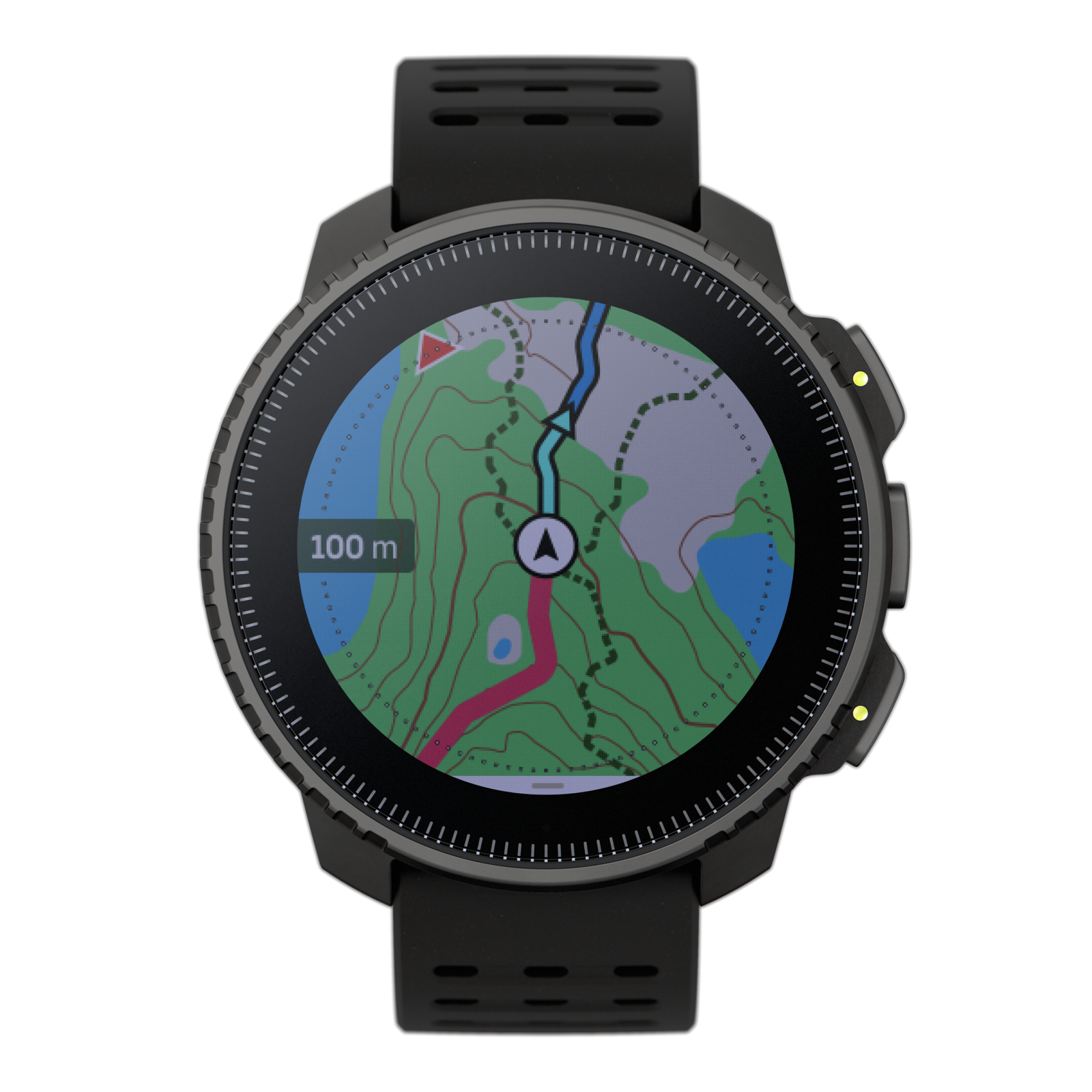
Suunto Vertical: Solar Charging Adventure Watch With Free Offline Maps and Dual Band GPS
Finland’s iconic outdoor watch brand delivers solar charging, dual band GPS, free offline topographic maps, and military grade durability in a package that spans $499 to $699 with no subscription required.
Presented By Our Partners



The relationship between outdoor physical activity and cardiovascular health extends beyond the exercise itself. A 2019 systematic review published in Environmental Research by Twohig Bennett and Jones analyzed data from 143 studies involving over 290 million participants and found that exposure to natural outdoor environments was associated with significant reductions in cortisol levels, heart rate, blood pressure, and all cause mortality compared to indoor environments. The researchers concluded that “greenspace exposure” provides measurable cardiovascular, immune, and psychological benefits independent of the exercise performed within it.
This finding reframes outdoor training as a compound health investment: the cardiovascular benefits of exercise layered with the autonomic, hormonal, and psychological benefits of natural environment exposure. Every hour spent running, hiking, or skiing in wilderness is doing more for health than the same intensity of exercise performed on a treadmill or stationary bike. The tools that enable outdoor activity, particularly the navigation and safety technology that allows athletes to explore unfamiliar terrain confidently, are not luxury accessories. They are health enabling infrastructure.
Suunto has been building this infrastructure since 1936, when Finnish engineer Tuomas Vohlonen invented the liquid filled compass. Nearly a century later, the Suunto Vertical represents the company’s most complete expression of outdoor health technology: a solar charging, dual band GPS adventure watch with free offline topographic maps, HRV based recovery monitoring, and military grade construction built for the Finnish forests, Scandinavian mountains, and global expedition routes where Suunto has always been home.
What Is the Suunto Vertical?
The Suunto Vertical is Suunto’s flagship outdoor GPS watch, available in stainless steel ($499) and titanium with solar charging ($699) configurations. Both versions feature a 49mm case with sapphire crystal, MIL STD 810H certification for environmental durability, and 100 meter water resistance. The titanium solar model adds a Power Glass solar charging lens that extends battery life through ambient light conversion.
The sensor suite includes Suunto’s optical heart rate sensor for continuous HR and HRV monitoring, a barometric altimeter, and a digital compass. Health and training features include HRV analysis, sleep staging, VO2 max estimation, training load tracking, recovery monitoring, and SuuntoPlus sport apps that add specialized metrics for climbing, trail running, and skiing.
Navigation features include dual band (L1 + L5) GPS with GLONASS, Galileo, BeiDou, and QZSS support. Free offline topographic maps from OpenStreetMap and proprietary Suunto sources are included without subscription, covering global terrain with topographic detail, trail overlays, and turn by turn route guidance. Battery life reaches up to 85 hours in GPS mode for the titanium solar model (60 hours for stainless steel) and up to 60 days in daily use mode with solar charging. No subscription is required for any feature.
The Science Behind It: Nature Exposure, Cardiovascular Health, and Recovery
The Suunto Vertical’s health proposition extends beyond its biosensor capabilities to include the outdoor activity it enables. The scientific evidence for nature based health benefits is substantial and growing.
Cardiovascular benefits of outdoor exercise are well documented. A 2015 meta analysis published in the Journal of Environmental Psychology found that outdoor exercise was associated with greater reductions in blood pressure, improved mood, and higher reported intention to repeat the activity compared to indoor exercise at matched intensities. The autonomic nervous system responds differently to natural environments: parasympathetic (vagal) activity increases, sympathetic activation decreases, and cortisol levels drop, all of which support cardiovascular recovery.
HRV monitoring during outdoor activity captures these autonomic responses in real time. According to the European Society of Cardiology’s 1996 guidelines, HRV reflects the balance between sympathetic and parasympathetic nervous system activity and is independently associated with cardiovascular mortality. Tracking HRV across outdoor training sessions, and observing how it recovers during sleep, provides a physiological measure of whether outdoor activity is building cardiovascular resilience or accumulating stress.
Altitude exposure, relevant for mountain hikers and trail runners using the Vertical’s navigation and altimetry, provides an additional cardiovascular stimulus. Moderate altitude exposure (1,500 to 2,500 meters) triggers adaptive responses including increased red blood cell production, improved oxygen carrying capacity, and enhanced mitochondrial efficiency. These adaptations persist for weeks after returning to lower elevation, providing a cardiovascular training effect that supplements traditional exercise.
That is the science. Here is how the Suunto Vertical applies it.
What the Suunto Vertical Does Well
Free offline maps are the Suunto Vertical’s most democratizing feature. While competitors like Garmin and COROS also offer offline maps, Suunto was among the first to make global topographic maps available at no additional cost, without a subscription, and with global coverage. The maps include topographic contour lines, trail overlays, points of interest, and route guidance, covering everything from local trail networks to remote backcountry terrain.
Solar charging on the titanium model addresses the practical reality that outdoor athletes cannot always recharge their devices. The Power Glass solar lens extends GPS battery life from 60 hours to approximately 85 hours under favorable sun conditions, and daily use battery from approximately 30 days to 60 days. For multi day backpacking trips, expedition treks, and athletes who train primarily outdoors, solar charging reduces or eliminates battery anxiety.
SuuntoPlus sport apps add specialized metrics for specific outdoor activities. SuuntoPlus Climbing tracks vertical gain, ascent rate, and rest times at belay stations. SuuntoPlus Trail Running provides real time gradient and altitude adjusted pace. SuuntoPlus Weather provides storm alerts based on barometric pressure trends. These activity specific overlays transform the Vertical from a general purpose GPS watch into a specialized tool for each outdoor discipline.
Featured Partner
Invest in the Infrastructure Behind Modern Medicine
As healthcare expands beyond hospital walls, the buildings and campuses supporting that shift are generating compelling returns for investors who move early. The Healthcare Real Estate Fund offers qualified investors direct access to a curated portfolio of medical office, outpatient, and specialty care facilities.
Learn More →
Suunto’s design aesthetic sets it apart from the angular, technical look of most outdoor watches. The Vertical’s clean lines and minimal bezel markings give it a Scandinavian design sensibility that transitions from trail to daily wear more gracefully than many competitors. For users who want a single watch that works in both outdoor and professional settings, this design consideration matters.
Pricing, Access, and Practical Realities
The Suunto Vertical is available in two configurations: stainless steel at $499 and titanium with solar charging at $699. No subscription is required. The Suunto app, with full training analytics and map access, is free. First year cost is $499 to $699 with zero recurring fees.
At $499 (stainless steel), the Vertical competes directly with the Polar Vantage V2 ($499.95) and the Garmin Forerunner 965 ($599.99). At $699 (titanium solar), it competes with the COROS VERTIX 2S ($699) and sits significantly below the Garmin Fenix 7X Pro Sapphire Solar ($999.99).
The watch works with both iOS and Android via the Suunto app. Bluetooth external sensor support includes heart rate monitors and cycling power meters.
Regarding regulatory status: general wellness classification. No FDA clearances, no ECG, no clinical cardiac screening capability.
Who the Suunto Vertical Is Best For
The Suunto Vertical is ideal for outdoor enthusiasts, hikers, trail runners, and mountain athletes who value free offline maps, solar charging capability, and Scandinavian design aesthetics. It serves athletes who appreciate Suunto’s nearly 90 year heritage in outdoor navigation instruments, users who want a premium outdoor watch that transitions gracefully to daily wear, and backpackers and expedition athletes who need solar extended battery life for extended trips away from power sources.
European outdoor athletes, where Suunto has its strongest brand presence and community, will find the deepest ecosystem support and user community.
Who may want to skip it: anyone needing ECG or cardiac screening. Athletes who prioritize training analytics depth should consider Garmin or Polar, which offer more sophisticated recovery and training load systems. Budget conscious buyers can get comparable navigation from the COROS APEX 4 ($429 to $479) at a lower price. Ultra endurance athletes needing 100+ hours of GPS should evaluate the COROS VERTIX 2S, which offers 140 hours.
How It Compares
Against the COROS VERTIX 2S ($699), the Suunto Vertical titanium solar matches on price while adding solar charging. COROS counters with significantly longer GPS battery (140 vs 85 hours), titanium bezel construction, and a growing training analytics platform. For solar charging and Suunto’s design aesthetic, the Vertical wins. For raw battery endurance, COROS wins.
Compared to the Garmin Fenix 7X Pro Sapphire Solar ($999.99), the Suunto Vertical saves $300 while offering comparable durability and solar charging. Garmin adds FDA cleared ECG, longer battery life, solar extended maps, and the deepest training analytics ecosystem. For value, Suunto wins. For feature completeness, Garmin wins.
Against the Polar Vantage V2 ($499.95), the Suunto Vertical (stainless steel, $499) offers offline maps and navigation that Polar lacks at the same price. Polar counters with deeper Training Load Pro analytics and the Precision Prime sensor. For outdoor navigation, Suunto wins. For training science, Polar wins.
Limitations and Open Questions
Suunto’s training analytics are less sophisticated than Garmin’s and Polar’s. The recovery monitoring, training load tracking, and workout suggestion systems are functional but lack the granularity of Garmin’s Training Readiness, Polar’s Training Load Pro, or even COROS’s rapidly improving analytics. Athletes who deeply analyze their training data may find Suunto’s software limiting.
No ECG at $499 to $699 is increasingly difficult to justify as competitors add cardiac screening at progressively lower prices. The absence means health focused outdoor athletes must carry or pair a second device for cardiac rhythm monitoring.
The Suunto app and ecosystem have a smaller global community than Garmin Connect, with fewer third party integrations and a less active online presence. In North America, where Garmin dominates the outdoor watch market, Suunto’s support network and retail availability are more limited.
GPS battery life of 60 to 85 hours, while competitive, falls behind the COROS VERTIX 2S (140 hours) and Garmin Fenix 7X Pro with solar (122 hours). For multi day ultra events, this gap matters.
What This Means for Your Health
Outdoor physical activity occupies a privileged position in the longevity framework because it engages multiple pillars simultaneously. Movement occurs in a natural environment that enhances autonomic recovery (Breathwork is naturally stimulated by altitude and fresh air). Mindset benefits from the cognitive demands and emotional restoration of wilderness engagement. Sleep is supported by natural light exposure that reinforces circadian rhythm. The Suunto Vertical enables and monitors all of these connections.
Cardiovascular disease, the first of the Four Villains, responds not just to exercise volume but to exercise environment. The research consistently shows that outdoor physical activity provides cardiovascular, immune, and psychological benefits beyond what indoor exercise of matched intensity delivers. By enabling navigation in unfamiliar outdoor terrain, the Suunto Vertical expands the range of environments available to each athlete, multiplying the health return on every hour of outdoor movement.
The fundamentals remain the foundation. Consistent outdoor activity, adequate sleep, whole food nutrition, stress management, and purposeful engagement with life and nature. The Suunto Vertical provides the navigation, monitoring, and endurance to pursue those fundamentals in the environments where they matter most.

Explore the full wearable guide
See how the Suunto Vertical compares with smart rings, watches, ECG devices, and other connected health hardware across the full Healthcare Discovery wearables guide.
Frequently Asked Questions
Does the Suunto Vertical have free maps?
Yes. The Suunto Vertical includes free offline topographic maps with global coverage, trail overlays, and turn by turn route guidance. No subscription is required. Maps cover outdoor terrain worldwide and can be downloaded to the watch for offline use in areas without cellular coverage.
Does the Suunto Vertical have solar charging?
The titanium model ($699) includes Power Glass solar charging that extends GPS battery life from 60 to approximately 85 hours and daily use from 30 to approximately 60 days. The stainless steel model ($499) does not include solar charging.
How long does the Suunto Vertical battery last?
The titanium solar model lasts up to 85 hours in GPS mode (with solar) and up to 60 days in daily use. The stainless steel model lasts up to 60 hours in GPS mode and approximately 30 days in daily use. All features are included with no subscription required.
Does the Suunto Vertical have ECG?
No. The Suunto Vertical does not include ECG or atrial fibrillation detection. It is classified as a general wellness device. Athletes who need cardiac screening should pair the Vertical with an ECG capable device or consider the Garmin Fenix 7X Pro ($999.99).
Is the Suunto Vertical MIL STD certified?
Yes. The Suunto Vertical meets MIL STD 810H standards for environmental durability, including resistance to extreme temperatures, shock, humidity, and altitude changes. The sapphire crystal display adds scratch resistance. The watch is water resistant to 100 meters.
What is SuuntoPlus?
SuuntoPlus is Suunto’s platform of sport specific app overlays that add specialized metrics during activities. Examples include SuuntoPlus Climbing (vertical gain, ascent rate), SuuntoPlus Trail Running (gradient adjusted pace), and SuuntoPlus Weather (storm alerts from barometric pressure). All SuuntoPlus apps are free.
Suunto Vertical at a glance
- Hardware price
- $499 to $699
- Subscription
- None required
- First year total
- $499
- Form factor
- Rugged adventure watch
- FDA status
- Wellness device, no clearance
- HSA/FSA
- Not confirmed
Measures Altimeter, Barometer, Compass, GPS, HR, HRV, Offline maps, Sleep, VO2max
Maintained in the Healthcare Discovery device database and updated automatically.


Similar Posts

Five Years of Proof: The Personalized mRNA Cancer Vaccine That Halved Melanoma Recurrence
Five-year data from the KEYNOTE-942 trial, presented at ASCO 2026, show that intismeran autogene plus Keytruda sustains a 49% reduction in melanoma recurrence risk and drives overall survival to 92.2%…

Oura Ring Gen 4: Readiness Scoring, HRV Tracking, and Recovery Intelligence
Recovery does not announce itself with a sensation. It reveals itself in data: the subtle shift of autonomic balance that determines whether today is a day to push or a…

The Mosaic Body: How Your Cells Are Quietly Mutating, and Why It’s Rewriting Medicine
A new picture of the human body is emerging from the world’s genome sequencers, and it is not the one most of us were taught. We are not single, settled…

Narcolepsy’s Second Brain Target: UCLA Researchers Discover a 25-Year Blind Spot That Could Transform Diagnosis and Treatment
A Nature Communications study from UCLA found that severe narcolepsy destroys neurons in a second brain region previously overlooked, overturning a foundational assumption held for nearly 25 years and opening…

Your Genome Knows More Than Your Doctor: How Precision Medicine Is Rewriting Preventive Health in 2026
A landmark Science study reveals that genes control over 50 percent of lifespan variation. Meanwhile, the PROACT trial uses polygenic risk scores to find hidden heart disease, and whole genome…

AI Designed This Lung Drug, and It Just Worked in Real Patients: Inside AI Drug Discovery’s 2026 Verdict
A drug whose target and molecule were both conceived by AI just improved lung function in a randomized Nature Medicine trial. Inside AI drug discovery’s 2026 clinical verdict, from Insilico’s…
