Age reversal and epigenetic longevity research | Healthcare Discovery
| |

Three Simultaneous Breakthroughs Are Rewriting the Science of Human Longevity

Three converging discoveries in longevity medicine are reshaping how scientists understand and target the aging process in 2026. From the first human epigenetic reprogramming trial to AI-driven drug discovery and a newly decoded gut-aging mechanism, these breakthroughs represent a pivotal convergence in the science of human longevity.

Abstract 3D visualization of a digital brain and neural network representing AI-driven longevity medicine breakthroughs in heart disease, drug discovery, and Alzheimer's research
| |

The 10 Fundamentals Your Body Already Knows: What Modern Metabolic Science Is Finally Confirming

Modern metabolic science, continuous glucose monitors, and wearable technology are confirming what ancient healers understood for millennia: optimal health comes down to mastering the fundamentals of nutrition, breath, recovery, and movement. Here are the 10 fundamentals your body has always known.

Scientific laboratory image representing mitophagy research and immune cell rejuvenation through urolithin A supplementation
| | |

Your Immune System Is Aging Because Your Mitochondria Are Failing: How Mitophagy Activation Is Reversing Immune Decline in Clinical Trials

A landmark clinical trial published in Nature Aging shows that urolithin A, a natural mitophagy activator, rejuvenated immune cell populations in middle-aged adults in just 28 days. The MitoImmune trial expanded naive CD8+ T cells, boosted fatty acid oxidation capacity by nearly 15 percentage points, and shifted immune transcription toward a younger profile. Here is what the science of mitophagy means for immune aging and your health.

Scientist conducting AI drug discovery and biological aging research in a modern laboratory
| |

The Longevity Toolkit Takes Shape: AI Drug Discovery, Biological Age Clocks, and Microbiome Science Converge

A generative AI-designed drug has delivered clinical proof in a Phase IIa trial, while new biological age clocks and microbiome science are completing the precision longevity toolkit. Here is what it means for your health span.

Woman practicing diaphragmatic breathing with hands on chest and belly, demonstrating the structured slow breathing technique that activates the vagus nerve and improves heart rate variability
| | |

Five Minutes of Slow Breathing Rewires Your Nervous System: What a New Wave of Clinical Research Reveals About Vagal Tone, Heart Rate Variability, and the Most Underused Tool in Medicine

A 2025 scoping review confirms that slow breathing at six cycles per minute significantly improves vagal tone, heart rate variability, and autonomic flexibility. Combined with the Stanford cyclic sighing trial and new anxiety research showing effect sizes rivaling medication, the evidence for structured breathwork as a first-line health intervention has never been stronger. Here is what the science says and exactly how to build a protocol that works.

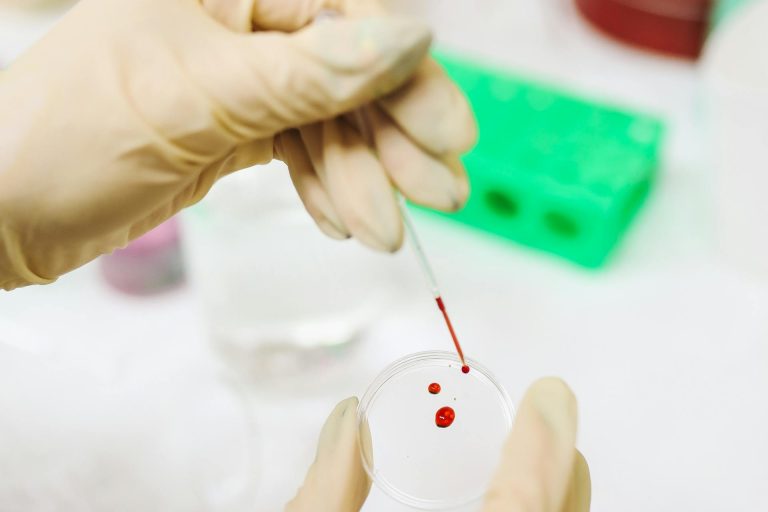
Blood sample vials in a clinical laboratory setting, representing the p-tau217 blood test revolution in Alzheimer's disease diagnosis
| | |

A Simple Blood Test Can Now Detect Alzheimer’s Years Before Symptoms: How the P-Tau217 Revolution Is Rewriting Diagnosis

A wave of FDA-cleared blood tests measuring phosphorylated tau 217 is transforming Alzheimer’s diagnosis from expensive brain scans and spinal taps into a routine blood draw at your doctor’s office. With accuracy exceeding 90 percent, the ability to predict symptom onset years in advance, and new treatments that work best when started early, the p-tau217 revolution is ushering in a new era of proactive brain health.

Scientist examining samples in a modern research laboratory representing longevity and epigenetic reprogramming breakthroughs
| |

Epigenetic Reprogramming Goes Human: Three Breakthroughs Signal a Turning Point for Longevity Science

The first human trial of partial epigenetic reprogramming has launched, an AI platform published in Cell is accelerating longevity drug discovery, and a landmark NEJM trial proves cardiovascular primary prevention works in patients who have never yet had a heart attack. Here is what it all means for the future of human healthspan.

Person performing strength training exercise demonstrating the connection between resistance training and improved sleep quality
| | |

Strength Training Is the Most Underrated Sleep Aid in Medicine: What 86 Clinical Trials and 7,276 Participants Reveal About Lifting Weights and Deep Sleep

A 2025 network meta-analysis of 86 clinical trials and 7,276 participants reveals that resistance training significantly improves sleep quality, increases deep slow-wave sleep, reduces anxiety and inflammatory markers, and triggers a virtuous recovery cycle. Here is what the research says, and exactly how to build a training protocol that transforms your sleep starting this week.

Hand holding an hourglass against a natural backdrop, symbolizing epigenetic clocks and the velocity of biological aging
| |

Biological Aging Reversal in 2026: Gut Bacteria, NAD+ Balance, and Epigenetic Clocks Point the Way

Three landmark studies in late 2025 and early 2026 reveal that gut bacteria, cellular NAD+ balance, and epigenetic clock acceleration are key drivers of biological aging and, in animal models, can be reversed. Here is what the science means for the future of longevity medicine and for how you live today.

Scientists in laboratory conducting longevity breakthroughs 2026 epigenetic aging research
| | |

Ultra-Processed Food Is Rewiring Your Brain: What 385,000 People Reveal About Diet, Depression, and the Gut-Brain Axis

A meta-analysis of 385,541 people finds that high ultra-processed food consumption raises depression risk by 44 percent and anxiety risk by 48 percent. New research on the gut-brain axis, neuroinflammation, and Mediterranean diet interventions reveals why what you eat shapes how you feel, and what to change starting today.