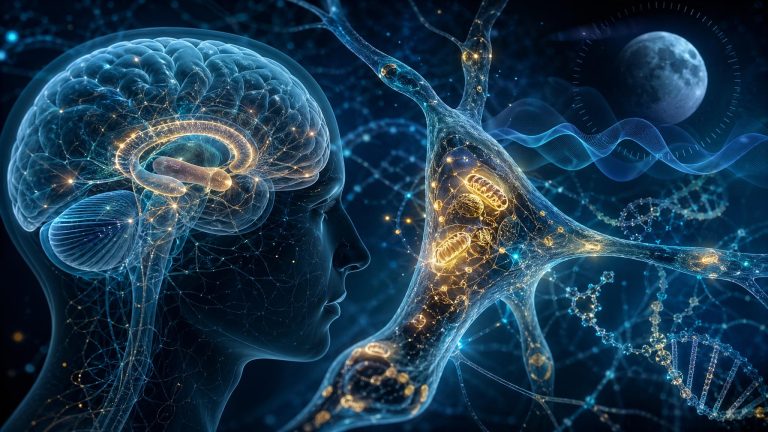
Abstract 3D visualization of a digital brain and neural network representing AI-driven longevity medicine breakthroughs in heart disease, drug discovery, and Alzheimer's research
| | |

The Race to Replace Lost Neurons: How Stem Cell Therapies, Genetic Targeting, and a New Class of Oral Drugs Are Rewriting the Parkinson’s Playbook

For the first time in Parkinson’s disease history, three distinct therapeutic frontiers are advancing simultaneously through late-stage clinical trials. Stem cell grafts are surviving in human brains and restoring dopamine production. Gene-targeted drugs are addressing the root molecular causes in specific patient populations. And a new selective dopamine agonist may soon become the first novel oral Parkinson’s drug approved in over a decade. Here is where the science stands in spring 2026.

Scientist examining DNA and cellular reprogramming data in a longevity research laboratory
| |

Longevity’s Reprogramming Moment: AI Drugs, Cellular Epigenetics, and Gut Microbiome Science Converge

Three landmark breakthroughs in longevity reprogramming research 2026 are reshaping what science knows about human aging. An AI-designed drug proves itself in clinical trials, the first human epigenetic reprogramming trial launches, and gut bacteria are engineered into longevity factories.

Artificial Intelligence Devices Surge Ahead: What 1,000‑Plus FDA Clearances Signal for the Next Chapter of MedTech
| |

Artificial Intelligence Devices Surge Ahead: What 1,000‑Plus FDA Clearances Signal for the Next Chapter of MedTech

The quiet revolution in machine‑intelligent medicine has reached critical mass. In March the U.S. Food and Drug Administration confirmed that more than one thousand medical devices incorporating artificial‑intelligence or machine‑learning algorithms are now cleared for marketing in the United States—a roughly tenfold jump in only eight years. The FDA’s public list, introduced in 2020 and…

Scientists examining biological aging epigenetic clock data in a research laboratory
| | |

Your Blood Sugar Is Aging You Faster Than You Think: What CGM Data From 10,000 Healthy Adults Reveals About Hidden Metabolic Decline

A landmark Nature study trained an AI model on over 10 million glucose readings from healthy adults and discovered that short-term blood sugar patterns predict diabetes and cardiovascular death up to 11 years in advance. The science of glucose variability is rewriting metabolic health, and the practical fixes start with how you build your plate.

Hand holding an hourglass against a natural backdrop, symbolizing epigenetic clocks and the velocity of biological aging
| |

From Epigenetic Speedometers to AI Drug Design, Science Is Learning to Reverse Aging at Its Source

Three landmark studies are transforming how scientists understand biological aging in 2026. From epigenetic clock data predicting mortality over 24 years, to brain training that reverses a decade of neural aging, to an AI-designed drug stabilizing lung function in IPF patients, the frontier has shifted.

Woman practicing diaphragmatic breathing with hands on chest and belly, demonstrating the structured slow breathing technique that activates the vagus nerve and improves heart rate variability
| | |

The Science of Slow Breathing: How Five Minutes a Day Rewires Your Nervous System, Lowers Cortisol, and Extends Your Healthspan

New research from 2025 reveals that structured slow breathing at five to six breaths per minute activates the vagus nerve, measurably increases heart rate variability, reduces cortisol and inflammatory biomarkers, and decreases pain, anxiety, and depression symptoms. From the Stanford cyclic sighing protocol to the A52 Breath Method tested in paramedic students, the science now offers a precise, evidence-based prescription for one of the most powerful free interventions in all of medicine. Here is what the research says and what you can do about it starting today.

Microscopic view of cells representing cellular senescence research and senolytic therapy for aging
| | |

Zombie Cells Are Destroying Your Body From Within. Scientists Are Finally Learning How to Kill Them.

Senescent “zombie” cells accumulate with age, leaking inflammatory molecules that accelerate disease across every organ. For the first time, clinical trials of senolytic drugs and CAR-T immune therapies are proving that clearing these cells can improve cognition, restore vision, and reverse metabolic dysfunction. Here is the science, the evidence, and what it means for your health today.

Abstract 3D visualization of a digital brain and neural network representing AI-driven longevity medicine breakthroughs in heart disease, drug discovery, and Alzheimer's research
| |

Heart Disease at 30, AI-Discovered Cures, and Reversed Alzheimer’s: Longevity Medicine’s Landmark Week

Three landmark developments are rewriting the rules of longevity medicine: cardiovascular prevention now starting at age 30, an AI platform published in Cell discovering treatments for liver cancer and pulmonary fibrosis, and a compound that fully reverses advanced Alzheimer’s disease in animal models. The convergence of precision diagnostics, AI-accelerated drug discovery, and cellular energy science marks a turning point in the science of aging.

DNA genomics and precision medicine concept representing polygenic risk scores for cardiovascular disease prevention
| | |

Your DNA Can Now Predict Heart Disease Before Symptoms Appear: How Polygenic Risk Scores Are Rewriting Cardiovascular Prevention

The 2026 ACC/AHA guidelines formally recognize polygenic risk scores as a risk-enhancing factor in cardiovascular prevention, marking a turning point for genomic medicine. A validated multi-ancestry score identifies up to 24 percent of individuals carrying hidden genetic heart disease risk that traditional screening misses. Combined with the Illumina Billion Cell Atlas and new centenarian longevity genetics research, precision medicine is shifting from treating disease to intercepting it before symptoms appear.

AI-powered gut microbiome stool test for colorectal cancer screening | Healthcare Discovery
| |

Longevity Breakthroughs 2026: Gut Bacteria, Epigenetic Reprogramming, and AI Converge at a Historic Inflection Point

Three landmark discoveries in early 2026 reveal how gut bacteria drive brain aging, epigenetic reprogramming enters its first human trial, and AI accelerates longevity science toward escape velocity.