
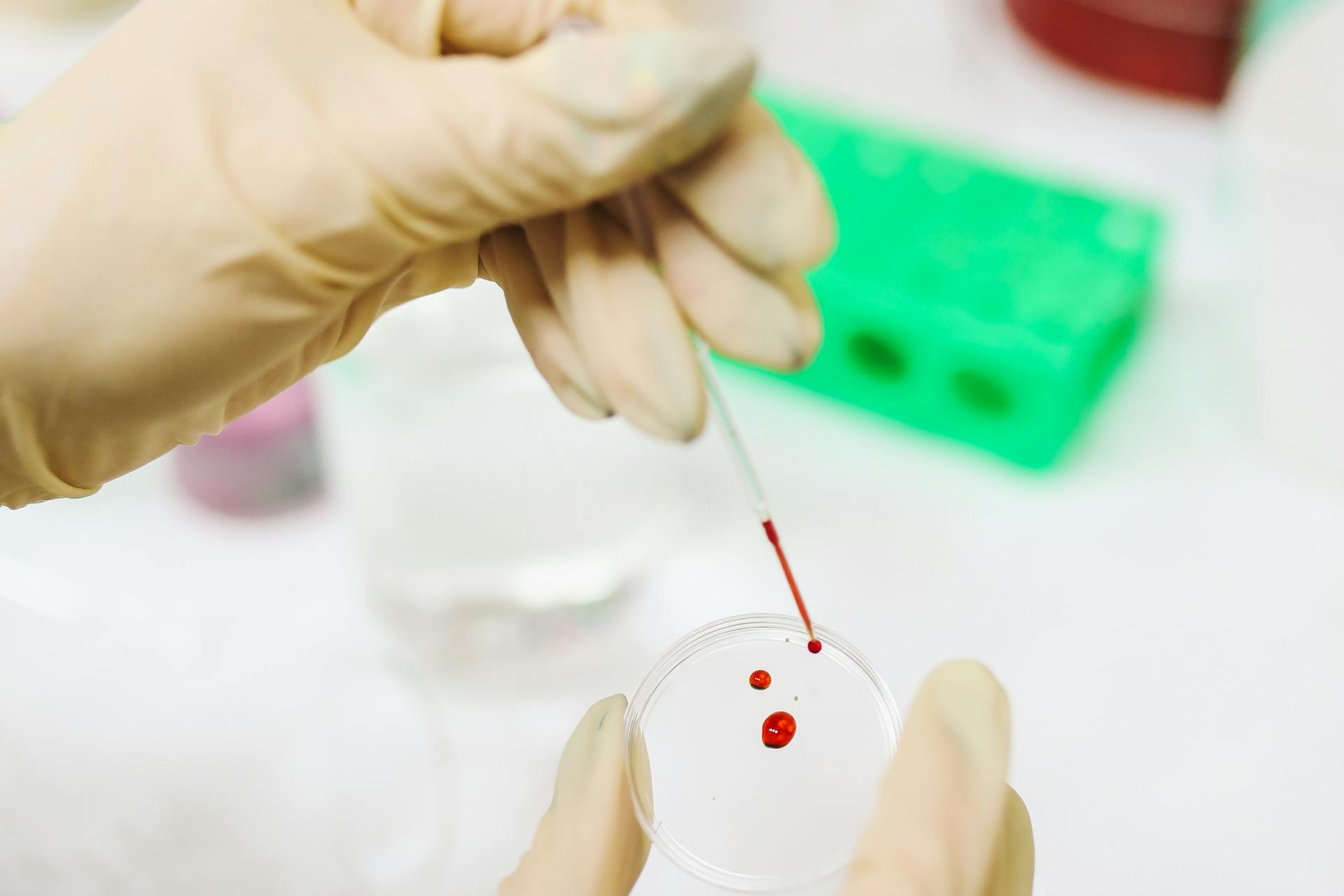
The Alzheimer’s Blood Test Has Arrived: How Plasma p-Tau217 Is Rewriting Early Diagnosis in 2026
For most of the last forty years, the diagnosis of Alzheimer’s disease has been a process of exclusion and inference. A patient and family describe memory changes. A clinician runs cognitive screens, orders an MRI, rules out vitamin deficiencies and thyroid disease, and arrives at a probabilistic label. Confirming the underlying biology, the amyloid plaques and tau tangles that define Alzheimer’s, has historically required a lumbar puncture to sample cerebrospinal fluid or an amyloid PET scan that costs several thousand dollars and is rarely covered outside research settings. The result, documented repeatedly in studies from the Alzheimer’s Association and published in JAMA, is that the majority of people living with Alzheimer’s disease never receive a confirmed biological diagnosis at all.
Presented By Our Partners



That era is ending. In May 2025 the U.S. Food and Drug Administration granted marketing clearance to the Lumipulse G pTau217/Beta-Amyloid 1-42 Plasma Ratio, manufactured by Fujirebio Diagnostics, the first blood test ever cleared in the United States to aid in the diagnosis of Alzheimer’s disease. By the spring of 2026, plasma p-tau217 assays from Roche Diagnostics, C2N Diagnostics, Quanterix, and ALZpath are either FDA cleared, in active regulatory review, or available through CLIA-certified reference laboratories. Major commercial laboratories, including Quest Diagnostics and Labcorp, now offer p-tau217 panels to clinicians ordering them as laboratory developed tests. A diagnostic transformation that took twenty years to mature in research is arriving in primary care and neurology clinics in the span of about eighteen months.
This article explains what plasma p-tau217 is, why it works, what the published clinical evidence actually shows, where it is being deployed, and how the test interacts with the new generation of anti-amyloid therapies like lecanemab and donanemab. It also addresses the harder question that any honest treatment of this technology has to face: what does early biological diagnosis mean for a person who does not yet have symptoms, and how should the test be used responsibly.
A Twenty Year Path From Spinal Fluid to a Tube of Blood
The biological definition of Alzheimer’s disease rests on two abnormal proteins. Amyloid beta, particularly the 42 amino acid form, accumulates extracellularly into the plaques first described by Alois Alzheimer in 1906. Tau, a protein that normally stabilizes microtubules inside neurons, becomes hyperphosphorylated, detaches from its scaffolding role, and forms intracellular neurofibrillary tangles. The 2018 NIA-AA Research Framework, published in Alzheimer’s and Dementia by Clifford Jack and colleagues, formalized this biology into the A/T/N system: amyloid status, tau status, and neurodegeneration markers, each measured by a biomarker rather than a clinical syndrome.
For most of the last twenty years, A/T/N status could only be confirmed in cerebrospinal fluid or by PET imaging. CSF assays for amyloid beta 42 and various tau species have been clinically available in Europe since the early 2000s and in the United States more recently. PET tracers for amyloid (florbetapir, florbetaben, flutemetamol) and for tau (flortaucipir) provided the imaging counterpart. Both approaches are accurate. Both are also expensive, invasive, and impractical for screening or for the millions of older adults presenting to primary care with subjective memory complaints.
The hunt for a blood biomarker began in earnest in the 2010s. Early candidates measuring total tau or amyloid beta in plasma were inconsistent. Then in 2020 a series of studies, most prominently from the laboratories of Oskar Hansson at Lund University and Randall Bateman at Washington University in St. Louis, demonstrated that a specific phosphorylated form of tau, tau phosphorylated at threonine 217, behaved very differently in blood than total tau. Plasma p-tau217 rose early in the disease, tracked closely with brain amyloid burden as measured by PET, and discriminated Alzheimer’s from other dementias with accuracy approaching that of CSF and PET. The seminal paper by Palmqvist and Hansson, published in JAMA in 2020, reported that plasma p-tau217 distinguished Alzheimer’s from other neurodegenerative diseases with an area under the curve of 0.96, statistically indistinguishable from CSF p-tau217 and tau PET.
The findings were replicated quickly. By 2023 multiple groups had shown that plasma p-tau217 not only identified amyloid positive individuals but also rose progressively from preclinical to mild cognitive impairment to dementia stages, and predicted future cognitive decline in cognitively normal older adults. A 2024 study in Nature Medicine by Nicholas Ashton and colleagues, working with the ALZpath assay, reported that a single plasma p-tau217 measurement performed as well as CSF testing in a memory clinic population, with positive and negative predictive values above 90 percent at optimized cutoffs. The diagnostic case for plasma p-tau217 was, at that point, largely settled in the research community. What remained was regulatory clearance, real world implementation, and the harder questions of clinical utility.
What the FDA Actually Cleared
The Lumipulse G pTau217/Beta-Amyloid 1-42 Plasma Ratio, the test cleared in May 2025, is a chemiluminescent enzyme immunoassay that measures the ratio of plasma p-tau217 to amyloid beta 1-42. The ratio approach, rather than a single analyte, was chosen because combining the two markers improves accuracy further by leveraging both the amyloid and tau dimensions of Alzheimer’s biology. The clearance is for use in adults aged 55 and older who present with cognitive impairment and are being evaluated for Alzheimer’s disease, as an aid to identify amyloid pathology associated with the disease.
The pivotal data submitted to the FDA, drawn from a multi-site study of 499 plasma samples compared against amyloid PET as the reference standard, showed that the test correctly identified 91.7 percent of patients with amyloid positive PET scans and correctly excluded 97.3 percent of those with amyloid negative scans. The FDA’s own analysis noted that fewer than 20 percent of test results fell into an intermediate or indeterminate range that would still require confirmatory testing, while the majority delivered a clear positive or negative result. By any standard of laboratory medicine, those numbers are extraordinary for a blood test.
In the months following the Lumipulse clearance, additional commercial activity accelerated. Roche Diagnostics submitted its Elecsys pTau217 assay to the FDA in late 2025 and received Breakthrough Device designation. C2N Diagnostics, whose PrecivityAD2 test combines plasma p-tau217 with an amyloid beta 42/40 ratio measured by mass spectrometry, has been available as a laboratory developed test for several years and continues to expand insurance coverage. Quanterix’s Simoa platform supports multiple plasma p-tau217 assays used widely in research and increasingly in clinical practice. ALZpath, a smaller specialist company, licenses its high performing p-tau217 antibody to multiple platform manufacturers.
Featured Partner
Invest in the Infrastructure Behind Modern Medicine
As healthcare expands beyond hospital walls, the buildings and campuses supporting that shift are generating compelling returns for investors who move early. The Healthcare Real Estate Fund offers qualified investors direct access to a curated portfolio of medical office, outpatient, and specialty care facilities.
Learn More →
The competitive dynamics matter because they will determine price, access, and the speed at which p-tau217 testing diffuses into general practice. Current list prices for plasma p-tau217 testing range from approximately 250 dollars to 1,200 dollars depending on the assay and the laboratory. By comparison, an amyloid PET scan typically costs 5,000 to 8,000 dollars, and a lumbar puncture for CSF biomarkers requires a procedure visit and laboratory costs that rarely come in under 1,500 dollars. The economic case for blood based testing is straightforward.
Why p-Tau217 Beat Every Other Blood Marker
Plasma biomarker development for Alzheimer’s has a long history of disappointment. Total tau in blood is dominated by peripheral sources and correlates poorly with brain pathology. Amyloid beta 42 in plasma is informative but technically demanding to measure with the precision needed for clinical decisions. Other phosphorylated tau species, including p-tau181 and p-tau231, perform reasonably well but are consistently outperformed by p-tau217 in head to head comparisons.
The reason p-tau217 stands apart appears to be biological rather than purely analytical. Tau phosphorylation at threonine 217 is one of the earliest molecular changes that occurs in response to amyloid pathology in the brain, and it appears to be more specifically linked to Alzheimer’s pathophysiology than other phosphorylation sites. A 2023 study in Nature Aging by Gemma Salvado and colleagues at the BarcelonaBeta Brain Research Center showed that plasma p-tau217 begins to rise approximately 20 to 25 years before the onset of clinical dementia in autosomal dominant Alzheimer’s disease, tracking closely with amyloid PET signal and preceding measurable cognitive change by two decades.
This long preclinical lead time is both the promise and the peril of plasma p-tau217. It opens the door to identifying Alzheimer’s pathology in cognitively normal individuals decades before symptoms, which is essential if disease modifying treatments are ever to be deployed in a truly preventive fashion. It also raises the question of what to tell a 55 year old with no symptoms, no family history, and an elevated p-tau217 level. The clinical guidelines being developed in 2026 by the Alzheimer’s Association and the American Academy of Neurology address this directly, and the consensus emerging is that p-tau217 testing should currently be restricted to symptomatic patients being evaluated for cognitive impairment, not used for general screening.
The Lecanemab and Donanemab Connection
The arrival of plasma p-tau217 testing coincides with the first generation of disease modifying therapies for Alzheimer’s. Lecanemab, marketed as Leqembi by Eisai and Biogen, received traditional FDA approval in July 2023 for the treatment of mild cognitive impairment due to Alzheimer’s disease and mild Alzheimer’s dementia, in patients with confirmed amyloid pathology. Donanemab, marketed as Kisunla by Eli Lilly, received approval in July 2024 for the same indication. Both drugs are monoclonal antibodies that clear amyloid from the brain, both require confirmation of amyloid pathology before initiation, and both demonstrated modest but statistically significant slowing of cognitive decline in their pivotal trials, the CLARITY-AD trial published in the New England Journal of Medicine in 2023 for lecanemab and the TRAILBLAZER-ALZ 2 trial in JAMA in 2023 for donanemab.
The amyloid confirmation requirement created an immediate bottleneck. Without enough PET scanners or CSF testing capacity to keep up with demand, eligible patients have faced waits of months to confirm whether they qualified for treatment. Plasma p-tau217 changes that calculus. A primary care physician or general neurologist can now order a blood test that, with high accuracy, indicates whether a symptomatic patient is likely to be amyloid positive. Patients with negative or low p-tau217 results can be evaluated for non-Alzheimer’s causes of cognitive impairment without the cost and delay of imaging. Patients with positive results can move directly to confirmatory PET or CSF testing if needed and to treatment evaluation.
Eisai and Lilly have both publicly acknowledged that broader plasma biomarker availability is essential to scaling access to their therapies. Real world data from the first 18 months of lecanemab use, summarized in a 2025 report from the Alzheimer’s Association’s Alzheimer’s Network for Treatment and Diagnostics (ALZ-NET) registry, indicate that fewer than 20 percent of patients with a clinical diagnosis of mild Alzheimer’s were receiving the drug, with diagnostic delays cited as a primary barrier. As p-tau217 testing scales through 2026, those numbers are expected to shift substantially.
Implementation in Primary Care and Specialty Practice
The integration of plasma p-tau217 into clinical workflows is happening in three settings. In academic memory clinics, the test is replacing CSF and PET as the first tier biomarker, with imaging or lumbar puncture reserved for indeterminate cases. In community neurology practices, p-tau217 is being adopted as an aid to diagnosis in patients with mild cognitive impairment or early dementia. In primary care, pilot programs at Kaiser Permanente, Geisinger, and several Veterans Health Administration sites are evaluating whether p-tau217 ordered by primary care physicians for symptomatic patients can streamline referrals and avoid unnecessary specialist visits for patients who turn out to have non-Alzheimer’s causes of cognitive change.
A 2025 implementation study by Jeffrey Cummings and colleagues at the Cleveland Clinic Lou Ruvo Center for Brain Health, published in Alzheimer’s and Dementia: Translational Research and Clinical Interventions, examined the introduction of plasma p-tau217 testing into a memory clinic workflow. The clinic reduced its mean time to biological diagnosis from 11 weeks to 9 days, decreased the number of patients requiring CSF testing by 67 percent, and reduced amyloid PET utilization by 54 percent, all while maintaining diagnostic accuracy when checked against a subset of patients who received confirmatory testing. The cost savings were substantial. The patient experience improvements were larger.
Health systems are paying close attention. The American Academy of Neurology issued an updated practice advisory in early 2026 endorsing the use of plasma p-tau217 in symptomatic patients, with specific guidance on how to interpret results and when to pursue confirmatory testing. CMS has begun the process of establishing reimbursement for FDA cleared plasma Alzheimer’s biomarkers, with a national coverage determination expected in late 2026.
What the Test Cannot Do
Honesty about plasma p-tau217 requires acknowledging its limits. The test detects Alzheimer’s pathology, not Alzheimer’s symptoms. A positive result in a cognitively normal individual indicates the presence of amyloid pathology but does not predict with certainty that dementia will develop, when it will develop, or how quickly. Amyloid pathology is found in roughly 30 percent of cognitively normal older adults, many of whom never develop clinical Alzheimer’s in their lifetimes.
The test also performs less well in some populations than others. Several studies, including a 2024 analysis in JAMA Neurology by Suzanne Schindler at Washington University, have documented that plasma p-tau217 levels can be affected by chronic kidney disease, obesity, and certain comorbidities, requiring careful interpretation in patients with these conditions. Performance in racially and ethnically diverse populations is being actively studied, with most assays showing strong performance across groups but with ongoing work to refine cutoffs.
Plasma p-tau217 also does not distinguish between Alzheimer’s and the increasingly recognized condition called LATE, limbic predominant age related TDP-43 encephalopathy, which mimics Alzheimer’s clinically but has distinct pathology. It does not identify Lewy body disease, frontotemporal dementia, or vascular cognitive impairment as such, although a negative p-tau217 result in a patient with cognitive symptoms is a strong clue that one of these alternative diagnoses is more likely.
These limitations matter for two reasons. First, they argue against using the test for general population screening, where the proportion of positive results that would not progress to dementia would be high. Second, they reinforce that p-tau217 is an aid to clinical diagnosis, not a replacement for the clinician. The neurologists and primary care physicians who order the test still have to interpret the result in the context of the patient’s symptoms, history, and overall picture.
What This Means For You
If you or a family member is experiencing cognitive symptoms and is being evaluated for possible Alzheimer’s disease, plasma p-tau217 is now an option worth discussing with your physician. The test is FDA cleared, available through major reference laboratories, and is being adopted rapidly by neurologists. It can shorten the path to a confirmed biological diagnosis from months to days and can clarify whether disease modifying treatments like lecanemab or donanemab are likely to be appropriate.
If you are cognitively normal and asymptomatic, the current consensus from the Alzheimer’s Association and the American Academy of Neurology is that plasma p-tau217 testing is not recommended outside of research studies. The risk of finding amyloid pathology that may never progress to dementia, combined with the absence of proven preventive interventions for asymptomatic individuals, means that screening healthy adults is not yet justified. This guidance is likely to evolve as preventive treatments mature, but it represents the responsible standard of care in 2026.
If you are caring for an aging parent or partner whose memory has changed in ways that concern you, the first step is the same as it has always been. Talk to a clinician, document the changes, and ask whether evaluation by a neurologist or memory specialist is appropriate. The new tools available in 2026 mean that the answers, when they come, can come faster, more accurately, and with a clearer path forward than at any previous point in the history of Alzheimer’s medicine.
The arrival of a blood test for Alzheimer’s disease is one of the most consequential diagnostic advances in modern neurology. It does not cure the disease. It does not by itself prevent it. What it does is collapse a diagnostic process that has been opaque, expensive, and often inaccessible into something a primary care physician can order with a routine blood draw. That alone changes who gets diagnosed, when they get diagnosed, and what they can do with the time that early diagnosis provides. For a disease that affects an estimated 7 million Americans and 55 million people worldwide, that change is not incremental. It is the beginning of a new era.


Similar Posts

PowerBreathe Plus: Inspiratory Muscle Training for Cardiovascular and Respiratory Performance
The muscles you use to breathe can be trained like any other muscle in your body. The evidence suggests doing so may lower blood pressure, improve exercise endurance, and reshape…

The Brain Has Its Own Immune System. Rejuvenating It May Be the Next Frontier in Cognitive Aging
A deep dive into neuroinflammageing and the 2025 to 2026 research showing the brain’s resident immune cells, the microglia, drive cognitive aging, and how scientists at Cedars-Sinai, UC Irvine, and…

The First Human Reprogramming Trial Is an Eye Study—Not Proof of Age Reversal
ER-100 has entered an 18-person Phase 1 eye trial. Here is what partial epigenetic reprogramming has—and has not—shown in humans.

The Daily Rounds: Longevity & Health Care Brief | May 21, 2026
🔬 Naked Mole Rat Gene Extends Mouse Lifespan — University of Rochester scientists transferred an HMW-HA longevity gene from naked mole rats to mice, achieving a 4.4% median lifespan increase and reduced tumor burden, with human translational trials now underway. 🧠 Women Face Amplified Dementia Risk From Common Factors — A 17,000-person UC San Diego study finds women are significantly more sensitive to standard dementia risk factors, calling for sex-specific prevention protocols. ⌚ Sweat Sensor Monitors Four Biomarkers Continuously for 21 Days — UC Irvine's battery-free wearable patch tracks cortisol, glucose, lactate, and urea in real time, published in Nature Biomedical Engineering as a breakthrough in continuous precision health monitoring. ❤️ Perimenopause Is a Heart Health Intervention Window — Women in perimenopause are twice as likely to have poor cardiovascular health scores, making it a critical and underutilized prevention opportunity for cardiologists. 🤖 AI Drug Discovery Reaches Regulatory Maturity — With 173 AI-designed drug programs in clinical trials and FDA guidance finalizing in 2026, AI has crossed from experimental tool to institutionalized pharmaceutical discovery platform.

The Metabolic-Drug Pipeline Is Not a Pharmacy Shelf
How to distinguish published trial evidence, regulatory review, FDA approval, and unapproved sales in the fast-moving metabolic-drug pipeline.
Apple Watch Ultra 2: Rugged Cardiovascular Monitoring for Extreme Environments
The athletes who push hardest against physical limits are often the last to discover cardiac abnormalities. A medical-grade heart monitor built to survive their training may be exactly what they…
