
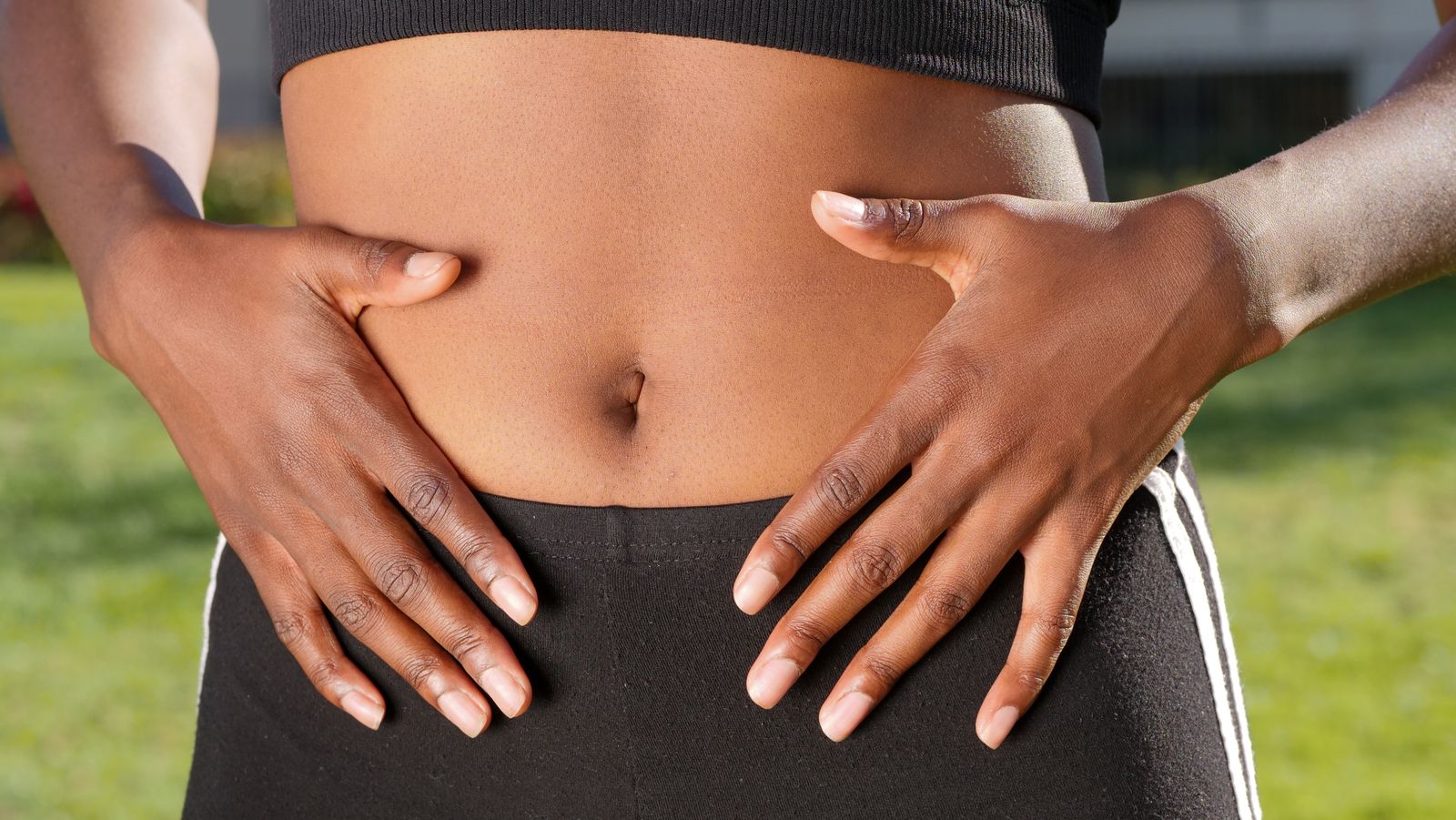
Does Collagen Heal the Gut? Insufficient Evidence, 36 Reviews Checked
The loudest collagen claim on the internet has never been tested in a human trial.
Presented By Our Partners



Among 36 systematic reviews and meta-analyses retrieved for collagen, none tested oral collagen peptides on gut permeability, digestive symptoms or any gastrointestinal outcome, so the claim that collagen heals the gut lining currently has no controlled human evidence behind it (search across PMIDs 40826844 to 39076515). This is not a case of trials showing no effect. It is a case of no trials, which is a different and in some ways more revealing finding, because it means the claim was built and sold entirely on mechanism.
Where the claim came from
Collagen’s amino acid profile is dominated by glycine, proline and hydroxyproline, with meaningful glutamine. Glutamine is a fuel for intestinal epithelial cells and has its own clinical literature in critically ill patients. Glycine has anti-inflammatory properties in animal models. From those two facts, wellness media assembled a narrative: the gut lining is made partly of collagen, “leaky gut” is a breakdown of that lining, and consuming collagen supplies the raw material to repair it. Each link in that chain is a hypothesis. None has been tested with oral collagen peptides in a controlled human study measuring intestinal permeability (lactulose to mannitol ratio, zonulin, or similar), digestive symptoms, inflammatory bowel disease activity or microbiome composition.
Following the money and the message
The HYPE Index pattern here is follow the money, and the money trail is short. Collagen became a mass market product on skin claims, with trials largely funded by manufacturers. Once the powder was in millions of kitchens, gut health became an adjacent story that required no new product and no new trial, only a new label line: “supports gut health.” Labels stay within structure and function language, which United States supplement rules allow without FDA review of the evidence before sale. Influencer captions then take the final step to “heals the gut lining,” which is a disease-adjacent claim no label would make. The drift from paper to label to caption happened entirely in the last link, because there is no paper.
Featured Partner
Invest in the Infrastructure Behind Modern Medicine
As healthcare expands beyond hospital walls, the buildings and campuses supporting that shift are generating compelling returns for investors who move early. The Healthcare Real Estate Fund offers qualified investors direct access to a curated portfolio of medical office, outpatient, and specialty care facilities.
Learn More →
| Gut outcome | Controlled human trials of oral collagen found in 36 syntheses | Nearest evidence |
|---|---|---|
| Intestinal permeability markers | None | Mechanistic reasoning from glutamine and glycine content |
| Digestive symptoms (bloating, reflux, bowel habit) | None | None in this evidence set |
| Inflammatory bowel disease activity | None | None in this evidence set |
| Microbiome composition | None | None in this evidence set |
| Wound and ulcer healing (adjacent) | Collagen not isolated | Protein supplements made little to no difference to pressure ulcer incidence across 33 RCTs, n=7,920 (PMID 38345088) |
What would count as evidence
The study the claim needs is not exotic. A randomized, placebo-controlled trial of hydrolyzed collagen at a typical label dose for 8 to 12 weeks in adults with functional digestive symptoms, measuring a validated permeability marker and a validated symptom score, would move the claim from stage 0 (mechanism only) to stage 2 (randomized trial on a surrogate) or stage 3 (clinical outcome). Comparing against an isonitrogenous complete protein rather than an inert placebo would answer the more useful question of whether collagen does anything a serving of ordinary protein would not. Until that trial exists, the evidence grade is insufficient and the HYPE composite of 78 places the gut claim in Tier 4, a Significant Evidence Gap, the highest of any collagen claim.
What we do not know
Everything. No controlled human data exist in this evidence set on permeability markers, symptoms, inflammatory bowel conditions or microbiome composition with oral collagen peptides. The claim’s plausibility rests on the glutamine and glycine literature, which was generated with isolated amino acids at doses and in populations (often critically ill patients) that have nothing to do with a scoop of powder in a smoothie. Absence of evidence is not evidence of harm, and collagen is a food protein, but the label and the caption are promising a result that has never been measured.
Doses used in studies
These are doses reported by the named sources, not recommendations. No gut trial exists, so the rows below are the doses used in skin and exercise trials and on a retail label.
| Source | Dose reported | Context |
|---|---|---|
| PMID 40826844 | 1 to 10 g per day, median 3.5 g | 10 RCTs, skin outcomes, not gut |
| Vital Proteins Collagen Peptides label | 20 g per two-scoop serving | Retail label carrying structure and function language |
The claims that do have trial support are graded in the hub: Collagen Review 2026: Evidence Grade, Best Form, Side Effects. A gut intervention that was tested in a randomized trial, with a joint outcome, is covered in the prebiotic fiber trial in knee osteoarthritis.


Similar Posts

Heart Health: What the Evidence Actually Shows
Roughly half of first heart attacks happen to people whose cholesterol panel looked fine. That is not a failure of the patients. It is a failure of what we were…

Zone 2 Training: The Mitochondrial Science Behind Low-Intensity Cardio and Why It Matters for Longevity
Zone 2 training has become the most talked about protocol in longevity circles, from Peter Attia to Iñigo San-Millán. Here is what the mitochondrial science actually says about low-intensity cardio,…

The NAD+ Renaissance: How a Cellular Fuel Molecule Is Rewriting the Science of Brain Aging, Sleep, and Neurodegeneration
A landmark Nature Aging expert review by 25 scientists, a Science Advances study showing NAD+ reverses Alzheimer’s memory deficits through RNA splicing, and the first human evidence that oral NAD+…

Emotiv Insight 2.0 Review: 5-Channel EEG, Price, and Real Limits
The Emotiv Insight 2.0 is a 5-channel wireless EEG headset for BCI prototyping and learning. Real raw data; unvalidated focus scores; not a medical device.
The Future of Wearable Blood Sugar Monitoring: From Glucose Tracking to Metabolic Intelligence
Wearable glucose monitoring is moving beyond diabetes management toward a broader era of metabolic intelligence, where CGMs, rings, watches, and AI begin to connect food, sleep, stress, and exercise into…

The Daily Rounds: Longevity & Health Care Brief | June 9, 2026
🤖 Pancreatic Cancer Gets Its Biggest Breakthrough in a Decade: Daraxonrasib nearly doubles median survival versus chemotherapy, earning a standing ovation at ASCO 2026 and advancing toward FDA submission. 🦠 Gut Bacteria Talk to Your Immune System in a Newly Discovered Molecular Language: A Helmholtz Munich team maps over 1,000 direct protein interactions between common gut bacteria and human cells, fundamentally reframing how the microbiome shapes immunity. ❤️ Night Owl Cardiac Risk Is Mostly Behavioral, Not Biological: AHA research shows the elevated heart disease risk for evening types is largely explained by modifiable lifestyle factors, making it genuinely actionable. 💪 Grip Strength Is a Mortality Predictor for Older Women, Period: The largest study of its kind confirms muscle strength protects women over 60 from early death regardless of how much aerobic exercise they do. 🥗 GLP-1 Success Depends on What You Keep, Not Just What You Lose: A new clinical framework urges practitioners to prioritize muscle preservation alongside weight loss in GLP-1 therapy to protect long-term function and metabolic health.
