
FDA AI in Urology: The Smaller Surgical Side of Medical AI
The FDA artificial-intelligence-enabled medical device list tells a clear story in radiology. It tells a growing story in cardiology. In urology, the story is quieter, smaller, and easier to misread.
Presented By Our Partners



That does not mean artificial intelligence has no future in urology. It means the regulated AI footprint is still early, and much of what appears under the relevant FDA category is not pure urology at all.
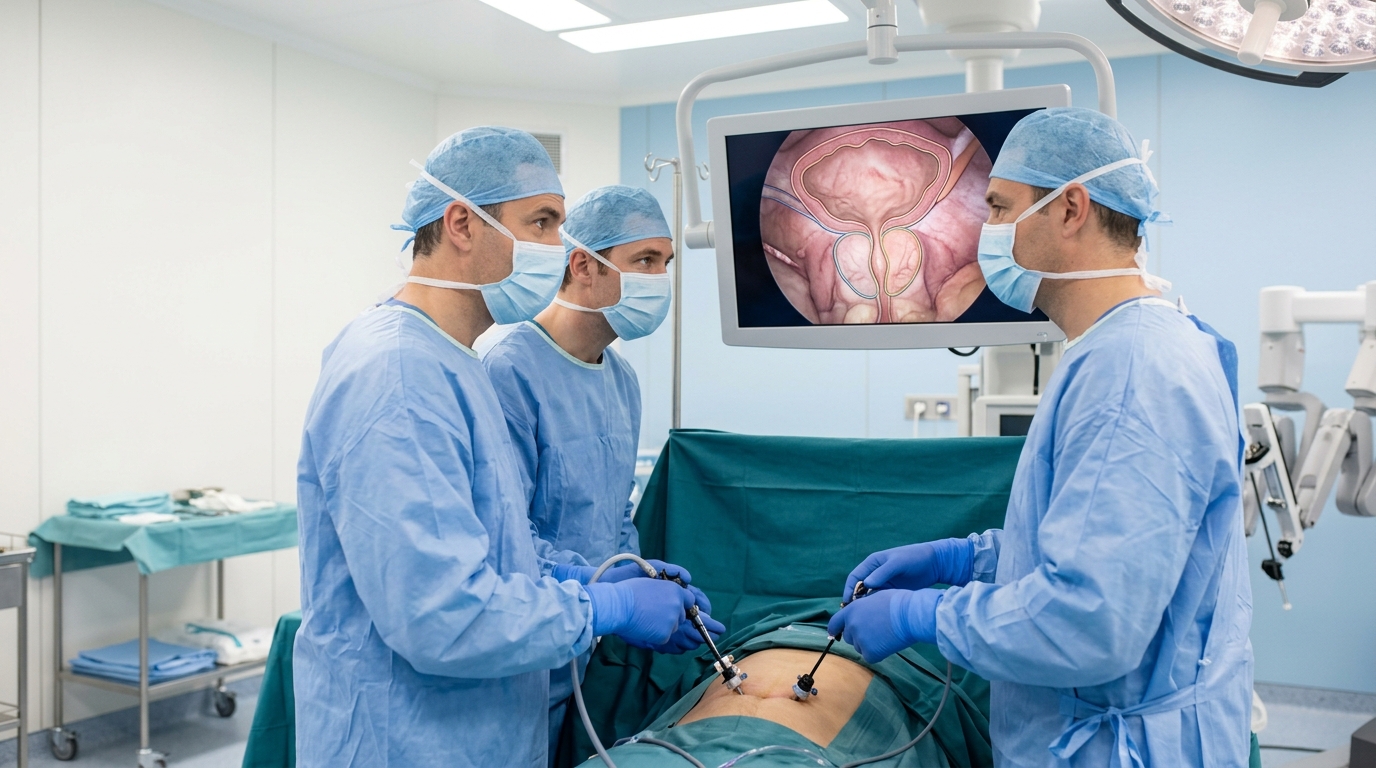
In the current FDA AI-enabled medical device list, the relevant panel is not labeled simply urology. It is labeled Gastroenterology-Urology. That combined panel accounts for 24 entries out of 1,430 listed AI-enabled medical devices. Most of those entries are endoscopy tools, especially colonoscopy systems designed to help detect or highlight suspicious lesions during gastrointestinal procedures. A smaller set points toward laparoscopic surgery, intraoperative imaging, and robotic assistance, where urology may become more important over time.
This is the urology chapter of the broader FDA AI medical devices landscape: not a mature consumer-facing category, not a giant diagnostic market yet, but an early sign of how AI may enter the operating room, the endoscopy suite, and the procedural specialties where vision, anatomy, and judgment meet.
It also sits beside newer adjacent chapters in cardiology, neurology, and anesthesiology’s sleep and respiratory category, all linked back to the main FDA AI devices pillar.
Why Urology Looks Smaller Than Expected
Urology is a technologically sophisticated field. It already uses imaging, robotics, endoscopy, lasers, scopes, ultrasound, pathology, lab testing, and procedural planning. Prostate cancer diagnosis, kidney stone management, bladder tumor surveillance, urinary tract evaluation, kidney surgery, and robotic prostatectomy all depend on seeing clearly and acting precisely.
So why does the FDA AI list not show a large urology-specific category?
The first reason is regulatory classification. The FDA list is organized by lead review panel, not by how a technology might eventually be discussed in clinical culture. Gastroenterology and urology share a combined panel in the list, and many devices in that panel are gastrointestinal endoscopy products. A device can be technically categorized in Gastroenterology-Urology while the public-facing clinical story is mostly colonoscopy.
The second reason is that much of urology’s most visible technology is not necessarily listed as an AI-enabled medical device. Surgical robots, scopes, imaging systems, planning tools, and diagnostic workflows may involve advanced software without appearing on this specific FDA AI-enabled list. The list is useful, but FDA itself notes that it is not a comprehensive inventory of every AI-enabled medical device.
The third reason is that urology’s AI future may arrive through adjacent categories. Prostate MRI tools may sit in radiology. Pathology algorithms may affect prostate or bladder cancer diagnosis but appear under pathology. Surgical navigation or intraoperative imaging may be categorized by device function rather than by specialty. Remote monitoring and home testing may live elsewhere entirely.
Urology is present, but it is not always labeled in large letters.
The Endoscopy Pattern
The strongest signal in the FDA Gastroenterology-Urology entries is endoscopy.
Products such as GI Genius, SKOUT, MAGENTIQ-COLO, CADDIE, EndoScreener, EW10-EC02, and NaviCam ProScan show the pattern. These systems are built around the same basic premise: endoscopy produces a live visual field, and software can help identify, flag, or support interpretation of findings that matter during the procedure.
In colonoscopy, that often means polyp detection or lesion recognition. The clinical logic is easy to understand. A colonoscopy depends on careful visual inspection. A small lesion can be subtle. Procedure quality matters. Fatigue, blind spots, bowel prep, anatomy, and time pressure can all affect what gets noticed. If AI can help highlight suspicious regions without distracting the clinician, it may support better procedural attention.
Featured Partner
Invest in the Infrastructure Behind Modern Medicine
As healthcare expands beyond hospital walls, the buildings and campuses supporting that shift are generating compelling returns for investors who move early. The Healthcare Real Estate Fund offers qualified investors direct access to a curated portfolio of medical office, outpatient, and specialty care facilities.
Learn More →
That endoscopy pattern matters for urology because urology also uses scopes. Cystoscopy, ureteroscopy, nephroscopy, and other visual procedures involve cameras, tissue, anatomy, motion, and decision-making inside the body. The FDA list does not yet show a large wave of urology-specific AI cystoscopy tools, but the direction is obvious. If AI can assist visual detection in the colon, similar principles may eventually matter in the bladder, ureter, prostate, and kidney.
The key word is eventually. A colonoscopy AI system is not automatically a urology AI system. But it demonstrates a regulatory and clinical pathway for procedural vision tools: define the intended use, test the performance, clear the device for a specific function, and place the software inside an existing workflow rather than pretending it replaces the physician.
The Surgical Side of the Category
The smaller but more directly urology-relevant thread is surgery.
The FDA Gastroenterology-Urology entries include systems such as Moon Surgical’s Maestro System, Hypervision Surgical’s HyperSnap Surgical System, and the TransEnterix Senhance Surgical System. These are not consumer health products. They live in the operating room. Their importance is not that they diagnose disease on a phone. Their importance is that software, imaging, robotics, and procedural assistance are beginning to merge inside surgery itself.
That matters for urology because urologic surgery has already been one of the major proving grounds for robotic surgery. Robotic prostatectomy, kidney procedures, pelvic surgery, and minimally invasive urologic operations helped make surgical robotics visible to both hospitals and patients. The future of AI in urology may not start as a simple app that says whether something is wrong. It may start as better vision, better segmentation, better camera control, better tissue awareness, better instrument support, and better procedural context in the operating room.
The operating room is a harder environment than a static image archive. Anatomy moves. Bleeding changes visibility. Tissue can deform. Instruments enter and leave the field. Surgeons need useful information without cognitive overload. A software system that distracts at the wrong moment is not helpful, no matter how sophisticated the model looks on paper.
That is why procedural AI will probably mature more slowly than radiology AI. A scan can be reviewed, queued, measured, segmented, and reported. Surgery happens in real time. The margin for confusion is smaller.
Where Urology AI May Actually Matter
Several urology use cases are plausible, even if they are not yet heavily represented on the FDA AI list.
One is cancer detection and surveillance. Bladder cancer surveillance often depends on repeated cystoscopy. Prostate cancer evaluation may involve PSA, MRI, biopsy, pathology, risk calculators, and clinical judgment. Kidney tumors and urinary tract abnormalities often involve imaging. AI could eventually help connect image interpretation, procedural visualization, pathology, and longitudinal risk assessment.
Another is surgical planning. Urologic procedures often involve delicate anatomy: nerves, vessels, ureters, tumor margins, continence structures, and nearby organs. Better preoperative segmentation, intraoperative guidance, and anatomy-aware visualization could matter more than a generic diagnostic label.
A third is kidney stone care. Stone burden, location, composition clues, recurrence risk, imaging patterns, and procedural planning all create data-rich opportunities. Some of the relevant AI may appear under radiology rather than urology because CT and ultrasound are central to stone evaluation.
A fourth is functional urology and remote monitoring. Urinary symptoms, bladder diaries, pelvic health, catheter data, home tests, and connected devices may eventually produce more structured data outside the clinic. This part of the field is much less mature than cardiac monitoring, but the same broader shift applies: healthcare is moving from isolated clinical snapshots toward longitudinal measurement.
For Healthcare Discovery, the lesson is that medical AI should be judged by workflow, not hype. The most useful urology AI may be the kind that helps a clinician see better, plan better, operate more safely, or follow a disease more intelligently over time.
The Risk of Overstating the Category
There is a temptation to make every specialty sound like it is being transformed at the same speed. That would be wrong.
Radiology dominates the FDA AI list because the data are digital, abundant, image-based, and already central to diagnostic workflow. Cardiology has a strong position because the heart produces measurable signals that can be captured repeatedly in clinics, hospitals, patches, watches, and remote systems.
Urology is different. It is procedural, anatomical, surgical, imaging-dependent, pathology-linked, and often episodic. Some of its AI future will be visible inside the urology department. Some will be hidden inside radiology, pathology, robotic surgery, and operating-room platforms.
That makes urology a bad category for hype but a good category for watching carefully.
The FDA’s combined Gastroenterology-Urology panel shows that AI is already entering visual procedural medicine. Most of the evidence today sits in GI endoscopy. The urology-specific implications are earlier and more indirect, but they are real. Once software learns to support live procedural vision, tissue recognition, camera control, surgical assistance, and anatomy-aware workflows, urology becomes a natural field of application.
What Comes Next
The next wave of urology AI will probably not look like a single dramatic invention.
It will look like a stack.
Radiology tools may help characterize prostate lesions, kidney tumors, stones, and urinary tract anatomy. Pathology tools may help classify cancer tissue. Surgical systems may support camera positioning, instrument control, tissue visualization, or real-time decision support. Endoscopic software may eventually become more relevant to bladder and urinary tract inspection. Remote tools may help track symptoms, recovery, recurrence risk, or post-procedure status.
That stack is more complicated than a simple headline, but it is closer to how medicine actually changes.
Urology AI is not yet one of the largest categories on the FDA list. It is not radiology. It is not cardiology. It is earlier, more procedural, and more fragmented. But that may be exactly why it matters. The field sits at the intersection of cancer, surgery, imaging, scopes, robotics, and long-term follow-up. If medical AI is going to move deeper into procedural care, urology will eventually be one of the places where the promise has to prove itself.
Sources
- FDA: Artificial Intelligence-Enabled Medical Devices
- FDA: AI-Enabled Medical Devices CSV
- FDA: SKOUT system 510(k) entry
- FDA: Maestro System 510(k) entry
- FDA: HyperSnap Surgical System 510(k) summary
- FDA: TransEnterix Senhance Surgical System 510(k) summary


Similar Posts

BodySpec Mobile DEXA: Gold Standard Body Composition and Bone Density Scanning
When clinical precision matters more than convenience, DEXA remains the measurement against which every consumer device is judged. BodySpec brings that standard directly to you. Presented By Our Partners In…
QardioBase 2: Smart Scale with Pregnancy Mode and Cardiovascular Ecosystem Integration
Pregnancy transforms body composition monitoring from a fitness tool into a clinical necessity. Most smart scales were not designed with this reality in mind. Presented By Our Partners Weight monitoring…

The Hidden Inflammation Trigger: How Harvard’s Morganella morganii Discovery Is Rewriting the Biology of Depression
A landmark Harvard Medical School study in the Journal of the American Chemical Society identifies an unusual bacterial phospholipid that activates the immune system and drives interleukin 6, the cytokine…

Wim Hof Method App: What the Science Actually Says About Breathwork and Cold Exposure
Separating the peer-reviewed evidence from the hype around controlled breathing, cold immersion, and voluntary immune system influence Presented By Our Partners In 2014, a study published in Proceedings of the…
MIR Smart One Spirometer Review: The Most Portable FDA Cleared Spirometer for Telehealth and Daily Lung Monitoring
Pocket sized, Bluetooth connected, and FDA cleared, the MIR Smart One puts clinical spirometry in a form factor smaller than a smartphone. Presented By Our Partners The history of spirometry…
Your Gut Microbiome Is Talking to Your Brain, Heart, and Kidneys: Five 2026 Studies Reveal the Body’s Hidden Communication Network
A Stanford Nature study shows gut bacteria drive age-related memory loss through vagus nerve inflammation, while new research in Nature Communications, npj Biofilms and Microbiomes, and Microbiology Spectrum reveals that…
