
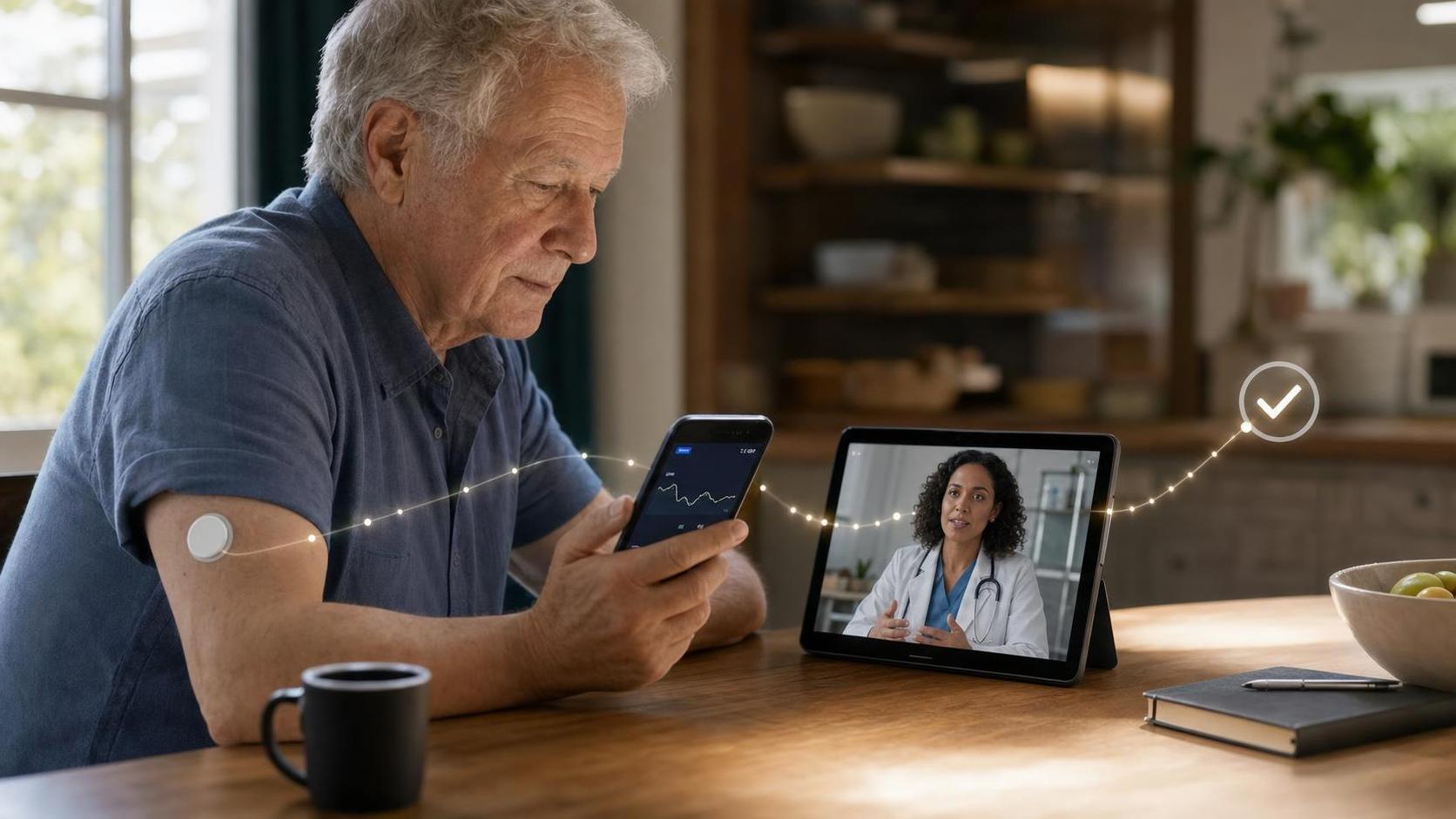
The FDA’s New AI Experiment Asks a Better Question: Did the Patient Get Better?
Healthcare artificial intelligence has spent years winning tests that end too early.
Presented By Our Partners



A model finds a hidden pattern. A dashboard raises an alert. A device produces a more continuous stream of data. Then the paper, press release, or product demonstration fades to black, just before the scene that matters most: someone owns the signal, the patient receives care, and a meaningful health outcome changes.
On July 22, the U.S. Food and Drug Administration and the Centers for Medicare & Medicaid Services took a consequential step toward extending that story. The FDA named Dexcom’s Glucose Health Program as the first participant in its Technology-Enabled Meaningful Patient Outcomes, or TEMPO, pilot. The pilot is connected to CMS’s new ACCESS model, a ten-year Medicare experiment that pays participating organizations for managing chronic conditions and ties payment to measured outcomes.
The bureaucratic names are forgettable. The underlying wager is not.
For once, the central question is not simply whether an algorithm can generate an insight. It is whether a technology-supported care program can move a Medicare patient from data to action to a better result — and produce the real-world evidence to show it.
What the first participant will test
According to the FDA’s participant description, the Dexcom Glucose Health Program is intended to let eligible patients, clinicians, and caregivers monitor metabolic and nutritional status, receive tailored guidance, and use real-time data and AI insights to inform decisions and behavior. The agency says the program may aid screening for prediabetes and type 2 diabetes through integrated digital-health metrics and may contribute to improved glycemic control and lower HbA1c in people with prediabetes.
That word "may" carries much of the article’s weight.
The FDA explicitly says it has not yet evaluated the effectiveness of the selected device for the intended uses being studied in TEMPO. This is not a conventional FDA authorization announcement, and it is not proof that the program improves health. TEMPO is an evidence-generating pathway. Participating manufacturers must collect, monitor, and report real-world data related to their intended uses.
The distinction is essential because the pilot includes a potentially powerful regulatory tool: the FDA may exercise enforcement discretion for certain requirements, including some premarket and investigational-device requirements, when a selected device is offered to or by an ACCESS participant for the pilot’s intended use. Regulatory flexibility is being paired with real-world monitoring, not substituted for evidence.
Featured Partner
Invest in the Infrastructure Behind Modern Medicine
As healthcare expands beyond hospital walls, the buildings and campuses supporting that shift are generating compelling returns for investors who move early. The Healthcare Real Estate Fund offers qualified investors direct access to a curated portfolio of medical office, outpatient, and specialty care facilities.
Learn More →
Whether that bargain works will depend on the details that follow: the quality of the data, the visibility of safety signals, the representativeness of patients, the rigor of outcome measurement, and the willingness of regulators to change course when the evidence disappoints.
The missing piece was not always technology
Digital-health companies often describe adoption as if the only obstacle were a skeptical physician or an outdated health system. In chronic care, the harder problem is frequently structural. Who gets paid to monitor the patient between visits? Who responds when a number drifts in the wrong direction? Who coordinates with the patient’s existing clinician? Who stays accountable long enough for a biological outcome to change?
ACCESS attempts to answer those questions with a payment model rather than another app.
The voluntary model began July 5 and focuses on conditions that affect more than two-thirds of people with Medicare, including high blood pressure, diabetes, chronic musculoskeletal pain, and depression. Instead of paying for each device, message, or task, CMS makes a recurring payment for managing a qualifying condition. Payment depends on the share of patients who reach defined outcomes, measured against thresholds that increase over time.
This changes the unit of value. A glucose sensor reading is not the endpoint. An AI-generated suggestion is not the endpoint. Even patient engagement is not the endpoint. The endpoint is a measurable improvement that survives contact with daily life.
ACCESS also includes a mechanism for clinical continuity. Primary-care and referring clinicians can send patients to participating organizations, receive electronic progress updates, and bill a co-management payment for documented review and coordination. That may sound like plumbing. In healthcare delivery, plumbing is often the difference between an alert and completed care.
CMS says more than 150 healthcare organizations were accepted for the model’s launch, though inclusion on that list is not an endorsement and does not guarantee final participation. The number matters less as a victory lap than as a sign of the experiment’s scale. A regulatory pilot can test whether a device is usable. A payment model with many participating organizations can test whether an entire care pathway is durable.
What success should look like
The obvious outcome for a glucose-management program is HbA1c. It should not be the only one.
A serious evaluation should show who enrolled, who stayed engaged, who dropped out, and whose outcomes improved. It should examine whether the program works across age, race, income, disability, geography, language, and digital access. It should measure false reassurance, unnecessary escalation, clinician burden, and the number of patients who needed in-person care. It should make clear whether improvement came from the device, the guidance, the care team, patient selection, or the combined program.
It should also test a less glamorous form of intelligence: restraint. Good chronic-care technology should know when a patient needs a nudge, when a clinician needs a concise update, and when an automated pathway has reached its limit.
Outcome-based payment introduces its own risks. Programs may be tempted to recruit patients most likely to improve, favor metrics that change quickly, or optimize documentation rather than health. A patient can generate a clean dashboard while living through a messy disease. Governance must therefore cover not only the algorithm but also enrollment, incentives, escalation, attrition, and public reporting.
A better standard for healthcare AI
TEMPO and ACCESS will not settle the argument over AI in chronic care. They do something more useful: they make parts of the argument measurable.
The FDA can observe how selected technologies behave in the real world. CMS can test whether paying for outcomes creates a viable route for technology-supported care. Clinicians can remain connected through referral and co-management. Manufacturers have to produce evidence beyond a product demo. Patients, at least in principle, become the reason the loop exists rather than the source of data that starts it.
There is plenty that could go wrong, and the first participant should not be mistaken for a proven success. But the architecture points in the right direction. Healthcare AI needs fewer victories that end when a model is accurate and more experiments that continue until a patient is measurably better.
The signal was never the finish line.
Sources
- FDA: First participant selected for TEMPO
- FDA: TEMPO participant table and effectiveness caveat
- FDA: TEMPO program overview
- CMS: ACCESS model overview
- CMS: ACCESS accepted applicants


Similar Posts

The Daily Rounds: Longevity & Health Care Brief | May 19, 2026
🔬 Senolytic Decelerates Muscle Epigenetic Age by 68% — BI01 administration in aging skeletal muscle produced dramatic DNAmAGE deceleration, linking senolytic therapy directly to measurable epigenetic rejuvenation in tissue. ⌚ Wearable Monitors Four Biomarkers for 21 Days Without a Battery — UC Irvine's IREM-W2MS3 continuously tracks glucose, cortisol, lactate, and urea in sweat for three weeks, representing a new frontier in ambient metabolic monitoring. 🤖 Insilico Medicine Signs $2.75 Billion AI Discovery Deal With Eli Lilly — One of the largest AI-pharma partnerships ever signals pharmaceutical industry commitment to generative biology as a primary discovery engine. 😴 Irregular Bedtimes Tied to 2.57x Higher Liver Cirrhosis Risk — A study of 88,000 adults confirms that sleep timing regularity, not just duration, is independently linked to disease risk across 172 conditions. 🦠 Kimchi Probiotic Clears Microplastics Before They Reach Organs — Korean researchers identify a fermented-food bacterium that binds microplastics in the gut and promotes excretion, offering a dietary approach to reducing plastic body burden.

GLP-1 Red Flags: When an Online Weight-Loss Offer Should Stop You
Six hard-stop safety signals and six serious caution flags to check before trusting an online GLP-1 medication offer.
The Daily Rounds: Longevity & Health Care Brief | May 12, 2026
🧬 SuperAger Neurogenesis Decoded — 80-year-olds who stay cognitively sharp produce 2x more new hippocampal neurons than peers, revealing neurogenesis as a key driver of lifelong cognitive resilience. 🏮 Ancient Exercise Rivals Blood Pressure Meds — A year-long JACC trial confirms Baduanjin, an 800-year-old Chinese mind-body practice, lowers blood pressure as effectively as medications and walking programs alike. 💊 Semaglutide Proven Effective at 65+ — A pooled STEP program analysis at ECO 2026 shows adults over 65 achieve 15.4% weight loss on semaglutide with strong cardiometabolic improvements, resolving key uncertainty about the drug in older populations. 🩺 AI Stethoscopes Proven in National Trial — The UK TRICORDER trial across 205 NHS practices and 1.5 million patients confirms AI-enabled stethoscopes accelerate cardiovascular diagnoses, marking a milestone for clinical AI deployment at scale. 📊 Largest Wearables Dataset in History Goes Public — NIH's All of Us program releases a 59,000-participant, 14-year Fitbit dataset in Nature Medicine, giving researchers an unprecedented tool for digital biomarker discovery across diverse populations.

Jamie Justice and the Longevity Revolution’s Most Unpopular Truth
# Jamie Justice and the Longevity Revolution’s Most Unpopular Truth Presented By Our Partners There is a strange tension at the heart of the modern longevity movement. On one side…

Emfit QS: Under-Mattress HRV and Recovery Tracking for Sleep Optimization
Elite athletes have known for years that recovery happens during sleep. The question is whether a sensor under your mattress can measure it precisely enough to matter. Presented By Our…
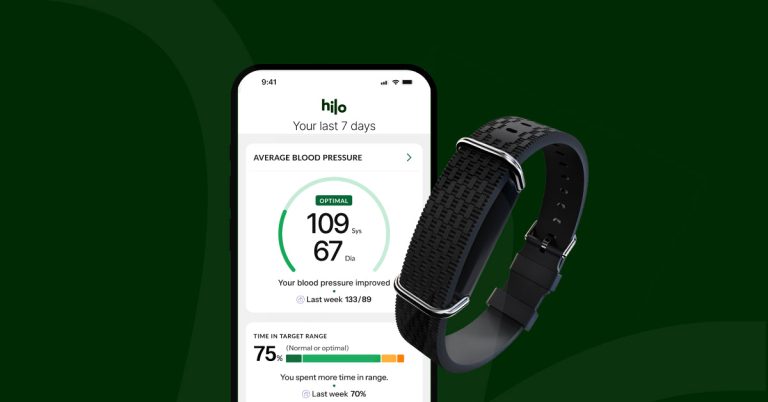
Aktiia Bracelet: 24/7 Cuffless Blood Pressure Monitoring From Your Wrist
A wrist worn bracelet that measures blood pressure continuously throughout the day and night using optical sensors, CE marked in Europe and awaiting FDA clearance in the United States. Presented…
