
Flowtime Headband Review: EEG, HRV, and What the Evidence Shows
A century after the first recording of a human brainwave, Entertech’s Flowtime headband promises to score your meditation from your alpha rhythm and your heartbeat, and only one of those two signals has strong science behind it.
Presented By Our Partners


In 1924, at the University Hospital in Jena, a German psychiatrist named Hans Berger recorded something no one had captured before: an electrical signal from a living human brain. Berger had begun his research measuring blood flow, the swelling and ebbing of tissue with each pulse, before he turned to electricity. Among the waves on his traces was a slow, steady rhythm of about 8 to 12 cycles per second that appeared when a person rested quietly. It is now called alpha. Berger’s colleagues doubted his recordings for years, and acceptance came late.
A century on, Berger’s rhythm is a consumer product. The Flowtime Biosensing Meditation Headband, made by the neurotechnology company Entertech, reads electrical brain activity and heart signals while you meditate, then turns them into live scores for calm, focus, breathing, and heart rate variability. It launched through crowdfunding, was first covered by the wearables press in December 2018, and is still listed on the Flowtime web store as of October 2026. Like Berger, who started with the pulse of blood and ended with the electricity of the brain, it listens to both.
This review asks a narrow, useful question: which numbers on that screen tell you something real about your nervous system, and which are a story told in the language of neuroscience? The answer splits the device down the middle. The heart half rests on decades of evidence. The brain half rests on very little.
The short answer: The Flowtime headband is Entertech’s EEG and heart-rate meditation headband, and as of October 2026 it is worth buying only as a breathing coach. Its heart rate variability and breathing feedback rest on solid biofeedback science. Its brainwave scores have no published validation, and trials of similar consumer headbands show small benefits that may be placebo.
- Best for: curious, healthy beginners who want live feedback on breathing and heart rate variability during meditation.
- Not for: anyone seeking treatment for anxiety, depression, ADHD, or insomnia, or anyone who wants validated brain measurements.
- Price (October 2026): $198 for the headband alone, or $267 bundled with a one-year membership, on Flowtime’s official store in US dollars as of October 2026.
- Regulatory status: not FDA regulated (wellness product); we located no FDA clearance.
- Evidence: Limited; no peer-reviewed study of Flowtime itself, and trials of comparable headbands show small, possibly placebo-driven effects.
What is the Flowtime headband?
The Flowtime headband is a consumer biosensing meditation headband made by Entertech that combines electroencephalography (EEG) sensors with heart-rate sensing. It pairs with the Flowtime: Meditation & Relax smartphone app, which turns those signals into real-time feedback during a session. It is sold as a wellness gadget, not as a medical device.
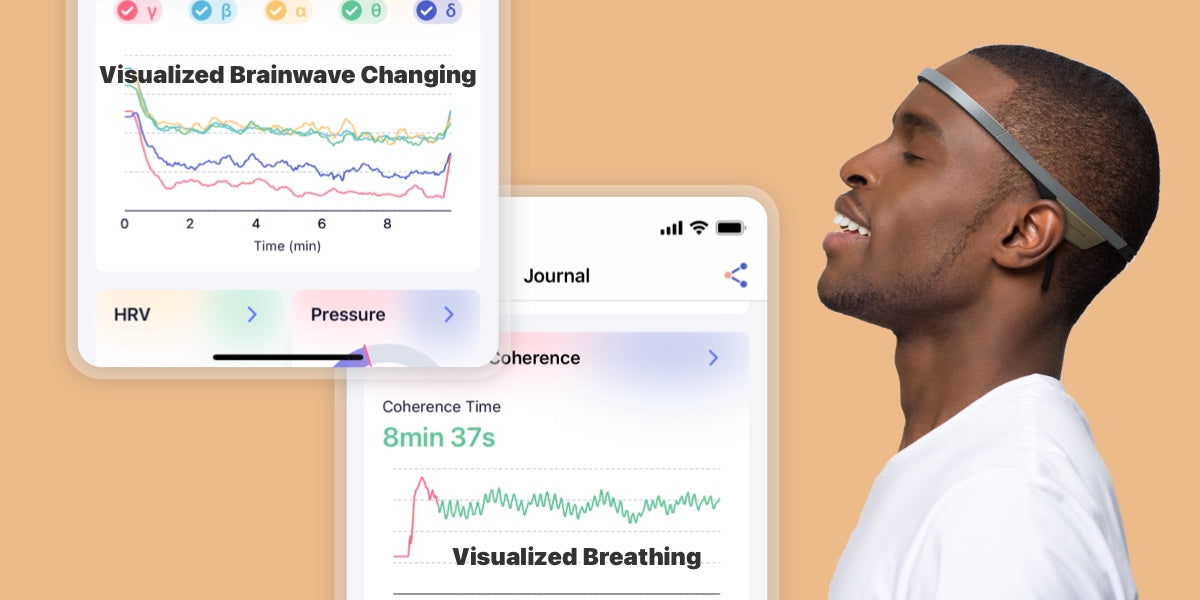
Retail listings for the headband describe a long menu of outputs: heart rate, breathing, heart rate variability (HRV), stress, a “flow” state, focus and calm states, and breakdowns of alpha, theta, beta, and gamma brainwave activity. In practice, you wear the band during a guided or silent session in the app, and the app reports those measures back to you as you go. The promise is that meditation, a practice famous for offering no scoreboard, finally gets one.
The Flowtime brand has since crowdfunded a second product, the Flowtime Brain Tag, an EEG wearable pitched on Indiegogo for better sleep and daytime performance and covered by the wearables press in February 2024. That is a different device with a different job. This review covers the meditation headband.
What the company has not published matters as much as what it sells. A search of PubMed, the main index of biomedical research, turns up no validation study of the Flowtime headband. We located no FDA clearance. And we found no public description of how its “flow” and “stress” scores are calculated. None of that makes the device useless. It means every claim about what the scores mean has to be borrowed from research on other devices, and borrowed evidence should be handled with care.
How does the Flowtime headband work?
Flowtime reads two body signals at once. Sensors against the skin pick up the faint electrical rhythms of the brain’s outer layer, which software sorts into frequency bands such as alpha and theta. A heart sensor tracks your pulse, and the app also reports heart rate variability and breathing. The heart signal is large and well understood; the brain signal is small and easily distorted.
Start with the brain. A single neuron’s electrical activity is far too weak to detect through bone and skin. But the cortex is built from neurons lined up side by side, and when large populations of them fire in rough synchrony, their currents sum into a wave strong enough to pass through skull and scalp. Think of a stadium heard from the parking lot. You cannot pick out one fan, but you know instantly when the whole stand starts chanting in rhythm. EEG hears the chant, not the conversation.
Consumer headbands of this kind rely on a small set of dry electrodes that need no conductive gel, according to a 2025 meta-analysis of the category in the Journal of Medical Internet Research. Software then breaks the raw signal into frequency bands. Alpha, the rhythm Berger found, sits at roughly 8 to 12 cycles per second and strengthens when the mind idles at rest. Theta is slower. When researchers at the University of East London reviewed 56 EEG studies of mindfulness meditation covering 1,715 participants, the most common finding was increased alpha and theta power during meditation compared with resting with eyes closed, a pattern they read as relaxed alertness (Neuroscience and Biobehavioral Reviews, 2015). That is the scientific seed of every meditation headband: if calm attention has an electrical signature, perhaps you can learn to produce it on cue.
Now the heart, which is where the more reliable physiology lives. Your heartbeat is not a metronome. Each time you inhale, the vagus nerve, the main parasympathetic line from brainstem to heart, briefly eases its brake and the heart speeds up; each exhale reapplies the brake and the heart slows. The beat-to-beat wobble that results is heart rate variability. Breathe slowly, at around six breaths a minute, and the rhythm of breathing lines up with the body’s blood pressure reflex, the baroreflex, so the swings in heart rate grow far larger. Researchers call this resonance (Applied Psychophysiology and Biofeedback, 2022). The leading explanation, laid out by Paul Lehrer and Richard Gevirtz in Frontiers in Psychology in 2014, is that repeatedly driving these large oscillations strengthens the baroreflex itself.
Meditators have stumbled into this for centuries. In a 1999 Psychosomatic Medicine study of 11 Zen practitioners, most slowed their breathing during a traditional abdominal technique into a range of 0.05 to 0.15 cycles per second, and their heart rate oscillations grew larger within that same slow band. One Rinzai master breathed about once a minute. A heart sensor sees all of this clearly, because the signal is big, regular, and tied to something you control: your breath.
Here is the asymmetry that shapes everything else in this review. The heart signal is large and its meaning is well established. The brain signal at the scalp is tiny, and the muscles of the forehead, jaw, and eyes generate electrical activity of their own. The same 2025 meta-analysis notes that consumer EEG can be contaminated by muscle movement, and that even clean measures of alpha or beta power are not straightforward to map onto psychological states like attention.
How accurate is the Flowtime headband? What the research shows
No published study has tested Flowtime against laboratory EEG or a medical-grade heart monitor, so its accuracy is unknown. Research on comparable consumer headbands shows that dry-electrode EEG can capture some genuine brain signals but often diverges from research-grade recordings, and that meditation feedback from these devices produces small benefits that may reflect placebo.
The device itself. Searching PubMed for Flowtime alongside EEG, meditation, headband, or biofeedback returns no study of this product. That absence is the single most important fact in this section. Everything below concerns the category Flowtime belongs to, not Flowtime itself.
Can consumer EEG see the brain at all? Sometimes, under the right conditions. In 2017, researchers at the University of Victoria showed in Frontiers in Neuroscience that a Muse headband could capture classic event-related brain responses, the N200 and P300 components in a visual oddball task and the reward positivity in a learning task, when the experiment was carefully controlled. A 2024 study in Sensors was less flattering. It recorded resting brain activity from healthy volunteers with three consumer devices and compared the signals with recordings from a research-grade Brain Products amplifier. All the consumer devices showed inflated power at low frequencies, a hallmark of dry-electrode technology, and the Muse S Gen 2 showed the poorest signal quality, with extremely low alignment with the research system. Different devices behave differently, so neither result transfers to Flowtime in either direction. Consumer EEG ranges from usable to unreliable, and you cannot tell where a given headband sits without a published test.
Does brainwave feedback deepen meditation? This is the question the product category exists to answer, and the best evidence comes from a preregistered 2025 meta-analysis in the Journal of Medical Internet Research led by researchers at MIT and Columbia University. It pooled 16 randomized controlled trials of consumer neurofeedback during mindfulness meditation, covering 763 participants, plus 5 smaller randomized within-person studies. Most trials used Muse headbands (11 of 16), and most compared the headband against a meditation app. None used Flowtime.
Featured Partner
Invest in the Infrastructure Behind Modern Medicine
As healthcare expands beyond hospital walls, the buildings and campuses supporting that shift are generating compelling returns for investors who move early. The Healthcare Real Estate Fund offers qualified investors direct access to a curated portfolio of medical office, outpatient, and specialty care facilities.
Learn More →
The results were sobering. Headband users showed a small reduction in psychological distress compared with controls, with an effect size (Hedges’ g) between -0.16 and -0.29 depending on how unreported results were handled. But there was no evidence of improvement in cognition, in mindfulness itself, or in physiological measures such as heart rate and heart rate variability. Participants did not get measurably better at shifting the brain targets their devices rewarded. No trial used sham feedback, the gold-standard control in which people wear the headband but receive feedback unrelated to their own brain. The authors raised a pointed possibility: “neurosuggestion,” a placebo effect driven by our faith in brain technology. Seven of the 16 trials came from a single research group, adverse effects were assessed in only 2 of 21 studies, and samples typically ran 30 to 50 people.
The heart half has a better record. HRV biofeedback, in which you watch your heart rhythm and pace your breathing to maximize its swings, has been studied far longer. A 2017 meta-analysis in Psychological Medicine pooled 24 studies with 484 participants and found that HRV biofeedback was associated with a large reduction in self-reported stress and anxiety, with a between-group effect size of 0.83, while cautioning that more well-controlled studies were needed. A broader 2020 review in Applied Psychophysiology and Biofeedback screened 1,868 papers, analyzed 58 randomized controlled trials, and found a small to moderate overall benefit, largest for anxiety, depression, anger, and athletic or artistic performance, and smallest for PTSD, sleep, and quality of life. Effects were larger against inactive controls than against active ones. These studies tested the method, not Flowtime’s version of it, but they show where the plausible value in this headband sits.
Slow breathing works with or without a gadget. A 2022 systematic review and meta-analysis in Neuroscience and Biobehavioral Reviews drew on 223 studies and found that voluntary slow breathing raised vagally mediated heart rate variability during practice, immediately after a single session, and after multi-session programs. The physiological effect does not depend on a sensor. The sensor is a teacher, and possibly a motivator.
If you want a framework for weighing claims like these, our explainer on what “clinically validated” actually means lays out the difference between a device that has been tested and a device whose category has been tested. Flowtime is firmly the second kind.
What the Flowtime headband gets right
Flowtime’s best idea is pairing brain feedback with heart feedback, because the heart signal is the one with real evidence behind it. Used as a breathing coach that shows heart rate variability responding in real time, it can teach a genuinely useful physiological skill, and it may keep beginners practicing long enough for meditation’s modest benefits to accrue.
It reports the signal that matters most. By showing heart rate variability and breathing alongside EEG, Flowtime puts the most trustworthy class of measurement in front of you. When your breathing slows toward resonance, the HRV response is large enough that a reasonable sensor should capture it, and you can confirm the effect yourself by feeling your pulse quicken on the inhale and ease on the exhale.
Slow breathing has measurable cardiovascular effects. In a 2019 Physiological Reports study, 10 healthy men who breathed at their resonance frequency for 10 minutes showed fewer bursts of sympathetic nerve activity, the fight-or-flight traffic to the blood vessels of the muscles, and a 4.6 mmHg drop in systolic blood pressure during the session. That is a small, short-term laboratory effect in a tiny sample. It is also exactly the kind of change a breathing coach is meant to produce.
Feedback can be a scaffold. Meditation’s benefits are real but modest. A 2014 JAMA Internal Medicine meta-analysis of 47 trials with 3,515 participants found moderate evidence that mindfulness programs improve anxiety (effect size 0.38 at eight weeks), depression (0.30), and pain (0.33). The hardest part is showing up. The 2025 neurofeedback meta-analysis noted that app-based mindfulness programs tend to show smaller effects than teacher-led ones, possibly because of poor adherence, and that headband feedback might add the incentive people need. If live numbers are what get you onto the cushion every morning, they have done useful work, whatever their precision.
The forehead is a reasonable place to read a pulse. We could not confirm from published sources whether Flowtime’s heart channel is optical or electrical. But in a 2019 Physiological Measurement study that compared pulse signals against a simultaneous ECG during a tilt-table test, forehead photoplethysmography provided more reliable beat-to-beat variability data than the fingertip. Head-worn heart sensing is not inherently second-rate.
It only listens. A recording headband passes no current into the scalp, so it carries none of the risks of stimulation devices such as transcranial direct current stimulation. The open question is whether it does anything, not whether it does harm.
Where the Flowtime headband falls short
Flowtime’s brainwave scores are unvalidated, several of its readouts have no established meaning for meditation, and the best research on similar headbands suggests brain feedback adds little beyond what a meditation app provides. US shipping terms also need checking before you order.
No device validation. A product that reports alpha, theta, beta, and gamma activity is implicitly claiming to measure them accurately. Without a published comparison against a research-grade system, there is no way to know how much of each number is brain and how much is blink, jaw tension, or electrode noise.
Some readouts have no meditation meaning. The 2015 systematic review of 56 meditation EEG studies found the most common changes in alpha and theta, and no consistent patterns in beta, delta, or gamma. A gamma breakdown on a meditation app may look sophisticated, but the research does not tell you what a higher or lower gamma reading during practice should mean.
The brain feedback may not train the brain. In the 2025 meta-analysis, participants did not get measurably better at moving the brain targets their headbands rewarded, and their mindfulness scores did not improve more than those of app users. If the small distress benefit is real, the authors’ leading explanation is expectation rather than neural training.
Artifacts can masquerade as calm. Consumer EEG is easily contaminated by muscle and eye movement. One plausible consequence: relaxing your forehead and jaw may quiet the signal and nudge a “calm” score, whether or not anything changed in your brain. That is not harmful, and relaxing your face is not a bad habit. It is just not neurofeedback.
Opaque scoring. We found no public documentation of how Flowtime computes its “flow” or “stress” scores, what population they were calibrated on, or how they were tested. The 2025 meta-analysis flagged the same problem across the category: device algorithms are proprietary, and calibration procedures were not systematically reported in published trials.
US shipping terms are unconfirmed. Pricing is clear: as of October 2026, Flowtime sells the headband directly through its official store in US dollars, at $198 alone or $267 bundled with a one-year membership. The headband is also listed on Amazon storefronts in the United Kingdom, Australia, and Singapore. We did not check US shipping terms, so US buyers should confirm shipping, warranty, and return terms before ordering.
It is not a brain health check. Berger’s alpha rhythm is now a serious research tool in dementia. A 2025 expert panel in Clinical Neurophysiology described decades of evidence linking abnormal resting EEG rhythms to Alzheimer’s disease biomarkers, while noting that 2024 clinical guidelines in the United States and Europe did not endorse routine resting EEG in the workup of older adults with cognitive impairment. If clinical-grade EEG is not yet a routine dementia test, a consumer headband’s alpha reading certainly is not.
Flowtime vs Muse 2 vs Muse S Athena vs Mendi
All four are consumer brain-feedback headbands, but they measure different signals and carry very different evidence. Muse devices dominate the published trials, Muse S Athena and Mendi add blood-oxygen sensing, and Flowtime emphasizes heart rate and HRV feedback alongside EEG, without any device-specific research behind it.
| Feature | Flowtime (Entertech) | Muse 2 | Muse S Athena | Mendi |
|---|---|---|---|---|
| What it senses | EEG plus heart rate, HRV, and breathing | EEG from two forehead and two behind-ear sensors | EEG plus fNIRS (brain oxygenation) | fNIRS (brain oxygenation) |
| Listed price | $198; $267 with a one-year membership (October 2026) | US price not confirmed for this review | $474.99 (October 2026) | $299 in published reviews |
| Published research | None found | Muse headbands used in 11 of 16 trials in the 2025 meta-analysis | None specific to Athena found (announced March 2025) | Not verified for this review |
| HSA/FSA | Not confirmed | Not confirmed | Not confirmed | Offered for qualified customers through Truemed |
| Best for | Breathing and HRV feedback with brainwave extras | An entry point to the best-studied headband family | EEG and brain-oxygen data in one band | Short, focused training sessions |
The practical choice comes down to what you want the feedback for. If you want the device family with the deepest published record, Muse is the default; our Muse 2 review and Muse S Athena review cover both models. If you would rather train with a blood-flow signal, which is less vulnerable to the muscle artifacts that plague EEG, read our Mendi fNIRS headband review. If breathing feedback is the point, Flowtime’s heart channel is its strongest feature. For every device in this space, browse our breathwork and mindfulness reviews.
How much does the Flowtime headband cost, and is it HSA/FSA eligible?
As of October 2026, Flowtime’s official store lists the headband at $198 on its own, or $267 bundled with a one-year membership, priced in US dollars. We found no insurance coverage and no HSA or FSA eligibility for it, so plan to pay out of pocket.
For context on the category, Muse lists its current flagship, the Muse S Athena, at $474.99 as of October 2026, and published reviews list Mendi at $299. The authors of the 2025 meta-analysis noted that consumer neurofeedback devices could be bought online for about $100 to $200, compared with thousands of dollars for teacher-led mindfulness courses, therapy, or laboratory neurofeedback. Mendi is offered as HSA and FSA eligible for qualified customers through Truemed; we found no equivalent arrangement for Flowtime.
Whatever the price, weigh it against the free alternative. The physiological effect with the strongest evidence here, slow breathing that raises heart rate variability, costs nothing. A headband earns its price only if its feedback gets you practicing more consistently than you would without it.
Who should use the Flowtime headband, and who should skip it?
Flowtime suits curious, healthy adults who want live feedback on breathing and heart rate variability and who treat the brainwave readouts as a game rather than a measurement. It is the wrong tool for anyone seeking treatment for a mental health condition, validated brain data, or the best-studied device in its category.
Reasonable candidates:
- Beginners who find silent meditation hard to stick with and are motivated by live numbers.
- People who want to learn slow, resonance-style breathing with a visible HRV response.
- Quantified-self enthusiasts who enjoy experimenting and can hold the brainwave scores lightly.
Better served by something else:
- Anyone with anxiety, depression, insomnia, or ADHD who wants treatment. Evidence-based care starts with a clinician, and the Healthcare Discovery doctor directory can help you find one.
- Buyers who want the most-studied meditation headband: Muse devices appear in most of the published trials.
- People who want research-grade brain data: no consumer headband in this comparison has demonstrated it, and Flowtime has not been tested at all.
- Budget-minded meditators: a free breathing timer and a finger on your pulse deliver the core physiological benefit.
What this means for you
Strip away the brainwave graphics and Flowtime is a breathing coach with an unproven brain-reading feature attached. That is not nothing. Breath is one of the Five Pillars because it is the one lever on the autonomic nervous system you can pull at will, and Mindset is another because attention, practiced daily, changes how stress lands. A device that gets you practicing both serves the pillars, provided you never mistake its scores for a diagnosis.
The stakes are bigger than relaxation. A 2017 American Heart Association scientific statement reviewed meditation’s effects on stress physiology, blood pressure, and cardiovascular risk, the territory of the Silent Assassin, and concluded that meditation may be considered as an adjunct to guideline-directed cardiovascular risk reduction, while stressing that the quality of the evidence is modest and the benefits remain to be better established. Slow breathing’s short-term drop in blood pressure points in the same direction. Neither replaces blood pressure control, exercise, or medication when you need them, and the full map of those risks lives in our guide to the Four Villains of Health and Longevity.
As for the Mind Thief, neurodegenerative disease, resist the temptation to read your alpha score as a brain health metric. Clinical-grade resting EEG is still a research tool for dementia, not a routine test. If you want a number that tracks your nervous system and responds to training, heart rate variability is the better-supported choice, and our guide to HRV and vagal tone training explains how to use it.
Berger spent years being doubted before his brainwaves were accepted. A century later, the doubt has flipped direction: the brainwave is settled science, and it is the products built on it that have to earn trust. Flowtime has not yet published the evidence to earn it. Use it, if you enjoy it, for the breath. Let the brain scores stay a curiosity until someone proves they are more.
Frequently asked questions
Is the Flowtime headband worth it?
It depends on what you want from it. If you want real-time feedback that helps you slow your breathing and watch your heart rate variability respond, Flowtime offers that, and HRV biofeedback has meta-analytic support for reducing stress and anxiety. If you want accurate brainwave measurement or a proven way to deepen meditation, no published study supports that for Flowtime, and trials of similar headbands found small effects that may be placebo.
Does the Flowtime headband accurately measure brainwaves?
Nobody knows, because no peer-reviewed study has compared Flowtime with laboratory EEG. Research on other consumer headbands is mixed: a 2017 study showed a Muse headband could capture classic brain responses in controlled tasks, while a 2024 comparison found a Muse S model aligned poorly with a research-grade amplifier. Consumer dry-electrode EEG is also prone to contamination from muscle and eye movement, which can masquerade as brain activity.
Flowtime vs Muse: which is better?
Muse has the larger evidence base: Muse devices were used in 11 of 16 randomized trials in a 2025 meta-analysis of consumer meditation neurofeedback, and Muse publishes clear pricing for its current Muse S Athena at $474.99. Flowtime has no published trials; its official store lists the headband at $198 as of October 2026. Neither has shown that its brain feedback deepens meditation beyond what a meditation app achieves, so comfort, app quality, and price should decide.
Is the Flowtime headband FDA approved?
No. We located no FDA clearance or approval for Flowtime, and it is sold as a consumer meditation and wellness product. That means the FDA has not reviewed it for accuracy or for any health claim. It should not be used to diagnose or treat anxiety, depression, ADHD, insomnia, or any other condition; for those, talk with a clinician who can recommend evidence-based care.
Can a meditation headband reduce stress or anxiety?
Modestly, perhaps. A 2025 meta-analysis of 16 randomized trials found consumer EEG meditation headbands produced a small reduction in psychological distress compared with control conditions, mostly meditation apps, but no gains in mindfulness, cognition, or physiology, and the authors suggested placebo may explain the effect. HRV biofeedback, which Flowtime also offers, has stronger support: a 2017 meta-analysis of 24 studies found large reductions in self-reported stress and anxiety.
Sources
- Vergani AA. Hans Berger (1873 to 1941): the German psychiatrist who recorded the first electrical brain signal in humans 100 years ago. Advances in Physiology Education, 2024. DOI
- Caeira MW, et al. An appraisal to Hans Berger by the time of his 150th birthday: the human EEG and tales of blood flow, heat and brain waves. Arquivos de Neuro-Psiquiatria, 2023. DOI
- Babiloni C, et al. Alpha rhythm and Alzheimer’s disease: has Hans Berger’s dream come true? Clinical Neurophysiology, 2025. DOI
- Lomas T, Ivtzan I, Fu CHY. A systematic review of the neurophysiology of mindfulness on EEG oscillations. Neuroscience and Biobehavioral Reviews, 2015. DOI
- Treves I, et al. Consumer-grade neurofeedback with mindfulness meditation: meta-analysis. Journal of Medical Internet Research, 2025. DOI
- Krigolson OE, et al. Choosing MUSE: validation of a low-cost, portable EEG system for ERP research. Frontiers in Neuroscience, 2017. DOI
- Mikhaylov D, et al. Comparison of EEG signal spectral characteristics obtained with consumer- and research-grade devices. Sensors, 2024. DOI
- Shaffer F, Moss D, Meehan ZM. Rhythmic skeletal muscle tension increases heart rate variability at 1 and 6 contractions per minute. Applied Psychophysiology and Biofeedback, 2022. DOI
- Lehrer PM, Gevirtz R. Heart rate variability biofeedback: how and why does it work? Frontiers in Psychology, 2014. DOI
- Lehrer P, Sasaki Y, Saito Y. Zazen and cardiac variability. Psychosomatic Medicine, 1999. DOI
- Goessl VC, Curtiss JE, Hofmann SG. The effect of heart rate variability biofeedback training on stress and anxiety: a meta-analysis. Psychological Medicine, 2017. DOI
- Lehrer P, et al. Heart rate variability biofeedback improves emotional and physical health and performance: a systematic review and meta analysis. Applied Psychophysiology and Biofeedback, 2020. DOI
- Laborde S, et al. Effects of voluntary slow breathing on heart rate and heart rate variability: a systematic review and a meta-analysis. Neuroscience and Biobehavioral Reviews, 2022. DOI
- Pagaduan J, et al. Acute effects of resonance frequency breathing on cardiovascular regulation. Physiological Reports, 2019. DOI
- Goyal M, et al. Meditation programs for psychological stress and well-being: a systematic review and meta-analysis. JAMA Internal Medicine, 2014. DOI
- Peralta E, et al. Optimal fiducial points for pulse rate variability analysis from forehead and finger photoplethysmographic signals. Physiological Measurement, 2019. DOI
- Levine GN, et al. Meditation and cardiovascular risk reduction: a scientific statement from the American Heart Association. Journal of the American Heart Association, 2017. DOI
- Interaxon. Introducing Muse S Athena, the next evolution in cognitive fitness (company announcement), March 18, 2025. Business Wire
- Interaxon. Muse S Athena product page, listed at $474.99 USD as of October 2026. Muse
Flowtime Biosensing Meditation Headband at a glance
- Hardware price
- $198 to $267
- First year total
- $198
- Form factor
- EEG headband
- FDA status
- Has FDA clearance
- HSA/FSA
- Not confirmed
Measures Breathing, EEG brainwaves, HR, HRV, Meditation feedback
Pricing verified October 20, 2026. Maintained in the Healthcare Discovery device database and updated automatically.


Similar Posts

Chronomics Epigenetic Testing: Longitudinal Biological Age Tracking and Lifestyle Impact Measurement
Designed for repeat testing rather than one-time snapshots, Chronomics measures biological age through DNA methylation with a focus on tracking how lifestyle changes move the needle over time. Presented By…

Berberine and Colon Polyps: The Under-Hyped Finding of 2026
In a two-year double-blind trial of 891 adults who had just had colorectal adenomas removed, berberine 300 mg twice daily cut the recurrence rate from 47 percent to 36 percent,…
Tonal Smart Gym: Electromagnetic Resistance Training for Strength and Longevity
A wall-mounted cable system that replaces an entire weight room with digital resistance, AI coaching, and real-time form feedback. Does the science of strength training support this approach to building…

Dreame Haptic AI Smart Ring Review: Is It on Sale Yet?
The Dreame Haptic AI Smart Ring vibrates on your finger, but as of October 2026 it has no official US sale or confirmed price, and no independent accuracy testing.
Fit3D ProScanner: Commercial 3D Body Scanner with Wellness Score and Health Risk Assessment
Every year, millions of gym members quit because they cannot see progress. A 35-second 3D scan changes what “progress” looks like. Presented By Our Partners The fitness industry’s retention problem…
Garmin Forerunner 965 VO2 Max Review: How Accurate Is the Estimate?
Garmin’s flagship running watch pairs Firstbeat analytics with an AMOLED display for detailed wrist based cardiorespiratory fitness tracking. Presented By Our Partners Product status, October 2026: The Garmin Forerunner 965…
