
Garmin Index Sleep Monitor Review 2026: $170 Price, Upper-Arm Sleep Band, HSA/FSA Status
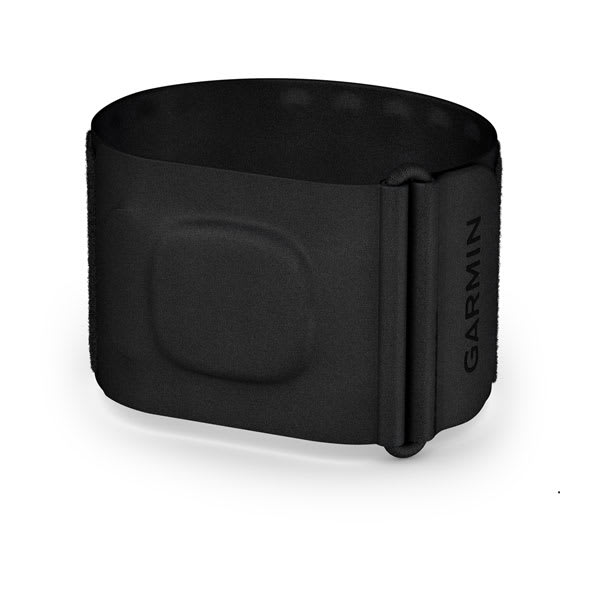
Garmin’s first sleep-only tracker is a screenless band you wear on your upper arm at night. The upper arm is a good spot for an optical heart sensor, but no study has tested the Index itself, and earlier Garmin devices were among the weaker performers for sleep staging in lab studies.
Presented By Our Partners



Garmin launched the Index Sleep Monitor in June 2025, and Bloomberg reported it as a $170 health-tracking arm band made to be worn during sleep (Bloomberg). Tom’s Guide called it Garmin’s first sleep-only tracker, a screenless, lightweight armband with illness-predicting tech (Tom’s Guide), and TechRadar described it as a screenless, WHOOP-style band oriented toward recovery (TechRadar). Gulf News framed it as Garmin’s entry into a screen-free fitness fight with Apple, WHOOP and Polar (Gulf News). This review looks past the launch to what published studies show about Garmin sleep tracking and about optical sensors worn on the upper arm.
First look. No peer-reviewed study has tested the Garmin Index Sleep Monitor itself yet; a PubMed search on October 28, 2026 found none. The accuracy section draws on independent studies of Garmin wrist devices tested against polysomnography or ECG, plus studies of other optical sensors worn on the upper arm. We could not confirm from the sources we reviewed which sensor generation the Index uses, so its accuracy may be better than, or simply different from, the Garmin watches below.
The short answer: The Garmin Index Sleep Monitor is a screenless upper-arm band for overnight sleep and recovery tracking, launched in June 2025 at about $170, as Bloomberg reported. Upper-arm optical sensors have tracked heart rate well in studies of other brands. Earlier Garmin devices told sleep from wake well but matched lab sleep stages only about half the time, and no study has tested the Index.
- Best for: Garmin users who dislike sleeping in a watch and want overnight sleep and recovery tracking without paying for a membership.
- Not for: Anyone who wants a sleep apnea test, a diagnosis, or precise nightly deep and REM sleep numbers.
- Price (October 2026): About $170 at launch, per Bloomberg. We found no confirmed current discount in our October 2026 search.
- Regulatory status: We found no FDA clearance for the Garmin Index Sleep Monitor. It is sold as a consumer wellness device.
- Evidence: Good for telling sleep from wake on earlier Garmin devices; limited for sleep stages; fair to poor for overnight heart rate variability on a Garmin watch; none published for the Index itself.
What Is the Garmin Index Sleep Monitor?
The Garmin Index Sleep Monitor is a screenless band that you wear on your upper arm while you sleep to track sleep and recovery, as Garmin’s launch coverage describes it.
TechPorn’s launch report describes it as an upper arm band (TechPorn), and Wearable Technologies called it a sleep-tracking armband (Wearable Technologies). Retailers such as Kohl’s list it in two sizes, S/M (Kohl’s) and L/XL (Kohl’s). Yanko Design wrote that it tracks sleep, fitness and recovery (Yanko Design), and the5krunner published a specifications overview on launch day (the5krunner). We could not confirm battery life or the full list of metrics from the headlines we reviewed, so check Garmin’s product page before you buy. These details come from the publications’ headlines and listings and were not tested by Healthcare Discovery.
Several outlets have published full reviews, including Tom’s Guide (Tom’s Guide), DC Rainmaker (DC Rainmaker), Digital Citizen (Digital Citizen) and road.cc (road.cc). Read them for hands-on impressions of comfort and the app; this page focuses on the published accuracy evidence.
How Does the Garmin Index Sleep Monitor Work?
The Index works like other optical trackers: a light sensor reads your pulse through the skin, a motion sensor tracks movement, and software turns those signals into sleep stages and recovery estimates. The difference is placement. It sits on the upper arm instead of the wrist.
Placement matters because optical sensors depend on a clean read of blood flow under the skin, and studies of other brands have found upper-arm sensors more accurate than the same sensors on the wrist. Sleep staging from a wearable is still an estimate. Labs score sleep stages from brain waves on polysomnography, and no wrist or arm band measures brain activity.
We found no FDA clearance for the Index, and nothing we found presents it as a test for sleep apnea or any other sleep disorder.
How Accurate Is the Garmin Index Sleep Monitor? What the Research Shows
No study has tested the Index yet. Earlier Garmin devices detected sleep well but matched lab sleep stages about 50 percent of the time and were often weaker than rivals at spotting wake. A Garmin watch had poor agreement for overnight heart rate variability against ECG. Upper-arm optical sensors from other makers have tracked heart rate closely, which is the main reason to expect the Index could do better than Garmin’s wrist devices.
Sleep and wake. In 53 adults in a sleep lab, a Garmin Forerunner 245 Music agreed with polysomnography on sleep versus wake 89 percent of the time, a kappa of 0.35 (PMID 36016077). In 34 healthy young adults over three nights, the Garmin Fenix 5S and Vivosmart 3 performed worse than research actigraphy on sleep and wake measures, while most other devices did as well or better (PMID 33378539). In another study of 53 young adults, every device except the Garmin Vivosmart estimated total sleep time about as well as research actigraphy (PMID 38276327).
Sleep stages. The same Forerunner matched lab sleep stages only 50 percent of the time, a kappa of 0.25, compared with 60 to 61 percent for WHOOP and Oura in that study (PMID 36016077). In 62 adults, six wrist devices including the Garmin Vivosmart 4 caught more than 90 percent of sleep but only 29.39 to 52.15 percent of wake, with kappas of 0.21 to 0.53; the authors singled out Fitbit and Apple devices, not Garmin, as the better performers (PMID 40303381). One bright spot: the Garmin Vivosmart showed low bias for deep sleep in the 2024 study (PMID 38276327). A meta-analysis of 24 studies and 798 people found consumer wrist trackers, Garmin among them, differed from polysomnography by about 17 minutes of total sleep time and 13 minutes of wake after sleep onset on average (PMID 39484805).
Overnight heart rate and heart rate variability. In 13 adults tracked against an ECG over 536 nights, a Garmin Fenix 6 showed poor agreement for heart rate variability, a concordance of 0.87 and a mean absolute percentage error of 10.52 percent; Oura and WHOOP did better, and Garmin was left out of the resting heart rate analysis because of methodological inconsistencies (PMID 40834291). Heart rate itself held up better: in 10 adults wearing a Garmin Vivosmart 5 and a Holter monitor for 72 to 96 hours, intraclass correlation averaged 0.902 with a mean bias of 1.16 beats per minute, though limits of agreement averaged plus or minus 12.4 beats per minute (PMID 42099266).
Why the upper arm may help. In 16 adults, a Polar Verity Sense worn on the upper arm tracked heart rate against an ECG chest strap with a mean absolute percentage error of 1.35 percent, compared with 6.82 percent for a Polar watch on the wrist (PMID 40116771). In 28 adults, identical WHOOP 4.0 units were more accurate on the upper arm than on the forearm or wrist (PMID 41516615). Both studies tested heart rate while awake, not sleep staging, and neither tested a Garmin armband.
Company ties: none of the cited studies lists a Garmin employee among its authors. Several authors of the 2021 Naval Health Research Center study also list government contractor affiliations (Leidos, Innovative Employee Solutions, Eagle Applied Sciences) (PMID 33378539). The other studies list academic, hospital or government research affiliations only. PubMed affiliations are not a full disclosure of funding or conflicts.
Featured Partner
Invest in the Infrastructure Behind Modern Medicine
As healthcare expands beyond hospital walls, the buildings and campuses supporting that shift are generating compelling returns for investors who move early. The Healthcare Real Estate Fund offers qualified investors direct access to a curated portfolio of medical office, outpatient, and specialty care facilities.
Learn More →
What the Garmin Index Sleep Monitor Gets Right
The Index puts the sensor where research suggests optical heart rate works best, takes the screen and the watch out of bed, and launched at a one-time price with no membership reported.
A better sensor spot. Upper-arm optical sensors outperformed wrist sensors in two independent studies of other brands (PMID 40116771, PMID 41516615). Better heart data is the foundation for better sleep and recovery estimates.
No watch in bed. People who find a watch uncomfortable at night can keep their Garmin watch for the day and wear the band only for sleep, a design Tom’s Guide highlighted as Garmin’s first sleep-only tracker (Tom’s Guide).
Pay once. At about $170, per Bloomberg (Bloomberg), it costs less than a year of the top WHOOP membership, which Engadget reported at $359 (Engadget).
Where the Garmin Index Sleep Monitor Falls Short
The weaknesses are no published data on the Index itself, a weaker track record for Garmin sleep staging and wake detection, poor heart rate variability agreement on a Garmin watch, and no FDA clearance or sleep disorder screening.
Garmin’s sleep track record is mixed. Garmin devices performed worse than actigraphy for sleep and wake in one study (PMID 33378539) and matched lab sleep stages only 50 percent of the time in another (PMID 36016077). A new placement may not fix an algorithm problem.
Heart rate variability needs care. A 10.52 percent average error for overnight heart rate variability on a Garmin Fenix 6 (PMID 40834291) is large enough that small night-to-night changes may be noise. Read trends over weeks, not single nights.
It does not screen for sleep disorders. We found no FDA clearance, and the band is not a sleep apnea test. Loud snoring, gasping at night or heavy daytime sleepiness need a clinician and a proper sleep study.
Unconfirmed details. We could not confirm battery life or the full metric list from headlines alone. Check Garmin’s listing and the full reviews above.
New hardware, older evidence. Every accuracy study above tested a different device. Until researchers test the Index against polysomnography, its accuracy is inferred, not shown.
Garmin Index Sleep Monitor vs WHOOP MG vs Polar Loop vs Amazfit Helio Strap vs Eight Sleep Pod 6
The Index is the only one of these built for sleep alone and worn on the upper arm. WHOOP, Polar and Amazfit sell screenless bands for all-day wear, and Eight Sleep tracks sleep from the bed itself.
| Feature | Garmin Index Sleep Monitor | WHOOP MG | Polar Loop | Amazfit Helio Strap | Eight Sleep Pod 6 |
|---|---|---|---|---|---|
| Form | Screenless upper-arm band, worn at night | Screenless wrist strap | Screenless band | Strap | Smart mattress cover |
| Payment model | One-time purchase; no membership reported | Membership | Not verified for this review | Not verified for this review | Not verified for this review |
| FDA clearance | None found | ECG feature cleared (K243236) | Not verified for this review | Not verified for this review | Not verified for this review |
| Published validation | None for Index; earlier Garmin devices studied | None for MG; earlier WHOOP straps studied | Not verified for this review | Not verified for this review | Not verified for this review |
| Price (October 2026) | About $170 at launch (Bloomberg) | Life membership, reported at $359 | Not verified for this review | Not verified for this review | Not verified for this review |
Our WHOOP MG review, Polar Loop review and Amazfit Helio Strap review cover the main screenless rivals, and our Eight Sleep Pod 6 review covers tracking sleep from the bed. If you want a Garmin watch for the day, see our Garmin Fenix 9 review. For what sleep scores can and cannot tell you, read our sleep score essay. Every device we track is in our healthtech wearables guide.
How Much Does the Garmin Index Sleep Monitor Cost, and Is It HSA or FSA Eligible?
The Garmin Index Sleep Monitor launched at about $170, as Bloomberg reported (Bloomberg), and we found no reported membership requirement. FSA Store carries a listing for the Garmin Index Sleep Monitor in size S/M (FSA Store), which suggests it can be bought with HSA or FSA funds through that retailer.
Garmin has also announced a partnership with Truemed to let qualified US customers use pre-tax HSA and FSA funds on some of its products (Garmin). We could not confirm whether the Index is included in that program or what qualifying steps apply. Plan rules vary, so ask your HSA or FSA administrator before paying with pre-tax funds. Insurance does not cover it as far as we found. Retailers such as The GPS Store list it (The GPS Store), but we found no confirmed price drop in our October 2026 search.
Who Should Buy the Garmin Index Sleep Monitor, and Who Should Skip It?
The Index suits Garmin users who want sleep and recovery tracking without wearing a watch to bed and without a subscription. It is a poor fit for anyone who needs a sleep disorder diagnosis or exact sleep stage numbers.
Good candidates:
- Garmin watch owners who find a watch uncomfortable at night.
- People who want to follow sleep timing and duration trends over weeks.
- Buyers who prefer a one-time price to a yearly membership.
Better served by something else:
- Chest pain, fainting, or waking up gasping and short of breath: that is an emergency. Call 911; do not wait for a sleep band.
- Loud snoring, pauses in breathing that a partner notices, or daytime sleepiness that affects driving: see a clinician about a sleep study. The Index does not test for sleep apnea.
- People who want all-day tracking from one device: a screenless strap such as the Polar Loop or Amazfit Helio Strap, or a watch, may fit better.
- Anyone who wants an ECG in a screenless strap: compare the WHOOP MG.
If your sleep data sends you looking for a sleep specialist, the Healthcare Discovery doctor directory lists clinicians by state and specialty.
What This Means for You
The Garmin Index Sleep Monitor makes a sensible design choice. Moving the optical sensor to the upper arm addresses a known weakness of wrist trackers, and dropping the screen and the subscription keeps it simple. But the Index has not been studied, and Garmin’s earlier devices were middle of the pack or weaker for sleep staging and overnight heart rate variability.
Use its sleep stages and recovery numbers as trends, not verdicts. Buy it if you already use Garmin devices and want comfortable overnight tracking for about $170; skip it if you need a diagnosis, and talk to a clinician if your sleep problems are affecting your days.
Compiled by Healthcare Discovery from the cited PubMed studies and Garmin’s launch materials. Every PMID, study size and result on this page was checked against PubMed on October 28, 2026. Launch, price, specification and review details come from the named publications’ headlines and listings and were not independently tested. This is a first look; no Healthcare Discovery hands-on testing was done.
How much does the Garmin Index Sleep Monitor cost?
Bloomberg reported a launch price of about $170 in June 2025. We found no reported membership requirement. We also found no confirmed price drop in our October 2026 search, so check retailers for current pricing.
Is the Garmin Index Sleep Monitor accurate?
No peer-reviewed study has tested the Index itself as of October 28, 2026. Earlier Garmin devices agreed with polysomnography on sleep versus wake 89 percent of the time but matched sleep stages only 50 percent of the time (PMID 36016077).
Why is the Garmin Index worn on the upper arm?
Optical heart sensors tend to work better on the upper arm than the wrist. In one study, an upper-arm Polar sensor had a 1.35 percent heart rate error versus 6.82 percent for a wrist watch (PMID 40116771), and identical WHOOP straps were more accurate on the upper arm (PMID 41516615).
Is the Garmin Index Sleep Monitor FDA cleared?
We found no FDA clearance for the Garmin Index Sleep Monitor. It is sold as a consumer wellness device and is not a test for sleep apnea or other sleep disorders.
Is the Garmin Index Sleep Monitor HSA or FSA eligible?
FSA Store lists the Garmin Index Sleep Monitor, which suggests it can be bought with HSA or FSA funds there. Garmin also partners with Truemed for pre-tax purchases, but we could not confirm the Index is included. Check with your plan administrator first.
How accurate is Garmin heart rate variability during sleep?
In 13 adults over 536 nights against an ECG, a Garmin Fenix 6 showed poor agreement for overnight heart rate variability, with a concordance of 0.87 and a 10.52 percent average error (PMID 40834291). No study has tested the Index’s heart rate variability.
Sources
- Miller DJ, et al. A validation of six wearable devices for estimating sleep, heart rate and heart rate variability in healthy adults. Sensors, 2022. PMID 36016077
- Chinoy ED, et al. Performance of seven consumer sleep-tracking devices compared with polysomnography. Sleep, 2021. PMID 33378539
- Kainec KA, et al. Evaluating accuracy in five commercial sleep-tracking devices compared to research-grade actigraphy and polysomnography. Sensors, 2024. PMID 38276327
- Schyvens AM, et al. A performance validation of six commercial wrist-worn wearable sleep-tracking devices for sleep stage scoring compared to polysomnography. Sleep Advances, 2025. PMID 40303381
- Lee YJ, et al. Performance of consumer wrist-worn sleep tracking devices compared to polysomnography: a meta-analysis. Journal of Clinical Sleep Medicine, 2025. PMID 39484805
- Dial MB, et al. Validation of nocturnal resting heart rate and heart rate variability in consumer wearables. Physiological Reports, 2025. PMID 40834291
- Tan C, et al. Reliability and validity of a smartwatch with a photoplethysmograph: comparison with a Holter electrocardiograph. Chronobiology International, 2026. PMID 42099266
- Schweizer T, et al. Wrist-worn and arm-worn wearables for monitoring heart rate during sedentary and light-to-vigorous physical activities: device validation study. JMIR Cardio, 2025. PMID 40116771
- Moghaddam M, et al. Impact of anatomical placement on the accuracy of wearable heart rate monitors during rest and various exercise intensities. Sensors, 2025. PMID 41516615
- Bloomberg. Garmin launches $170 health-tracking arm band for wear during sleep, June 2025. Bloomberg
- Tom’s Guide. Garmin launches first sleep-only tracker: a screenless lightweight armband with illness-predicting tech, June 2025. Tom’s Guide
- TechRadar. Garmin Index Sleep Monitor: everything we know about Garmin’s screenless Whoop-style recovery-orientated band. TechRadar
- Gulf News. Garmin’s new sleep-only band enters screen-free fitness war with Apple, Whoop, Polar. Gulf News
- TechPorn. Garmin launches Index Sleep Monitor upper arm band. TechPorn
- Wearable Technologies. Garmin launches sleep-tracking armband. Wearable Technologies
- Yanko Design. Garmin Index Sleep Monitor is a smart band that tracks your sleep, fitness, and recovery. Yanko Design
- the5krunner. Garmin Index sleep monitor: all you need to know, June 2025. the5krunner
- Tom’s Guide. Garmin Index Sleep Monitor review. Tom’s Guide
- DC Rainmaker. Garmin Index Sleep Monitor review, June 2025. DC Rainmaker
- Digital Citizen. Garmin Index Sleep Monitor review. Digital Citizen
- road.cc. Garmin Index Sleep Monitor review. road.cc
- Kohl’s. Garmin Index Sleep Monitor S/M. Kohl’s
- Kohl’s. Garmin Index Sleep Monitor L/XL. Kohl’s
- The GPS Store. Garmin Index Sleep Monitor. The GPS Store
- FSA Store. Garmin Index Sleep Monitor, S/M. FSA Store
- Garmin. Garmin teams up with Truemed to unlock HSA/FSA funds for fitness products. Garmin
- Engadget. Why would you pay $359 for the most expensive Whoop membership? Engadget


Similar Posts

The Mutations Hiding in Your Blood: How Clonal Hematopoiesis Quietly Drives Heart Disease, and the Rise of Precision Cardio-Hematology
Clonal hematopoiesis, a hidden buildup of mutated blood stem cells, raises heart disease risk independent of cholesterol and blood pressure. Inside the science of CHIP and the new field of…

The Machine That Learned to Read the Immune System
Harvard’s COMPASS model uses tumor gene activity to map cancer immunotherapy response, translating thousands of gene-expression signals into interpretable immune concepts.

The Alzheimer’s Blood Test Has Arrived: How Plasma p-Tau217 Is Rewriting Early Diagnosis in 2026
For decades, confirming Alzheimer’s disease required a spinal tap or a PET scan that few patients ever received. In 2025 the FDA cleared the first plasma p-tau217 blood test, and…

First-in-Class Bispecific ADC Rewrites the Rules for Triple-Negative Breast Cancer at ASCO 2026
At ASCO 2026, izalontamab brengitecan became the first bispecific antibody-drug conjugate to improve both progression-free and overall survival in triple-negative breast cancer. Inside the EGFRxHER3 mechanism, the Phase 3 trial…

Inito Fertility Monitor: Four-Hormone Cycle Analysis From Your Smartphone
A validation study of 100 women found that quantitative urinary hormone monitoring achieved 100% specificity for confirming ovulation, with correlation to laboratory assays within 5% variance. Presented By Our Partners…
Apple Watch Ultra 2: Rugged Cardiovascular Monitoring for Extreme Environments
The athletes who push hardest against physical limits are often the last to discover cardiac abnormalities. A medical-grade heart monitor built to survive their training may be exactly what they…
