
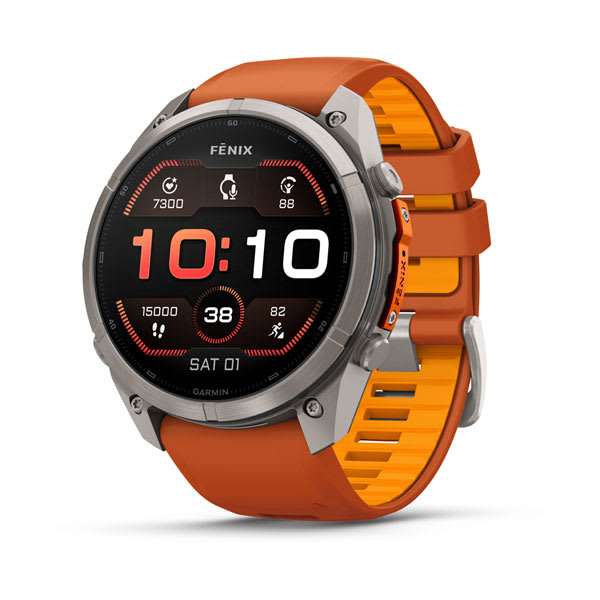
Garmin fenix 9 Review 2026: $1,000 Price, 29-Day Battery, Health Accuracy, HSA/FSA Status
Garmin’s new flagship adventure watch promises weeks of battery and a brighter screen. Garmin’s wrist heart rate has held up well in independent studies, but the heart rate variability, sleep and blood oxygen numbers behind its training and recovery scores deserve more caution than the dashboards suggest.
Presented By Our Partners


Garmin launched the fenix 9 series in August 2026 (Android Authority; ProPakistani), and Notebookcheck reported a global release with a brighter AMOLED display and up to 29 days of battery life (Notebookcheck). iDevice reported that the fenix 9 starts at $1,000, with orders opening August 28 (iDevice), and TechRepublic described the fenix 9 Pro as a $100 upgrade (TechRepublic). This review looks past the launch to what Garmin’s sensors have been shown to measure in published studies.
First look. No peer-reviewed study has tested the fenix 9 itself yet; a PubMed search on October 28, 2026 found none. The accuracy section draws on studies of the fenix 6, Forerunner 955 and 265, Vivosmart and Venu models that use Garmin’s optical heart rate sensors and algorithms. We could not confirm from launch headlines which sensor generation the fenix 9 uses, and it may perform better or simply differently.
The short answer: The Garmin fenix 9 is Garmin’s August 2026 flagship outdoor and multisport watch, starting at about $1,000. Garmin wrist heart rate has matched chest ECG closely in several independent studies, and a fenix 6 estimated VO2 max within about 7 percent of lab testing. Heart rate variability, sleep and blood oxygen readings from earlier Garmin watches carried large errors.
- Best for: Hikers, ultrarunners, climbers and triathletes who want weeks of battery, maps and detailed training metrics on one rugged watch.
- Not for: Anyone who needs a diagnosis, buyers who mainly want health alerts, or anyone who does not want to spend about $1,000 on a watch.
- Price (October 2026): From about $1,000 at launch; the fenix 9 Pro costs about $100 more, and Technobezz has reported the Pro discounted to $1,099.99.
- Regulatory status: Garmin’s ECG App was FDA cleared in January 2023, and Notebookcheck lists ECG among the fenix 9’s features. We found no FDA clearance specific to the fenix 9 hardware, and no FDA clearance for Garmin sleep apnea, blood pressure or background irregular rhythm alerts.
- Evidence: Good for heart rate at rest and in steady exercise; moderate for VO2 max; limited for heart rate variability and sleep; poor for blood oxygen; none published for the fenix 9 itself or for Garmin’s ECG App in an independent PubMed study.
What Is the Garmin fenix 9?
The Garmin fenix 9 is Garmin’s flagship rugged GPS multisport watch, launched in August 2026 in standard and Pro versions, that tracks heart rate, heart rate variability, sleep, blood oxygen and training load, with maps and an ECG app on the wrist.
Retailer listings show 43mm, 47mm and 51mm titanium cases (JB Hi-Fi, JB Hi-Fi, JB Hi-Fi). Wareable reported a thinner titanium case and improved LTE (Wareable), ARY News reported that the fenix 9 Pro adds a titanium case and satellite connectivity (ARY News), and ChannelNews led with 29-day battery life and a brighter OLED display (ChannelNews). ProPakistani described the series as offering nearly two months of battery life (ProPakistani). Those figures come from the publications’ headlines and were not tested by Healthcare Discovery.
Early reviews are positive. T3 called the fenix 9 Pro a titanium-clad triumph with familiar foundations (T3); TechRadar, after testing in the French Alps, wrote that the best gets better (TechRadar); Tom’s Guide called it a titanium titan for your biggest adventures (Tom’s Guide); and Android Central said the fenix 9 raises the bar with faster maps and smarter training (Android Central). In a TechRadar run against an electrical chest strap, both the fenix 9 Pro and the Apple Watch Ultra 4 nailed heart rate (TechRadar).
How Does the Garmin fenix 9 Work?
The fenix 9 reads the body through light, electricity and motion. An optical sensor on the back tracks each pulse for heart rate and heart rate variability, red and infrared light estimate blood oxygen, an accelerometer tracks movement and sleep, and the ECG app records a single-lead heart tracing when you touch the watch.
The optical sensor does most of the work. Each heartbeat pushes blood into the small vessels of the wrist, and the sensor sees the skin brighten and dim with every beat. Overnight, the watch measures the spacing between beats to calculate heart rate variability, which Garmin feeds into its recovery, stress and readiness style scores.
Fitness numbers are models built on those signals. VO2 max is estimated from your heart rate and pace during outdoor runs or rides, and race time predictions build on that estimate. Sleep stages are inferred from movement and heart rhythm, not measured from brain waves as in a sleep lab. None of these numbers is a diagnosis.
How Accurate Is the Garmin fenix 9? What the Research Shows
No study has tested the fenix 9 yet. On earlier Garmin watches, heart rate tracked a chest ECG closely at rest and in steady exercise, and VO2 max estimates were usually within 10 percent of lab tests. Heart rate variability, sleep staging and blood oxygen readings carried large errors, and we found no independent study of Garmin’s ECG App.
Heart rate. In 58 Hispanic adults with Fitzpatrick skin types III to V cycling at moderate and vigorous intensity, Apple and Garmin watches had the lowest mean absolute error against a Polar H10 chest strap, although error spread more widely in people with higher BMI and the darkest skin tones tested (PMID 42197732). In 32 participants tracked over 24 hours against a medical-grade ECG, four consumer optical sensors including the Garmin Venu 2S had mean absolute percentage errors of 2.2 to 4.7 percent, but the Venu 2S underestimated time at vigorous intensity by 15.9 percent, and upper arm sensors outperformed wrist sensors (PMID 39508366). Over 72 to 96 hours of everyday wear in 10 adults, a Garmin Vivosmart 5 averaged 1.16 beats per minute from a Holter monitor, with a mean intraclass correlation of 0.902 and limits of agreement of about plus or minus 12.4 beats per minute (PMID 42099266).
Heart rate variability. In 23 healthy adults, a Forerunner 955 with Garmin’s Elevate v4 sensor was highly reliable for resting heart rate, but its heart rate variability agreed poorly with ECG, with individual errors from minus 43 to plus 52 percent lying down and minus 41 to plus 118 percent sitting; the authors judged it fine for within-person trends but not for absolute values (PMID 42944412). Across 536 nights in 13 adults, a fenix 6’s overnight heart rate variability showed poor agreement with ECG, with a mean absolute percentage error of 10.52 percent, behind Oura and WHOOP; the fenix was left out of the resting heart rate comparison because of methodological inconsistencies (PMID 40834291).
Atrial fibrillation. In 200 Taiwanese patients wearing a Garmin smartwatch alongside a 24 hour Holter monitor, the researchers’ analysis of the watch’s pulse recordings detected atrial fibrillation with 97.3 percent sensitivity, 88.6 percent specificity and a 91.6 percent positive predictive value (PMID 35131229). That study tested Garmin’s sensor with the researchers’ own processing, not a Garmin alert. We found no independent, peer-reviewed validation of Garmin’s FDA-cleared ECG App on PubMed as of October 28, 2026.
Sleep. In a sleep lab study of 62 adults with polysomnography, the Garmin Vivosmart 4 (25 participants with data) had the lowest agreement of six wrist devices, with a Cohen’s kappa of 0.21, and overestimated total sleep time by 38.44 minutes on average (PMID 40303381). In 53 young adults, the Garmin Vivosmart was the only one of five consumer devices that could not estimate total sleep time comparably to research-grade actigraphy (PMID 38276327). Newer Garmin watches may do better, but the most recent adult polysomnography test of Garmin sleep staging we found used the Vivosmart 4.
VO2 max. In 19 adults, a fenix 6 estimated VO2 max with a mean absolute percentage error of 7.05 percent and a concordance of 0.73 against lab gas analysis, meeting the study’s validity criteria (PMID 39797066). In 20 runners training for a half marathon, a Forerunner 265 overestimated VO2 max (43.95 versus 41.10 mL/kg/min at the start, 45.00 versus 42.43 after 12 weeks) and predicted half marathon times about 7.6 minutes faster than runners actually ran, although average errors stayed under 10 percent (PMID 42822520).
Featured Partner
Invest in the Infrastructure Behind Modern Medicine
As healthcare expands beyond hospital walls, the buildings and campuses supporting that shift are generating compelling returns for investors who move early. The Healthcare Real Estate Fund offers qualified investors direct access to a curated portfolio of medical office, outpatient, and specialty care facilities.
Learn More →
Blood oxygen. In the same fenix 6 study, 22 participants were tested in normal and low oxygen conditions against a medical-grade pulse oximeter, and the watch failed to measure blood oxygen accurately under any condition, with a concordance of just 0.10 (PMID 39797066).
Company ties: none of these studies lists Garmin employees among its PubMed author affiliations. The overnight heart rate variability study lists affiliations with The Ohio State University and the US Air Force Research Laboratory (PMID 40834291); the others list academic or hospital affiliations only. PubMed affiliations are not a full disclosure of funding or conflicts.
What the Garmin fenix 9 Gets Right
The fenix 9 gets the training essentials right: wrist heart rate that has matched chest ECG well in steady effort, a VO2 max estimate that landed within 10 percent of lab testing in the studies we found, an FDA-cleared ECG app, and battery life measured in weeks rather than days.
Dependable heart rate for training. Garmin had among the lowest heart rate errors in a cycling study (PMID 42197732) and stayed within about 1 beat per minute of a Holter monitor on average over days of wear (PMID 42099266), so heart rate zones and resting heart rate trends are trustworthy.
Useful fitness estimates. A 7.05 percent average VO2 max error on the fenix 6 (PMID 39797066) makes the trend line a reasonable guide to whether your fitness is improving.
Battery that suits sleep and expedition tracking. Up to 29 days reported by Notebookcheck means the watch can stay on your wrist through nights and multi-day trips, which matters for overnight heart rate and heart rate variability trends.
Where the Garmin fenix 9 Falls Short
The weaknesses are heart rate variability that is off in absolute terms, sleep tracking that was among the weakest in lab tests of earlier Garmin models, blood oxygen that failed validation, heart rate that lags during hard intervals, a high price, and no independent data on the fenix 9 itself.
Heart rate variability is a trend, not a number. Individual errors of up to 118 percent seated (PMID 42944412) and a 10.52 percent average overnight error on the fenix 6 (PMID 40834291) mean recovery and readiness scores built on it are rough guidance.
Sleep tracking lags rivals. A kappa of 0.21 against polysomnography for the Vivosmart 4, the lowest of six devices, and a 38 minute average overestimate of sleep time (PMID 40303381) make Garmin sleep stages approximate at best. Our sleep score essay explains why.
Blood oxygen is not reliable. The fenix 6 failed to track blood oxygen against a medical oximeter, including in low oxygen conditions (PMID 39797066). Climbers at altitude should not rely on it to judge acclimatization.
Hard efforts and intervals. The Venu 2S underestimated time at vigorous intensity by 15.9 percent (PMID 39508366). For interval training, a chest strap remains more precise.
New hardware, older evidence. Every study above tested an earlier Garmin watch. Until researchers test the fenix 9, its accuracy is inferred, not shown.
Garmin fenix 9 vs Apple Watch Ultra 4 vs Galaxy Watch Ultra 2 vs Forerunner 970
The fenix 9 is the battery and navigation choice; the Apple Watch Ultra 4 has more FDA-cleared health alerts but charges every couple of days. The Galaxy Watch Ultra 2 is Samsung’s rugged Android rival, and the Forerunner 970 offers Garmin’s training features in a lighter running watch.
| Feature | Garmin fenix 9 | Apple Watch Ultra 4 | Galaxy Watch Ultra 2 | Forerunner 970 |
|---|---|---|---|---|
| Form | Rugged multisport watch, 43, 47 or 51mm | Rugged smartwatch, 49mm | Rugged smartwatch | Running and triathlon watch |
| Battery (reported) | Up to 29 days (Notebookcheck) | Up to 50 hours (MacObserver) | Not verified for this review | Up to 15 days (Notebookcheck) |
| ECG app | Garmin ECG App, FDA cleared (2023) | FDA cleared (2018) | Not verified for this review | Garmin ECG App |
| Sleep apnea alerts | No FDA clearance found | FDA cleared (2024) | Not verified for this review | No FDA clearance found |
| Price (October 2026) | From about $1,000 at launch | $799 at launch | Not verified for this review | Not verified for this review |
Our Forerunner 970 review covers the cheaper Garmin option with similar training metrics, and our Garmin Venu 4 review covers Garmin’s everyday health watch. iPhone owners should compare our Apple Watch Ultra 4 review, and Android users our Galaxy Watch Ultra 2 review. For other long-battery adventure watches, see our Polar Grit X2 Pro review and Suunto Race 2 and Vertical 2 review. Every device we track is in our healthtech wearables guide.
How Much Does the Garmin fenix 9 Cost, and Is It HSA or FSA Eligible?
The Garmin fenix 9 starts at about $1,000, according to iDevice (iDevice), and TechRepublic described the Pro as a $100 step up (TechRepublic). Technobezz has since reported the fenix 9 Pro discounted to $1,099.99 (Technobezz), and in Germany Notebookcheck reported a deal at an all-time best price (Notebookcheck). Truemed lists the fenix 9 in its HSA and FSA shop (Truemed), and Garmin has announced a partnership with Truemed to unlock HSA and FSA funds for fitness products (Garmin Newsroom).
A Truemed listing is not automatic eligibility: it depends on Truemed’s own screening and on your plan’s rules, so ask your HSA or FSA administrator before paying with pre-tax funds. Insurance does not cover the watch as far as we found. Budget too for the follow-up a watch can prompt: after an abnormal ECG reading, the usual next step is a clinician-ordered heart monitor.
Who Should Buy the Garmin fenix 9, and Who Should Skip It?
The fenix 9 suits endurance athletes and outdoor travelers who want weeks of battery, maps and accurate training heart rate in one rugged watch. It is a poor fit for people who mainly want health alerts or sleep tracking, for anyone who needs a diagnosis, and for buyers who would use only a fraction of what $1,000 buys.
Good candidates:
- Ultrarunners, hikers, climbers and triathletes who need long battery life, navigation and training load in one watch.
- People who train by heart rate zones and want wrist heart rate that tracks a chest strap closely in steady effort.
- Garmin users who want an on-demand ECG to record a heart rhythm when something feels off, to share with a clinician.
Better served by something else:
- Chest pain, fainting, or a racing heart with shortness of breath: that is an emergency. Call 911; do not wait for a watch.
- Buyers focused on health alerts: the Apple Watch Ultra 4 adds FDA-cleared sleep apnea and hypertension notifications.
- Runners who do not need maps or a rugged case: the Forerunner 970 offers Garmin’s training metrics for less.
- Anyone who suspects sleep apnea or low oxygen levels: book a sleep study or use a medical oximeter rather than relying on the watch.
If a reading sends you looking for a cardiologist or sleep specialist, the Healthcare Discovery doctor directory lists clinicians by state and specialty.
What This Means for You
The fenix 9 is a training and adventure tool first. Its most dependable health number is heart rate, which Garmin watches have measured well against chest ECG in steady effort, and its VO2 max trend is a fair guide to fitness. Its ECG App is FDA cleared, but we found no independent study of how it performs. For the wider picture of what drives heart risk, see our heart health evidence review.
Treat heart rate variability, readiness, sleep stage and blood oxygen numbers as trends, not verdicts. Buy the fenix 9 for its battery, maps and training data; if health screening is your main goal, a watch with more FDA-cleared alerts will serve you better for less money.
Compiled by Healthcare Discovery from the cited PubMed studies and Garmin’s launch materials. Every PMID, study size and result on this page was checked against PubMed on October 28, 2026. Launch, price, specification and review details come from the named publications’ headlines and listings and were not independently tested. This is a first look; no Healthcare Discovery hands-on testing was done.
How accurate is the Garmin fenix 9 heart rate?
No study has tested the fenix 9 itself yet. Earlier Garmin watches tracked chest ECG closely: a Vivosmart 5 averaged 1.16 beats per minute from a Holter monitor over days of wear (PMID 42099266), and Garmin had among the lowest errors in a cycling study (PMID 42197732). Accuracy drops during hard intervals.
How long does the Garmin fenix 9 battery last?
Notebookcheck and ChannelNews report up to 29 days, and ProPakistani described nearly two months of battery life for the series. Healthcare Discovery has not tested battery life.
Does the Garmin fenix 9 have an FDA-cleared ECG?
Garmin’s ECG App was FDA cleared in January 2023, and Notebookcheck lists ECG among the fenix 9’s features. We found no independent peer-reviewed study of the Garmin ECG App, and no FDA clearance for Garmin sleep apnea or blood pressure alerts.
How accurate is Garmin sleep tracking?
Limited. In a polysomnography study, the Garmin Vivosmart 4 had the lowest agreement of six devices (kappa 0.21) and overestimated sleep time by 38.44 minutes on average (PMID 40303381). Use Garmin sleep data for trends.
Is the Garmin fenix 9 HSA or FSA eligible?
Truemed lists the fenix 9 in its HSA and FSA shop, and Garmin has a Truemed partnership. Eligibility depends on Truemed’s screening and your plan’s rules, so check with your administrator before buying with pre-tax funds.
How much does the Garmin fenix 9 cost?
iDevice reported it starts at $1,000, and TechRepublic described the Pro as a $100 upgrade. Technobezz has reported the fenix 9 Pro discounted to $1,099.99. Check Garmin for current pricing.
Sources
- Kostrna J, et al. PPG-based heart rate accuracy in Hispanic adults with Fitzpatrick III-V skin tones: an evaluation of body composition and skin-tone effects. Sensors, 2026. PMID 42197732
- Neudorfer M, et al. Validity of four consumer-grade optical heart rate sensors for assessing volume and intensity distribution of physical activity. Scandinavian Journal of Medicine and Science in Sports, 2024. PMID 39508366
- Tan C, et al. Reliability and validity of a smartwatch with a photoplethysmograph: comparison with a Holter electrocardiograph. Chronobiology International, 2026. PMID 42099266
- Casanova-Lizón A, et al. Pulse vs. R-R interval: validity and reliability of the Garmin Elevate v4 sensor for ultra-short HR and HRV monitoring in healthy adults. Sensors, 2026. PMID 42944412
- Dial MB, et al. Validation of nocturnal resting heart rate and heart rate variability in consumer wearables. Physiological Reports, 2025. PMID 40834291
- Chang PC, et al. Atrial fibrillation detection using ambulatory smartwatch photoplethysmography and validation with simultaneous Holter recording. American Heart Journal, 2022. PMID 35131229
- Schyvens AM, et al. A performance validation of six commercial wrist-worn wearable sleep-tracking devices for sleep stage scoring compared to polysomnography. Sleep Advances, 2025. PMID 40303381
- Kainec KA, et al. Evaluating accuracy in five commercial sleep-tracking devices compared to research-grade actigraphy and polysomnography. Sensors, 2024. PMID 38276327
- Carrier B, et al. Validation of aerobic capacity (VO2max) and pulse oximetry in wearable technology. Sensors, 2025. PMID 39797066
- Howard J, et al. Validity of the Garmin Forerunner 265 to predict VO2max and race performance times. Journal of Medical Engineering and Technology, 2026. PMID 42822520
- Android Authority. Garmin launches fenix 9 series, August 2026. Android Authority
- ProPakistani. Garmin Fenix 9 and Fenix 9 Pro launch with nearly two-month battery life, August 2026. ProPakistani
- Notebookcheck. Garmin releases new high-end smartwatch globally with brighter AMOLED display and 29 days battery life. Notebookcheck
- iDevice. The Fenix 9 starts at $1,000 and orders open August 28. iDevice
- TechRepublic. Garmin Fenix 9 vs Fenix 9 Pro: is the $100 upgrade worth it? TechRepublic
- Technobezz. Garmin fēnix 9 Pro discounted to $1,099.99. Technobezz
- Notebookcheck. Deal zum Allzeit-Bestpreis: Die aktuelle Garmin Fenix 9 mit Karten, Musik, EKG ist günstig zu haben. Notebookcheck
- ChannelNews. Garmin unveils Fenix 9 with 29-day battery life and brighter OLED display. ChannelNews
- Wareable. Garmin Fenix 9 and 9 Pro land with thinner titanium case and improved LTE. Wareable
- ARY News. Garmin fēnix 9 Pro launches with titanium case and satellite connectivity. ARY News
- JB Hi-Fi. Garmin fenix 9 43mm, 47mm and 51mm product listings. 43mm, 47mm, 51mm
- T3. Garmin Fenix 9 Pro review: a titanium-clad triumph with familiar foundations. T3
- TechRadar. Garmin Fenix 9 Pro review: the best gets better as we put Garmin’s new flagship through its paces in the French Alps. TechRadar
- Tom’s Guide. Garmin Fenix 9 Pro review: a titanium titan for your biggest adventures. Tom’s Guide
- Android Central. The Garmin Fenix 9 raises the bar with faster maps and smarter training. Android Central
- TechRadar. Apple Watch Ultra 4 vs Garmin Fenix 9 Pro: I wore them both for a run with an electrical heart rate monitor, and both watches nailed it. TechRadar
- TechCrunch. Garmin launches a new FDA-cleared ECG app for the Venu 2 Plus, January 2023. TechCrunch
- IoT M2M Council. Garmin launches FDA-cleared ECG Watch App. IoT M2M Council
- Truemed. Garmin fenix 9 listing. Truemed
- Garmin. Garmin teams up with Truemed to unlock HSA/FSA funds for fitness products. Garmin Newsroom
- Notebookcheck. Garmin Forerunner 970 mit LED-Taschenlampe, EKG und 15 Tagen Laufzeit. Notebookcheck
- Apple. ECG app and irregular heart rhythm notification available today on Apple Watch, December 2018. Apple Newsroom
- AppleInsider. FDA approves Apple Watch sleep apnea detection notification, September 2024. AppleInsider
- MobiHealthNews. Apple receives FDA nod for hypertension notification feature, September 2025. MobiHealthNews
- NewsBytes. Apple starts pre-orders for Apple Watch Ultra 4 at $799. NewsBytes
- MacObserver. Apple Watch Ultra 4 vs Apple Watch Ultra 2: 36 to 50 hours, S9 to S11 and satellite added. MacObserver


Similar Posts

Airthings Wave Plus: Radon and Indoor Air Quality Monitor for Long-Term Health
Radon is the second leading cause of lung cancer in the United States. It is colorless, odorless, and present in roughly one in fifteen American homes at levels the EPA…
NMN for Endurance: What 9 Trials Show (2026 Evidence Grade)
A real but small signal on walking speed and submaximal endurance, nothing on strength or VO2max, and one study suggesting NMN may blunt the training response. Presented By Our Partners…
The First Human Reprogramming Trial Is an Eye Study, Not Proof of Age Reversal
ER-100 has entered an 18-person Phase 1 eye trial. Here is what partial epigenetic reprogramming has, and has not, shown in humans.

The Daily Rounds: Longevity & Health Care Brief | May 29, 2026
🧠 Blocking Parkinson's Spread Protein: Penn Medicine researchers identified GPNMB as the key driver of alpha-synuclein propagation in Parkinson's disease, with monoclonal antibodies successfully halting the spread in preclinical models and opening the first potential disease-modifying treatment pathway. 🔬 FDA Approves First Epigenetic Reprogramming Trials: The FDA greenlit the first human trials testing partial epigenetic reprogramming as an anti-aging intervention, marking the most significant regulatory milestone for longevity medicine in years. 🤖 GLP-1 Drugs Show Cancer Prevention Signal at ASCO 2026: Opening-day research at the world's largest oncology conference showed GLP-1 receptor agonists reduce breast cancer incidence in high-risk women, extending the drugs' clinical case well beyond weight management. 🧠 Long COVID Is Not Brain Inflammation: A landmark neuroimaging study found no widespread brain inflammation in long COVID patients, redirecting research and treatment toward stress-response and emotional regulation pathways instead. 🥗 Microbiome Ranking Links Gut Species to Longevity: A 34,000-person study produced the first species-level gut microbiome ranking tied to longevity markers, providing a precision nutrition framework for designing diets that specifically promote healthspan.
Nutrisense: CGM with Registered Dietitian Coaching for Metabolic Optimization
Data without interpretation is noise. Nutrisense bridges the gap between continuous glucose monitoring and meaningful health change by pairing sensors with registered dietitians. Presented By Our Partners The wearable health…
Garmin Epix Pro Gen 2: AMOLED Endurance Watch With FDA Cleared ECG and Advanced Navigation
Garmin’s premium AMOLED multisport watch pairs FDA cleared atrial fibrillation screening with deep training analytics, multi band GPS, and expedition grade durability in a display that finally matches the data…
