
Your Gut Microbiome Is Talking to Your Brain, Heart, and Kidneys: Five 2026 Studies Reveal the Body’s Hidden Communication Network
For decades, the gut was treated as a simple digestive organ. Food went in, nutrients were absorbed, waste came out. The trillions of bacteria living inside it were considered passengers at best and pathogens at worst.
Presented By Our Partners



That era is over.
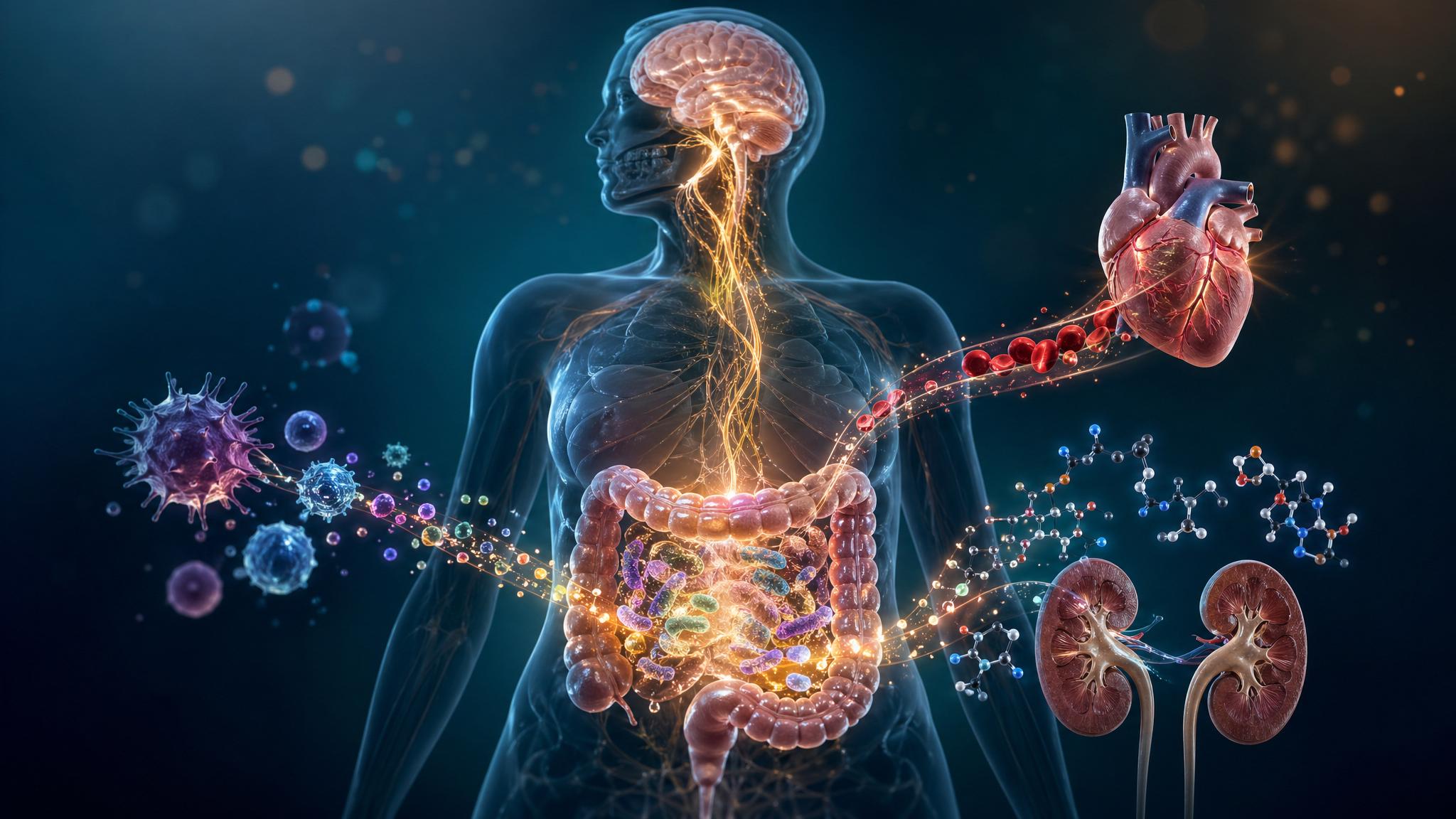
In the first three months of 2026, a cascade of landmark studies has rewritten our understanding of what the gut microbiome actually does. It is not a bystander. It is an active signaling hub that communicates with your brain, your heart, and your kidneys through neural, immune, and metabolic pathways. When those signals go wrong, the consequences ripple across every major organ system.
What follows is a deep examination of five studies published in early 2026 that, taken together, establish the gut microbiome as the most underappreciated variable in human health and longevity.
A Gut Bacterium That Steals Your Memory
The most striking study of the year so far was published in Nature in March 2026 by researchers at Stanford Medicine and the Arc Institute. The paper, titled "Intestinal interoceptive dysfunction drives age-associated cognitive decline," identified a precise biological mechanism by which changes in gut bacteria drive memory loss during aging.
The research team found that a bacterium called Parabacteroides goldsteinii increases in relative abundance as mice age. That shift matters because P. goldsteinii produces medium-chain fatty acids that accumulate in the gut lining. Those fatty acids activate myeloid immune cells in the intestinal wall, triggering a localized inflammatory response.
Here is where the story gets remarkable. That inflammation does not stay in the gut. It impairs the vagus nerve, the longest cranial nerve in the body, which serves as the primary communication highway between the gut and the brain. When vagal signaling to the hippocampus is disrupted, the brain region responsible for memory formation and spatial navigation stops functioning properly.
The researchers demonstrated this through a series of elegant experiments. When they colonized young, healthy mice with P. goldsteinii, those animals developed cognitive deficits. They could no longer recognize novel objects or navigate mazes with the same proficiency. Brain imaging confirmed reduced hippocampal activity in the colonized mice.
But the most important finding was the reversal. When the team stimulated the vagus nerve in aged mice using the gut hormone cholecystokinin (CCK) or GLP-1 receptor agonists, which are drugs in the same class as semaglutide (Ozempic), the old mice performed as well as young mice on every cognitive test. Their memory was restored.
This study is the first to trace a complete causal chain from a specific gut bacterium to a specific metabolite to a specific immune response to a specific nerve pathway to a specific cognitive deficit, and then reverse it pharmacologically. It is published in Nature, it was conducted at two of the world’s leading research institutions, and it has profound implications for how we think about brain aging.
The important caveat: this work was done entirely in mice. Human trials have not yet begun. But the mechanism it identifies, vagal interoceptive dysfunction driven by microbial metabolites, aligns with a growing body of human observational research linking gut dysbiosis to cognitive decline in aging populations.
Your Gut Predicts Your Heart Attack Years in Advance
While the Stanford team was mapping the gut-brain axis, a separate group of researchers was uncovering an equally important connection between the gut microbiome, kidney function, and cardiovascular disease.
A study published in Nature Communications in 2026 identified what the authors call a "gut microbiome-kidney-heart axis" that predicts future cardiovascular events. The research focused on how microbial metabolism of aromatic amino acids, specifically phenylalanine and tyrosine, interacts with kidney function to influence heart health.
The findings showed that markers related to gut microbial metabolism of these amino acids associate with circulating pro-atrial natriuretic peptide (a cardiac biomarker) and estimated glomerular filtration rate (a measure of kidney function) in a metabolically healthy European population. Critically, the microbiome-related metabolites identified as mediators of this gut-kidney axis also associated with incident cardiovascular disease in an external validation cohort from Canada.
This is not a correlation study looking backward. It is a prospective finding showing that gut microbiome composition today can predict cardiovascular events years from now. The mechanism involves a three-way communication loop: gut bacteria produce metabolites that affect kidney filtration, which in turn alters cardiac biomarkers, which predict clinical heart disease.
The clinical significance is substantial. If gut microbial metabolites can serve as early warning signals for cardiovascular disease before traditional risk factors like blood pressure or cholesterol become abnormal, it opens an entirely new window for prevention.
Featured Partner
Invest in the Infrastructure Behind Modern Medicine
As healthcare expands beyond hospital walls, the buildings and campuses supporting that shift are generating compelling returns for investors who move early. The Healthcare Real Estate Fund offers qualified investors direct access to a curated portfolio of medical office, outpatient, and specialty care facilities.
Learn More →
4,792 People, 6.2 Years, and a Microbiome That Knew What Was Coming
The HELIUS cohort study, published in npj Biofilms and Microbiomes in March 2026, provides the largest and most diverse prospective evidence yet that the gut microbiome predicts cardiometabolic disease outcomes.
Researchers at Amsterdam UMC collected fecal samples from 4,792 participants representing Dutch, Surinamese, Turkish, Moroccan, and Ghanaian ethnic backgrounds. They analyzed the samples using 16S rRNA sequencing and then followed participants for an average of 6.2 years, with some followed for up to 9.5 years.
At follow-up, new diagnoses of hypertension, dyslipidemia, and diabetes were assessed. Major adverse cardiovascular events (MACE) were obtained from hospital and mortality registries.
The results were clear: baseline gut microbiota composition predicted long-term cardiometabolic outcomes across all ethnic groups. Higher abundance of Eubacterium xylanophilum group species and Akkermansia muciniphila was associated with lower risk of major adverse cardiovascular events. In contrast, Ruminococcus gnavus group species was associated with higher cardiovascular event risk.
Akkermansia muciniphila has emerged as one of the most consistently protective gut bacteria identified in human research. It strengthens the intestinal barrier, reduces systemic inflammation, and improves metabolic signaling. Its presence in the gut appears to be a reliable marker of metabolic health, and its absence is increasingly recognized as a risk factor.
The HELIUS study is especially valuable because of its multi-ethnic design. Most microbiome research has been conducted in predominantly white European populations, making it difficult to generalize findings. The HELIUS cohort demonstrates that the gut-cardiometabolic connection holds across diverse genetic and dietary backgrounds, which strengthens the case for universal relevance.
The Dyslipidemia Signature Hiding in Your Gut
A fourth study, published in Microbiology Spectrum in March 2026, zoomed in on the relationship between gut bacteria and dyslipidemia, the lipid imbalance that frequently precedes cardiovascular disease and remains the leading cause of death worldwide.
Led by geneticist Han-Na Kim at the Samsung Advanced Institute for Health Sciences and Technology at Sungkyunkwan University in Seoul, the research team compared fecal and blood samples from 1,384 participants, 895 of whom had diagnosed dyslipidemia.
Using metagenomic sequencing, the team identified a distinct gut microbiome signature associated with dyslipidemia. Participants with lipid imbalances had higher levels of Bacteroides caccae, a bacterium previously linked to inflammatory and metabolic processes. Participants with healthy cholesterol levels had higher prevalence of Coprococcus eutactus and Coprococcus catus, both of which produce short-chain fatty acids with demonstrated anti-inflammatory effects.
Short-chain fatty acids, particularly butyrate, propionate, and acetate, are among the most important metabolites produced by a healthy gut microbiome. They fuel the cells lining the intestinal wall, reduce intestinal permeability (so-called "leaky gut"), modulate immune function, and influence lipid metabolism throughout the body. When the bacteria that produce them are diminished, the downstream effects cascade across multiple organ systems.
The Kim study adds to a growing body of evidence suggesting that gut microbiome testing could eventually become a standard component of cardiovascular risk assessment. Rather than waiting for cholesterol levels to become abnormal on a standard lipid panel, clinicians might one day identify at-risk patients by analyzing their gut bacterial composition.
TMAO: The Metabolite That Connects Diet, Bacteria, and Heart Disease
No discussion of the gut-heart axis is complete without addressing trimethylamine N-oxide, or TMAO. This metabolite, produced when gut bacteria digest nutrients like choline, carnitine, and betaine found in red meat, eggs, and certain fish, has been one of the most studied microbial molecules in cardiovascular research.
A 2026 review published in Gut Microbes examined emerging therapies that target TMAO production as a strategy for reducing cardiovascular risk. The review highlighted three potential intervention points: reducing the prevalence of TMAO-producing bacteria, suppressing microbial gene expression involved in trimethylamine production, and inhibiting the host liver enzyme (flavin-containing monooxygenase 3, or FMO3) that converts trimethylamine into TMAO.
Dietary fiber has emerged as one of the most practical interventions. A randomized, double-blind pilot study published in the European Journal of Clinical Nutrition in 2025 investigated the influence of fiber supplementation on intestinal TMAO formation after beef consumption. The study found that dietary fiber significantly modulated TMAO levels, likely by altering the composition of gut bacteria away from trimethylamine-producing species.
Meanwhile, a precision health trial examined polyphenol effects on TMAO in postmenopausal women, modulated by urolithin A and equol metabotypes. This line of research represents a shift toward personalized microbiome interventions, where the therapeutic strategy is tailored not just to the patient’s genetics but to their individual gut bacterial ecosystem.
The Emerging Picture: One Microbiome, Many Diseases
Taken together, these five lines of research paint a picture that is both sobering and hopeful.
The sobering part: the gut microbiome is implicated in cognitive decline, cardiovascular disease, kidney dysfunction, lipid disorders, and systemic inflammation. Disruption of the microbial ecosystem does not produce a single disease. It produces vulnerability across every major organ system, often years before clinical symptoms appear.
The hopeful part: the same studies that identify these risks also point to interventions. Vagus nerve stimulation reversed memory loss in the Stanford study. Short-chain fatty acid-producing bacteria were protective in the HELIUS cohort. Dietary fiber reduced TMAO production in clinical trials. Akkermansia muciniphila abundance predicted lower cardiovascular event risk across diverse populations.
The gut microbiome is not a black box. Researchers are mapping its communication pathways with increasing precision, identifying specific bacteria, specific metabolites, and specific host responses that drive disease or protect against it. The field is moving from correlation to mechanism, and from mechanism to intervention.
What remains is the hard work of translating these findings into clinical practice. Microbiome testing is available but not yet standardized. Probiotic interventions exist but are often poorly targeted. Dietary recommendations are well supported but inconsistently implemented.
The science, however, is no longer in question. Your gut microbiome is talking to your brain, your heart, and your kidneys. The question is whether we are listening.
What This Means for You
The practical implications of this research fall into several categories.
Diet remains the single most powerful lever. Every study discussed here points back to the same dietary fundamentals: high fiber intake promotes short-chain fatty acid-producing bacteria. Diverse plant consumption supports microbial diversity. Excessive red meat and processed food consumption promotes TMAO-producing species and inflammatory bacteria. You do not need a microbiome test to start acting on this evidence.
The vagus nerve is trainable. While the Stanford study used pharmacological interventions in mice, human research has consistently shown that vagal tone can be improved through slow breathing exercises, cold exposure, aerobic exercise, and meditation. If the gut-brain axis depends on vagal signaling integrity, practices that strengthen that nerve may offer neuroprotective benefits.
GLP-1 drugs may have unexpected cognitive benefits. The Stanford finding that GLP-1 receptor agonists reversed age-related memory deficits in mice adds to the growing list of potential benefits beyond weight loss and blood sugar control. This does not mean these drugs should be prescribed for cognitive decline today, but it suggests that ongoing human trials should include cognitive endpoints.
Microbiome testing is approaching clinical utility. The HELIUS study and the Sungkyunkwan University research both demonstrate that gut bacterial composition predicts disease outcomes years in advance. As sequencing costs continue to fall and analytical frameworks mature, microbiome profiling may become a routine component of preventive health screening.
Protect your Akkermansia. This bacterium appears repeatedly in protective roles across cardiovascular, metabolic, and longevity research. It thrives on polyphenol-rich foods like berries, pomegranates, green tea, and cranberries. Supplemental Akkermansia muciniphila is commercially available and has been studied in human clinical trials with promising safety and efficacy data, though the evidence base is still maturing.
The gut microbiome is no longer a curiosity of biology. It is the central switchboard of human health, and 2026 is the year the evidence became too strong to ignore.


Similar Posts
Withings Body Scan 2: 60+ Biomarker Smart Scale with ECG and Longevity Assessment
What if a 90-second daily ritual on your bathroom scale could tell you more about your biological trajectory than most annual physicals? Presented By Our Partners Body composition is not…
The Cardiac Amyloidosis Revolution: How ATTR Therapies Are Rewriting Heart Failure Treatment in 2026
For decades, cardiac amyloidosis was a diagnosis cardiologists whispered and patients rarely heard. In 2026, tafamidis, acoramidis, RNA silencers, and a CRISPR gene editing therapy are transforming ATTR care and…

Plunge Cold Plunge Tub Review: Electric Cold Water Immersion for Recovery, Inflammation, and Mental Resilience
The Plunge delivers consistent, temperature controlled cold water immersion without the ice runs, bringing clinical grade cold exposure to the home recovery protocol. Presented By Our Partners Cold water immersion…

The New Race in Healthcare AI Is Not to Detect More. It Is to Finish the Job.
Healthcare AI is getting better at finding signals. The harder test is whether those signals turn into accountable action, completed care, and measured outcomes.
Peri: First Wearable Device Purpose-Built for Perimenopause Symptom Tracking
A palm-sized adhesive sensor worn on the upper abdomen that continuously tracks hot flashes, night sweats, anxiety, sleep patterns, menstrual cycles, and activity levels to give women objective biometric data…
Senolytic CAR-T Cells: How Cancer Immunotherapy Is Being Reengineered to Clear Aging Cells
First-generation senolytics like dasatinib plus quercetin showed only subtle effects in human trials. A new generation of senolytic CAR-T cells borrows cancer immunotherapy and retrains it to hunt senescent cells….
