
Helios Review: The 1,000-Protein Blood Test From the Scientists Behind SHERLOCK
Helios wants to read about 1,000 proteins from a single drop of blood you collect at home, then hand the results to an AI coach. The founders invented the first FDA-authorized CRISPR test, and the science behind blood proteomics is real. The company says its own testing shows a drop from your arm matches a lab draw. Until that data is published, it is the question that matters most.
Presented By Our Partners


Every cell in your body is talking, and most of what it says ends up in your blood. A stressed heart muscle cell leaks troponin. A struggling kidney changes what it filters. An inflamed blood vessel sheds signaling molecules into the bloodstream long before anyone feels a symptom. For most of medical history, a doctor listened to perhaps a dozen of those voices at a time: cholesterol, glucose, a few liver enzymes, a white blood cell count. The rest of the conversation, thousands of proteins drifting through every milliliter of plasma, was noise nobody could afford to record.
That changed quietly over the last decade, inside research cohorts. Machines that can count thousands of distinct proteins from a few microliters of plasma turned the bloodstream into something closer to a live feed. In December 2023, a Stanford team used that feed to estimate the biological age of 11 separate organs in living people (Oh et al., 2023). In 2024, researchers working with UK Biobank data showed that small sets of blood proteins could forecast the 10-year onset of dozens of diseases better than standard clinical information (Carrasco-Zanini et al., 2024).
On November 18, 2026, a Boston startup called Helios came out of stealth promising to take that feed out of the lab and put it in your hands. It opened a waitlist for HeliosOne, an at-home test that measures about 1,000 proteins from a few drops of blood collected on the upper arm and interpreted by an AI health coach. The test launches in 2027, first through select clinics.
First look. Helios has not shipped a test, published a validation study or announced a price, so Healthcare Discovery could not test it. This review is built from the company’s website, FAQ and launch materials, its Y Combinator profile, the founders’ public records, and the peer-reviewed literature on blood proteomics, with every study linked to its PubMed record. We will update it when the test ships.
The short answer: Helios is a waitlist-only, at-home blood proteomics test from the scientists who built Sherlock Biosciences. HeliosOne measures about 1,000 proteins, turns them into 71 biological age and risk scores for your whole body and individual organs, and pairs them with an AI coach, with results in 2 to 4 weeks. The underlying science is strong in large research cohorts, and the company reports strong internal validation. What is not yet public is the data behind those claims, the price, and evidence that a risk score changes what people actually do.
Status: Waitlist at myhelios.com. Launch in 2027 through select clinics, 15 of which are named on its site. Price not announced. A laboratory-developed test, not FDA cleared, with CLIA validation expected in early 2027.
What Is Helios?
Helios, listed with Y Combinator as Helios Intelligence, is a consumer and clinic-facing longevity test. According to its Y Combinator profile, it was founded in 2025, is based in Boston, has five employees and belongs to YC’s Fall 2026 batch. Its launch announcement says it is also backed by Formation VC and a group of AI and technology founders, investors and physicians, and a seed round of $2.3 million has been reported.
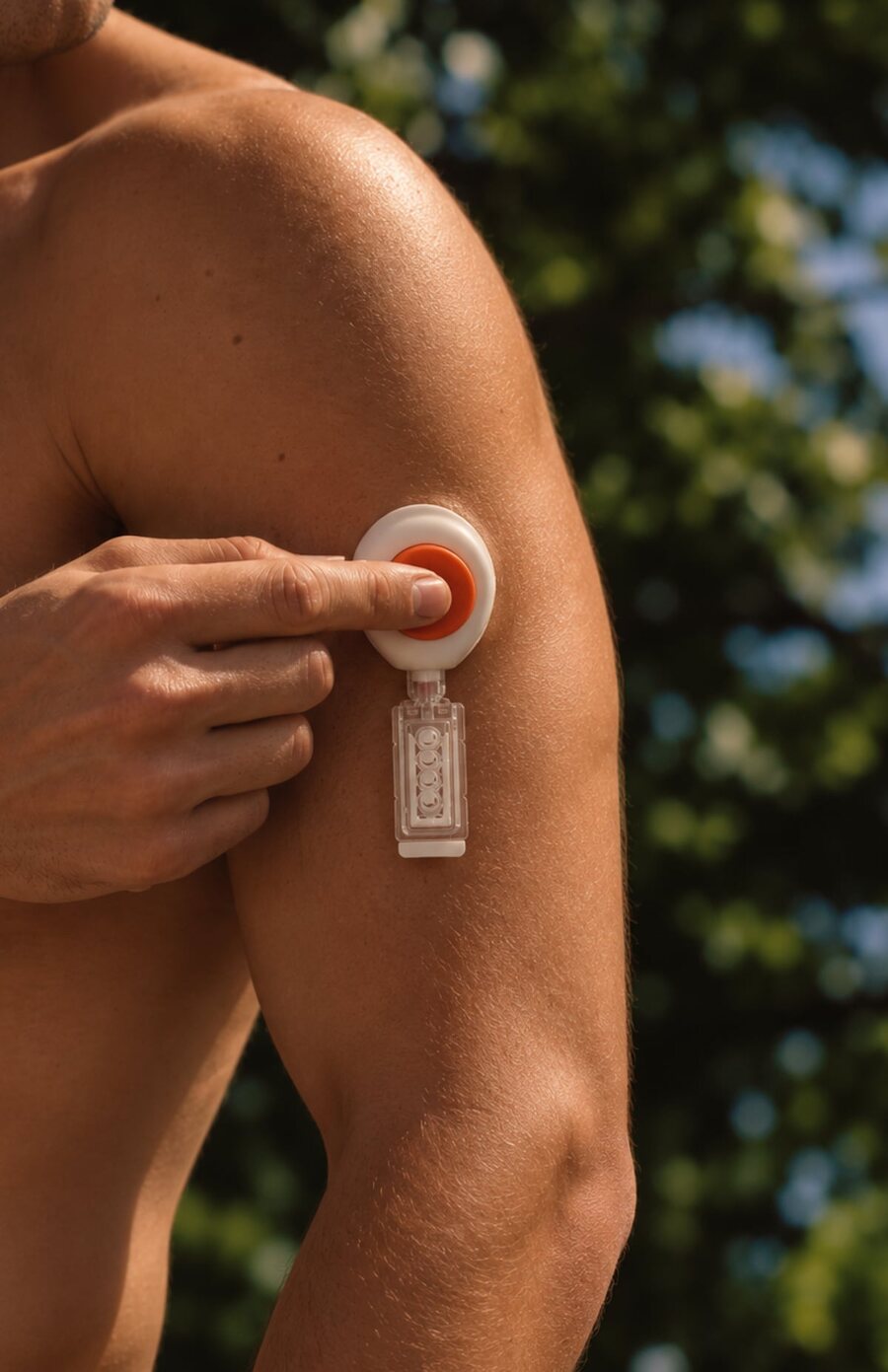
The pitch has three parts. First, you press a small device against your upper arm and push a button. According to the company’s FAQ, a tiny lancet collects about 70 microliters of capillary blood, roughly one and a half drops, across four small pads, with no venous needle and no phlebotomist. Launch coverage called it needle-free; the more precise description is lancet-based. Second, Helios measures about 1,000 proteins in that sample, organized into 14 body systems. The largest groups are immune and inflammation (354 proteins), vessels and heart (114), cellular health and aging (113) and brain (107), with smaller sets for metabolism, liver, kidneys, gut, lungs, hormones and more. Third, the Helios AI agent explains the results, highlights risks and builds a plan around lifestyle, nutrition, supplements and follow-up care, citing the studies behind each suggestion. You then retest to see whether the plan is working.
What comes back is a biological age for your whole body and for individual organs, cells and systems, risk scores for the diseases those ages predict, and the proteins driving each score. Helios says it builds 71 such scores today. Its homepage shows 10-year risk for conditions including type 2 diabetes, coronary artery disease, stroke, chronic kidney disease, heart failure, chronic liver disease, atrial fibrillation, blood clots, COPD and dementia. The company suggests retesting monthly, quarterly or twice a year, and says a single change, such as a new medication or diet, can be checked in as little as a week.
The company’s homepage claims more than 200 diseases predicted. Its press release goes further, noting that studies have linked blood proteins to more than 600 diseases, sometimes decades before diagnosis. Those two numbers are worth keeping separate: one is what Helios says its own scores predict, the other is what the scientific literature has associated with proteins in general.
Helios is launching through clinics before consumers. Its site lists 15 practices under “coming to select clinics in 2027,” including Restore Hyper Wellness, the Institute for Human Optimization, Precision Aging Institute, Precision Health Clinics, Continuum Health, Exponential Health, Lucida Wellness, Prana Health, Quotient Health, VII Clinic, Vita Veda, ONCARE MD, GoodLabs, CeliaRx and Bioscope.ai.
Who Built It: The SHERLOCK Scientists
The founders are the most credible part of the story, and they are also its most interesting tension.
Omar Abudayyeh and Jonathan Gootenberg met as graduate students in Feng Zhang’s lab at the Broad Institute and MIT, where they helped turn the CRISPR enzyme Cas13 into a diagnostic tool called SHERLOCK. In 2019 they co-founded Sherlock Biosciences with Zhang and bioengineer Jim Collins, and the company developed the first FDA-authorized CRISPR-based test. OraSure Technologies acquired Sherlock in December 2024 to build over-the-counter molecular self-tests. Today both are Harvard assistant professors who co-lead the Abudayyeh-Gootenberg Lab at Brigham and Women’s Hospital.
Their next company went the other way. Tome Biosciences launched in December 2023 with $213 million to commercialize the pair’s PASTE gene insertion technology, then laid off 131 employees within a year as investor appetite for gene editing collapsed. The founders have also co-founded Proof Diagnostics. Taken together, the launch materials say the founding team has raised more than $700 million across prior companies.
The third co-founder anchors the clinical side. Yousef Badran, MD, earned his medical degree at the University of Jordan, trained in internal medicine at Massachusetts General Hospital, served as a chief medical resident there and practices gastroenterology at MGH, with clinical interests that include complications of cancer immunotherapy. The company says he also spent time as a researcher at Boston Children’s Hospital and the Broad Institute and has six years of experience in biotech investing. “Measurement only matters if it changes what you do next,” Badran said in the launch announcement, which is as good a summary of the whole challenge as anyone has offered.
Featured Partner
Invest in the Infrastructure Behind Modern Medicine
As healthcare expands beyond hospital walls, the buildings and campuses supporting that shift are generating compelling returns for investors who move early. The Healthcare Real Estate Fund offers qualified investors direct access to a curated portfolio of medical office, outpatient, and specialty care facilities.
Learn More →
How Blood Proteomics Works
Your genome is a blueprint that barely changes over a lifetime. Proteins are the work orders being executed right now. They respond to sleep, food, training, infection, stress and disease, which is exactly why they are interesting for longevity: a protein signal can move in weeks, while your DNA sequence never will.
Modern proteomics platforms do not weigh every protein one at a time. The two dominant research technologies use molecular tags. Olink, now part of Thermo Fisher, pairs antibodies with DNA barcodes that only produce a readable signal when two antibodies bind the same protein, a design that keeps cross-reactivity low even at high plex. SomaLogic uses engineered DNA aptamers. Both measure thousands of proteins from microliters of plasma, and both generally report relative rather than absolute concentrations, which matters when a company wants to tell you whether a number is “high.”
Helios has not said which platform it uses. Its 1,000-protein figure lines up with commercial panels such as Olink Reveal, which targets more than 1,000 proteins at a lower cost than full discovery panels, but that is our inference, not a company disclosure.
What the Research Actually Shows
Proteins Can Map Organ Aging
The study that put proteomic aging on the map came from Tony Wyss-Coray’s lab at Stanford. Researchers identified plasma proteins enriched in specific organs, then trained machine learning models to estimate the biological age of 11 organs across five independent cohorts totaling 5,676 adults. Nearly 20 percent of people showed strongly accelerated aging in at least one organ, and accelerated organ aging carried a 20 to 50 percent higher mortality risk. People with an older-looking heart had a 250 percent higher risk of heart failure (Oh et al., 2023). We covered that work in depth in our explainer on organ age from blood proteins. A 2025 follow-up in Nature Medicine extended the approach in UK Biobank and linked brain and immune system aging in particular to healthspan and longevity (Oh et al., 2025).
Helios’s promise to show “which systems are aging faster” is essentially a commercial version of this idea.
Proteins Can Forecast Disease
The largest test of protein-based risk prediction used the UK Biobank Pharma Proteomics Project. Researchers measured about 3,000 plasma proteins in 41,931 people and built models for the 10-year incidence of 218 diseases. For 67 of them, including multiple myeloma, non-Hodgkin lymphoma, motor neuron disease, pulmonary fibrosis and dilated cardiomyopathy, a signature of just 5 to 20 proteins beat models built on standard clinical information such as cholesterol, kidney function and HbA1c (Carrasco-Zanini et al., 2024).
Read that carefully. It is a genuinely impressive result, and it also shows the limits of the “600 diseases” framing. Proteins beat conventional prediction for roughly a third of the diseases tested, in a large, mostly white British cohort, using venous plasma processed under research conditions. The authors themselves called for validation in more diverse populations and for affordable clinical tests before the findings could change care.
The Hard Part: A Drop of Blood at Home
Every one of those landmark studies used blood drawn from a vein by a professional, spun down and frozen under strict protocols. Helios is betting the same signal survives a self-collected capillary sample mailed through the postal system.
The best direct test of that bet is sobering. In a 2024 study in Proteomics, Vanderbilt researchers compared Olink measurements from venous blood with capillary blood self-collected using the Tasso+ device in 20 volunteers. Of 230 proteins analyzed, only 14.8 percent showed good agreement with venipuncture when samples sat for 24 hours, and 29.6 percent when they sat for 48 hours. The authors concluded that home capillary self-collection for large-scale proteomics “should be limited to select proteins” with good agreement (El-Sabawi et al., 2024).
Helios says it has solved exactly this problem. Its FAQ states that in side-by-side testing, blood from its device measured as many proteins as a venous draw at closely matching levels, held steady after a week at room temperature, and that its models are trained on samples from the same device. It also reports that all 71 of its scores, applied unchanged to an independent group of more than 40,000 people followed for over a decade and measured on a different platform, predicted future disease and death; that its whole-body score predicted 20 of 23 common diseases, beating two published aging clocks on most; and that across 16 clinical datasets its whole-body age fell in people who responded to treatment.
Those are strong claims, and the founders have the credentials to make them. Their careers were built on making lab assays work in disposable formats, and their own assay may behave very differently from the off-the-shelf panel in the Vanderbilt study. But none of this data has been published in a peer-reviewed journal or preprint. Until it is, readers are being asked to take the company’s word for the one result that matters most.
The Theranos Question
It is impossible to describe a drop-of-blood test without someone invoking Elizabeth Holmes, and Helios’s launch coverage leaned into it, with one tech outlet running the headline “Theranos but it works.” The comparison is not new. In 2023, Stanford geneticist Michael Snyder called his own multi-omics microsampling test “Theranos that works,” and a letter in Clinical Chemistry and Laboratory Medicine pushed back that the slogan was misleading.
The differences are real and worth stating plainly. Theranos claimed to run hundreds of standard clinical tests on proprietary hardware that did not work, and it hid its methods. Helios is measuring a different class of molecule, using an approach with thousands of peer-reviewed papers behind it, and its founders have a regulatory track record with an authorized diagnostic. The similarity is narrower: until Helios publishes validation data on self-collected samples, consumers are being asked to trust a claim they cannot yet check. That is a reason to wait for the data, not a reason to dismiss the company.
Helios vs Function Health vs InsideTracker vs Superpower
Helios enters a crowded and well-funded consumer testing market, but it is selling a different kind of measurement. Most competitors run standard clinical chemistry through national labs; Helios is selling a research-grade molecular readout.
| Feature | Helios | Function Health | InsideTracker | Superpower |
|---|---|---|---|---|
| What it measures | About 1,000 proteins, 71 age and risk scores | 160+ standard biomarkers across two draws | Up to 54 blood biomarkers plus InnerAge | 100+ standard biomarkers |
| Collection | Self-collected upper-arm lancet device, about 70 microliters | Venous draw at Quest or at home | Venous draw | Venous draw |
| Price | Not announced | About $365 to $499 a year | From about $699 per test for the top plan | About $199 a year |
| Interpretation | AI coach, physician review planned | Clinician notes and app | Algorithmic recommendations | App and concierge |
| Availability | Waitlist, launch 2027 | Available now | Available now | Available now |
If you want actionable numbers today, the incumbents win by default: our reviews of Function Health, InsideTracker InnerAge and Labcorp OnDemand cover what those panels can and cannot tell you. If you already use a fingerstick test like SiPhox Health, Helios is the logical next step up in molecular resolution. And if your interest is biological age specifically, compare it with epigenetic clocks such as TruDiagnostic TruAge, which read DNA methylation rather than proteins.
What Helios Gets Right
- The right molecule. Proteins are dynamic, organ-specific and responsive to behavior, which makes them a better fit for “is my plan working” than a genome that never changes.
- A founding team that has shipped a regulated diagnostic. Few consumer longevity founders have taken a novel assay through FDA authorization and an acquisition.
- Honest framing, so far. The company says its scores support clinical judgment, are not diagnoses, do not screen for cancer and do not replace annual blood work, and that a physician decides what to act on. Launching through clinics first is a more careful path than selling straight to consumers.
- Retesting built in. A single snapshot of 1,000 proteins is hard to interpret. Repeated measurements of the same person are where proteomics becomes personally useful.
Where Helios Falls Short, for Now
- Validation is company-reported. Helios describes side-by-side and 40,000-person validation on its site, but none of it is peer reviewed yet, and independent work suggests capillary proteomics is a hard problem.
- No price. Research-grade proteomics is expensive to run. Arivale, the scientific wellness pioneer co-founded by genomics legend Leroy Hood, charged about $3,500 a year for deep testing and coaching, served roughly 5,000 members and shut down in 2019 because the cost of the service exceeded what customers would pay.
- Not FDA cleared. Helios says HeliosOne is a laboratory-developed test that will run in a CLIA-certified lab, with CLIA validation expected in the first quarter of 2027. A federal court vacated FDA’s rule to regulate those tests as devices in March 2025, so there is no premarket review of the claims.
- An AI coach that talks drugs. The sample conversation on Helios’s homepage has the agent walking a user through retatrutide, an investigational drug available only in clinical trials. The answer is careful and cited, but an AI that surfaces unapproved medicines to consumers is something clinicians will want to supervise closely.
- Risk without remedy. Learning that your kidney looks old is only valuable if there is a proven next step. For many protein signals, the honest answer will still be the fundamentals.
Who Should Join the Waitlist, and Who Should Skip It?
Join if you already track your health closely, have a clinician willing to interpret novel data, and want to be an early adopter of a technology with serious science behind it. Clinicians who run longevity or preventive practices are the company’s first customers and should consider joining the clinic waitlist.
Skip for now if you have not yet done the basics. An ApoB, Lp(a), HbA1c, blood pressure and kidney panel, all orderable through standard labs such as Quest or Ulta Lab Tests, will catch the most common threats tracked in our Four Villains of Health and Longevity framework. Proteomics is a microscope, not a replacement for a checkup. If you are specifically worried about cancer or dementia, the evidence today is further along for targeted tools like multi-cancer early detection and the p-tau217 Alzheimer’s blood test.
What This Means for You
Helios is a bet on a big idea: that the longevity conversation should move from “what’s your cholesterol” to “how fast is each of your organs aging.” The science that idea rests on is among the most exciting work in aging research, and it is a key piece of the bridge described in our look at longevity escape velocity: better measurement now, better interventions arriving later.
But a proteomic readout does not change the playbook so much as sharpen it. The proteins Helios will measure are shaped by the same five pillars every time: nutrition that keeps blood sugar and inflammation in check, seven to nine hours of regular sleep, resistance and cardiovascular training, breathwork and stress recovery, and the mindset and community that keep you consistent. The best possible outcome of a 1,000-protein test is a clearer, more motivating signal about which of those to work on first, and a way to see, months later, that it worked.
Until Helios publishes how well a drop of blood at home matches a lab draw, treat it as a waitlist worth watching, not a test worth reorganizing your health around. For more devices and tests in this category, see our complete guide to health tech wearables and biomarker testing, and for the investment view of the company, see the Helios funding profile on Healthcare Venture Capital Fund.
Frequently Asked Questions
What Is the Helios Blood Test?
Helios is an at-home blood proteomics test that plans to measure more than 1,000 proteins from a single drop of self-collected blood, then use an AI coach to explain how you are aging and where disease risk may be building.
How Much Does Helios Cost?
Helios has not announced pricing. The test is waitlist-only and is scheduled to launch in 2027.
Is Helios FDA Approved?
No. Helios says HeliosOne is a laboratory-developed test that is not FDA cleared. It will run in a CLIA-certified laboratory, with CLIA validation expected in the first quarter of 2027, and its scores are positioned as support for clinical judgment rather than diagnoses.
Who Founded Helios?
Helios was founded by Omar Abudayyeh, PhD, and Jonathan Gootenberg, PhD, the co-inventors of the SHERLOCK CRISPR diagnostic and co-founders of Sherlock Biosciences, together with gastroenterologist Yousef Badran, MD, of Massachusetts General Hospital.
How Does the Helios Blood Collection Work?
You press a small device against your upper arm. A tiny lancet collects about 70 microliters of capillary blood onto four pads, which you mail back. There is no venous draw or phlebotomist.
How Long Do Helios Results Take?
According to the company’s Y Combinator launch, results come back in 2 to 4 weeks.
Is Helios Like Theranos?
Not in method. Helios measures proteins using an approach with a large peer-reviewed literature, its founders have a regulatory track record, and it describes its validation openly. Like any new test, though, its accuracy on self-collected samples should be judged on published data, which is not out yet.
Sources
- Oh HS, Rutledge J, Nachun D, et al. Organ aging signatures in the plasma proteome track health and disease. Nature, 2023. PubMed ID 38057571
- Carrasco-Zanini J, Pietzner M, Davitte J, et al. Proteomic signatures improve risk prediction for common and rare diseases. Nat Med, 2024. PubMed ID 39039249
- Oh HS, Le Guen Y, Rappoport N, et al. Plasma proteomics links brain and immune system aging with healthspan and longevity. Nat Med, 2025. PubMed ID 40634782
- El-Sabawi B, Huang S, Tanriverdi K, et al. Capillary blood self-collection for high-throughput proteomics. Proteomics, 2024. PubMed ID 38783781
- Helios Intelligence company profile and launch, Y Combinator, 2026
- Helios Comes Out of Stealth, Reading 1,000+ Biomarkers to See Decades Into the Future of Your Health, PR Newswire, November 18, 2026
- Helios homepage, FAQ, About and What We Measure pages, myhelios.com, accessed November 20, 2026
- Yousef Badran, MD, physician profile, Massachusetts General Hospital
- OraSure Technologies acquires Sherlock Biosciences, December 19, 2024
- Tome Biosciences layoffs, STAT News, August 22, 2024
- Why Arivale failed, GeekWire, 2019
- Federal court vacates FDA’s laboratory developed tests rule, March 31, 2025


Similar Posts
Tempo Studio: 3D Motion Capture and Real Weights for AI-Coached Strength Training
The only smart home gym that combines real weight plates with 3D body scanning and AI form correction. Does adding a depth sensor to a barbell change the equation for…
Signos: AI-Powered CGM for Weight Management and Metabolic Health
The connection between blood sugar and body weight has been studied for decades. Now AI is using real-time glucose data to guide when, what, and how much you eat. Presented…
Withings BPM Connect Review: Validated Accuracy, Price, and Wi-Fi
The Withings BPM Connect is an FDA cleared Wi-Fi upper-arm blood pressure cuff that passed two independent accuracy studies. Accurate and easy to use.

SONU Band Review 2026: $299 Price, Drug-Free Congestion Relief, HSA/FSA Status
SONU Band first look: the $299 FDA-authorized acoustic headband for nasal congestion, what its 52-person sham-controlled trial shows, the steroid spray claim, and HSA/FSA status.
Aktiia Bracelet Review: Accuracy, FDA Status, and the Hilo Rebrand
The Aktiia Bracelet, now sold as Hilo, is an FDA cleared cuffless wrist blood pressure monitor. Good for day and night trends, not precise enough for diagnosis.
Withings Body Cardio: Smart Scale with Pulse Wave Velocity for Arterial Health
Your arteries age faster than you do. A bathroom scale that measures how fast is the first step toward slowing them down. Presented By Our Partners Updated October 28, 2026:…