

Microsoft and Copilot Healthcare Breakthroughs: Every Medical and Drug Discovery Move Since 2006
Microsoft has worked on biology and medicine for two decades, from HIV immune modeling to pathology foundation models, an AI scribe sold to hospitals and a diagnostic system published in Science. This timeline logs every dated move we could source, and how far each result has been proven.
Presented By Our Partners



The short answer: Microsoft trains its own biomedical models, such as Prov-GigaPath for pathology and BioEmu for protein motion, and owns Nuance, maker of the DAX Copilot ambient scribe, which it bought for $19.7 billion in 2022, and in 2025 it launched Dragon Copilot, a voice AI assistant for clinicians. Its headline diagnostic result, a physician-panel style AI system published in Science in October 2026, is peer-reviewed but was tested on benchmark cases, not live patients. Its most-tested product is DAX Copilot: in an independent randomized trial at UCLA it did not significantly cut note-writing time, though survey measures suggested less burnout.
- Tier: Tier 1, frontier lab, with a large business distributing models it did not train
- Own models: Yes: Microsoft Research biomedical models (Prov-GigaPath, BiomedParse, BioEmu, TamGen) plus Microsoft AI diagnostic research; it also distributes OpenAI models
- Own wet lab: Not confirmed (TamGen compounds were tested with the Global Health Drug Discovery Institute)
- First health move: July 2006, a Microsoft Research model of immune peptide binding applied to HIV (earliest we could source)
- Furthest result so far: Tested in people, Operations (DAX Copilot randomized trials)
- Key partners: Providence, Mayo Clinic, Epic, OpenAI, Global Health Drug Discovery Institute, Cambridge University Hospitals
What Has Microsoft Done in Healthcare?
Microsoft does three things in health: its researchers publish biomedical AI models, its product teams sell clinical documentation software, and its consumer Copilot answers health questions from the public. The research is often peer-reviewed. The products have mixed results in independent trials.
The research record is long. In 2006, Microsoft Research scientists published a machine learning model of how immune molecules bind viral peptides and applied it to HIV data (PMID 16873476). In 2020, its Health Intelligence team in Cambridge, UK, published radiotherapy contouring models with Cambridge University Hospitals (PMID 33252691). Since 2024 it has published Prov-GigaPath in Nature, BiomedParse in Nature Methods, TamGen in Nature Communications and BioEmu in Science.
The product record runs through Nuance. Microsoft Research and Nuance authors wrote the 2023 NEJM special report on GPT-4 in medicine (PMID 36988602), and the Dragon Ambient eXperience (DAX) Copilot scribe, which a UCLA trial describes as a Microsoft product, has been studied at Atrium Health, UCLA, AdventHealth and other systems. On the consumer side, Microsoft Research published a report in March 2026 on how people use Copilot for health (Microsoft Research).
Why Microsoft sits in tier 1, with a caveat. Microsoft trains its own biomedical foundation models, which is the tier 1 test. But much of its health reach comes from distributing models it did not train, starting with OpenAI’s GPT-4: Epic announced GPT-4 integration through Microsoft in April 2023, per MedCity News. Microsoft AI, the newer group behind the MAI-DxO system, evaluated frontier language models in general in its 2026 Science paper, and the abstract names no Microsoft-trained model. So parts of Microsoft’s health business behave like a tier 3 application layer. We grade each result on its own and say whose model was tested where the source says.
Microsoft Healthcare Timeline: Every Move Since 2006
Entries are newest first. Deals, launches and partnerships are labeled “Not a result.” Studies run by health systems with no Microsoft authors are noted as independent in the text below.
| Date | Move | Type | Evidence level | Source |
|---|---|---|---|---|
| Oct 22, 2026 | Microsoft AI paper in Science: a system that simulates a panel of physicians reached 83.2% accuracy on hard published cases versus 36.1% for generalist physicians, in a benchmark setting | Result | Peer-reviewed, Clinical care | PMID 42912144 |
| Aug 19, 2026 | AdventHealth review of DAX Copilot across 210 providers: active note time fell 26.2% per appointment | Result | Peer-reviewed, Operations | PMID 42618038 |
| Jun 2, 2026 | Mayo Clinic and Microsoft announce a collaboration to develop a frontier AI model for healthcare | Partnership | Not a result | Microsoft Source |
| Mar 2026 | Microsoft Research publishes a report on how people use Copilot for health | Product | Not a result | Microsoft Research |
| Jan 31, 2026 | Independent nursing study: the agent-based MAI-DxO system outscored ChatGPT-4 and 110 dialysis nurses on four hemodialysis scenarios | Result | Peer-reviewed, Clinical care | PMID 41620749 |
| Nov 26, 2025 | UCLA randomized trial of 238 physicians: DAX Copilot did not significantly cut time in notes; survey measures suggested less burnout | Result | Tested in people, Operations | PMID 41497288 |
| Aug 14, 2025 | BioEmu, a Microsoft Research model that generates protein motion ensembles, published in Science | Model | Peer-reviewed, Research tool | PMID 40638710 |
| Jul 17, 2025 | Randomized quality improvement trial of DAX Copilot with 23 pediatric subspecialists: better clinician experience, no change in charting time | Result | Tested in people, Operations | PMID 40675605 |
| Jul 7, 2025 | Microsoft AI reports, before peer review, that its diagnosis system reached about 85% accuracy on complex published cases | Result | Company-reported, Clinical care | HLTH |
| Mar 2025 | Microsoft unveils Dragon Copilot, a voice AI assistant for healthcare professionals | Product | Not a result | Seeking Alpha |
| Nov 22, 2024 | Atrium Health longitudinal study of 112 DAX Copilot users and 103 controls: no significant change in EHR time or financial metrics | Result | Tested in people, Operations | PMID 42932770 |
| Nov 18, 2024 | BiomedParse, a model that segments, detects and labels objects across nine imaging types, published in Nature Methods | Model | Peer-reviewed, Research tool | PMID 39558098 |
| Oct 29, 2024 | TamGen generative chemistry model: 14 compounds active against a tuberculosis protease in lab tests, best IC50 1.9 micromolar | Result | Peer-reviewed, Molecule design | PMID 39472567 |
| May 22, 2024 | Prov-GigaPath, an open-weight pathology foundation model trained with Providence on 171,189 slides, published in Nature | Model | Peer-reviewed, Research tool | PMID 38778098 |
| Jun 2023 | DAX Copilot entered first health system use at Atrium Health, which began enrolling clinicians for an evaluation | Product | Not a result | PMID 42932770 |
| Apr 2023 | Epic announced it would integrate OpenAI’s GPT-4 into its health record software through an expanded Microsoft partnership | Partnership | Not a result | MedCity News |
| Mar 30, 2023 | Microsoft Research and Nuance authors published an NEJM special report on the benefits, limits and risks of GPT-4 as a medical chatbot | Model | Not a result | PMID 36988602 |
| Mar 7, 2022 | Microsoft completes its $19.7 billion acquisition of Nuance, maker of the DAX ambient documentation software | Acquisition | Not a result | Voicebot.ai |
| Nov 2, 2020 | Microsoft Research radiotherapy contouring models matched expert variability on 13 of 15 structures and cut contouring time 93% | Result | Peer-reviewed, Clinical care | PMID 33252691 |
| Jul 15, 2006 | Microsoft Research machine learning model of immune peptide binding, applied to HIV data from 246 patients (earliest health or biology move we could source) | Result | Peer-reviewed, Research tool | PMID 16873476 |
Microsoft’s Biggest Results, and How Far Each Has Been Proven
Microsoft’s furthest-tested product is DAX Copilot, which independent randomized trials have studied with mixed results. Its research models are peer-reviewed but mostly unproven in patient care.
A physician-panel AI for diagnosis. Microsoft researchers, including Mustafa Suleyman and Eric Horvitz, built an AI system that simulates a panel of physicians, revises a differential diagnosis and picks cost-effective tests. On published clinicopathological conference cases it reached 83.2% accuracy versus 36.1% for generalist physicians, and 80.3% versus 46.8% on emergency department admissions from the MIMIC-IV-ED dataset (PMID 42912144). The paper says these findings came from a controlled benchmark. Microsoft first reported the system in 2025, before peer review, as HLTH covered in July 2025 (HLTH). A separate independent study found the agent-based MAI-DxO system outscored ChatGPT-4 and experienced dialysis nurses on four scenarios (PMID 41620749). Evidence level: Peer-reviewed. Stage: Clinical care. What would prove it next: a prospective study in live patients, with diagnostic accuracy and test costs as outcomes. Our progress check on the MAI-DxO study grades it in detail.
Featured Partner
Invest in the Infrastructure Behind Modern Medicine
As healthcare expands beyond hospital walls, the buildings and campuses supporting that shift are generating compelling returns for investors who move early. The Healthcare Real Estate Fund offers qualified investors direct access to a curated portfolio of medical office, outpatient, and specialty care facilities.
Learn More →
DAX Copilot in real clinics. In a UCLA randomized trial of 238 outpatient physicians, DAX users showed no significant change in time-in-note versus usual care (minus 1.7%, 95% confidence interval minus 9.4% to plus 5.9%), while the rival scribe Nabla cut it 9.5%; survey measures of burnout and task load pointed to improvement for both, which the authors say needs confirmation in larger trials (PMID 41497288). At Atrium Health, the first DAX Copilot site, a study of 112 users and 103 controls found no significant change in primary EHR or financial metrics (PMID 42932770). A non-randomized AdventHealth review of 210 providers found active note time fell from 5.54 to 4.09 minutes per appointment (PMID 42618038). All three were run by health systems, not Microsoft. Evidence level: Tested in people. Stage: Operations. What would prove it next: the larger multicenter trials the UCLA authors call for.
Prov-GigaPath for pathology. Trained on 1.3 billion image tiles from 171,189 whole slides from Providence, covering more than 30,000 patients, the open-weight model reached state-of-the-art performance on 25 of 26 benchmark tasks (PMID 38778098). Evidence level: Peer-reviewed. Stage: Research tool. What would prove it next: prospective use on live pathology cases, or a regulatory clearance built on it.
TamGen for tuberculosis drug design. Microsoft Research AI for Science and the Global Health Drug Discovery Institute used the generative chemistry model to find 14 compounds with inhibitory activity against the tuberculosis ClpP protease; the best had an IC50 of 1.9 micromolar (PMID 39472567). Evidence level: Peer-reviewed. Stage: Molecule design. What would prove it next: activity against live bacteria and in animal models, then a named preclinical candidate.
Radiotherapy contouring. Microsoft Research models matched expert interobserver variability on 13 of 15 organ structures in CT scans from 8 sites and cut manual contouring time by 93% (PMID 33252691). Evidence level: Peer-reviewed. Stage: Clinical care. What would prove it next: published outcomes from routine clinical use at multiple cancer centers.
Who Microsoft Works With
Microsoft works through health systems, an EHR vendor and research institutes, and it distributes OpenAI’s models. Providence supplied the slides and co-authored Prov-GigaPath and BiomedParse. Mayo Clinic and Microsoft announced in June 2026 that they will collaborate on a frontier AI model for healthcare, per Microsoft’s newsroom. Epic integrated GPT-4 through Microsoft in 2023. The Global Health Drug Discovery Institute in Beijing ran the TamGen lab work, and Cambridge University Hospitals co-authored the radiotherapy study. Microsoft bought Nuance, the maker of DAX Copilot, for $19.7 billion in 2022, its largest health deal on this page. We found no Microsoft-owned wet lab; TamGen’s lab work ran at a partner institute.
What to Watch Next
- A prospective clinical study of Microsoft AI’s diagnostic system in live patients, with accuracy and test costs reported.
- The first published validation of the Mayo Clinic and Microsoft healthcare model inside Mayo’s own clinics.
- A multicenter randomized trial of DAX Copilot powered to detect time savings and documentation errors.
- Whether any TamGen compound advances to animal testing as a named tuberculosis candidate.
- Independent safety data on health answers in consumer Copilot.
Related: see the full AI healthcare breakthroughs tracker, how OpenAI and ChatGPT compare, the Google DeepMind record, how the AI drug discovery stack fits together and our HYPE Index methodology.
What This Means for You
If you are a patient, Microsoft AI may already touch your care through a doctor’s DAX Copilot note or a Copilot answer at night. The evidence says scribes can ease clinician burnout, but time savings are not consistent. Read your visit notes and flag errors, since trial clinicians reported occasional significant inaccuracies.
If you work in research or care, Microsoft’s open models such as Prov-GigaPath and BioEmu are peer-reviewed research tools you can test on your own data. Treat the Science diagnosis result as a benchmark until prospective data arrive, and ask vendors which model, Microsoft’s or OpenAI’s, sits under each product.
Compiled by Healthcare Discovery from company announcements, named news reports and PubMed. Every PMID on this page was checked against PubMed on October 28, 2026. Evidence levels follow the scale explained in our AI healthcare breakthroughs tracker. Healthcare Discovery uses AI research tools from several companies on this page, including OpenAI, Anthropic and Google models; no company listed reviewed or paid for this page.
What has Microsoft done in healthcare AI?
Microsoft Research has published biomedical models such as Prov-GigaPath for pathology, BiomedParse for medical images, BioEmu for protein motion and TamGen for drug design. Microsoft sells the DAX Copilot documentation tool, studies health use of Copilot, is building a healthcare model with Mayo Clinic, and its Microsoft AI group published a diagnostic system in Science in October 2026.
Does DAX Copilot save doctors time?
The evidence is mixed. In a UCLA randomized trial of 238 physicians, DAX Copilot did not significantly reduce time in notes, though survey measures suggested less burnout. An AdventHealth review of 210 providers found a 26.2% drop in active note time, but that study was not randomized.
Is Microsoft’s AI better than doctors at diagnosis?
On a benchmark of hard published cases, Microsoft’s physician-panel style system reached 83.2% accuracy versus 36.1% for generalist physicians, according to its 2026 Science paper. The authors note this was a controlled benchmark, not care of live patients.
Does Microsoft use AI for drug discovery?
Yes, at the research stage. Its TamGen model helped identify 14 compounds that inhibited a tuberculosis protease in lab tests, and BioEmu models how proteins move. We found no Microsoft-designed drug in human trials.
Does Microsoft build its own AI models or use OpenAI’s?
Both. Microsoft Research trains its own biomedical models, while Microsoft also distributes OpenAI models; for example, Epic announced GPT-4 integration through Microsoft in 2023.
Has an AI-designed drug been approved?
Not as of October 2026. AI-discovered molecules are in human trials, but none has reached FDA approval, and none is credited to Microsoft models.
Sources
- Nori H, et al. Sequential diagnosis with language models. Science, 2026. PMID 42912144
- Svetly A, et al. Large-Scale Implementation of Ambient Artificial Intelligence Documentation and Its Effects on Electronic Health Record Efficiency and Clinician Well-Being. Applied Clinical Informatics, 2026. PMID 42618038
- Orkaby B, et al. How do dialysis nurses and AI reason clinically? A scenario-based comparative study. BMC Nursing, 2026. PMID 41620749
- Lukac PJ, et al. Ambient AI Scribes in Clinical Practice: A Randomized Trial. NEJM AI, 2025. PMID 41497288
- Lewis S, et al. Scalable emulation of protein equilibrium ensembles with generative deep learning. Science, 2025. PMID 40638710
- Shin HS, et al. The Influence of Artificial Intelligence Scribes on Clinician Experience and Efficiency among Pediatric Subspecialists: A Rapid, Randomized Quality Improvement Trial. Applied Clinical Informatics, 2025. PMID 40675605
- Liu TL, et al. Does AI-Powered Clinical Documentation Enhance Clinician Efficiency? A Longitudinal Study. NEJM AI, 2024. PMID 42932770
- Zhao T, et al. A foundation model for joint segmentation, detection and recognition of biomedical objects across nine modalities. Nature Methods, 2024. PMID 39558098
- Wu K, et al. TamGen: drug design with target-aware molecule generation through a chemical language model. Nature Communications, 2024. PMID 39472567
- Xu H, et al. A whole-slide foundation model for digital pathology from real-world data. Nature, 2024. PMID 38778098
- Lee P, et al. Benefits, Limits, and Risks of GPT-4 as an AI Chatbot for Medicine. New England Journal of Medicine, 2023. PMID 36988602
- Oktay O, et al. Evaluation of Deep Learning to Augment Image-Guided Radiotherapy for Head and Neck and Prostate Cancers. JAMA Network Open, 2020. PMID 33252691
- Jojic N, et al. Learning MHC I peptide binding. Bioinformatics, 2006. PMID 16873476
- Microsoft Source. Mayo Clinic and Microsoft collaborate to develop a frontier AI model for healthcare, June 2026. Microsoft Source
- Microsoft Research. How people use Copilot for Health, March 2026. Microsoft Research
- HLTH. Microsoft AI diagnoses complex medical cases with 85% accuracy, July 2025. HLTH
- Seeking Alpha. Microsoft unveils voice AI assistant Dragon Copilot for healthcare professionals, March 2025. Seeking Alpha
- MedCity News. Epic to integrate GPT-4 into its EHR through expanded Microsoft partnership, April 2023. MedCity News
- Voicebot.ai. Microsoft Completes $19.7B Nuance Acquisition, March 2022. Voicebot.ai


Similar Posts

Mayo’s AI Stack: From Microsoft’s Frontier Model to the Clinic Floor
Mayo Clinic’s Microsoft partnership is more than a frontier-model announcement. It reveals a broader AI stack connecting clinical data, foundation models, Phoenix campus expansion, Discovery Oasis, and the hard test…
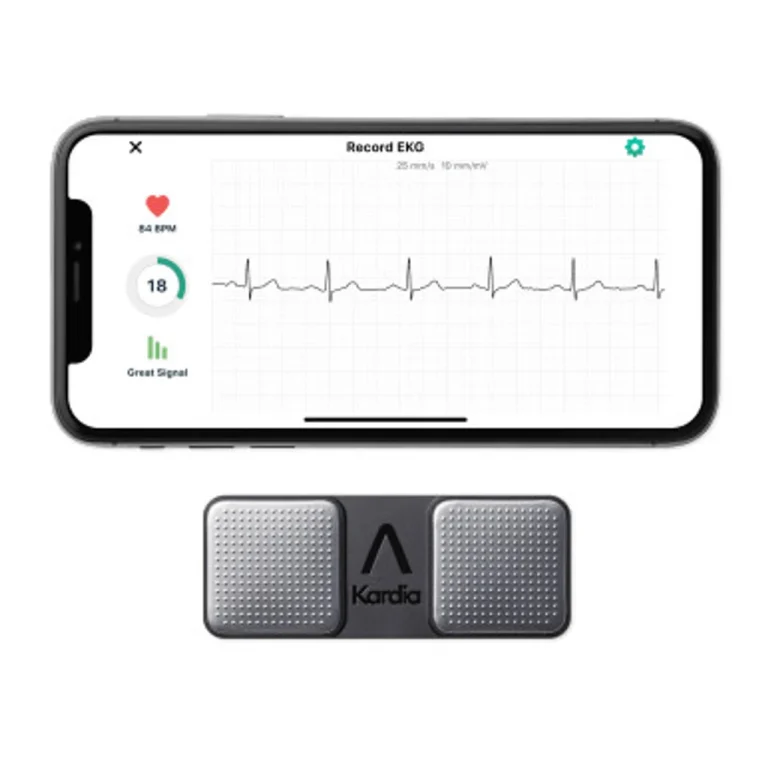
AliveCor KardiaMobile: The Most Affordable FDA Cleared Personal ECG
A credit card sized, $99 device that records a medical grade single lead ECG in 30 seconds, detects six arrhythmia types, and lets you email the results to your cardiologist…

Whil Mindfulness: Enterprise-Grade Meditation and Resilience Training for the Workplace
How a purpose-built enterprise mindfulness platform differs from consumer meditation apps, and what the workplace wellness research actually supports Presented By Our Partners A 2025 analysis published by Carnegie Mellon…
Normatec Go: Portable Pneumatic Compression for On-the-Go Recovery
Recovery does not wait for you to get home. The metabolic window after training is when compression therapy delivers its greatest circulatory benefit, and for traveling athletes, that window has…
Ice Barrel Cold Plunge Review: Passive Cold Water Immersion for Recovery Without Electricity
The Ice Barrel strips cold water immersion to its essential elements: cold water, your body, and nothing else. Presented By Our Partners Before cold plunges became a wellness industry, they…
Hyperice Hypervolt 2 Pro: Smart Percussive Therapy with HyperSmart Sensor Technology
The best massage gun is the one that adapts to what your body needs, not the one that simply delivers the most force. Presented By Our Partners Percussive therapy has…
