
AI Healthcare Breakthroughs Tracker: OpenAI, Anthropic, Google DeepMind and the AI Science Labs
OpenAI, Anthropic, Google DeepMind and a new class of AI science labs are racing to change how medicines are found and how patients are diagnosed. This tracker logs every health and drug discovery move we can verify, back to each company’s first one, and grades every result by how far it has actually been proven. Last updated October 28, 2026.
Presented By Our Partners



The short answer: AI has one fully proven breakthrough in biology so far: AlphaFold’s protein structure predictions, independently replicated and recognized with the 2024 Nobel Prize in Chemistry. Among the labs we track, the most advanced published drug result is Insilico Medicine’s rentosertib, which finished a 71-patient Phase 2a trial whose primary goal was safety. We found no approved AI-discovered drug as of October 2026, and most frontier lab health results are still company-reported or tested on past cases rather than patients.
- Tier 1, frontier labs: OpenAI, Anthropic, Google DeepMind, Microsoft, Meta
- Tier 2, AI science labs: Isomorphic Labs, Insilico Medicine, Generate Biomedicines, Recursion, Xaira Therapeutics, Chai Discovery
- Furthest drug result: Tested in people, Phase 2 (rentosertib, Insilico Medicine)
- Furthest clinical AI result: Tested in people, Clinical care (Google DeepMind’s AMIE and diabetic eye screening studies, Meta’s fastMRI knee study with NYU, and a GPT-4o tool in a randomized trial in Kenya)
- How we grade: five evidence levels, from Announced to Tested in people, plus the stage reached
What Counts as a Frontier AI Lab in Healthcare?
We sort companies by what they build, not by how much they raised. A frontier lab trains its own general foundation model and points it at health. An AI science lab trains its own models built for biology or medicine and usually runs experiments and drug programs. Everyone else builds on those models, and that is a separate category.
| Tier | What they build | Examples | What their news usually means |
|---|---|---|---|
| Tier 1: Frontier labs | General foundation models (GPT, Claude, Gemini, Llama, Microsoft’s MAI and research models) applied to health and science | OpenAI, Anthropic, Google DeepMind, Microsoft, Meta | New tools, partnerships and acquisitions; results are often benchmarks or company reports |
| Tier 2: AI science labs | Their own biology or chemistry models, usually paired with lab experiments and drug programs | Isomorphic Labs, Insilico Medicine, Generate Biomedicines, Recursion, Xaira Therapeutics, Chai Discovery | Molecules, preclinical data and clinical trials; this is where drug breakthroughs will be tested |
| Tier 3: Health AI applications | Products built on other companies’ models | Most AI scribes, symptom chatbots and care navigation tools | Workflow and access changes; judged on clinical and operational outcomes |
The lines blur at the edges, and we say so on each page. Anthropic now runs its own wet lab and drug programs, which looks like tier 2 work. Microsoft trains its own biomedical models but also distributes OpenAI models it did not train, which behaves like tier 3. Meta’s health impact runs mainly through open models that other groups build on.
How We Grade Each Breakthrough
Every result gets one evidence level and the stage it reached. A deal, hire or funding round is logged but never graded as a result, because money is not evidence that something works. The scale is fixed and applies to every company the same way, including the ones whose tools we use.
| Evidence level | What it means |
|---|---|
| 1. Announced | A goal or plan, with no data shared |
| 2. Company-reported | Data shared by the company in a blog post, technical report, press release or preprint that has not been peer reviewed |
| 3. Peer-reviewed | Published in a peer-reviewed journal |
| 4. Independently replicated | Confirmed by a group with no tie to the company |
| 5. Tested in people | Results from a human clinical trial or a prospective study in patients |
Stages run from research tool, target discovery and molecule design through preclinical work and Phase 1, 2 and 3 trials to approval. Clinical AI tools are marked Clinical care, and work on documents, regulatory filings or manufacturing is marked Operations. For the biggest announcements we also publish a progress check that compares the headline with the evidence, and we add a HYPE Index score only when we have read the full study.
Latest Moves: The 2026 Running Log
This log lists every verified 2026 move on our company pages, newest first. Each company’s page carries its full history back to its first health move. Studies by outside groups that only use a company’s open models are left to the company pages.
| Date | Company | Move | Evidence level | Source |
|---|---|---|---|---|
| Oct 22, 2026 | Microsoft | Microsoft AI paper in Science: a system that simulates a panel of physicians reached 83.2% accuracy on hard published cases versus 36.1% for generalist physicians, in a benchmark setting | Peer-reviewed, Clinical care | PMID 42912144 |
| Oct 2026 | Anthropic | Acquired Mithril, a one-person biotech, and started its own drug programs | Not a result | The Next Web |
| Oct 2026 | Anthropic | Published a report on early drug development work with six partner companies; coverage cites an 89% cut in drug development paperwork time and cancer-fighting cells that worked longer in lab tests | Company-reported, Molecule design | Anthropic |
| Oct 2026 | Anthropic | Claude produced 35,000 antibody designs in one month aimed at food allergy targets | Company-reported, Molecule design | Interesting Engineering |
| Oct 2026 | Google DeepMind | AMIE tested with 98 real urgent primary care patients before their visits at Beth Israel Deaconess (Lancet) | Tested in people, Clinical care | PMID 42849491 |
| Oct 2026 | Isomorphic Labs | Reported to be in funding talks at a valuation of at least $40 billion; terms not final | Not a result | Bloomberg |
| Oct 2026 | OpenAI | Acquired Orchestra Bio, a startup that puts AI agents into drug programs; the agents are being folded into GPT-Rosalind | Not a result | Crypto Briefing |
| Sep 23, 2026 | Anthropic | Announced an enzyme system resembling CRISPR that it says Claude found after scanning about 200,000 enzymes | Company-reported, Research tool | TechCrunch |
| Sep 18, 2026 | Anthropic | Confirmed a Bay Area wet lab that runs biology experiments | Not a result | TechCrunch |
| Sep 16, 2026 | Anthropic | Partnered with Novo Nordisk to speed up drug development with Claude | Not a result | BNN Bloomberg |
| Sep 2026 | Insilico Medicine | Nature Biotechnology analysis of serum from the rentosertib Phase 2a trial: six proteomic aging clocks all predicted lower biological age in treated arms | Peer-reviewed, Phase 2 (exploratory biomarker analysis) | PMID 42706338 |
| Aug 19, 2026 | Microsoft | AdventHealth review of DAX Copilot across 210 providers: active note time fell 26.2% per appointment | Peer-reviewed, Operations | PMID 42618038 |
| Aug 2026 | Anthropic | Reported that Claude designed protein binders against 14 of 15 targets that passed lab tests, and released the dataset | Company-reported, Molecule design | Anthropic |
| Jul 14, 2026 | Generate Biomedicines | First-in-human trial of GB-0669, an AI-optimized antibody against a conserved part of the SARS-CoV-2 spike, published: 51 healthy adults, well tolerated, half-life of 54 days | Tested in people, Phase 1 | PMID 42446369 |
| Jul 13, 2026 | Chai Discovery | Raised a $400M Series C at a $3.8B valuation; coverage named Lilly, Novartis and Pfizer as users of its models | Not a result | Business Wire |
| Jul 6, 2026 | Xaira Therapeutics | Hired Ian McCaffery as SVP for translational science | Not a result | Business Wire via Enid News |
| Jun 30, 2026 | Anthropic | Released Claude Science, a product aimed at researchers and the pharma industry | Not a result | STAT |
| Jun 26, 2026 | OpenAI | Randomized trial of a GPT-4o decision support tool in 16 Kenyan primary care clinics, run by outside researchers with Penda Health: better notes, no drop in 14-day treatment failure | Tested in people, Clinical care | PMID 42362867 |
| Jun 25, 2026 | OpenAI | OpenAI and Boston Children’s Hospital researchers report 18 new rare disease diagnoses in 376 unsolved cases using an AI-assisted genome reanalysis workflow | Peer-reviewed, Clinical care | PMID 42529462 |
| Jun 2, 2026 | Microsoft | Mayo Clinic and Microsoft announce a collaboration to develop a frontier AI model for healthcare | Not a result | Microsoft Source |
| Jun 2026 | Anthropic, Google DeepMind | AlphaFold co-creator and Nobel laureate John Jumper said he would leave Google DeepMind for Anthropic | Not a result | Bloomberg Government |
| Jun 2026 | Google DeepMind | AMIE disease management study in Nature: a Gemini-grounded AMIE was non-inferior to 21 primary care physicians on management reasoning across 100 simulated multivisit cases | Peer-reviewed, Clinical care | PMID 42310463 |
| May 20, 2026 | Anthropic | Signed a strategic agreement with Bristol Myers Squibb to make Claude Enterprise a shared platform across its global operations | Not a result | BioSpace |
| May 2026 | Google DeepMind | AI co-scientist published in Nature; drug repurposing ideas for leukemia confirmed in lab tests | Peer-reviewed, Preclinical | PMID 42156544 |
| May 2026 | Isomorphic Labs | Raises a $2.1 billion Series B to scale its AI drug design engine | Not a result | Isomorphic Labs |
| Apr 30, 2026 | OpenAI | Harvard, Beth Israel Deaconess and Stanford study in Science: an OpenAI model outperformed physician baselines on hard diagnostic cases and emergency room second opinions | Peer-reviewed, Clinical care | PMID 42060751 |
| Apr 16, 2026 | OpenAI | Launched GPT-Rosalind, a model for life sciences research and drug discovery | Not a result | Axios |
| Apr 14, 2026 | OpenAI | Novo Nordisk partnership to use OpenAI models in drug discovery and operations | Not a result | BioPharm International |
| Apr 2026 | Anthropic | Added Novartis CEO Vas Narasimhan to its board | Not a result | Anthropic |
| Apr 2026 | Anthropic | Acquired Coefficient Bio, a stealth AI startup, for a reported $400 million | Not a result | Fierce Biotech |
| Apr 2026 | Insilico Medicine | Formed a Longevity Board chaired by Eli Lilly’s Andrew Adams, with Nobel laureate Michael Levitt among its members | Not a result | Insilico via AlphaGalileo |
| Apr 2026 | OpenAI | HealthBench Professional: OpenAI says ChatGPT for Clinicians outperformed physicians on clinical tasks, even when the physicians had unlimited time and web access | Company-reported, Clinical care | arXiv |
| Mar 25, 2026 | Xaira Therapeutics | Hired Rachel Lane as SVP business development and operations | Not a result | Business Wire |
| Mar 17, 2026 | Xaira Therapeutics | Launched X-Cell, its first virtual cell model, described in coverage as the largest to date | Company-reported, Research tool | Business Wire via Joplin Globe |
| Mar 2026 | Microsoft | Microsoft Research publishes a report on how people use Copilot for health | Not a result | Microsoft Research |
| Jan 31, 2026 | Microsoft | Independent nursing study: the agent-based MAI-DxO system outscored ChatGPT-4 and 110 dialysis nurses on four hemodialysis scenarios | Peer-reviewed, Clinical care | PMID 41620749 |
| Jan 27, 2026 | OpenAI | Released Prism, an AI workspace for scientific research and writing | Not a result | Engadget |
| Jan 12, 2026 | OpenAI | Acquired Torch, a medical records startup, for a reported $100 million, to power ChatGPT Health | Not a result | SiliconANGLE |
| Jan 11, 2026 | Anthropic | Launched Claude for Healthcare and partnered with HealthEx to let users connect medical records | Not a result | Fortune |
| Jan 8, 2026 | Chai Discovery | Collaboration with Eli Lilly to speed biologics discovery with custom AI models | Not a result | Business Wire |
| Jan 8, 2026 | OpenAI | Launched ChatGPT Health, a health space that can connect medical records and wellness apps through b.well | Not a result | HLTH |
| Jan 8, 2026 | OpenAI | Announced a ChatGPT tool for doctors | Not a result | Axios |
| Jan 7, 2026 | Anthropic | Genmab partnered with Anthropic to use agentic AI in research and development | Not a result | Business Wire |
| Jan 2026 | Google DeepMind | AlphaGenome DNA model published in Nature | Peer-reviewed, Research tool | PMID 41606153 |
| Jan 2026 | Isomorphic Labs | Reuters reports that Isomorphic has delayed its first clinical trial timeline | Announced, Preclinical | Reuters via WHBL |
| 2026 | Generate Biomedicines | Initial public offering on Nasdaq raised $400 million at $16 per share | Not a result | pharmaphorum |
For deal terms and what each 2026 acquisition adds, see our 2026 AI lab biotech deal tracker.
Milestones Before 2026
The race did not start with ChatGPT. Microsoft Research applied machine learning to immune data from HIV patients in 2006, Recursion-affiliated scientists ran a machine-learning drug screen in 2014, and Google DeepMind and Insilico Medicine made their first health moves in 2016. This table lists each company’s first move and its most important results before 2026, newest first; each company page links the source for every row.
| Date | Milestone | Evidence level |
|---|---|---|
| Dec 15, 2025 | Chai Discovery, described by TechCrunch as OpenAI-backed, raises a $130 million Series B at a $1.3 billion valuation | Not a result |
| Dec 1, 2025 | Generate Biomedicines announces global Phase 3 studies of GB-0895, a long-acting antibody for severe asthma engineered with AI | Not a result |
| Dec 2025 | Recursion reports Phase 1b/2 TUPELO results for REC-4881, a MEK inhibitor, in familial adenomatous polyposis, describing reductions in polyp burden | Company-reported, Phase 2 (Phase 1b/2 trial) |
| Nov 26, 2025 | UCLA randomized trial of 238 physicians: Microsoft‘s DAX Copilot did not significantly cut time in notes; survey measures suggested less burnout | Tested in people, Operations |
| Oct 20, 2025 | Anthropic launches Claude for Life Sciences, its first dedicated life sciences product | Not a result |
| Jul 2025 | OpenAI and Penda Health report 16% fewer diagnostic errors with an AI Consult copilot across about 40,000 patient visits | Company-reported, Clinical care |
| Jun 30, 2025 | Chai Discovery announces Chai-2 for zero-shot antibody design | Company-reported, Molecule design |
| Jun 17, 2025 | Xaira Therapeutics releases X-Atlas/Orion, a genome-wide Perturb-seq dataset of about 8 million cells | Company-reported, Research tool |
| Jun 2025 | Insilico Medicine‘s rentosertib Phase 2a results published in Nature Medicine: 71 patients with idiopathic pulmonary fibrosis, 12 weeks, safety as the primary endpoint | Tested in people, Phase 2 |
| May 2025 | Recursion deprioritizes three clinical programs after a data review, months after its Exscientia merger | Not a result |
| Apr 2025 | Google DeepMind‘s AMIE diagnostic dialogue and differential diagnosis papers published in Nature | Peer-reviewed, Clinical care |
| Nov 2024 | Recursion completes its merger with Exscientia | Not a result |
| Oct 2024 | Demis Hassabis and John Jumper of Google DeepMind share the Nobel Prize in Chemistry for protein structure prediction | Independently replicated, Research tool |
| Sep 2024 | Chai Discovery comes out of stealth with a seed round of about $30 million backed by OpenAI and Thrive Capital | Not a result |
| Jun 2024 | Recursion publishes Phase 1 results for REC-994 in 84 healthy volunteers: well tolerated | Tested in people, Phase 1 |
| May 2024 | AlphaFold 3, built by Google DeepMind and Isomorphic Labs, published in Nature | Peer-reviewed, Research tool |
| Apr 23, 2024 | Xaira Therapeutics launches with $1 billion in funding commitments | Not a result |
| Mar 2024 | Insilico Medicine reports in Nature Biotechnology that its AI nominated TNIK as a fibrosis target and generated the molecule now called rentosertib, with a Phase 1 in 78 healthy participants | Tested in people, Phase 1 |
| Feb 6, 2024 | The OpenAI Startup Fund co-leads a $70 million round in Ambience Healthcare, the earliest dated health move by OpenAI we could source | Not a result |
| Nov 2023 | Generate Biomedicines publishes its Chroma protein design model in Nature | Peer-reviewed, Research tool |
| Jan 2023 | A prospective study of 170 patients finds AI-accelerated knee MRI from the Meta and NYU fastMRI work diagnostically equivalent to the standard scan | Tested in people, Clinical care |
| Mar 7, 2022 | Microsoft completes its $19.7 billion acquisition of Nuance, maker of the DAX documentation software | Not a result |
| Mar 2022 | Google Health diabetic eye screening AI tested prospectively in Thailand’s national program (see Google DeepMind) | Tested in people, Clinical care |
| Nov 2021 | Alphabet launches Isomorphic Labs to turn AlphaFold into drug discovery | Not a result |
| Mar 31, 2021 | Flagship Pioneering names Mike Nally to lead Generate Biomedicines, its earliest dated move we could source | Not a result |
| Nov 2020 | AlphaFold 2 from Google DeepMind tops the CASP14 blind protein structure assessment; the Nature paper follows in July 2021 | Independently replicated, Research tool |
| Aug 20, 2018 | Facebook AI Research and NYU School of Medicine launch fastMRI, Meta‘s first medical research move | Not a result |
| Nov 2017 | Facebook begins using AI to spot posts that may signal suicide risk, the first health move by Meta we could source | Not a result |
| Nov 2016 | DeepMind Health partners with the Royal Free London NHS trust on the Streams app; the UK data regulator ruled in July 2017 that the trial did not comply with data protection law | Not a result |
| May 2016 | Insilico Medicine publishes deep neural networks that estimate age from a routine blood test | Peer-reviewed, Research tool |
| Dec 2014 | Recursion-affiliated scientists use a machine-learning image screen of 2,100 known drugs to find two that cut lesion burden in a mouse model of cerebral cavernous malformation | Peer-reviewed, Preclinical |
| Jul 15, 2006 | A Microsoft Research machine learning model of immune peptide binding is applied to HIV data from 246 patients, the earliest Microsoft health or biology move we could source | Peer-reviewed, Research tool |
Where Each Lab Stands: The Scorecard
The furthest result tells you more than the funding total. This table shows each company’s best-proven health result so far, as graded on its own page.
| Company | Tier | Own models | Own wet lab | First health move | Furthest result so far |
|---|---|---|---|---|---|
| Google DeepMind | 1 | Yes (Gemini, Gemma, AlphaFold, AMIE, AlphaGenome and others) | Not confirmed | 2016 | Tested in people, Clinical care (AMIE and diabetic eye screening studies); Independently replicated, Research tool (AlphaFold) |
| OpenAI | 1 | Yes (GPT series, GPT-Rosalind, GPT-4b micro) | None found | February 2024 | Tested in people, Clinical care (randomized trial by outside researchers; primary outcome not met) |
| Microsoft | 1 | Yes (Prov-GigaPath, BiomedParse, BioEmu, TamGen and diagnostic research); also distributes OpenAI models | Not confirmed | July 2006 | Tested in people, Operations (DAX Copilot randomized trials) |
| Meta | 1 | Yes (Llama; ESM protein models until the team left) | No | November 2017 | Tested in people, Clinical care (fastMRI with NYU) |
| Anthropic | 1 | Yes (general-purpose Claude models; no biology-specific model found) | Yes | October 2025 | Company-reported, Molecule design |
| Insilico Medicine | 2 | Yes (PandaOmics, Chemistry42, inClinico, nach0) | Yes | May 2016 | Tested in people, Phase 2 (rentosertib Phase 2a, peer-reviewed; primary endpoint safety) |
| Recursion | 2 | Yes (OpenPhenom-S/16; Boltz-2 with MIT) | Yes | December 2014 | Tested in people, Phase 1 (REC-994, peer-reviewed); its Phase 2 data for REC-994 and REC-4881 are company-reported |
| Generate Biomedicines | 2 | Yes (Chroma) | Yes | March 2021 | Tested in people, Phase 1 (GB-0669, peer-reviewed); GB-0895 is in Phase 3 with no results yet |
| Isomorphic Labs | 2 | Yes (AlphaFold 3 with Google DeepMind; Isomorphic Labs Drug Design Engine) | Not confirmed | November 2021 | Peer-reviewed, Research tool (AlphaFold 3) |
| Chai Discovery | 2 | Yes (Chai-1, Chai-2) | Not disclosed | September 2024 | Company-reported, Molecule design (Chai-2); Peer-reviewed, Research tool (outside tests of Chai-1) |
| Xaira Therapeutics | 2 | Yes (X-Cell) | Yes | April 2024 | Company-reported, Research tool |
“First health move” is the earliest dated health or biology move we could source, not necessarily the company’s founding date.
Tier 1: How the Frontier Labs Are Moving Into Health
The frontier labs are taking three different routes: build products, buy pieces of the drug business, or spin out a drug company.
Featured Partner
Invest in the Infrastructure Behind Modern Medicine
As healthcare expands beyond hospital walls, the buildings and campuses supporting that shift are generating compelling returns for investors who move early. The Healthcare Real Estate Fund offers qualified investors direct access to a curated portfolio of medical office, outpatient, and specialty care facilities.
Learn More →
Google DeepMind has the best-proven result. AlphaFold changed structural biology, and its AMIE diagnostic system was tested with 98 patients before urgent primary care visits at Beth Israel Deaconess in a 2026 Lancet feasibility study (PMID 42849491). Its drug work runs through its sister company Isomorphic Labs.
OpenAI moved fast in 2026 with ChatGPT Health, GPT-Rosalind, and the Torch and Orchestra Bio acquisitions, and TechCrunch describes Chai Discovery as OpenAI-backed. Its strongest test so far was run by outside researchers with Penda Health, with no OpenAI authors: a cluster-randomized trial of a GPT-4o decision support tool in 16 Kenyan primary care clinics improved notes but did not change 14-day treatment failure (PMID 42362867).
Anthropic is integrating vertically. It confirmed its own Bay Area wet lab in September 2026, bought Coefficient Bio and Mithril, and started its own drug programs, alongside deals with Genmab, Bristol Myers Squibb and Novo Nordisk. Its results, including Claude-designed protein binders and an enzyme system resembling CRISPR, are company-reported, and we found no peer-reviewed paper or human trial for an Anthropic health or drug result. Our progress check on its partner results grades each one.
Microsoft owns Nuance, maker of DAX Copilot, and trains its own biomedical models. It published its sequential diagnosis study in Science on October 22, 2026: 83.2% accuracy on hard published cases versus 36.1% for generalist physicians, in a benchmark on past cases (PMID 42912144). Its furthest result is in documentation: randomized trials of DAX Copilot found no significant cut in note-writing time, though clinicians reported a better experience. See our progress check on the MAI-DxO study.
Meta has a health record made mostly of open research that others build on: open Llama models, the fastMRI work with NYU, and the ESM protein models, whose team left to found EvolutionaryScale.
Tier 2: The AI Science Labs Where Drugs Get Tested
Tier 2 is where AI-designed molecules meet real biology and, eventually, patients.
Insilico Medicine holds the most advanced published drug result among the labs we track. In the rentosertib Phase 2a trial, 71 patients with idiopathic pulmonary fibrosis were treated for 12 weeks at sites in China; the primary endpoint was safety, and the lung function signal at the highest dose needs larger and longer trials (PMID 40461817).
Generate Biomedicines published the first-in-human trial of GB-0669, an AI-optimized antibody, in 2026 (PMID 42446369), and has GB-0895 in Phase 3. Recursion has company-reported Phase 2 data for REC-994 and REC-4881, but its best-proven human result is still a peer-reviewed Phase 1 safety study, and it deprioritized three clinical programs in 2025. Isomorphic Labs raised $2.1 billion in May 2026, but Reuters reported in January 2026 that its first clinical trials were delayed, and we found no dosed patient as of October 28, 2026.
Chai Discovery and Xaira Therapeutics are earlier. Each trains its own models and has raised large sums, but neither has a disclosed drug candidate in a clinical trial.
Tier 3: Why Health AI Apps Are a Separate Category
Most health tech companies using AI do not train foundation models. They build scribes, chatbots, triage and navigation tools on top of models from tier 1 labs. Their success depends on clinical and operational outcomes, such as time saved, errors avoided and patients helped, rather than on scientific discovery. We cover them in our wider AI in medicine reporting and do not list them in this tracker.
Also on Our Watch List
- Lila Sciences: a Flagship Pioneering company unveiled on March 10, 2025 with a $200 million seed round (SiliconANGLE), it has since raised a $350 million Series A that includes $115 million with backing from Nvidia’s venture arm (Fierce Biotech), at a valuation above $1.3 billion as Reuters reported in October 2025 (Yahoo Finance), and Bloomberg reported talks at an $8.5 billion valuation (Bloomberg). Its job listings point to protein engineering work (General Catalyst job board), but as of October 28, 2026 it has announced no drug candidate, pharma partner or health result. We will give it a full page when it names a biology program or publishes health data.
- EvolutionaryScale: founded by former Meta ESM researchers, it launched with a $142 million round in June 2024 (TechCrunch).
- Edison Scientific and Periodic Labs: AI scientist startups. FutureHouse spun out Edison Scientific and its Kosmos research agent in November 2025 (HPCwire), and Edison raised $70 million in December 2025 (SiliconANGLE). Former OpenAI and DeepMind researchers launched Periodic Labs with a $300 million seed round to automate science (TechCrunch).
- Nvidia: an investor across tier 2, including a $50 million investment in Recursion in 2023 (CNBC), Generate’s Series C (Business Wire) and Lila Sciences (Fierce Biotech).
How Far Has AI Drug Discovery Really Come?
AI-discovered drugs look better than average in early safety trials but not yet in efficacy trials. A 2024 analysis of AI-native biotech pipelines in Drug Discovery Today found AI-discovered molecules succeeded in Phase 1 80 to 90 percent of the time, above historical averages, but about 40 percent of the time in Phase 2, comparable to history and on a limited sample (PMID 38692505). The next two years of Phase 2 and Phase 3 readouts will show whether that gap closes. For the full picture, see where AI-designed drugs stand in human trials, our rentosertib verdict and why AI drug discovery is not one thing.
How This Tracker Is Kept Current
We review the log every week. Newsletters and headlines are treated as leads only; every entry is confirmed against the company’s own announcement, a named news report, PubMed or ClinicalTrials.gov before it is added. Evidence levels change when new evidence appears, and each change is noted on the company’s page.
Update log: October 28, 2026, tracker published with company pages for five frontier labs and six AI science labs, plus progress checks on Microsoft’s MAI-DxO study and Anthropic’s partner results. Lila Sciences moved to the watch list because it has no health result to grade yet.
What This Means for You
If you are a patient, nothing in this tracker changes what your doctor can prescribe today. The most advanced AI-discovered drugs are still in Phase 2 and Phase 3 trials. Clinical AI tools are reaching clinics faster, so ask whether a tool your care team uses was tested with patients like you, not only on past cases.
If you work in research or care, read every AI headline for two things: who produced the evidence and what stage it reached. A company report about early design work and a peer-reviewed trial in patients are not the same news, even when the headlines sound alike.
Compiled by Healthcare Discovery from company announcements, named news reports and PubMed. Every PMID on this page was checked against PubMed on October 28, 2026. Healthcare Discovery uses AI research tools from several companies on this page, including OpenAI, Anthropic and Google models; no company listed reviewed or paid for this page.
What are the biggest AI healthcare breakthroughs so far?
The most proven is AlphaFold, Google DeepMind’s protein structure model, which has been independently replicated and led to the 2024 Nobel Prize in Chemistry. Among the labs we track, the most advanced published drug result is Insilico Medicine’s rentosertib, which completed a 71-patient Phase 2a trial published in Nature Medicine in 2025, with safety as its primary endpoint. Clinical AI tools such as Google DeepMind’s AMIE and a GPT-4o tool tested in Kenya have now been studied with real patients, mostly in feasibility or quality studies, and the Kenya trial found no drop in treatment failure.
Has an AI-discovered drug been approved?
We found none as of October 2026. The most advanced AI-discovered drugs are in Phase 2 and Phase 3 trials, and none has reached FDA approval yet.
What is the difference between a frontier lab and an AI science lab?
A frontier lab trains general foundation models, such as ChatGPT, Claude or Gemini, and applies them to health. An AI science lab trains its own models built for biology or medicine, often runs its own wet lab, and develops drugs or partners with pharma. Isomorphic Labs, Generate Biomedicines and Insilico Medicine are examples.
What has Anthropic done in healthcare?
Anthropic launched Claude for Life Sciences in October 2025 and Claude for Healthcare in January 2026, signed deals with Genmab, Bristol Myers Squibb and Novo Nordisk, bought Coefficient Bio and Mithril, confirmed its own Bay Area wet lab in September 2026 and reported early drug development work with six partner companies. Its health results so far are company-reported; we found no peer-reviewed paper or human trial for an Anthropic health or drug result.
What has OpenAI done in healthcare?
OpenAI launched ChatGPT Health and a ChatGPT tool for doctors in January 2026, released the GPT-Rosalind life sciences model in April 2026 and bought Torch and Orchestra Bio. A randomized trial of a GPT-4o decision support tool in 16 Kenyan clinics, run by outside researchers with Penda Health, improved notes but did not reduce 14-day treatment failure.
How does Healthcare Discovery grade AI health news?
Every result gets one of five evidence levels: Announced, Company-reported, Peer-reviewed, Independently replicated or Tested in people, plus the drug development or clinical stage it reached. Deals, hires and funding rounds are logged but never graded as results.
Sources
- Jumper J, et al. Highly accurate protein structure prediction with AlphaFold. Nature, 2021. PMID 34265844
- Xu Z, et al. A generative AI-discovered TNIK inhibitor for idiopathic pulmonary fibrosis: a randomized phase 2a trial. Nature Medicine, 2025. PMID 40461817
- Brodeur PG, et al. Conversational diagnostic artificial intelligence in ambulatory primary care: a prospective feasibility study. Lancet, 2026. PMID 42849491
- Agweyu A, et al. Generative AI-enabled clinical decision support system in primary care: a pragmatic, cluster-randomized trial. Nature Medicine, 2026. PMID 42362867
- Nori H, et al. Sequential diagnosis with language models. Science, 2026. PMID 42912144
- Borriello F, et al. Randomized, Double-Blind, Placebo-Controlled First-in-Human Trial of a First-in-Class AI-Designed Monoclonal Antibody (GB-0669) Against the Conserved SARS-CoV-2 Spike S2 Stem Helix. The Journal of Infectious Diseases, 2026. PMID 42446369
- Kp Jayatunga M, et al. How successful are AI-discovered drugs in clinical trials? A first analysis and emerging lessons. Drug Discovery Today, 2024. PMID 38692505
- Nobel Prize. The Nobel Prize in Chemistry 2024 press release, October 2024. Nobel Prize
- DeepMind. AlphaFold: a solution to a 50-year-old grand challenge in biology, November 2020. DeepMind
- SiliconANGLE. Lila Sciences raises $200M to accelerate autonomous scientific research, March 2025. SiliconANGLE
- Fierce Biotech. Lila Sciences adds $115M to Series A, bringing total haul to $350M and securing backing from Nvidia, October 2025. Fierce Biotech
- Reuters via Yahoo Finance. Exclusive: AI lab Lila Sciences funding round, October 2025. Yahoo Finance
- Bloomberg. Lila Sciences said in talks for funds at $8.5 billion valuation. Bloomberg
- General Catalyst job board. Lila Sciences: ML Scientist I/II, AI for protein engineering. General Catalyst
- TechCrunch. EvolutionaryScale, backed by Amazon and Nvidia, raises $142M for protein-generating AI, June 2024. TechCrunch
- HPCwire. FutureHouse spins out Edison Scientific, launches Kosmos AI for research, November 2025. HPCwire
- SiliconANGLE. Edison Scientific raises $70M to build autonomous AI scientists, December 2025. SiliconANGLE
- TechCrunch. Former OpenAI and DeepMind researchers raise whopping $300M seed to automate science, September 2025. TechCrunch
- CNBC. Nvidia invests in biotech company Recursion for AI drug discovery, July 2023. CNBC
- Business Wire. Generate Biomedicines announces close of $273M Series C financing, September 2023. Business Wire
- Every entry in the running log links its own source; each company page lists its full sources.


Similar Posts
Plunge Cold Plunge Tub Review: Electric Cold Water Immersion for Recovery, Inflammation, and Mental Resilience
The Plunge delivers consistent, temperature controlled cold water immersion without the ice runs, bringing clinical grade cold exposure to the home recovery protocol. Presented By Our Partners Cold water immersion…
Apple Watch Series 9: ECG, HRV, and Cardiovascular Health Monitoring
The most widely worn smartwatch on the planet now carries FDA-cleared tools that cardiologists once reserved for clinical settings. Here is what the science says about whether that actually matters…
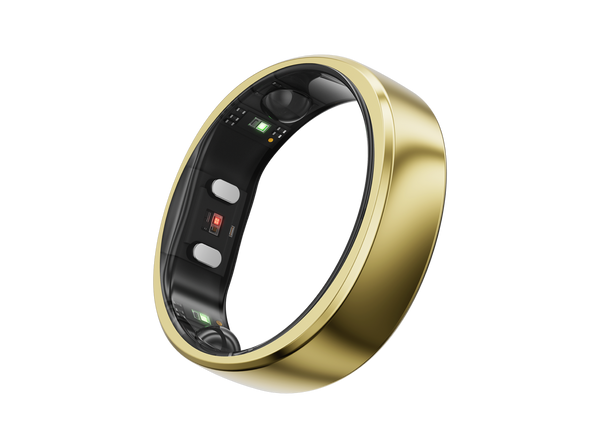
RingConn Gen 2: Sleep Apnea Monitoring Smart Ring with 12-Day Battery Life
An ultra-thin titanium smart ring weighing just 2 to 3 grams at 2.5mm thickness, offering AI-powered sleep apnea monitoring with AHI scoring, 12-day battery life with 150-day charging case, heart…
Ulta Lab Tests: The Most Affordable Path to Preventive Blood Testing
Direct-access lab testing without the prescription markup. Panels from $9 to $199, nationwide availability, and the transparency that preventive health demands. Presented By Our Partners The Cost Barrier to Preventive…
Fitbit Air: Google’s Screenless Health Tracker with Gemini AI at $99
Google’s screenless fitness tracker, launched in May 2026, combines optical heart rate, SpO2, skin temperature, and accelerometer sensors with Gemini AI-powered health insights at $99.99, with core features free and…

The GLP-1 Telehealth Transparency Scorecard: What a Platform Should Show Before You Trust It
A 20-point, source-backed framework for evaluating what a GLP-1 telehealth service discloses about medication identity, clinical accountability, pharmacy source, full cost, follow-up, claims, reviews, and commercial influence.
