
Rapamycin in Humans: What the Trials Show About the Most Reproducible Longevity Drug in Mice
Rapamycin leads a strange double life. In transplant clinics it is sirolimus, a daily immunosuppressant that keeps donor kidneys alive. In longevity circles it is the most talked about prescription drug of the decade, taken once a week by physicians, founders and retirees who believe it slows aging itself. The gap between those two identities is where the human evidence lives, and by late 2026 that evidence is finally substantial enough to read on its own terms rather than through the lens of mouse data.
Presented By Our Partners


This deep dive walks through every major randomized human result on rapamycin and its close chemical relatives for aging related outcomes: what was measured, what moved, what did not, and the one 2026 result that should change how people think about pairing the drug with exercise.
Why a Transplant Drug Became a Longevity Candidate
Rapamycin works by inhibiting mTOR, short for mechanistic target of rapamycin, a protein kinase that acts as the cell’s growth switch. When nutrients and growth signals are plentiful, mTOR pushes cells to build protein and divide. When it is dialed down, cells shift toward maintenance and recycling, including the cleanup process called autophagy. Turning the pathway down genetically extends lifespan in yeast, worms and flies, which made it an obvious target for anyone hoping to slow mammalian aging.
The turning point came in 2009, when David Harrison of the Jackson Laboratory, Richard Miller of the University of Michigan, Randy Strong of UT Health San Antonio and colleagues in the National Institute on Aging Interventions Testing Program reported in Nature that rapamycin fed to genetically diverse mice starting at 600 days of age, roughly comparable to a 60 year old person, extended both median and maximal lifespan in males and females (Harrison et al., Nature 2009). Measured at the age when 90 percent of animals had died, survival rose 14 percent in females and 9 percent in males, and the effect appeared at all three independent test sites.
That last detail matters. Many longevity compounds have produced dramatic results in a single lab with a single inbred mouse strain and then vanished on replication. The Interventions Testing Program design, with genetically mixed mice and three sites, was built to avoid exactly that failure, and rapamycin passed (Harrison et al., PubMed 19587680). It remains the most reproducible pharmacological lifespan extension in mammals.
The Metabolic Catch: mTORC1 Versus mTORC2
mTOR is not a single switch. It sits inside two protein complexes. mTORC1 is the growth and nutrient sensor most linked to longevity. mTORC2 helps the liver respond to insulin. Rapamycin was long assumed to act only on mTORC1, yet chronic dosing in mice impaired glucose tolerance, a puzzling side effect for a drug that supposedly mimics calorie restriction.
Dudley Lamming, Joseph Baur, David Sabatini and colleagues resolved the puzzle in a 2012 Science paper showing that sustained rapamycin exposure disrupts mTORC2 in living animals, and that mTORC2 loss drives the insulin resistance (Lamming et al., Science 2012). Crucially, female mice engineered to have reduced mTORC1 activity alone lived longer while keeping normal glucose tolerance and insulin sensitivity, suggesting the longevity benefit and the metabolic harm could be pulled apart.
That finding explains why nearly every human longevity protocol uses intermittent dosing, typically once a week. The rationale drawn from the Lamming work is that brief exposure inhibits mTORC1 while giving mTORC2 time to recover between doses (Lamming et al., PubMed). It is a sensible pharmacological hypothesis. In people, it is still mostly a hypothesis.
The First Human Signal: Better Vaccine Responses in Older Adults
The first randomized evidence that mTOR inhibition might counter an aging process in humans came from Joan Mannick, Lloyd Klickstein and colleagues at Novartis. In a placebo controlled trial published in Science Translational Medicine in 2014, older volunteers received the rapamycin analog everolimus (RAD001) for six weeks before an influenza shot. Antibody responses to the vaccine improved by about 20 percent at doses that were relatively well tolerated, and fewer T cells carried PD-1, an exhaustion marker that rises with age (Mannick et al., Sci Transl Med 2014 (doi: 10.1126/scitranslmed.3009892)).
Featured Partner
Invest in the Infrastructure Behind Modern Medicine
As healthcare expands beyond hospital walls, the buildings and campuses supporting that shift are generating compelling returns for investors who move early. The Healthcare Real Estate Fund offers qualified investors direct access to a curated portfolio of medical office, outpatient, and specialty care facilities.
Learn More →
The same group followed up with a 264 person phase 2a trial, published in 2018, that combined low doses of two mTOR inhibitors chosen to act selectively on TORC1. Over the following year, participants on the combination reported significantly fewer infections than those on placebo, along with increased antiviral gene expression and better flu vaccine responses (Mannick et al., Sci Transl Med 2018 (doi: 10.1126/scitranslmed.aaq1564)). For a field built almost entirely on animal data, these were striking human results, and they helped launch a company, resTORbio, to take the approach into larger studies.
Then the Phase 3 Missed
This is the part of the rapamycin story that rarely makes it into podcast summaries. In 2021, The Lancet Healthy Longevity published results from resTORbio’s phase 2b and phase 3 programs testing the oral mTOR inhibitor RTB101 in adults aged 65 and older during winter cold and flu season (Mannick et al., Lancet Healthy Longev 2021 (doi: 10.1016/S2666-7568(21)00062-3)). In the phase 2b, a prespecified pooled analysis found laboratory confirmed respiratory infections in 19 percent of people taking RTB101 10 mg daily versus 28 percent on placebo.
The phase 3, which enrolled 1,024 older adults, did not confirm it. Clinically symptomatic respiratory illness occurred in 26 percent of the drug group and 25 percent of the placebo group, a statistical tie (Mannick et al., PubMed). The drug still switched on interferon driven antiviral genes, and it was well tolerated. The biology moved. The clinical outcome did not. The authors pointed out that the phase 3 endpoint counted any symptoms consistent with a respiratory infection, laboratory confirmed or not, which may have diluted a real effect. That is a fair caveat and a familiar one: when a surrogate improves but the outcome people care about does not, the honest reading is uncertainty, not confirmation.
PEARL: The First Year Long Test in Healthy Agers
Everolimus and RTB101 are cousins of rapamycin. The drug longevity clinics actually prescribe is rapamycin itself, usually compounded and taken weekly. The first year long randomized test of that real world regimen was PEARL, run by the telehealth company AgelessRx and published in the journal Aging in April 2025 (Moel et al., Aging 2025 (doi: 10.18632/aging.206235)).
PEARL was a decentralized, double blind, placebo controlled trial in healthy, normally aging adults. Participants took placebo, 5 mg or 10 mg of compounded rapamycin once a week for 48 weeks. The primary outcome was visceral fat measured by DXA scan, and it did not change. Adverse and serious adverse events were similar across all three groups, and blood biomarkers stayed within normal ranges (Moel et al., PubMed).
The secondary findings are what circulated online: women taking 10 mg gained lean tissue mass and reported less pain, and the 5 mg group reported better emotional wellbeing and general health. Those are signals worth following, but they carry heavy qualifiers. They were secondary outcomes, splitting results by sex and dose multiplies the odds of a chance finding, and self reported measures are vulnerable to expectation. The PEARL authors themselves framed the result as evidence of relative safety, with efficacy still to be established (Moel et al., 2025 (doi: 10.18632/aging.206235)). PEARL is best read as a reassuring safety result at low weekly doses, not proof that rapamycin slows aging.
RAPA-EX-01: The 2026 Result That Complicates Gym Plus Rapamycin Stacks
The most practically important new human data arrived in April 2026 in the Journal of Cachexia, Sarcopenia and Muscle. The RAPA-EX-01 trial, led by New Zealand physician Brad Stanfield with University of Washington biologist Matt Kaeberlein and biostatistician Brian Leroux, asked a question many rapamycin users had simply assumed the answer to, namely whether weekly rapamycin enhances the benefits of exercise in older adults (Stanfield et al., J Cachexia Sarcopenia Muscle 2026 (doi: 10.1002/jcsm.70274)).
The idea behind the question, sometimes called the cycling hypothesis, is elegant. Exercise activates mTORC1 to build muscle, and a weekly pulse of rapamycin might clear out damaged proteins in between, so alternating the two could produce better adaptation than exercise alone. The protocol, registered and published in advance in Trials, randomized 40 sedentary adults aged 65 to 85 to 6 mg of sirolimus or placebo weekly for 13 weeks while everyone followed the same home program of chair stands and stationary cycling three times a week (Stanfield et al., Trials 2024 (doi: 10.1186/s13063-024-08490-2)).
Both groups improved. But the improvement leaned toward placebo. On the primary outcome, the 30 second chair stand test, the rapamycin group gained about 2.1 fewer repetitions than placebo in the intention to treat analysis, a difference that narrowly missed statistical significance. In the prespecified complete case and per protocol analyses, the gap widened to 2.5 and 3.4 repetitions and became significant. Grip strength, six minute walk distance and quality of life scores also trended toward placebo without reaching significance (Stanfield et al., PubMed).
Safety told a similar story. Seventeen people in each arm reported at least one adverse event, but the rapamycin arm logged 99 events against 63 on placebo, including one serious case of pneumonia judged possibly related to the drug (Stanfield et al., 2026 (doi: 10.1002/jcsm.70274)). The investigators concluded that this regimen did not enhance, and may have modestly blunted, short term functional gains from exercise.
Context matters here. Forty people over 13 weeks cannot settle the question, and 6 mg weekly sits a little above the lower PEARL arm (Moel et al., 2025 (doi: 10.18632/aging.206235)). A longer course, lower doses or less frequent dosing might behave differently, as the RAPA-EX-01 team notes (Stanfield et al., 2026 (doi: 10.1002/jcsm.70274)). Still, the result is notable for who produced it. Kaeberlein is among the most prominent scientific advocates of rapamycin as a geroprotector, and his team published a finding that cuts against a popular use case. That is how the field should work.
The Human Evidence at a Glance
| Source | Who | Drug and dose | Main finding |
|---|---|---|---|
| Mannick et al., Sci Transl Med 2014 (doi: 10.1126/scitranslmed.3009892) | Older adults | Everolimus, 6 weeks | About 20 percent better flu vaccine response |
| Mannick et al., Sci Transl Med 2018 (doi: 10.1126/scitranslmed.aaq1564) | 264 older adults | Low dose TORC1 combination, 6 weeks | Fewer reported infections over one year |
| Mannick et al., Lancet Healthy Longev 2021 (doi: 10.1016/S2666-7568(21)00062-3) | 1,024 adults 65 and older (phase 3) | RTB101 10 mg daily, 16 weeks | No reduction in respiratory illness (26 vs 25 percent) |
| Moel et al., Aging 2025 (PEARL) (doi: 10.18632/aging.206235) | Healthy, normally aging adults | Rapamycin 5 or 10 mg weekly, 48 weeks | Primary outcome unchanged; safety similar to placebo |
| Stanfield et al., J Cachexia Sarcopenia Muscle 2026 (RAPA-EX-01) (doi: 10.1002/jcsm.70274) | 40 sedentary adults 65 to 85 | Sirolimus 6 mg weekly plus exercise, 13 weeks | No added benefit; possible blunting of gains; more adverse events |
Reading the Record as a Whole
Put the human results side by side and a pattern emerges. mTOR inhibitors reliably change biology in older people: vaccine antibody titers, T cell exhaustion markers, interferon driven antiviral genes (Mannick et al., 2018 (doi: 10.1126/scitranslmed.aaq1564)). Low weekly doses appear tolerable over a year in healthy adults (Moel et al., 2025 (doi: 10.18632/aging.206235)). What has not happened yet is a clean, replicated win on a hard clinical outcome. The largest test of a clinical endpoint, the RTB101 phase 3, was neutral (Mannick et al., 2021 (doi: 10.1016/S2666-7568(21)00062-3)), and the newest controlled data on physical function point the wrong way when the drug is layered on exercise (Stanfield et al., 2026 (doi: 10.1002/jcsm.70274)).
Several gaps stand out. Nothing in the human record has used lifespan or rates of age related disease as a primary outcome, and no conventional funding cycle could. Dosing remains improvised: weekly protocols circulating online range from a few milligrams to well over 10 mg, compounded products vary, and absorption differs widely between people. Sex differences, which show up repeatedly in mice, have barely been examined in people. And the most enthusiastic users tend to be healthy, highly active adults, exactly the group in whom a modest drag on exercise adaptation could cost more than a speculative longevity benefit returns.
None of this makes rapamycin a dead end. The mouse data remain unusually strong and reproducible (Harrison et al., 2009 (doi: 10.1038/nature08221)), the immune findings are biologically coherent, and the mTORC1 versus mTORC2 framework gives researchers a clear path toward safer, more selective drugs (Lamming et al., 2012 (doi: 10.1126/science.1215135)). The honest summary is that rapamycin is a serious geroscience candidate whose human case is still being built, one moderately sized trial at a time.
What This Means For You
If you are weighing rapamycin for longevity, start with what the evidence can and cannot support today. The best human data describe tolerability at low weekly doses over about a year and shifts in immune markers. They do not show that you will live longer, age more slowly, or feel better in a way that outlasts expectation.
- Treat it as the prescription drug it is. Rapamycin is an immunosuppressant. Anyone taking it for longevity should do so with a physician who orders baseline and follow up blood work, including glucose, lipids, blood counts and kidney function. Mouth ulcers, slower wound healing and infections are known side effects.
- Do not assume it stacks with training. If strength and physical function are your priorities, the newest controlled evidence suggests weekly rapamycin may slightly blunt gains from an exercise program in older adults (Stanfield et al., 2026 (doi: 10.1002/jcsm.70274)). Regular resistance and aerobic exercise has far stronger evidence for healthy aging than any drug.
- Be skeptical of dose claims. The best characterized weekly regimens in people are 5 and 10 mg over 48 weeks (Moel et al., 2025 (doi: 10.18632/aging.206235)). Higher is not established as better, and compounded products are not standardized.
- Plan around illness and procedures. Because mTOR inhibition touches immunity and tissue repair, ask your prescriber how to handle doses around surgery, dental work and acute infections.
- Keep the surrogate trap in mind. Improved biomarkers did not translate into fewer respiratory illnesses in the largest phase 3 to date (Mannick et al., 2021 (doi: 10.1016/S2666-7568(21)00062-3)). A better lab number is a reason for more research, not a reason to assume a better outcome.
The fundamentals that move healthspan in people, consistent exercise, sleep, blood pressure and lipid control, and not smoking, remain the foundation. Rapamycin may one day earn a place on top of them. For now, it is an experiment, and anyone joining it should know which parts are proven and which are hope.


Similar Posts

Four Weeks to a Younger Body: New Research Shows Diet Can Reverse Biological Age in Adults Over 65
A University of Sydney trial published in Aging Cell found that just four weeks of eating differently produced measurable reductions in biological age among adults between 65 and 75. The…
A Simple Blood Test Can Now Detect Alzheimer’s Years Before Symptoms: How the P-Tau217 Revolution Is Rewriting Diagnosis
A wave of FDA-cleared blood tests measuring phosphorylated tau 217 is transforming Alzheimer’s diagnosis from expensive brain scans and spinal taps into a routine blood draw at your doctor’s office….
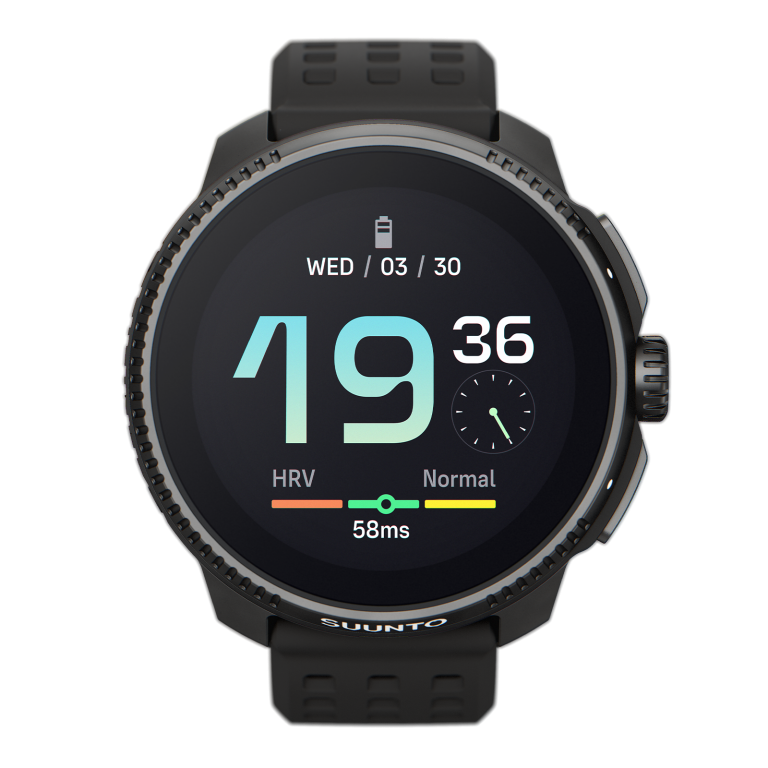
Suunto Race: AMOLED Performance Watch With Dual Band GPS, Free Maps, and Advanced HRV Training
Suunto’s performance focused watch combines a vibrant AMOLED display with dual band GPS, free offline maps, and HRV driven training analytics at $349 to $549, challenging premium competitors on both…

The Blood-Brain Barrier Breakthrough: Smart Nanoparticles Just Reversed Alzheimer’s Pathology in Under an Hour
Scientists at the Institute for Bioengineering of Catalonia and West China Hospital engineered supramolecular nanoparticles that cleared 50 to 60 percent of amyloid-beta from Alzheimer’s mice within one hour, restored…
Masimo MightySat: Clinical Grade Pulse Oximetry in a Consumer Fingertip Device
The consumer version of the pulse oximetry technology used in hospital ICUs worldwide, delivering clinical grade SpO2, perfusion index, and pleth variability measurements from your fingertip. Presented By Our Partners…
LetsGetChecked: At Home Blood Testing With Nurse Support and Physician Review
A comprehensive at home blood testing platform that combines finger prick convenience with CLIA certified lab analysis, dedicated nurse support, and physician reviewed results across dozens of health panels. Presented…