
The Gut as a Longevity Organ: 2026 Microbiome Research Reshaping Aging Medicine
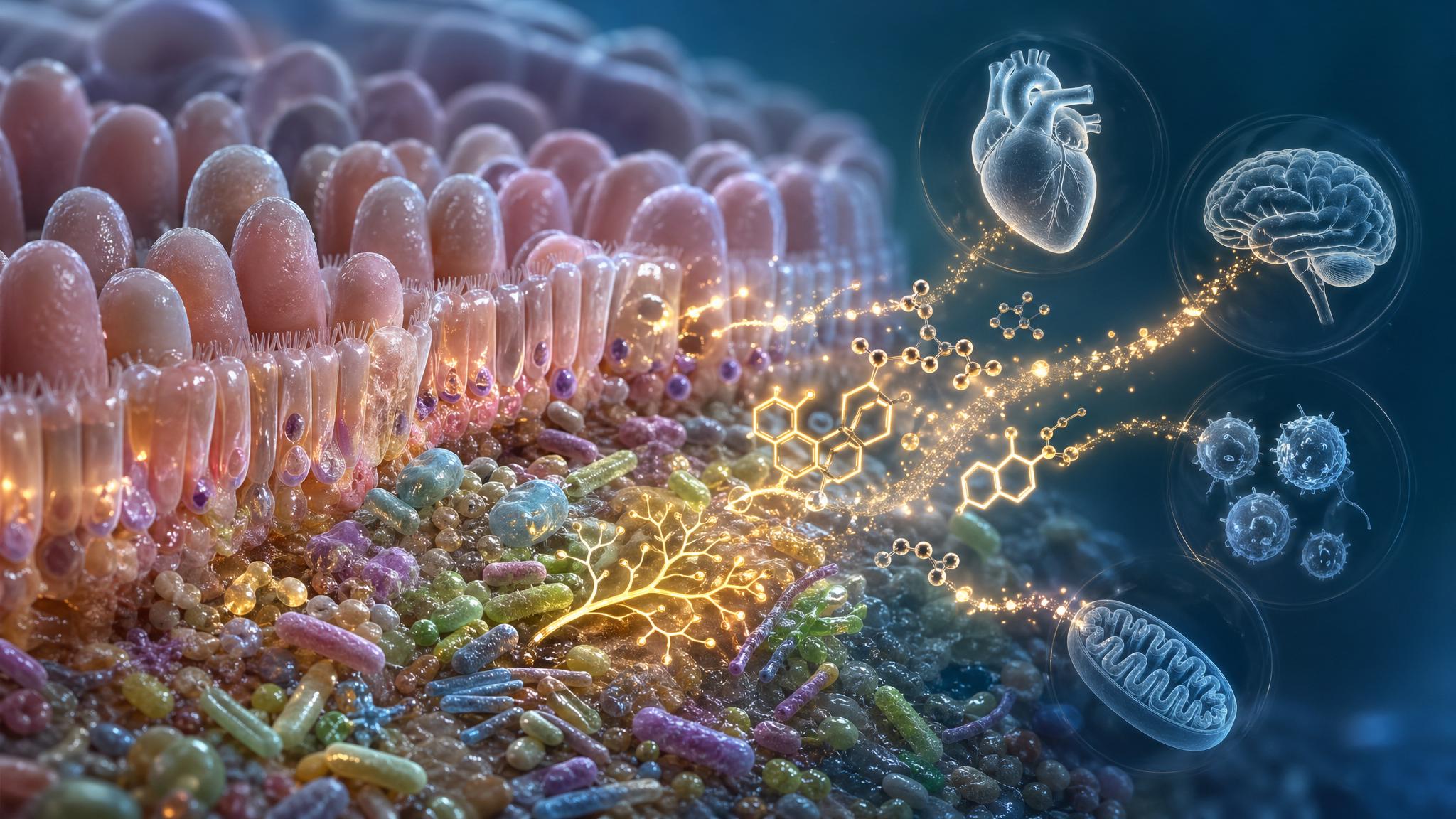
A new picture of the human gut is taking shape, and it looks far less like a digestive tube and far more like a metabolic organ co-equal with the liver and pancreas. The trillions of microbes living a few millimeters from our intestinal lining are now understood to manufacture a private pharmacopeia of small molecules that influence cholesterol, insulin, immune tone, blood pressure, and the pace at which our cells grow old. Three lines of research, each maturing rapidly across 2025 and into 2026, have moved gut microbiome science from interesting biology to actionable longevity medicine. Together they suggest that the most consequential longevity intervention of the next decade may not be a drug at all, but a deliberate reshaping of the ecosystem we already carry.
Presented By Our Partners



A Janelia Lab Just Showed You Can Reprogram Gut Bacteria Into a Longevity Factory
The headline discovery comes from the laboratory of Meng Wang, a senior group leader at the Howard Hughes Medical Institute’s Janelia Research Campus and one of the field’s most cited investigators in microbiome aging. Her team published a paper in PLOS Biology in late 2025, "Chemical modulation of gut bacterial metabolism induces colanic acid and extends the lifespan of nematode and mammalian hosts," that has rapidly become required reading for anyone tracking the longevity drug pipeline.
Wang’s group had previously established that colanic acid, a polysaccharide secreted by commensal Escherichia coli under environmental stress, was sufficient to extend lifespan in the roundworm Caenorhabditis elegans by influencing host mitochondrial dynamics. The remaining puzzle was how to coax bacteria living at the warm, neutral, well fed conditions of a mammalian gut to produce colanic acid in any meaningful quantity. Inside the body, the bacterial pathway that makes colanic acid is essentially switched off by a temperature block.
The new paper identifies a small molecule that flips the switch. A low, sub inhibitory dose of cephaloridine, a first generation cephalosporin antibiotic, removes the temperature block in commensal E. coli and induces colanic acid production at body temperature. The mechanism is not the broad bacterial stress response that comes with most antibiotic exposure. It is a precise activation of the Rcs phosphorelay, a specific bacterial signaling pathway, by a sub therapeutic dose that does not kill the bacteria or absorb meaningfully into the bloodstream.
The downstream effects are striking. Roundworms given low dose cephaloridine lived approximately 30 percent longer than controls. In aged mice, the same intervention produced measurable shifts in age related metabolism: higher HDL cholesterol and lower LDL in male animals, lower fasting insulin in females, and a partial reversal of age associated transcriptional changes in liver and adipose tissue. Importantly, oral cephaloridine at these doses is not absorbed systemically, meaning the entire mechanism plays out inside the gut without the body wide effects that have made antibiotics famously bad for longevity at therapeutic concentrations.
The work is not a license to take antibiotics for longevity. Cephaloridine itself was discontinued for human use decades ago because of nephrotoxicity at higher doses. The point is mechanistic. It demonstrates that the gut microbiome is a chemically programmable longevity factory, and that the right small molecule can selectively turn on a beneficial bacterial gene circuit without destroying the ecosystem around it. Wang’s lab and several biotech spinouts are now searching for non antibiotic chemical inducers of the same colanic acid pathway, along with engineered probiotic strains that produce colanic acid constitutively. Several reading frames of an entire new drug class are coming into focus.
Akkermansia muciniphila Has Crossed Into Real Clinical Evidence
If colanic acid represents the frontier, Akkermansia muciniphila represents the most clinically advanced microbial longevity intervention in 2026. A. muciniphila is a mucin degrading bacterium that lives in the inner mucus layer of the colon, where it strengthens the gut barrier and trains immune tone. It is consistently depleted in obesity, type 2 diabetes, inflammatory bowel disease, and frailty, and consistently enriched in people who age well.
The translational data has now caught up to the observational data. Two trials published or reported in the last year have moved the field beyond hypothesis. A 12 week, randomized, double blind, placebo controlled trial of pasteurized A. muciniphila strain HB05P in older adults with low muscle mass demonstrated improvements in grip strength and gait speed, two of the most robust predictors of all cause mortality in older populations. A separate 8 week trial of 130 overweight participants comparing live A. muciniphila PROBIO to its postbiotic and placebo found significantly greater weight reduction in both active arms, replicating an earlier signal from the seminal 2019 Cani group trial in Nature Medicine.
Mechanism work has kept pace. A 2025 Frontiers in Immunology review by an international consortium synthesized more than two hundred mechanistic papers and concluded that A. muciniphila exerts its anti aging effects through at least four convergent pathways: restoration of intestinal mucus thickness, reduction of circulating lipopolysaccharide and metabolic endotoxemia, increased short chain fatty acid output (notably acetate, which feeds host enterocytes and influences blood brain barrier integrity), and modulation of the gut brain axis through vagal afferents.
What is novel about the 2025 to 2026 wave of A. muciniphila research is the emerging case for the pasteurized form. Heat killed bacteria are easier to formulate, store, and ship than live probiotics, and the active mechanism appears to depend on a specific membrane protein, Amuc_1100, that survives pasteurization. A. K. Pendyala and colleagues have characterized Amuc_1100 binding to TLR2 receptors on intestinal epithelial cells, providing a clean mechanistic story for why a non viable preparation can still drive measurable clinical benefit. Several pharmaceutical sized companies are now pursuing pasteurized A. muciniphila and recombinant Amuc_1100 as biopharmaceuticals rather than probiotics, with the regulatory implications that classification carries.
Featured Partner
Invest in the Infrastructure Behind Modern Medicine
As healthcare expands beyond hospital walls, the buildings and campuses supporting that shift are generating compelling returns for investors who move early. The Healthcare Real Estate Fund offers qualified investors direct access to a curated portfolio of medical office, outpatient, and specialty care facilities.
Learn More →
The Centenarian Microbiome Has a Distinct Signature
The third strand of this story is the most surprising, and perhaps the most useful for prevention. A series of large cohort studies published between 2023 and 2026 have established that centenarians, the people who reach age 100 in good cognitive and physical health, carry gut microbiomes with consistently identifiable features. The signature is not just a younger looking gut. It is a distinctive ecology that diverges measurably from both healthy 65 year olds and frail 85 year olds.
A 2024 Springer Nature Journal of Biomedical Science narrative review and a 2025 Frontiers in Microbiology metagenomic study, together drawing on more than 9,000 participants across Italian, Japanese, Chinese, and Sardinian cohorts, converged on the same observations. Centenarians retain higher alpha diversity than expected for their age. They are markedly enriched in Bacteroides thetaiotaomicron and Bacteroides uniformis, two species that produce a wide repertoire of short chain fatty acids and bile acid metabolites. They show high abundance of Akkermansia and Christensenellaceae, the latter of which is one of the most heritable and most consistently longevity associated bacterial families ever identified. They carry unusual amounts of methanogenic archaea such as Methanobrevibacter smithii, which the field is only beginning to understand. And they show enriched populations of indole producing taxa, whose tryptophan derived metabolites cross the blood brain barrier and engage the aryl hydrocarbon receptor, a master regulator of immune tone and intestinal stem cell turnover.
The flip side is just as informative. Frailty in older adults, measured by the Fried frailty phenotype or the Rockwood frailty index, tracks closely with depletion of Coprococcus eutactus, Prevotella copri, and Faecalibacterium prausnitzii, alongside dominance of Clostridium hathewayi and Bacteroides fragilis. The pattern is consistent enough across studies that several research groups have proposed a microbiome based frailty score. The implication is that frailty, long thought of as an inevitable consequence of muscle and bone loss, has an early and potentially modifiable microbial component.
A 2025 paper in the Journal of Internal Medicine by Schoultz and colleagues went further. The authors argued that healthy aging is not the absence of microbiome change but a particular kind of change. The hallmark of a long lived microbiome is increasing uniqueness with age, driven by the emergence of rare taxa that synthesize specific bioactive metabolites, especially indoles. People whose microbiomes drift toward a generic, high inflammation, low diversity composition appear to age faster across multiple organ systems. People whose microbiomes become more individuated, with retained capacity to produce indoles, short chain fatty acids, and secondary bile acids, appear to age more slowly.
Why This Matters For the Rest of Longevity Medicine
The convergence of these three findings reframes the gut microbiome as a longevity organ in the same sense that the thymus or the liver is a longevity organ. It produces molecules. It interacts with every other system. It can be measured, tracked, and modulated. And the evidence is now strong enough that several adjacent fields are reorganizing around it.
Cardiology is one of the clearest examples. Trimethylamine N oxide, or TMAO, a microbially produced metabolite of dietary choline and carnitine, has emerged as an independent predictor of major adverse cardiovascular events with a hazard ratio comparable to LDL cholesterol in some cohorts. Several biotechs are now testing small molecule inhibitors of bacterial TMA lyase, which would lower TMAO without altering the broader microbiome. The Cleveland Clinic group led by Stanley Hazen continues to anchor this work.
Neurology is another. The gut brain axis is no longer a fringe concept. The vagal afferent fibers that report from the intestinal wall to the brainstem carry information that influences mood, cognition, and neuroinflammation. Multiple groups have shown that fecal microbiota transplant from young to aged mice partially restores hippocampal neurogenesis and reverses age associated cognitive decline. Human trials remain early, but several Phase 1 and Phase 2 studies of capsule based fecal microbiota transplants for mild cognitive impairment are now enrolling.
Oncology has its own crossover. The composition of the gut microbiome is now an established modifier of response to immune checkpoint inhibitor therapy in melanoma and several solid tumors, with specific taxa including Akkermansia muciniphila and members of Ruminococcaceae correlating with response. Microbial profiling is becoming a routine pre treatment biomarker at major academic cancer centers.
What This Means For You
The science is moving fast, and the temptation to act ahead of the evidence is real. Several principles are durable enough to act on now.
Diversity and fiber matter more than any single supplement. The most consistent finding across centenarian studies is microbial diversity, and the strongest dietary lever for diversity is the variety and quantity of fiber consumed. The widely cited American Gut Project benchmark of thirty different plant species per week appears to track better with healthy microbiome composition than any single dietary pattern, including the Mediterranean diet considered in isolation. Lentils, beans, oats, berries, leafy greens, cruciferous vegetables, nuts, seeds, and fermented foods all contribute different substrates that feed different microbes.
Fermented foods produce measurable and rapid effects. A landmark Stanford trial led by Justin Sonnenburg and Christopher Gardner, published in Cell in 2021, demonstrated that ten weeks of high fermented food intake (yogurt, kefir, kimchi, sauerkraut, kombucha) increased microbial diversity and reduced 19 inflammatory markers, including interleukin 6, in healthy adults. The effect was larger than a high fiber intervention alone. Most people in the United States consume essentially no fermented foods and have substantial room to gain.
Antibiotic stewardship is a longevity intervention. Repeated broad spectrum antibiotic exposure in adulthood is associated with measurable reductions in microbial diversity that can persist for years. This is not an argument against using antibiotics when indicated. It is an argument against treating viral upper respiratory infections with them and against the casual use of antibiotic mouthwashes and antibacterial soaps. Each course shifts the ecosystem.
Targeted probiotics are reasonable, generic ones less so. The clinical evidence for Akkermansia muciniphila in metabolic and sarcopenic indications is now strong enough that pasteurized formulations are a defensible addition for older adults with low muscle mass or metabolic syndrome, ideally in consultation with a physician who follows the literature. The evidence for off the shelf multi strain probiotics is far weaker, and most consumer products contain strains for which there is little human outcome data.
Test before you treat, when feasible. The cost of clinical grade gut microbiome sequencing has dropped substantially. Companies including Viome, BiomeSight, and several academic spinouts now offer reasonable quality reports that include diversity scores, taxa abundances, and predicted metabolic capacity. The reports are not yet diagnostic, but they can establish a baseline against which dietary or probiotic interventions can be evaluated. Repeat sampling at six and twelve months is the right cadence for most people.
Ask your physician about TMAO. Routine cardiovascular risk panels are beginning to incorporate TMAO measurement, particularly for patients with intermediate risk by traditional metrics. A persistently elevated TMAO with otherwise reasonable lipids may reflect a microbiome composition that warrants attention.
Watch the colanic acid pipeline. The Janelia work is unlikely to produce a consumer product in the next two to three years, but it represents the leading edge of a class of interventions that may reach the clinic before this decade ends. The same is true of recombinant Amuc_1100. These are the molecules to know about when discussing what is real versus what is marketing.
The deeper message of the 2026 microbiome research is one that older models of medicine are still catching up to. Aging is not just a property of human cells. It is a property of the microbial ecosystem that has co evolved with us, and that ecosystem can be tended. The gut is not separate from longevity medicine. It is the substrate on which much of it will be built.


Similar Posts

Nox T3 Home Sleep Test: Comprehensive Respiratory Monitoring for Sleep Apnea Diagnosis
When a home sleep test needs to measure what polysomnography measures, the Nox T3 bridges the gap between laboratory precision and home convenience. Presented By Our Partners The debate over…
Elysium Index: An Accessible Entry Point to Epigenetic Age Testing
Backed by Nobel Prize-winning science and priced at $299, the Elysium Index measures biological age through DNA methylation. Is this the most accessible on-ramp to epigenetic health tracking? Presented By…
The Klotho Protein: How a Single Longevity Hormone Is Reshaping Brain Aging Research in 2026
Discovered almost by accident in 1997 and named after the Greek fate that spins the thread of life, klotho is the longevity hormone that may connect kidney biology, cognitive aging,…
Nebula Genomics: Whole Genome Sequencing, Data Ownership, and the Case for Reading Every Base Pair
While most consumer genetic tests read a fraction of your genome, Nebula sequences all 3.2 billion base pairs and lets you keep the data. Is whole genome sequencing ready for…
Fitbit Sense 2: Continuous Stress Monitoring With ECG and Electrodermal Activity at an Accessible Price
The only mainstream smartwatch combining FDA cleared ECG with continuous electrodermal activity sensing, Fitbit Sense 2 brings clinical grade heart rhythm screening and real time stress biology monitoring to a…

Smart Money Is Rotating Into Healthcare AI: What ARK Invest’s $87M Big Tech Selloff Signals for Precision Medicine
ARK Invest dumped $87 million in Nvidia and Meta last week and redirected capital into Tempus AI, GeneDx Holdings, CRISPR Therapeutics, and other healthcare AI and genomics companies. The signal…
