
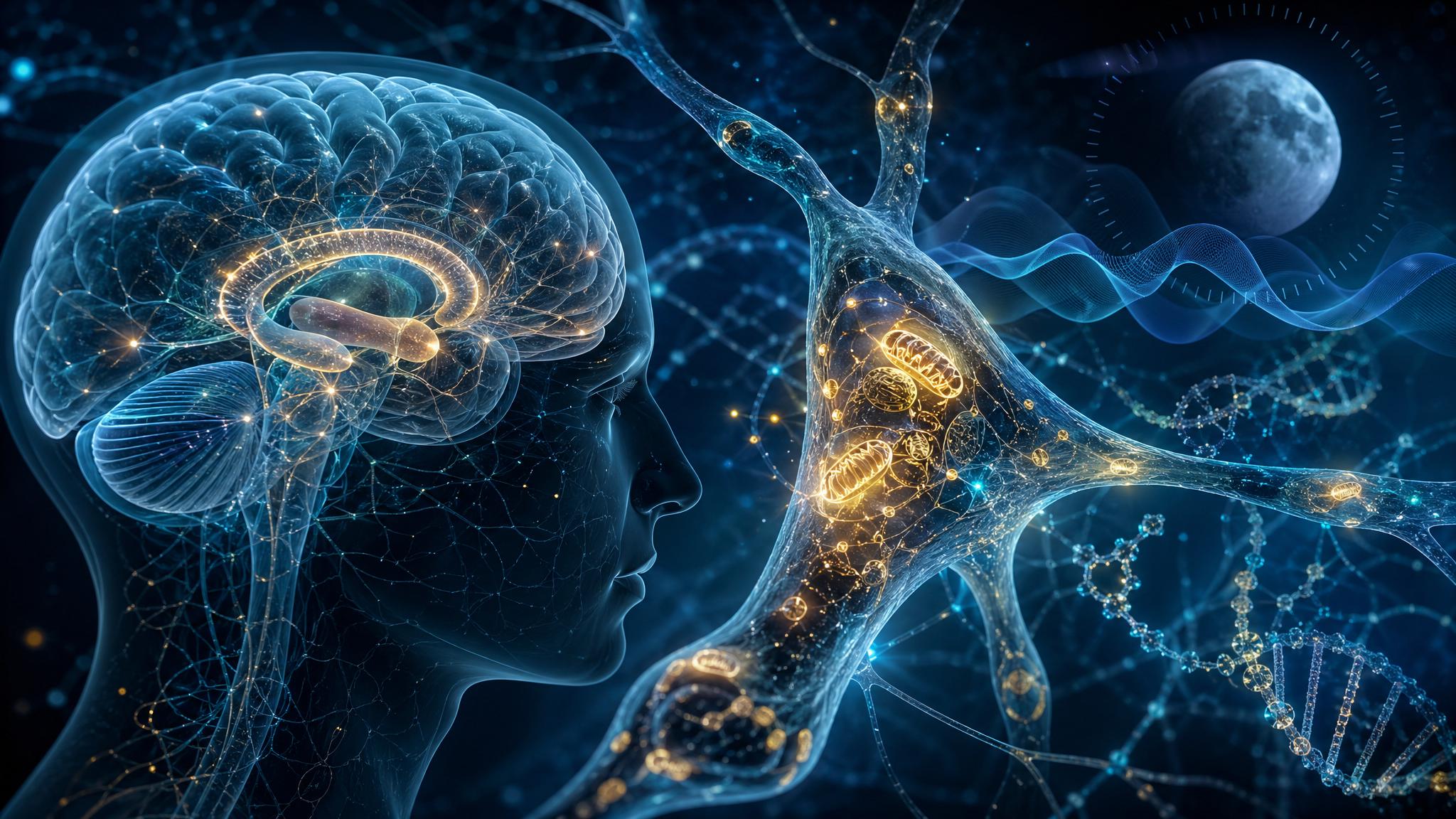
The NAD+ Renaissance: How a Cellular Fuel Molecule Is Rewriting the Science of Brain Aging, Sleep, and Neurodegeneration
A molecule you have never heard of may hold the key to how well your brain ages
Nicotinamide adenine dinucleotide, known as NAD+, is not a drug, a supplement brand, or a Silicon Valley biohack. It is a coenzyme found in every living cell, essential for converting food into energy, repairing damaged DNA, regulating circadian rhythms, and keeping neurons firing correctly. Without adequate NAD+, cells cannot perform the hundreds of enzymatic reactions that sustain life.
Presented By Our Partners


The problem is that NAD+ levels decline with age. By midlife, circulating NAD+ concentrations can drop by 50 percent or more compared to younger adults. That decline has been linked to mitochondrial dysfunction, chronic inflammation, impaired DNA repair, and the progressive deterioration of tissues from the heart to the hippocampus. For years, the connection between falling NAD+ and aging biology remained an intriguing laboratory observation without much clinical traction.
That is changing rapidly. In March 2026, a landmark expert review published in Nature Aging brought together more than 25 leading scientists from the University of Oslo, Akershus University Hospital, Jinan University, the University of Minho, and other institutions to assess the state of NAD+ science. Their conclusion: NAD+ augmentation has moved from animal curiosity to a legitimate therapeutic frontier, with more than 100 clinical trials now registered on ClinicalTrials.gov and early results showing improvements in memory, physical function, metabolic health, and sleep quality.
At the same time, a breakthrough paper in Science Advances demonstrated that NAD+ supplementation reverses Alzheimer’s related memory deficits in animal models through a previously unknown RNA splicing mechanism. And a first of its kind human pharmacokinetic study published in iScience confirmed what researchers had long hoped but never proven: oral NAD+ precursors actually reach the human brain.
Together, these three studies represent a turning point. The NAD+ field is no longer asking whether this molecule matters for aging. It is asking how to use it most effectively.
Inside the Nature Aging review: 25 scientists, one verdict
The Nature Aging expert review, led by Associate Professor Evandro Fei Fang of the University of Oslo, is the most comprehensive assessment of NAD+ augmentation therapy (NAD-AT) published to date. Unlike single study papers, this consensus document synthesizes evidence from preclinical models, phase I and phase II clinical trials, and mechanistic biology to evaluate where the science stands and where the gaps remain.
The review focuses on two primary NAD+ precursors that have dominated the clinical landscape: nicotinamide riboside (NR) and nicotinamide mononucleotide (NMN). Both are orally bioavailable compounds that cells convert into NAD+ through slightly different metabolic pathways. Both have demonstrated the ability to raise circulating NAD+ levels in human trials. The question that has lingered for years is whether raising blood NAD+ translates into functional benefits in tissues that matter, particularly the brain.
On this point, the review presents cautious optimism. Early phase trials have reported improvements across several domains. In neurodegenerative disease models, NAD+ augmentation has shown neuroprotective effects. In metabolic studies, NMN supplementation has improved insulin sensitivity and glucose handling. In aging cohorts, both NR and NMN have been associated with reduced inflammatory markers and improved physical performance metrics.
However, the 25 authors are careful to note that the field is still in its early clinical stages. Most completed human trials have been small, ranging from 30 to 65 participants, and short, typically lasting two to 14 weeks. Meta analyses have confirmed that NMN supplementation reliably elevates blood NAD+ levels, but many clinically relevant endpoints, including cognitive scores, cardiovascular outcomes, and longevity markers, have not yet reached statistical significance in the published data.
The review calls for larger, longer, and more rigorously designed trials to determine optimal dosing, identify which patient populations benefit most, and establish whether NAD+ augmentation can meaningfully delay or reverse age related decline. What it does not do is dismiss the approach. The scientific foundation, the authors conclude, is strong enough to justify a major expansion of clinical investigation.
NAD+ reverses Alzheimer’s memory deficits through an unexpected mechanism
While the Nature Aging review provides the 30,000 foot view, a study published in Science Advances offers a granular molecular breakthrough. Researchers led by Professor Fang, in collaboration with Professor Oscar Junhong Luo of Jinan University and Associate Professor Joana M. Silva of the University of Minho, discovered that NAD+ supplementation corrects dysfunctional alternative RNA splicing events, a mechanism that had not previously been linked to NAD+ biology in the context of Alzheimer’s disease.
Alternative RNA splicing is the process by which a single gene can produce multiple different protein variants. It is a fundamental regulatory mechanism, and when it goes wrong, cells produce misfolded or dysfunctional proteins. Aging and Alzheimer’s disease are both associated with a dramatic increase in aberrant splicing events, but until this study, no one had connected NAD+ decline to splicing dysfunction or shown that restoring NAD+ levels could fix it.
The researchers used a comprehensive multi model approach, combining computational predictions with validation in the nematode C. elegans, transgenic mouse models carrying tau related mutations, and human brain tissue samples from Alzheimer’s patients. They identified a key protein called EVA1C (epithelial V like antigen 1 homolog C) that serves as a critical mediator between NAD+ levels and RNA splicing fidelity.
In mice bearing pathological tau mutations, NAD+ supplementation improved RNA splicing accuracy, restored brain function, and enhanced memory performance. The researchers then demonstrated that EVA1C is essential for these benefits: when they used adeno associated virus techniques to knock down EVA1C expression in the hippocampal CA1 region, the memory improvements from NAD+ supplementation were abolished. This confirmed that NAD+ is not simply acting as a generic cellular energizer but is operating through a specific molecular pathway with identifiable control points.
The study also found that EVA1C levels are reduced in the hippocampus of human Alzheimer’s patients compared to cognitively normal individuals, suggesting that this pathway is directly relevant to human disease, not just to mouse models.
Featured Partner
Invest in the Infrastructure Behind Modern Medicine
As healthcare expands beyond hospital walls, the buildings and campuses supporting that shift are generating compelling returns for investors who move early. The Healthcare Real Estate Fund offers qualified investors direct access to a curated portfolio of medical office, outpatient, and specialty care facilities.
Learn More →
This is significant for several reasons. First, it provides a new mechanistic target for drug development. Second, it suggests that NAD+ augmentation may address Alzheimer’s pathology through a pathway that is distinct from the amyloid and tau targeting approaches that have dominated and largely disappointed the pharmaceutical pipeline. Third, it opens the door to combination strategies where NAD+ precursors could be used alongside other therapies to attack the disease from multiple angles.
For the first time, oral NAD+ precursors are proven to reach the human brain
One of the most persistent criticisms of NAD+ supplementation has been the blood brain barrier question: even if NR or NMN raises NAD+ in the blood, does it actually increase NAD+ in the organ that matters most for cognitive aging?
A phase I clinical trial published in iScience in early 2026 provides the first definitive answer. Conducted at the Department of Neurology at Haukeland University Hospital in Norway, the study established the pharmacokinetic profile of NAD+ augmentation with oral NR and NMN supplementation.
The findings were striking. Blood NAD+ levels increased slowly after oral supplementation, plateauing after approximately two weeks of daily intake. The decline after discontinuation followed similarly gradual kinetics, suggesting that NAD+ augmentation is not a single dose phenomenon but requires sustained supplementation to maintain elevated levels.
More importantly, after four weeks of oral NR supplementation, cerebral NAD+ levels increased measurably in healthy participants. This was one of the first studies to directly demonstrate, using advanced neuroimaging techniques, that an orally consumed NAD+ precursor can cross the blood brain barrier and elevate NAD+ concentrations in the human brain.
The study also compared NR and NMN head to head. While both precursors showed comparable pharmacokinetic profiles in blood, NR produced a greater NAD+ increase, and the investigators selected NR for further investigation to reduce participant burden. A parallel finding from a January 2026 trial involving 65 healthy adults found that both NR and NMN at 1,000 mg per day doubled circulating NAD+ over 14 days, with no significant difference between the two compounds.
For the Parkinson’s disease patients enrolled in the study, brain NAD+ levels showed a comparable upward trend, though the increase fell short of statistical significance, likely due to the small sample size. This is a tantalizing finding that warrants follow up in larger trials specifically powered to detect brain NAD+ changes in neurodegenerative populations.
The clinical implications are substantial. If oral supplementation can reliably elevate brain NAD+, then the neuroprotective effects observed in animal models, including the RNA splicing restoration demonstrated in the Science Advances paper, become directly relevant to human medicine.
NAD+ and sleep: a clinical surprise that connects cellular biology to a fundamental health pillar
Beyond neurodegeneration, one of the most unexpected clinical findings in the NAD+ literature involves sleep. A randomized, double blind, placebo controlled trial tested NMN supplementation in middle aged and older adults with chronic insomnia and found significant improvements across multiple sleep parameters.
After 12 weeks of daily NMN supplementation at 300 mg, participants experienced faster sleep onset, increased deep sleep duration, increased REM sleep ratios, decreased light sleep ratios, reduced nighttime awakenings, and improved daytime alertness and functioning. The treatment group achieved an effectiveness rate of 65.5 percent, compared to 27.6 percent in the placebo control group. Post treatment scores on the Pittsburgh Sleep Quality Index (PSQI) were significantly lower in the NMN group, indicating meaningful improvements in perceived sleep quality.
These findings are particularly relevant because sleep disruption is both a symptom and a driver of accelerated aging. Poor sleep impairs glymphatic clearance of amyloid beta from the brain, elevates cortisol, disrupts glucose metabolism, and accelerates cellular senescence. If NAD+ augmentation can improve sleep architecture in aging adults, the downstream benefits could extend far beyond subjective rest quality.
A larger clinical trial is now underway, enrolling 400 chronic insomnia patients in a multicenter, randomized, placebo controlled design with NMN at 320 mg per day. This trial will measure total sleep time, sleep efficiency, sleep latency, and REM sleep latency as secondary outcomes, providing the kind of powered, rigorous evidence the field needs.
The biological plausibility is clear. NAD+ is a critical cofactor for sirtuins, the family of enzymes that regulate circadian clock gene expression. SIRT1 in particular modulates the core clock machinery, including BMAL1 and CLOCK proteins, that govern 24 hour sleep wake cycles. When NAD+ levels decline with age, sirtuin activity drops, circadian signaling weakens, and sleep architecture deteriorates. Restoring NAD+ may essentially recalibrate the cellular clock.
The honest state of the science: what we know, what we do not, and what to watch
It would be irresponsible to present the NAD+ story without acknowledging its complexities. The field is generating excitement, but it has not yet delivered the definitive human outcomes data that would move NAD+ augmentation from promising to proven.
Several key uncertainties remain. First, optimal dosing is not established. Clinical trials have used NMN doses ranging from 250 mg to 1,200 mg per day and NR doses from 300 mg to 2,000 mg per day, with varying durations and endpoints. The iScience pharmacokinetic study suggests that sustained daily supplementation is necessary, but the minimum effective dose for brain NAD+ elevation is unknown.
Second, the NR versus NMN debate is not settled. While the Norwegian brain pharmacokinetics study found NR produced greater NAD+ increases, the January 2026 head to head trial found no significant difference at equal doses. The two precursors use different metabolic conversion pathways, and individual variation in enzymes like NRK1, NRK2, and NAMPT may influence which precursor works better for a given person.
Third, long term safety data are limited. Short term trials consistently show that both NR and NMN are well tolerated, but the longest published human studies span only 12 weeks. Given that NAD+ augmentation would likely need to be sustained for years to meaningfully impact aging trajectories, longer safety monitoring is essential.
Fourth, and perhaps most importantly, no human trial has demonstrated that NAD+ supplementation extends lifespan. The Nature Aging review authors explicitly flag this gap. Animal studies show lifespan extension in certain models, but translating those findings to human longevity remains an open question.
What the field does have, and what makes 2026 a pivotal year, is converging evidence across multiple independent research groups showing that NAD+ augmentation produces measurable biological changes in humans: elevated blood and brain NAD+, reduced inflammatory markers, improved sleep architecture, and, in preclinical models, restoration of memory and correction of molecular pathology through identified mechanisms.
What this means for you
If you are interested in the NAD+ story from a personal health perspective, the evidence supports several practical takeaways.
The science is real but still early. NAD+ decline with age is well established, the biological rationale for augmentation is strong, and early clinical results are encouraging. But this is not yet a proven intervention for any specific disease. Anyone considering supplementation should understand that they are in the early adopter phase, not the evidence based medicine phase.
Exercise remains the most reliable way to boost NAD+ naturally. Both aerobic exercise and resistance training have been shown to increase NAD+ biosynthesis through activation of NAMPT, the rate limiting enzyme in the NAD+ salvage pathway. Before reaching for a supplement, optimizing your exercise routine is the intervention with the deepest evidence base.
If you do supplement, NR and NMN appear comparably effective at raising blood NAD+. The doses used in successful clinical trials range from 250 mg to 1,000 mg per day. The iScience pharmacokinetic data suggest that at least two to four weeks of consistent daily use is needed to reach plateau levels in blood, and likely four weeks or more for brain NAD+ elevation.
Watch the large trials. The 400 patient NMN insomnia study and several phase II trials in Alzheimer’s and Parkinson’s disease will report results over the next one to two years. These will provide the kind of evidence needed to determine whether NAD+ augmentation belongs in clinical practice or remains a laboratory promise.
The NAD+ story is not about a miracle molecule. It is about a fundamental piece of cellular biology that science is finally learning to measure, manipulate, and test in the people who need it most. The next chapter will be written in clinical trials, and the results, for once, may be worth the wait.


Similar Posts
SiPhox Health Core Panel: Fingerstick ApoB and Advanced Lipid Testing at Home
A microfluidics-powered fingerstick blood panel that brings advanced cardiometabolic markers like ApoB, hsCRP, and HbA1c to your kitchen table at a fraction of the cost of traditional lab panels. Presented…
Mosaic Aging: Why Your Organs Age at Different Rates, and Why It Matters
A growing body of work argues that the body does not age all at once. It ages in tiles. The pace at which your fastest-aging organ breaks down, not the…
Fitbit Aria Air: Simple Body Composition Scale for the Fitbit and Google Ecosystem
Sometimes the most useful health device is the simplest one, the one you actually step on every morning without thinking about it. Presented By Our Partners Health technology has a…
The Daily Rounds: Longevity & Health Care Brief | April 2, 2026
🧬 - Epigenetic reprogramming has entered human clinical trials for the first time, with Life Biosciences receiving FDA clearance to test partial reprogramming in retinal degeneration patients, a landmark moment for the entire longevity field. 🤖 - An AI-designed drug for pulmonary fibrosis showed a 160 mL treatment differential in forced vital capacity versus placebo in Phase IIa, suggesting the drug may stop or reverse disease progression rather than merely slowing it. 🦠 - Gut bacteria use molecular syringe-like structures to inject proteins directly into human cells, and this bacterial protein transfer is now linked to elevated Crohn's disease risk, redefining how the microbiome communicates with the immune system. ❤️ - A new cardiovascular drug class reduces heart attack and stroke risk in older adults by nearly 20 percent by simultaneously targeting cholesterol, inflammation, and blood sugar, pointing toward a potential revision of current standard-of-care protocols. ⏰ - Circadian biology is entering the clinic, with evidence that vaccine timing, sleep medication evaluation, and cardiovascular risk management all benefit from treating the biological clock as a measurable and modifiable variable rather than background noise.

The PEARL Trial Is In: What Low-Dose Rapamycin Actually Did to Human Aging Over 48 Weeks
The most anticipated longevity drug trial in a generation has delivered its full one-year results. Here is what rapamycin actually did to lean muscle, pain, biological age, and overall healthspan…
The Undruggable 80 Percent: Why AI Is Cracking the Proteins Medicine Couldn’t Touch
For four decades, a single protein drove roughly a third of all human cancers, and nobody could build a drug against it. Here is why that story is finally changing,…
