
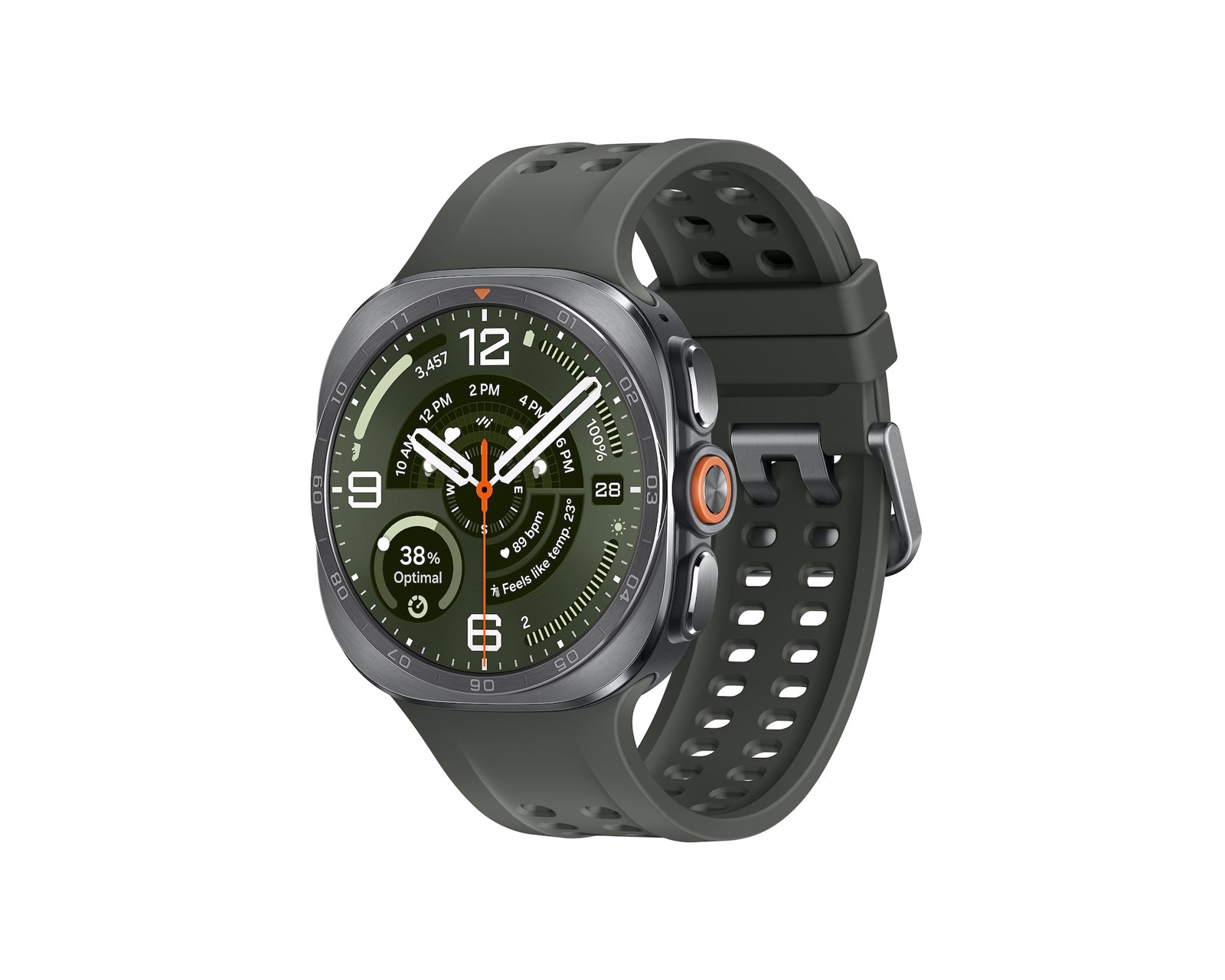
Samsung Galaxy Watch Ultra 2 Review 2026: $699 Price, Battery, Health Accuracy, HSA/FSA Status
Samsung’s rugged flagship gets a brighter screen, a bigger battery and a higher price. Its health tools are the same strong Galaxy Watch set, but for the athletes it targets, the evidence on workout heart rate and calories is more mixed than the marketing.
Presented By Our Partners


Samsung introduced the Galaxy Watch Ultra 2 at Galaxy Unpacked in July 2026 alongside the Galaxy Watch 9 (Samsung Newsroom). It sells for $699 in the US (SamMobile), up from $649 for the original Ultra, and launch coverage led with display, speed and battery upgrades (SamMobile). This review looks at what Galaxy Watch sensors have been shown to measure, with a focus on the outdoor and endurance use the Ultra is built for.
First look. No peer-reviewed study has tested the Galaxy Watch Ultra or Ultra 2; a PubMed search on October 27, 2026 returned none. The accuracy section draws on studies of the Galaxy Watch 3 through 7, which share Samsung’s sensor platform and health software, and the Ultra 2 may perform better or simply differently.
The short answer: The Galaxy Watch Ultra 2 is Samsung’s $699 rugged smartwatch, launched in July 2026 in a 47mm titanium case with LTE. Its health screens are the same as the Galaxy Watch 9’s, including an FDA-authorized sleep apnea feature that found 94 percent of moderate to severe cases in a 2026 Stanford study. Galaxy Watch heart rate held up in maximal treadmill tests, but lagged rivals in another study and badly underestimated heart rate during weightlifting, and calorie estimates were off by 10 percent or more.
- Best for: Android users who hike, run long distances or train outdoors and want a tough watch with Samsung’s rhythm and sleep apnea screening.
- Not for: iPhone owners, anyone who needs a diagnosis, lifters who want accurate heart rate between sets, or buyers who only want the health features, which the cheaper Galaxy Watch 9 also offers.
- Price (October 2026): $699, 47mm with LTE.
- Regulatory status: Samsung’s irregular heart rhythm notification is FDA cleared, its sleep apnea feature received FDA De Novo authorization in 2024, and Galaxy Watch ECG is FDA and CE marked. The blood pressure feature is not FDA cleared. We found no clearance specific to the Ultra 2 hardware; confirm which features your region supports.
- Evidence: Moderate to strong for atrial fibrillation ECGs and sleep apnea screening; good for blood oxygen in low-oxygen lab tests; mixed for exercise heart rate; weak for calories; none published for GPS distance, VO2 max or the Ultra 2 itself.
What Is the Samsung Galaxy Watch Ultra 2?
The Galaxy Watch Ultra 2 is Samsung’s rugged, 47mm titanium smartwatch for Android phones, announced in July 2026, with LTE, GPS and an 800mAh battery. It tracks heart rate and rhythm, sleep, blood oxygen, body composition and workouts, and succeeds the original Galaxy Watch Ultra.
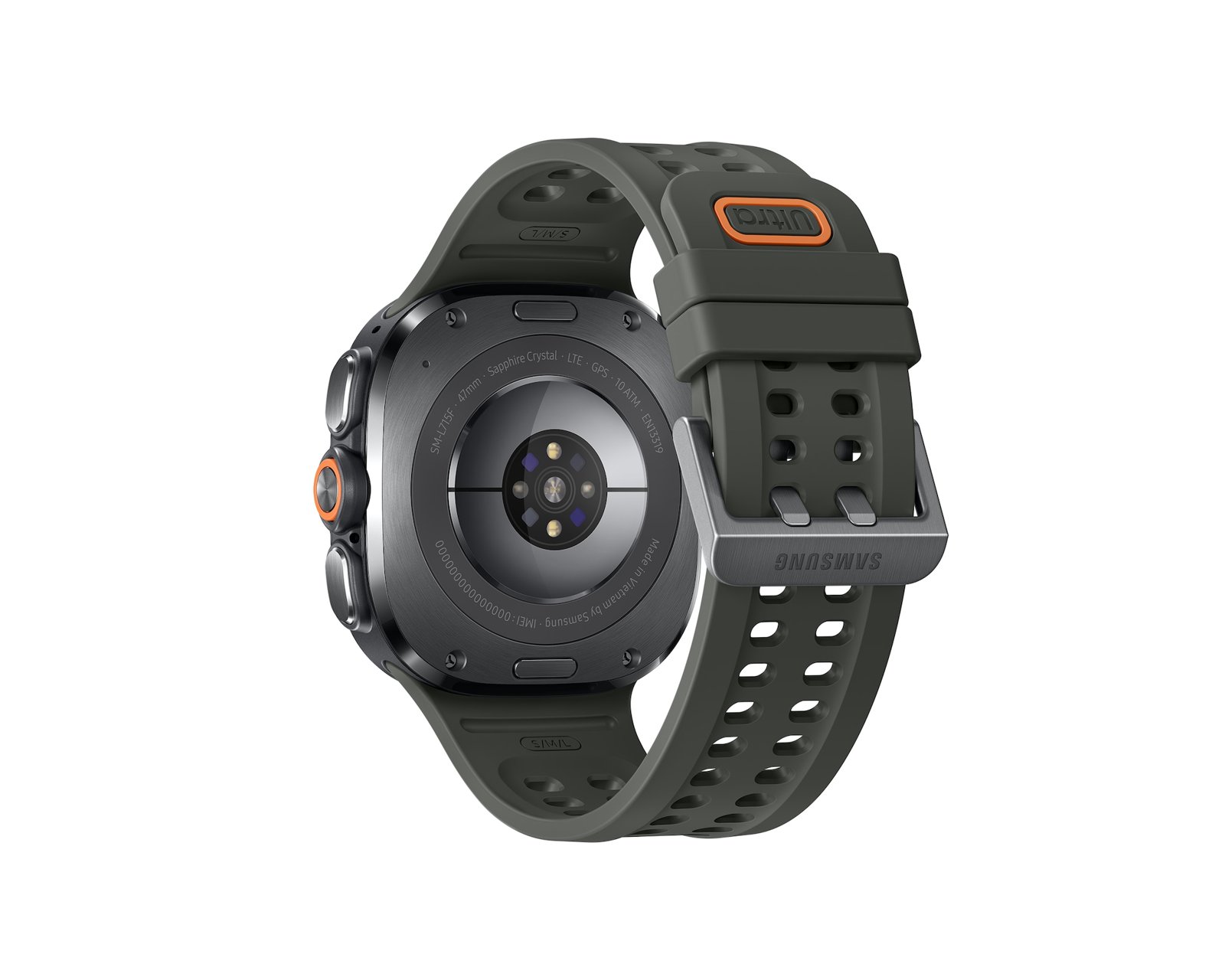
Samsung’s US newsroom pitched the Ultra 2 to runners and to owners ready to upgrade (Samsung), and Digital Trends summed up the launch as a brighter display, a larger battery and new fitness features (Digital Trends). We found no battery life rating in hours from Samsung for the Ultra 2; the original Ultra was rated at up to 100 hours. The 800mAh capacity comes from retailer and spec listings and was not tested by Healthcare Discovery.
Reviews are strongly positive. BGR and T3 both called it Samsung’s best smartwatch yet, Expert Reviews said it is better in just about every way, and the Irish Examiner called it peak performance for serious athletes and adventurers. Business Today was cooler, describing incremental polish with some compromises.
Can your doctor see this data? Partly, if you share it. Samsung Health is adding Xealth, the care platform Samsung bought, to move wearable data into participating health systems.
How Does the Galaxy Watch Ultra 2 Work?
Like other Galaxy Watches, the Ultra 2 reads the body through light, electricity and motion. Optical sensors on the back track each pulse for heart rate and rhythm, electrodes record a single-lead ECG, red and infrared light estimate blood oxygen, a bioelectrical impedance sensor estimates body fat and muscle, and an accelerometer and GPS track movement and distance.
The optical sensor does most of the work. Each heartbeat pushes blood into the small vessels of the wrist, and the sensor sees the skin brighten and dim with every beat. During hard exercise, arm swing and a loose strap can swamp that signal, which is why workout heart rate is harder to measure than resting heart rate, and why weightlifting, with its sudden grip and wrist flexion, is the hardest case of all.
Samsung’s sleep apnea feature looks for repeated dips in blood oxygen across at least two nights, the fingerprint of obstructive sleep apnea. Calorie estimates are a model on top of everything else, combining heart rate, motion and your profile, so they inherit every other error.
How Accurate Is the Galaxy Watch Ultra 2? What the Research Shows
No study has tested the Ultra 2 yet. On earlier Galaxy Watches, ECGs detected atrial fibrillation about as well as Apple’s, the sleep apnea feature caught most moderate to severe cases, and blood oxygen met accuracy limits in low-oxygen lab tests. Treadmill heart rate was close on average but varied for individuals, weightlifting heart rate was badly off, and calorie estimates erred by 10 percent or more.
Exercise heart rate. In 55 healthy adults running a maximal treadmill test, the Galaxy Watch 6 stayed within a median of 1 to 3 beats per minute of a Polar H10 chest strap, with a mean bias of 2.67 beats per minute low. Agreement was good near maximum effort (intraclass correlation 0.90) but weaker at 70 to 80 percent of maximum (0.54), and individual readings ranged from 16.90 below to 11.57 above the strap (PMID 41990212). An independent Seoul study of 37 adults found the Apple Watch SE and Polar Verity Sense had significantly lower heart rate error than the Galaxy Watch 6 (PMID 42438855). In 44 patients with coronary artery disease, the Galaxy Watch 4 stayed under 2 percent average error on a treadmill test, with agreement dropping from 0.997 overall to 0.867 above 160 beats per minute (PMID 37536665). Weightlifting was the weak spot: in 70 men, the Galaxy Watch 5 underestimated heart rate right after each set by 25.60 beats per minute (PMID 42938956).
Calories. In 148 adults running intermittent intervals for 27 minutes, the Galaxy Watch 6 and 7 calorie estimates were not significantly different from a portable metabolic analyzer on average, but individual errors averaged 10.10 to 12.55 percent (PMID 41849635). An independent Florida International study of 58 Hispanic adults on a cycling protocol found the Galaxy Watch 5 overestimated calories by 56.76 kilocalories over 10 minutes, with errors growing as body fat rose (PMID 42525581).
Blood oxygen at altitude. In 18 young adults breathing gas mixtures that simulate high altitude, the Galaxy Watch 5 stayed within the 4 percent accuracy limit against a reference oximeter, including below 90 percent saturation, though the Apple Watch 8 was the most reliable of the three watches tested (PMID 38005550). In a hypoxia lab study that followed FDA and ISO methods with arterial blood samples, the Galaxy Watch 4 read within 1.8 percentage points (root mean square deviation) across saturations from 70 to 100 percent in 24 adults (PMID 40096012).
Sleep apnea and atrial fibrillation. In a 2026 Stanford study of 152 adults with known or suspected moderate to severe sleep apnea, the Galaxy Watch feature reached an area under the curve of 0.94, finding 94.1 percent of moderate to severe cases at its default threshold but correctly clearing only 66.7 percent of people without them (PMID 42661136). In the BASEL Wearable Study of 201 cardiology patients, the Galaxy Watch 3 ECG detected atrial fibrillation with 85 percent sensitivity and 75 percent specificity, matching the Apple Watch 6, with 17 percent of tracings inconclusive (PMID 36858690). Our Galaxy Watch 9 review covers the shared ECG, blood pressure and body composition evidence in full.
Featured Partner
Invest in the Infrastructure Behind Modern Medicine
As healthcare expands beyond hospital walls, the buildings and campuses supporting that shift are generating compelling returns for investors who move early. The Healthcare Real Estate Fund offers qualified investors direct access to a curated portfolio of medical office, outpatient, and specialty care facilities.
Learn More →
GPS and VO2 max. We found no peer-reviewed study of Galaxy Watch GPS distance accuracy or VO2 max estimates on PubMed as of October 27, 2026.
Company ties: the maximal treadmill and running calorie studies come from the Sidia Institute of Science and Technology in Manaus, Brazil, a research institute with a history of Samsung partnerships, although PubMed lists no direct Samsung affiliation (PMID 41990212, PMID 41849635). One author of the FDA-method hypoxia study lists Physio Monitor LLC, a testing company (PMID 40096012). PubMed affiliations are not a full disclosure of funding or conflicts.
What the Galaxy Watch Ultra 2 Gets Right
The Ultra 2 gets the most important screens right for Android users, atrial fibrillation on demand and sleep apnea over several nights, and pairs them with blood oxygen readings that held up in low-oxygen testing, which matters for the mountain and endurance use Samsung is selling.
A sleep apnea screen with real evidence. Finding more than nine in ten moderate to severe cases in a high-risk group is a strong reason to book a sleep study when the watch raises a flag (PMID 42661136).
Blood oxygen you can watch at altitude. Galaxy Watches met accuracy limits in two low-oxygen lab studies, including one that followed FDA methods with arterial blood samples (PMID 38005550, PMID 40096012).
Steady-state running heart rate. A median error of 1 to 3 beats per minute on a maximal treadmill test is good enough for zone training on average (PMID 41990212).
Where the Galaxy Watch Ultra 2 Falls Short
The weaknesses are workout heart rate that lags some rivals and fails during weightlifting, calorie estimates with large errors, a sleep apnea screen that raises false alarms, no published GPS or VO2 max validation, and no independent data on the Ultra 2 itself.
Heart rate during strength training. A 25.60 beats per minute underestimate after each set makes the watch a poor guide for lifting (PMID 42938956), and one independent study ranked the Galaxy Watch 6 behind an Apple Watch SE on treadmill heart rate (PMID 42438855). Pair a chest strap for serious training.
Calories are rough. Average errors of 10 to 12 percent when running and a 57 kilocalorie overestimate in 10 minutes of cycling, worse at higher body fat, make calorie totals a poor basis for diet decisions (PMID 41849635, PMID 42525581).
False alarms on sleep apnea. A specificity of 66.7 percent means about one in three people without moderate to severe apnea would still be flagged in a high-risk group (PMID 42661136). A flag is a reason for a sleep study, not a diagnosis.
Navigation and fitness scores are unproven. We found no published accuracy study of Galaxy Watch GPS distance or VO2 max. For an adventure watch, that is a notable gap.
New hardware, older evidence. Every study above tested an earlier Galaxy Watch. Until researchers test the Ultra 2, its accuracy is inferred, not shown.
Galaxy Watch Ultra 2 vs Galaxy Watch 9 vs Apple Watch Ultra 4 vs Pixel Watch 5
The Ultra 2 and Galaxy Watch 9 share Samsung’s health features; the Ultra adds a tougher titanium case, a bigger battery and a higher price. The Apple Watch Ultra 4 is the iPhone rival, and the Pixel Watch 5 is the Android choice with the strongest rhythm alert and cardiac arrest evidence.
| Feature | Galaxy Watch Ultra 2 | Galaxy Watch 9 | Apple Watch Ultra 4 | Pixel Watch 5 |
|---|---|---|---|---|
| Form | Rugged smartwatch, 47mm | Smartwatch | Rugged smartwatch, 49mm | Smartwatch |
| Phone | Android | Android | iPhone | Android |
| Irregular rhythm alerts | FDA cleared | FDA cleared | FDA cleared (2018) | FDA cleared algorithm (2022) |
| Sleep apnea feature | FDA De Novo authorized feature (2024) | FDA De Novo authorized feature (2024) | FDA cleared notifications (2024) | Not verified for this review |
| Blood pressure | Cuff-calibrated estimate, not FDA cleared | Cuff-calibrated estimate, not FDA cleared | FDA cleared hypertension notifications | Health Guardian trends, not FDA cleared |
| Price (October 2026) | $699 | From $379.99 at pre-order | $799 at launch | From $399 |
Our Galaxy Watch 9 review covers the cheaper Samsung option with the same health features, and our Pixel Watch 5 review covers Google’s alternative. For iPhone users, see our Apple Watch Ultra 4 review. If you would rather wear a ring, see our Ultrahuman Ring Pro review. Every device we track is in our healthtech wearables guide.
How Much Does the Galaxy Watch Ultra 2 Cost, and Is It HSA or FSA Eligible?
The Galaxy Watch Ultra 2 costs $699 in the US, $50 more than the original Ultra’s $649 launch price (iDevice). We found no confirmation that the Ultra 2, or any Galaxy Watch, is HSA or FSA eligible as a standard purchase; Samsung’s HSA and FSA page covers the Galaxy Ring, not its watches (Samsung).
Ask your HSA or FSA administrator before assuming the watch qualifies, and do not expect insurance to cover it. Budget for the tests a watch can prompt: after an irregular rhythm alert, a clinician-ordered ECG monitor, and after a sleep apnea flag, a home or in-lab sleep study.
Who Should Buy the Galaxy Watch Ultra 2, and Who Should Skip It?
The Ultra 2 suits Android users who spend long days outdoors and want a durable watch with Samsung’s rhythm, sleep apnea and blood oxygen tools. It is a poor fit for iPhone users, for people who need a diagnosis, for lifters who rely on wrist heart rate, and for buyers who want the health features without paying for ruggedness.
Good candidates:
- Hikers, trail runners and climbers who want blood oxygen and rhythm checks in a tough case.
- Adults with risk factors for sleep apnea, such as loud snoring or daytime sleepiness, who want a screen that can prompt a sleep study.
- Android users over 65 who want on-demand ECG checks for atrial fibrillation.
Better served by something else:
- Chest pain, fainting, or a racing heart with shortness of breath: that is an emergency. Call 911; do not wait for a watch.
- iPhone users: the Galaxy Watch requires an Android phone, so look at the Apple Watch Ultra 4.
- Buyers focused on health tracking alone: the Galaxy Watch 9 offers the same health features for less.
- Strength athletes and anyone counting calories closely: use a chest strap and treat calorie totals as rough estimates.
If a notification sends you looking for a cardiologist or sleep specialist, the Healthcare Discovery doctor directory lists clinicians by state and specialty.
What This Means for You
For most people, the Ultra 2’s health value comes from the same two screens as the Galaxy Watch 9: atrial fibrillation and sleep apnea, both of which do their damage quietly and both of which have solid evidence behind Samsung’s tools. For the wider picture of what drives heart risk, see our heart health evidence review.
For athletes, read the workout numbers with care. Running heart rate is close on average, but strength training heart rate and calorie totals carry large errors, and GPS and VO2 max have no published validation. Buy the Ultra 2 for its toughness, battery and proven screens, and use a chest strap when the numbers matter.
Compiled by Healthcare Discovery from the cited PubMed studies and Samsung’s launch materials. Every PMID, study size and result on this page was checked against PubMed on October 27, 2026. Launch, price, specification and review details come from the named publications’ headlines and listings and were not independently tested. This is a first look; no Healthcare Discovery hands-on testing was done.
Is the Galaxy Watch Ultra 2 accurate for heart rate during exercise?
On running, mostly yes: the Galaxy Watch 6 stayed within a median of 1 to 3 beats per minute of a chest strap on a maximal treadmill test (PMID 41990212). During weightlifting, the Galaxy Watch 5 underestimated heart rate by 25.60 beats per minute after each set (PMID 42938956). No study has tested the Ultra 2 itself.
Does the Galaxy Watch Ultra 2 detect sleep apnea?
Yes. Samsung’s sleep apnea feature received FDA De Novo authorization in 2024. In a 2026 Stanford study of 152 high-risk adults, it found 94.1 percent of moderate to severe cases but cleared only 66.7 percent of people without them (PMID 42661136).
How accurate is Galaxy Watch blood oxygen at altitude?
Earlier Galaxy Watches met accuracy limits in low-oxygen lab tests, including below 90 percent saturation (PMID 38005550) and in an FDA-method study with arterial blood samples (PMID 40096012).
How accurate are Galaxy Watch calorie estimates?
Not very for individuals. Running calorie errors averaged 10.10 to 12.55 percent (PMID 41849635), and the Galaxy Watch 5 overestimated cycling calories by 56.76 kilocalories over 10 minutes, with larger errors at higher body fat (PMID 42525581).
Is the Galaxy Watch Ultra 2 HSA or FSA eligible?
We found no confirmation that it qualifies as a standard HSA or FSA purchase. Samsung’s HSA and FSA page covers the Galaxy Ring, not its watches. Check with your plan administrator before buying with pre-tax funds.
How much does the Galaxy Watch Ultra 2 cost?
It costs $699 in the US for the 47mm LTE model, $50 more than the original Galaxy Watch Ultra. Check Samsung for current pricing and offers.
Sources
- Inoue A, et al. Heart rate estimation using the Galaxy Watch during maximal cardiopulmonary exercise testing: cross-sectional validation study. JMIR Cardio, 2026. PMID 41990212
- Jeong Y, et al. Comparison of heart rate measurement accuracy among commercially available photoplethysmography-based wearable devices across exercise intensities. Physical Activity and Nutrition, 2026. PMID 42438855
- Validation of wearable digital devices for heart rate measurement during exercise test in patients with coronary artery disease. Annals of Rehabilitation Medicine, 2023. PMID 37536665
- Yun JH, et al. Criterion validity of smartwatches for measuring heart rate and energy expenditure during resistance exercise. Bioengineering, 2026. PMID 42938956
- Ferreira ARP, et al. Validity of Galaxy Watch for estimating energy expenditure during intermittent running: cross-sectional study. JMIR Formative Research, 2026. PMID 41849635
- Kostrna J, et al. Body fat, skin tone, and the accuracy of smartwatch caloric expenditure estimates. PLoS One, 2026. PMID 42525581
- Walzel S, et al. Evaluation of leading smartwatches for the detection of hypoxemia: comparison to reference oximeter. Sensors, 2023. PMID 38005550
- Browne SH, et al. Evaluation of pulse oximetry accuracy in a commercial smartphone and smartwatch device during human hypoxia laboratory testing. Sensors, 2025. PMID 40096012
- Alavi A, et al. Smartwatch-based detection of moderate-to-severe and high-risk obstructive sleep apnea. Journal of Clinical Sleep Medicine, 2026. PMID 42661136
- Mannhart D, et al. Clinical validation of 5 direct-to-consumer wearable smart devices to detect atrial fibrillation: BASEL Wearable Study. JACC: Clinical Electrophysiology, 2023. PMID 36858690
- Samsung. Galaxy Unpacked July 2026: a first look at Galaxy Watch Ultra2 and Galaxy Watch9. Samsung Newsroom
- Samsung. Top Galaxy Watch Ultra2 features for runners. Samsung
- Samsung. Galaxy Ring is FSA and HSA eligible. Samsung
- SamMobile. Samsung’s impressive Galaxy Watch Ultra 2 can be yours for $699. SamMobile
- SamMobile. Galaxy Watch Ultra 2 launched: display, speed, battery upgrades. SamMobile
- iDevice. A price increase from the original $649. iDevice
- Digital Trends. Galaxy Watch Ultra2 launched with brighter display, larger battery and new fitness features. Digital Trends
- SmartwatchInsight. Samsung Galaxy Watch Ultra 2: $699, 800mAh battery. SmartwatchInsight
- Geekchamp. The Galaxy Watch Ultra offers up to 100 hours of battery life. Geekchamp
- BGR. Samsung Galaxy Watch Ultra 2 review: Samsung’s best smartwatch yet. BGR
- T3. Samsung Galaxy Watch Ultra 2 review: Samsung’s best smartwatch yet. T3
- Expert Reviews. Samsung Galaxy Watch Ultra 2 review: better in just about every way. Expert Reviews
- Irish Examiner. Samsung Galaxy Watch Ultra 2 review: peak performance for serious athletes and adventurers. Irish Examiner
- Business Today. Samsung Galaxy Watch Ultra 2 review: incremental polish with some compromises, October 2026. Business Today


Similar Posts

The Daily Rounds: Longevity & Health Care Brief | April 3, 2026
🧬 - Epigenetic reprogramming enters human trials for the first time, with Life Biosciences' ER-100 receiving FDA clearance for a phase 1 study in optic nerve degeneration, marking the dawn of cellular rejuvenation medicine. 🫁 - An AI-designed molecule for idiopathic pulmonary fibrosis shows clinical promise in a phase 2a trial, proving that algorithmically discovered drugs can survive contact with human biology. 🦠 - Gut bacteria can inject proteins directly into human cells, a newly described mechanism now linked to Crohn's disease inflammation and poised to reshape microbiome therapeutics. 🧠 - Disrupted circadian rhythms are associated with 2.5 times the risk of dementia, reinforcing that sleep timing and biological clock integrity are modifiable targets for brain aging. 💊 - With more than 173 AI-discovered drug programs now in clinical trials and Eli Lilly committing $2.75 billion to AI drug development, the algorithmic era of medicine is no longer theoretical.

Tempdrop 2.0 Fertility Monitor: Wearable BBT Tracking for Cycle Intelligence
Continuous overnight temperature sensing is transforming how women understand their cycles, but the science behind basal body temperature reveals both remarkable potential and persistent gaps. Presented By Our Partners Every…
Fora 6 Connect: The Multi-Parameter Meter for Glucose, Ketones, and Uric Acid
A single handheld meter that measures five biomarkers from a fingerstick: blood glucose, blood ketones, uric acid, hemoglobin, and hematocrit, making it the most versatile point-of-care device available to consumers….

The Peptide Boundary Problem: Why GLP-1 Drugs and Research Peptides Are Not One Category
A source-backed guide to the six categories commonly blurred together in peptide marketing: FDA-approved drugs, compounded medication, investigational drugs, research-use products, longevity protocols, and supplements.
The Daily Rounds: Longevity & Health Care Brief | May 10, 2026
🫀 Thymus as Longevity Organ: AI analysis of CT scans across 25,000 adults finds that healthy thymus tissue predicts a 50% lower risk of all-cause death and 63% lower cardiovascular death risk, reframing this overlooked organ as a modifiable longevity target. 🧠 Cognitive Disability Rising Fast in Young Adults: Self-reported cognitive disability in US adults under 40 has nearly doubled since 2013, making younger adults the primary driver of overall cognitive impairment for the first time on record. 🖨️ Adhesive-Free Wearable Tracks Metabolism Continuously: A 3D-printed University of Arizona device, published in Nature Communications on May 10, monitors dehydration, metabolic shifts, and stress through skin gas emissions with no adhesive and no skin irritation. 💊 Eli Lilly Goes All-In on AI Drug Discovery: A $2.75 billion deal with Insilico Medicine signals that Big Pharma has moved from piloting AI to fully integrating AI-first companies as primary R&D partners. ⏱️ Fasting Windows Alone Do Not Boost Metabolism: A controlled study finds that intermittent fasting without calorie reduction produces no measurable metabolic or cardiovascular benefit, confirming that caloric balance, not timing alone, is the key driver.

Meta and Llama Healthcare Breakthroughs: Every Medical and Drug Discovery Move Since 2017
Every Meta health and biology move since 2017: Facebook health features, fastMRI with NYU, the ESM protein models and Llama in medicine, graded by how far each result has been…
