
Meta and Llama Healthcare Breakthroughs: Every Medical and Drug Discovery Move Since 2017
Meta’s mark on medicine comes mostly from research it gave away: faster MRI scans built with NYU, protein language models that reached peer review in Science, and open Llama models that hospitals and universities build on. It has also run two consumer health features on Facebook. This page logs every health and biology move we could source and grades each result on the same evidence scale we use for every AI lab.
Presented By Our Partners



The short answer: Meta’s health record is mostly open research that others build on, plus two Facebook health features (suicide risk flagging in 2017, screening reminders in 2019) with no published outcome data. Its furthest result is fastMRI with NYU: a prospective study in 170 patients found AI-accelerated knee MRI diagnostically equivalent to the standard scan in nearly half the time. Its ESM protein models reached PNAS and Science before the team left to form EvolutionaryScale, and most of Llama’s health impact comes from outside groups.
- Tier: Tier 1, frontier lab. Its health impact runs mainly through open models others build on.
- Own models: Yes. Llama general models, and the ESM protein language models until the team left.
- Own wet lab: No. We found no Meta wet lab or drug program.
- First health move: November 2017: Facebook began using AI to spot posts that may signal suicide risk. First medical research move: fastMRI with NYU School of Medicine, August 20, 2018
- Furthest result so far: Tested in people, Clinical care
- Key partners: NYU School of Medicine (NYU Langone); academic groups that build medical models on Llama
What Has Meta Done in Healthcare?
Meta has made four kinds of health contributions: consumer health features on Facebook, an MRI research program with NYU, a line of protein and molecular models and datasets, and the open Llama models that researchers adapt for medicine. It has no drug programs, no pharma partnerships and no health acquisitions that we could source.
Its first health move was on its own platform. In November 2017 Facebook said it would use AI to help prevent suicides by spotting posts that may signal suicidal thoughts, as CNBC reported. In October 2019 it launched a Preventive Health tool, built with medical associations, that reminds users about recommended checkups and screenings, as KTVZ reported. We found no peer-reviewed outcome data for either feature, so neither counts as a result on our scale.
The first medical research move came in August 2018, when Facebook AI Research and NYU School of Medicine launched fastMRI, a project to make MRI scans faster with AI. The team released a public dataset of raw knee MRI data (PMID 32076662) and then tested its methods on real patient scans, first retrospectively and then prospectively.
In parallel, Facebook AI Research trained protein language models. Its ESM model, trained on 86 billion amino acids across 250 million protein sequences, was published in PNAS in 2021 (PMID 33876751). In November 2022 Meta released ESMFold and the ESM Metagenomic Atlas, which Live Science reported predicted the shapes of 600 million proteins in two weeks. The work appeared in Science in 2023 (PMID 36927031). Meta later laid off the team behind the model, as AI Business reported, and The Decoder reported that Meta shifted its focus to commercial generative AI. In June 2024 former members of the team launched EvolutionaryScale with a $142 million round, according to TechCrunch.
Llama is Meta’s family of open-weight general models. Meta did not build them for medicine, but researchers have retrained and tested them on medical tasks. Those studies are listed below because they show how Meta’s health impact actually travels: through other people’s work.
Meta’s most recent science release relevant to drug discovery is chemistry, not medicine. In May 2025 Meta’s FAIR lab and Lawrence Berkeley National Laboratory released Open Molecules 2025 (OMol25), which Berkeley Lab called a record-breaking dataset for training AI models in computational chemistry, described in a preprint along with models trained on it. It is a tool for molecular modeling, not a health result.
Meta Healthcare Timeline: Every Move Since 2017
| Date | Move | Type | Evidence level | Source |
|---|---|---|---|---|
| Jun 2026 | A BRAC University study finds fine-tuned Llama 3 8B among the best open models for writing clinical notes from doctor-patient conversations | Result | Peer-reviewed, Operations | PMID 42234930 |
| Dec 2025 | A Technion team’s multi-agent system built on Llama 3.3 70B scores 89.2% on neurology board questions, up from 69.5% for the base model | Result | Peer-reviewed, Research tool | PMID 41343478 |
| May 2025 | Meta FAIR and Lawrence Berkeley National Laboratory release the Open Molecules 2025 (OMol25) chemistry dataset and models for training AI models of molecules | Model | Company-reported, Research tool | Berkeley Lab |
| Jun 25, 2024 | Former Meta ESM researchers launch EvolutionaryScale with a $142 million round, after Meta laid off the protein team | Funding | Not a result | TechCrunch |
| May 2024 | Yale and University of Florida researchers release Me-LLaMA, medical models built by retraining Llama 2 on 129 billion tokens of biomedical and clinical text | Result | Company-reported, Research tool | PMID 38826372 |
| Mar 2024 | An independent Nature Communications study of 110 clinical cases finds Llama 2, tested in a sub-study, slightly behind GPT models | Result | Peer-reviewed, Research tool | PMID 38448475 |
| Mar 2023 | ESMFold and the ESM Metagenomic Atlas published in Science: more than 617 million metagenomic protein structures predicted | Result | Peer-reviewed, Research tool | PMID 36927031 |
| Jan 2023 | Prospective study of 170 patients finds AI-accelerated knee MRI diagnostically equivalent to the standard scan | Result | Tested in people, Clinical care | PMID 36648347 |
| Nov 2022 | Released ESMFold and the ESM Metagenomic Atlas of predicted protein structures | Model | Company-reported, Research tool | Meta AI |
| Apr 2021 | ESM protein language model, trained on 250 million protein sequences, published in PNAS | Result | Peer-reviewed, Research tool | PMID 33876751 |
| Oct 2020 | Retrospective study of 108 patients finds AI-accelerated knee MRI interchangeable with standard images for six readers | Result | Peer-reviewed, Clinical care | PMID 32755163 |
| Jan 2020 | fastMRI public raw knee MRI dataset published for machine learning research | Result | Peer-reviewed, Research tool | PMID 32076662 |
| Oct 2019 | Facebook launches a Preventive Health tool, built with medical associations, that reminds users about checkups and screenings | Product | Not a result | KTVZ |
| Aug 20, 2018 | Facebook AI Research and NYU School of Medicine launch fastMRI to speed up MRI scans with AI | Partnership | Not a result | Meta Engineering |
| Nov 2017 | Facebook begins using AI to spot posts that may signal suicide risk | Product | Not a result | CNBC |
Meta’s Biggest Results, and How Far Each Has Been Proven
Meta’s strongest health evidence comes from fastMRI, which reached a prospective study in patients. Its protein work is peer reviewed but is a research tool, not a medicine. Llama results belong mostly to the outside groups that ran them.
Featured Partner
Invest in the Infrastructure Behind Modern Medicine
As healthcare expands beyond hospital walls, the buildings and campuses supporting that shift are generating compelling returns for investors who move early. The Healthcare Real Estate Fund offers qualified investors direct access to a curated portfolio of medical office, outpatient, and specialty care facilities.
Learn More →
Faster knee MRI in real patients (2020 to 2023). In a retrospective study of 108 patients, six readers found AI-accelerated knee images interchangeable with standard ones, with discordant opinions no more than 4% of the time for any feature (PMID 32755163). A follow-up prospective study scanned 170 patients referred for knee MRI between January 2020 and February 2021. The AI-reconstructed images were diagnostically equivalent to conventional images for detecting abnormalities, image quality scored higher, and scan time fell by nearly half (PMID 36648347). Both studies were run by NYU and Meta researchers together, so neither is independent. Evidence level: Tested in people. Stage: Clinical care. What would prove it next: an independent multi-site study, and results for other body parts and scanners.
ESMFold and the ESM Metagenomic Atlas (2022 to 2023). Meta’s Science paper showed a protein language model scaled to 15 billion parameters could predict atomic-level structure directly from sequence, roughly an order of magnitude faster than earlier high-resolution methods. The team used it to predict structures for more than 617 million metagenomic proteins, more than 225 million with high confidence (PMID 36927031). Evidence level: Peer-reviewed. Stage: Research tool. What would prove it next: a drug or diagnostic program that publicly credits ESM structures as a step in reaching the clinic.
The ESM protein language model (2021). The PNAS paper showed that a model trained only on protein sequences learned biological structure and improved prediction of mutation effects (PMID 33876751). This line of work continued outside Meta: EvolutionaryScale’s ESM3, published in Science in 2025, generated a bright fluorescent protein at 58% sequence identity to known fluorescent proteins (PMID 39818825). ESM3 is EvolutionaryScale’s result, not Meta’s. Evidence level for the Meta paper: Peer-reviewed. Stage: Research tool.
Llama as a base for medical AI (2024 to 2026). Outside groups show both the promise and the limits. Me-LLaMA, built by retraining Llama 2, outperformed ChatGPT on 7 of 8 datasets and GPT-4 on 5 of 8 after task-specific tuning, in a preprint by its developers (PMID 38826372). An independent study of 110 clinical cases found that Llama 2, tested in a sub-study, performed slightly below GPT models (PMID 38448475). A Technion multi-agent system built on Llama 3.3 70B reached 89.2% on 305 neurology board questions, close to the 90.9% top score from OpenAI’s o1 (PMID 41343478). Evidence level: Peer-reviewed for the journal studies, Company-reported for the preprint. Stage: Research tool. What would prove it next: a prospective clinical study of a Llama-based tool in patient care.
Who Meta Works With
Meta’s main health partner is NYU’s medical school, through fastMRI. Beyond that, its health reach runs through people who download Llama, not through formal partnerships.
- Consumer health partners: medical associations that supplied the screening recommendations behind Facebook’s 2019 Preventive Health tool.
- Science partner: Lawrence Berkeley National Laboratory, co-developer of the OMol25 chemistry dataset.
- Clinical research partner: NYU School of Medicine (NYU Langone), co-developer of fastMRI and co-author of its patient studies.
- Open-model users: academic teams at Yale, the University of Florida, the Technion, BRAC University and elsewhere that retrain or test Llama for medical tasks. These are not Meta partnerships.
- Spinout: EvolutionaryScale, formed by former Meta ESM researchers and backed by Amazon and Nvidia, according to TechCrunch.
- Pharma partners and acquisitions: none sourced.
- Own lab: none. We found no Meta wet lab or drug program.
What to Watch Next
- Peer-reviewed publication of OMol25, and whether drug discovery groups report using models trained on it.
- An independent, multi-site study of fastMRI-style reconstruction outside NYU.
- A peer-reviewed prospective study of a Llama-based tool used in patient care, reporting error rates or outcomes.
- Whether any drug program publicly credits ESMFold, the ESM Atlas or ESM3 in reaching a human trial.
Related: our AI healthcare breakthroughs tracker, the Google DeepMind healthcare timeline, the OpenAI and ChatGPT healthcare timeline, our guide to the AI drug discovery stack and our explainer on virtual cell models.
What This Means for You
If you are a patient, the Meta work most likely to touch you is faster MRI. Studies at NYU found AI-accelerated knee scans as reliable as standard ones in about half the time, but whether your scanner uses a similar method depends on your hospital and its equipment vendor. Meta has no drugs in development, and it has published no outcome data for its Facebook health features.
If you work in research or care, Llama is a common starting point for medical models that can run on your own servers, which matters for patient privacy. Independent tests show it can trail the top commercial models unless it is retrained or wrapped in a carefully designed system, so validate any Llama-based tool on your own data before you rely on it.
Compiled by Healthcare Discovery from company announcements, named news reports and PubMed. Every PMID on this page was checked against PubMed on October 28, 2026. Evidence levels follow the scale explained in our AI healthcare breakthroughs tracker. Healthcare Discovery uses AI research tools from several companies on this page, including OpenAI, Anthropic and Google models; no company listed reviewed or paid for this page.
What has Meta done in healthcare?
Meta co-developed fastMRI with NYU School of Medicine starting in 2018, built the ESM protein language models and the ESM Metagenomic Atlas, and releases the open Llama models that researchers adapt for medical tasks. On Facebook it added AI to spot posts that may signal suicide risk in 2017 and a screening reminder tool in 2019. We found no Meta drug programs or pharma partnerships.
What is ESMFold?
ESMFold is a protein structure prediction model from Meta’s AI research group. Published in Science in 2023, it predicted structures for more than 617 million metagenomic proteins, more than 225 million with high confidence, forming the ESM Metagenomic Atlas.
Is Llama used in medicine?
Yes, mainly in research. Academic teams have retrained Llama into medical models such as Me-LLaMA and tested it on clinical cases, board exams and clinical note writing. We found no peer-reviewed prospective study of a Llama-based tool in patient care.
What happened to Meta’s protein AI team?
Meta laid off the team behind its ESM protein models. Former members launched EvolutionaryScale in June 2024 with a $142 million round and published the ESM3 model in Science in 2025.
Has Meta’s AI been tested on patients?
Yes. A prospective NYU and Meta study of 170 patients, published in Radiology in 2023, found AI-accelerated knee MRI diagnostically equivalent to the standard scan with nearly half the scan time.
Does Meta have any consumer health tools?
Yes, on Facebook. In November 2017 it began using AI to spot posts that may signal suicide risk, and in October 2019 it launched a Preventive Health tool, built with medical associations, that reminds users about checkups and screenings. We found no peer-reviewed outcome data for either.
Sources
- Ahmed S, et al. Clinical Note Generation From Doctor-Patient Conversations Using Parameter-Efficient Fine-Tuning Large Language Models: Comparative Study. JMIR Medical Informatics, 2026. PMID 42234930
- Sorka M, et al. A multi-agent approach to neurological clinical reasoning. PLOS Digital Health, 2025. PMID 41343478
- Hayes T, et al. Simulating 500 million years of evolution with a language model. Science, 2025. PMID 39818825
- Xie Q, et al. Me-LLaMA: Foundation Large Language Models for Medical Applications. Research Square (preprint), 2024. PMID 38826372
- Sandmann S, et al. Systematic analysis of ChatGPT, Google search and Llama 2 for clinical decision support tasks. Nature Communications, 2024. PMID 38448475
- Lin Z, et al. Evolutionary-scale prediction of atomic-level protein structure with a language model. Science, 2023. PMID 36927031
- Johnson PM, et al. Deep Learning Reconstruction Enables Prospectively Accelerated Clinical Knee MRI. Radiology, 2023. PMID 36648347
- Rives A, et al. Biological structure and function emerge from scaling unsupervised learning to 250 million protein sequences. Proceedings of the National Academy of Sciences, 2021. PMID 33876751
- Recht MP, et al. Using Deep Learning to Accelerate Knee MRI at 3 T: Results of an Interchangeability Study. American Journal of Roentgenology, 2020. PMID 32755163
- Knoll F, et al. fastMRI: A Publicly Available Raw k-Space and DICOM Dataset of Knee Images for Accelerated MR Image Reconstruction Using Machine Learning. Radiology: Artificial Intelligence, 2020. PMID 32076662
- Berkeley Lab. Computational Chemistry Unlocked: A Record-Breaking Dataset to Train AI Models has Launched, May 2025. Berkeley Lab
- arXiv. The Open Molecules 2025 (OMol25) Dataset, Evaluations, and Models (preprint), May 2025. arXiv
- TechCrunch. EvolutionaryScale, backed by Amazon and Nvidia, raises $142M for protein-generating AI, June 2024. TechCrunch
- AI Business. Meta Lays Off Team Behind Revolutionary Protein-folding Model. AI Business
- The Decoder. Meta abandons protein folding AI project, focusing on commercial generative AI instead. The Decoder
- Meta AI. ESMFold and the ESM Metagenomic Atlas, November 2022. Meta AI
- Live Science. Meta’s new AI just predicted the shape of 600 million proteins in 2 weeks, November 2022. Live Science
- KTVZ. Facebook launches new tool to help you get health tests and screenings, October 2019. KTVZ
- Meta Engineering. Facebook and NYU School of Medicine launch research collaboration to improve MRI, August 2018. Meta Engineering
- CNBC. Facebook turns to AI to help prevent suicides, November 2017. CNBC


Similar Posts

The Walking Cure: What a Decade of Step Count Research Reveals About the Most Underrated Longevity Tool in Modern Medicine
A 226,889 person meta-analysis, a 78,500 person UK Biobank study, and a decade of cohort work have transformed walking from a soft wellness recommendation into one of the most rigorously…

Calm App Review: Is Calm Worth It? Price, Evidence, Sleep Stories
Calm is a subscription sleep and meditation app. Trials show modest stress and bedtime-arousal benefits; it is worth paying for only if you will use it most nights.
What “Clinically Validated” Actually Means
A single phrase covers at least four different evidentiary realities. Learning to tell them apart is the first move in reading healthcare AI.

Clonal Hematopoiesis (CHIP): The Cardiovascular Risk Hidden in Your Blood
By age seventy, somewhere between ten and twenty percent of people carry a population of mutated blood stem cells that quietly double their risk of heart disease. The condition has…
AI Designed This Lung Drug, and It Just Worked in Real Patients: Inside AI Drug Discovery’s 2026 Verdict
A drug whose target and molecule were both conceived by AI just improved lung function in a randomized Nature Medicine trial. Inside AI drug discovery’s 2026 clinical verdict, from Insilico’s…
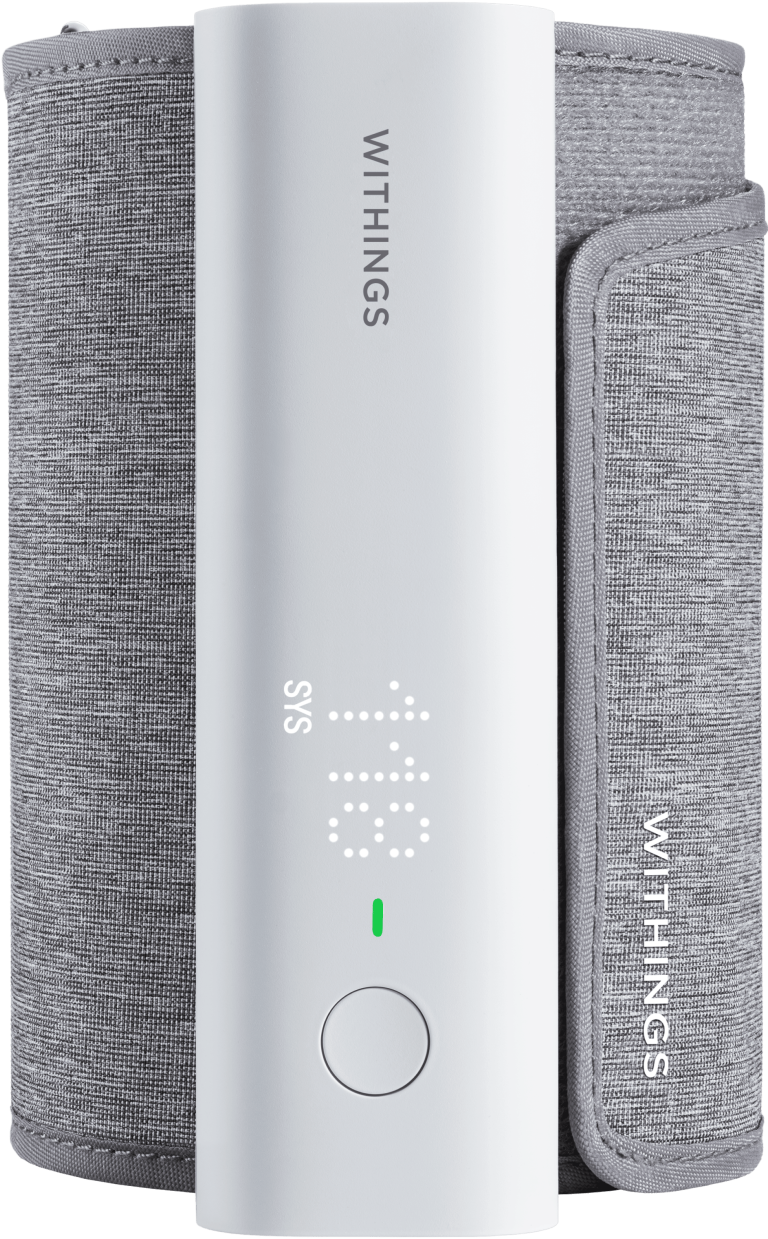
Withings BPM Connect Review: Validated Accuracy, Price, and Wi-Fi
The Withings BPM Connect is an FDA cleared Wi-Fi upper-arm blood pressure cuff that passed two independent accuracy studies. Accurate and easy to use.