
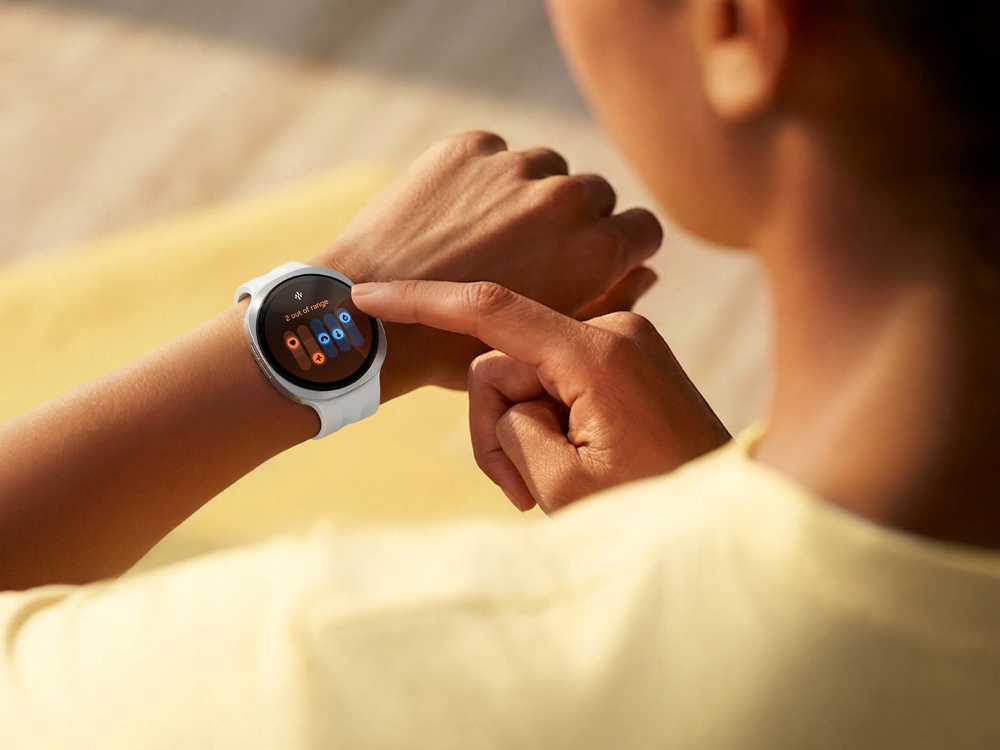
Samsung Galaxy Watch 9 Review 2026: Price, Sleep Apnea Alerts, HSA/FSA Status
Samsung’s newest everyday watch is faster and brighter, reviewers say, but the reasons to wear it for your health rest on features that earlier Galaxy Watches carried into hospital studies, and those studies are uneven.
Presented By Our Partners


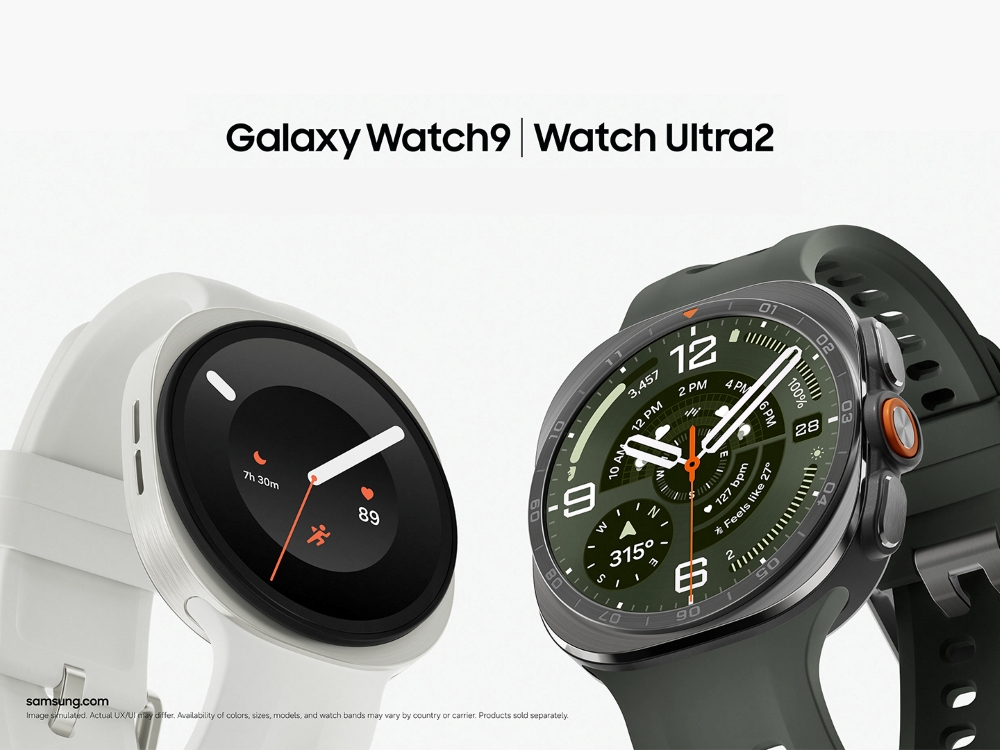
The Galaxy Watch 9 arrived at Samsung’s Galaxy Unpacked event in July 2026 alongside the Galaxy Watch Ultra 2 (Samsung Newsroom). Samsung pitched the pair as a health companion on the wrist, and in September, coverage described new features focused on preventive health. The early reviews are mostly about speed, screens and battery. This review is about something else: what the sensors on a Galaxy Watch have actually been shown to measure when researchers put them next to a 12-lead ECG, a sleep lab or a DXA scanner.
First look. No peer-reviewed study has tested the Galaxy Watch 9 itself yet; a PubMed search on October 27, 2026 found none. Everything in the accuracy section comes from earlier Galaxy Watch models, from the Watch 2 through the Watch 6, and the Watch 9 may perform better or simply differently.
The short answer: The Galaxy Watch 9 is Samsung’s July 2026 everyday smartwatch, with pre-orders reported from $379.99. For Android users it is a credible screener: Galaxy Watch ECGs matched Apple’s in a 201-patient cardiology study, and Samsung’s FDA-authorized sleep apnea feature found 94 percent of moderate to severe cases in a 2026 Stanford study. Treat its blood pressure, body composition and sleep stage numbers as trends, not measurements.
- Best for: Android users who want rhythm checks, sleep apnea screening and long-term trend lines in a watch they will actually wear.
- Not for: iPhone owners, anyone who needs a diagnosis rather than a screen, or anyone who wants a blood pressure number to act on without a cuff.
- Price (October 2026): pre-orders were reported starting at $379.99; check Samsung’s store for current pricing by size and connectivity.
- Regulatory status: Samsung’s irregular heart rhythm notification is FDA cleared, its sleep apnea feature received FDA De Novo authorization in 2024, and Galaxy Watch ECG is FDA and CE marked. The blood pressure feature is not FDA cleared. Confirm which of these the Watch 9 supports in your region.
- Evidence: Moderate to strong for atrial fibrillation ECGs and sleep apnea screening; moderate for overnight oxygen and body fat; limited for sleep stages, muscle mass and cuffless blood pressure; none yet for the Watch 9 hardware.
What Is the Samsung Galaxy Watch 9?
The Galaxy Watch 9 is a smartwatch made by Samsung, announced in July 2026, that tracks heart rate and rhythm, sleep, blood oxygen and activity and works with Samsung Health. It comes in 40mm and 44mm sizes, with Bluetooth models on Samsung’s store and carrier versions sold separately. It succeeds the Galaxy Watch 8.
Samsung’s launch material leans on two themes. The first is AI: Samsung published a guide to using Gemini on the Watch 9 and Ultra 2, and the Samsung Health app received what reviewers called a major update ahead of the launch. The second is prevention: Samsung’s own launch article frames the Watch 9 and Ultra 2 as health companions, and Wareable described how the Watch 9 generation pushes into preventative health. We could not verify the full list of new health metrics from the sources available for this review, so check Samsung’s specification page for the exact features your model and region support before you buy.
The reviews so far agree on the hardware story. Wareable’s verdict was “Faster chip, familiar limits.” Notebookcheck called it significantly faster and brighter than the Apple Watch 11. Trusted Reviews called it “almost the perfect watch,” while Android Central’s headline warned that comfort comes at a price. The most common complaint is battery: Android Authority described one problem you will notice every day, a Swedish review site summed it up as fast performance but flawed battery, and owners have opened battery drain threads on Samsung’s community forums.
Can your doctor see this data? Partly, if you share it. Samsung Health is adding Xealth, the care platform Samsung bought, to move wearable data into participating health systems.
How Does the Galaxy Watch 9 Work?
Like every Galaxy Watch since the Watch 4, the Watch 9 reads your body through light, electricity and motion. Optical sensors on the back track each pulse of blood for heart rate, rhythm alerts and blood oxygen. Electrodes record a single-lead ECG when you touch the side button. A small current passed between your fingers estimates body fat. An accelerometer tracks movement and sleep.
The optical sensor does most of the work. Every heartbeat pushes a pressure wave into the small vessels of the wrist, and blood absorbs light, so a sensor shining light into the skin sees the wrist brighten and dim with each beat. From those beats the watch times the gaps between heartbeats. In atrial fibrillation those gaps turn chaotic, and Samsung’s irregular heart rhythm notification looks for that pattern in the background.
Blood oxygen works on the same principle with two colors of light, because oxygen-rich and oxygen-poor blood absorb red and infrared light differently. Overnight, repeated dips in oxygen are the fingerprint of obstructive sleep apnea, which is why Samsung’s sleep apnea feature leans on oxygen data across two nights of sleep.
The ECG is a separate instrument. Touching a finger to the watch completes a circuit across the chest and records one lead, the view from one arm to the other. That is enough to tell an organized rhythm from atrial fibrillation, but not enough to diagnose a heart attack.
The body composition and blood pressure features are estimates built on models. Bioelectrical impedance sends a tiny current through the body and infers fat and muscle from how easily it flows, which depends on hydration as much as anatomy. The blood pressure feature reads the shape of the pulse wave and maps it back to a cuff reading you enter during calibration, so it measures change from a known point rather than pressure itself.
How Accurate Is the Galaxy Watch 9? What the Research Shows
No study has tested the Watch 9 yet. On earlier Galaxy Watches, ECGs detected atrial fibrillation about as well as Apple’s, the sleep apnea feature caught most moderate to severe cases, overnight oxygen stayed within about 2.5 points of a sleep lab, and body fat tracked DXA closely. Sleep stages, muscle mass and cuffless blood pressure carried larger errors.
Atrial fibrillation on the ECG. In the BASEL Wearable Study of 201 cardiology patients, the Galaxy Watch 3 detected atrial fibrillation with 85 percent sensitivity and 75 percent specificity against a physician-read 12-lead ECG, the same figures as the Apple Watch 6, and 17 percent of its tracings came back inconclusive, the lowest of the five devices tested (PMID 36858690). In a Bordeaux study of 100 patients in atrial fibrillation and 100 in sinus rhythm, Samsung’s automated algorithm on the Galaxy Watch Active 3 reached 88 percent sensitivity and 81 percent specificity, similar to Apple’s 87 and 86 percent. When experts read the tracings themselves, though, Samsung’s fell behind (86 and 76 percent versus 94 and 84 percent for Apple), because 15 percent of Samsung tracings were uninterpretable compared with 4 percent for Apple (PMID 35187135).
Inconclusive readings cluster in hearts that already carry a history. In a 2025 Basel study of 256 patients and 1,280 single-lead ECGs from five devices including the Galaxy Watch 3, 19 percent of recordings were inconclusive on at least one device, and a paced rhythm raised the odds of an inconclusive result more than sixfold (odds ratio 6.35) (PMID 40536450).
Sleep apnea screening. The strongest evidence for any Galaxy Watch feature is the newest. In a prospective Stanford study published in 2026, 152 adults with known or suspected moderate to severe obstructive sleep apnea wore a Galaxy Watch during two in-lab polysomnography nights and at least three nights at home. The watch reached an area under the curve of 0.94. At its default threshold it found 94.1 percent of moderate to severe cases (sensitivity) but correctly cleared only 66.7 percent of people without them (specificity); a stricter, study-optimized threshold traded sensitivity down to 82.4 percent for specificity of 94.9 percent. Among the people with the highest oxygen-desaturation burden, it separated high from low risk perfectly (PMID 42661136). One caution: everyone enrolled already had a diagnosis or a high-risk screening score, and screening tools usually look better in a population like that than in the general public.
An earlier San Diego study of the Galaxy Watch 4 in 51 adults found its continuous overnight oxygen readings differed from the sleep lab’s by a root-mean-square error of 2.54 percentage points, with an area under the curve of 0.80 for predicting an apnea-hypopnea index above 15 from watch data alone (PMID 38652502). In 18 young adults breathing low-oxygen gas mixtures, the Galaxy Watch 5 stayed within the 4 percent accuracy limit that the ISO standard sets for pulse oximeters, although the Apple Watch 8 was the most reliable of the three watches tested (PMID 38005550).
Featured Partner
Invest in the Infrastructure Behind Modern Medicine
As healthcare expands beyond hospital walls, the buildings and campuses supporting that shift are generating compelling returns for investors who move early. The Healthcare Real Estate Fund offers qualified investors direct access to a curated portfolio of medical office, outpatient, and specialty care facilities.
Learn More →
Sleep: duration fair, stages weak. In 127 patients with sleep apnea, the Galaxy Watch 2 underestimated total sleep time by 24.9 minutes against polysomnography (PMID 36971253). In a multicenter Korean study of 11 consumer sleep trackers, including the Galaxy Watch 5, against 543 hours of polysomnography, agreement on sleep stages varied widely, with macro F1 scores from 0.26 to 0.69 across devices; that study was run by Asleep Co., which makes one of the apps tested (PMID 37917155). Samsung’s own researchers reported that their four-stage sleep algorithm reached 71.6 percent balanced accuracy and a Cohen’s kappa of 0.56 on 586 recordings (PMID 38810479). A kappa near 0.5 means moderate agreement: useful for trends, unreliable for any single night.
Blood pressure: close to the calibration point, drifting away from it. In a Czech study, 37 people wore a Galaxy Watch 5 for 28 days after one calibration. The watch met ISO and IEEE accuracy criteria in all but one measure, with mean differences under 1 mmHg. But when true pressure moved 10 mmHg away from the calibration reading, the error grew to 3.4 mmHg systolic and 5.1 mmHg diastolic (PMID 41602947). In a Belgian study of 40 patients undergoing 24-hour monitoring, the Galaxy Watch Active 2 overestimated low pressures and underestimated high ones, and caught hypertension with 83 percent sensitivity but only 41 percent specificity; the authors concluded it was not ready for clinical use (PMID 35898281). Among 760 real-world users in Korea, the average systolic gap before and after recalibration was 6.8 mmHg, larger in people with higher pressure (PMID 36781979). In 50 older adults measured at rest, the Galaxy Watch 6 agreed well with an ambulatory monitor (intraclass correlation 0.88 for both systolic and diastolic) (PMID 42178658).
Body composition: fat yes, muscle less so. In 108 physically active adults at the University of Michigan, the Galaxy Watch 5’s body fat estimate agreed strongly with DXA (concordance 0.91, mean absolute percentage error 14.3 percent), better than a clinical InBody 770 on that measure. Its skeletal muscle estimate agreed only weakly (concordance 0.45, error 20.3 percent), and errors grew in people with more body fat (PMID 41341278).
Heart rate depends on the activity. In 44 patients with coronary artery disease on a treadmill test, the Galaxy Watch 4 stayed under 2 percent average error with an intraclass correlation of 0.997 (PMID 37536665). Weightlifting was harder: in 70 men doing bench press, rows, squats and deadlifts, the Galaxy Watch 5 underestimated heart rate right after each set by 25.60 beats per minute (PMID 42938956).
Temperature and cycles. In 106 women, wrist temperature from a Galaxy Watch 5 during sleep predicted the ovulation date within three days in 77.8 percent of 225 cycles, confirmed by progesterone blood tests, and within two days in 64.0 percent (PMID 42143892).
Company ties: of the studies above, PubMed lists Samsung affiliations for the sleep staging algorithm paper (PMID 38810479), and the 11-tracker comparison was run by Asleep Co. (PMID 37917155). PubMed affiliations are not a full disclosure of funding or conflicts.
What the Galaxy Watch 9 Gets Right
The Galaxy Watch platform gets the two most consequential screens right for most buyers: atrial fibrillation on demand and sleep apnea over several nights. Its body fat estimate holds up against DXA, its overnight oxygen tracks a sleep lab closely, and it puts all of that in a watch reviewers describe as fast and bright.
A rhythm check that matches the leader. Equal sensitivity and specificity to the Apple Watch in the BASEL study, with the fewest inconclusive tracings of five devices, makes a Galaxy Watch a reasonable choice for Android users who want to catch atrial fibrillation (PMID 36858690).
A sleep apnea screen with real evidence behind it. Obstructive sleep apnea goes undiagnosed in most people who have it, largely because a sleep study is expensive and slow to schedule. A watch that finds more than nine in ten moderate to severe cases in a high-risk group is a useful reason to book that study (PMID 42661136).
A body fat trend from the wrist. Few wrist devices measure body composition at all, and the Watch 5’s fat estimate agreed with DXA about as well as a clinical analyzer did (PMID 41341278).
Where the Galaxy Watch 9 Falls Short
The weaknesses are a sleep apnea screen that raises false alarms at its default setting, ECG tracings that experts found harder to read than Apple’s, blood pressure that drifts from its calibration point, a weak muscle estimate, battery complaints, and no independent data yet on the Watch 9 itself.
False alarms on sleep apnea. A specificity of 66.7 percent means roughly one in three people without moderate to severe apnea would still be flagged in a high-risk group (PMID 42661136). A flag is a reason for a sleep study, not a diagnosis.
ECGs your cardiologist may struggle with. When 15 percent of Samsung tracings were uninterpretable to experts in one study, against 4 percent for Apple, the second opinion that a watch ECG depends on became harder to get (PMID 35187135).
Blood pressure is a trend tied to a cuff. Errors grow as your pressure moves away from your calibration reading, and that is exactly when the reading matters most (PMID 41602947). Samsung’s blood pressure feature reached U.S. users in April 2026, and SamMobile reported it is not approved by the FDA. Keep a validated cuff for any number you plan to act on.
Muscle mass is the weak spot. A concordance of 0.45 for skeletal muscle means the watch is a poor judge of whether a training block added muscle (PMID 41341278).
Battery. Battery life is the most repeated criticism in early reviews and owner forums. A health tracker only works while it is on your wrist, so a watch that needs a top-up mid-day can leave gaps in overnight data.
New hardware, old evidence. Every study above tested an earlier model. Until researchers test the Watch 9, its accuracy is inferred, not shown.
Galaxy Watch 9 vs Apple Watch Series 12 vs Oura Ring 5 vs Hilo Core
The Galaxy Watch 9 is the Android counterpart to the Apple Watch Series 12, with stronger published sleep apnea data and a body composition sensor. Oura Ring 5 is the quieter sleep and recovery option, and Hilo Core is the blood pressure specialist that pairs a wristband with an FDA-cleared cuff.
| Feature | Galaxy Watch 9 | Apple Watch Series 12 | Oura Ring 5 | Hilo Core |
|---|---|---|---|---|
| Form | Smartwatch | Smartwatch | Smart ring | Wristband plus upper-arm cuff |
| Phone | Android | iPhone | iPhone or Android | Not verified for this review |
| On-demand ECG | Yes, single lead (confirm for your region) | Yes, single lead (confirm for your region) | No | No |
| Sleep apnea feature | FDA De Novo authorized feature (2024) | FDA cleared notifications (2024) | Not verified for this review | No |
| Blood pressure | Cuff-calibrated estimate, not FDA cleared | FDA cleared hypertension notifications | Blood pressure signals, not FDA cleared | Wellness trends from the band; readings from an FDA-cleared cuff |
| Price (October 2026) | From $379.99 at pre-order | From $399 at launch | From $399, plus membership | $239.98 first-year system |
For iPhone users, our Apple Watch Series 12 review covers the same questions for Apple’s flagship. If sleep and recovery matter more than a screen, see our Oura Ring 5 price and blood pressure guide. For blood pressure specifically, the Hilo Core review explains how a band and a cuff work together, and the RingConn Gen 2 review covers a ring that also estimates sleep apnea. For a tougher Samsung with the same health features, see our Galaxy Watch Ultra 2 review, and iPhone users can compare our Apple Watch Ultra 4 review. Every device we track is in our healthtech wearables guide.
How Much Does the Galaxy Watch 9 Cost, and Is It HSA or FSA Eligible?
Pre-orders opened in July 2026 with prices reported starting at $379.99, and coverage of the launch noted trade-in offers on pre-orders. Price varies by size and by Bluetooth or LTE. We found no confirmation that the Galaxy Watch 9 is HSA or FSA eligible as a standard purchase, and insurance does not cover it as far as we found.
Ask your HSA or FSA administrator before assuming the watch qualifies. Budget for the tests a watch can prompt: after an irregular rhythm alert, the usual next step is a clinician-ordered ECG monitor, and after a sleep apnea flag, a home or in-lab sleep study.
Who Should Buy the Galaxy Watch 9, and Who Should Skip It?
The Galaxy Watch 9 suits Android users who want atrial fibrillation checks, sleep apnea screening and honest trend lines for sleep, fitness and body fat. It is a poor fit for iPhone users, for people who need a diagnosis, and for owners of a recent Galaxy Watch whose main interest is health features the older watch already has.
Good candidates:
- Adults who snore, wake unrefreshed or have high blood pressure, and want a nudge toward a sleep study if one is needed.
- People with risk factors for atrial fibrillation who want an ECG on hand when palpitations strike.
- Anyone tracking body fat over months of training or weight change who will read the trend, not a single number.
Better served by something else:
- Chest pain, fainting, or a racing heart with shortness of breath: that is an emergency. Call 911; do not wait for a watch.
- iPhone users: Galaxy Watches do not pair with iPhones, so look at the Apple Watch or a smart ring.
- Anyone managing hypertension: use a validated upper-arm cuff for decisions.
- Recent Galaxy Watch owners who mainly want health features: the studies above tested those features on older models, so check what the Watch 9 adds before you upgrade.
If a notification sends you looking for a cardiologist or sleep physician, the Healthcare Discovery doctor directory lists clinicians by state and specialty.
What This Means for You
The two problems a Galaxy Watch is best placed to catch, atrial fibrillation and sleep apnea, both do their damage quietly. Atrial fibrillation can announce itself first as a stroke, and untreated sleep apnea is linked with cardiovascular and neurocognitive disease. A watch that raises either one earlier is worth more than any step count. For the wider picture of what drives heart risk, see our heart health evidence review.
Use the watch like a compass, not a GPS. Trust it on when you slept and roughly how long, ignore the nightly stage breakdown, watch your body fat trend over weeks, and treat a blood pressure reading as a prompt to check with a cuff. Buy it for the rhythm and apnea screens, and keep your expectations tied to the studies rather than the keynote.
Compiled by Healthcare Discovery from the cited PubMed studies and Samsung’s launch materials. Every PMID, study size and result on this page was checked against PubMed on October 27, 2026; full text was not available in PubMed Central for the Stanford sleep apnea study, so its figures come from the published abstract. Launch, price and review details come from the named publications’ headlines and listings and were not independently tested. This is a first look; no Healthcare Discovery hands-on testing was done.
Is the Galaxy Watch 9 accurate for heart health?
For rhythm checks, the platform has good evidence. In a 201-patient cardiology study, an earlier Galaxy Watch detected atrial fibrillation with 85 percent sensitivity and 75 percent specificity, matching the Apple Watch (PMID 36858690). No study has tested the Watch 9 itself yet, and its cuffless blood pressure estimates drift as pressure moves away from the calibration reading (PMID 41602947).
Can the Galaxy Watch 9 detect sleep apnea?
Samsung’s sleep apnea feature received FDA De Novo authorization in 2024. In a 2026 Stanford study of 152 high-risk adults, a Galaxy Watch found 94.1 percent of moderate to severe cases at its default threshold, with 66.7 percent specificity (PMID 42661136). A flag means you should get a sleep study, not that you have a diagnosis.
Is the Galaxy Watch 9 blood pressure feature FDA cleared?
No. SamMobile reported that the Galaxy Watch blood pressure feature, which reached U.S. users in April 2026, is not FDA approved. It needs calibration with a cuff, and studies of earlier models found errors grew as pressure moved away from the calibration point (PMID 41602947, PMID 35898281).
How accurate is Galaxy Watch body composition?
Good for body fat, weaker for muscle. In 108 active adults, the Galaxy Watch 5’s body fat estimate agreed strongly with DXA (concordance 0.91), but its skeletal muscle estimate agreed only weakly (concordance 0.45) (PMID 41341278). Track the trend over weeks under the same conditions.
Is the Galaxy Watch 9 HSA or FSA eligible?
We found no confirmation that it qualifies as a standard HSA or FSA purchase, and no sign that insurance covers it. Check with your plan administrator before buying with pre-tax funds.
How much does the Galaxy Watch 9 cost?
Pre-orders opened in July 2026 with prices reported starting at $379.99, varying by size and by Bluetooth or LTE. Check Samsung’s store for current pricing.
Sources
- Mannhart D, et al. Clinical validation of 5 direct-to-consumer wearable smart devices to detect atrial fibrillation: BASEL Wearable Study. JACC: Clinical Electrophysiology, 2023. PMID 36858690
- Abu-Alrub S, et al. Smartwatch electrocardiograms for automated and manual diagnosis of atrial fibrillation: a comparative analysis of three models. Frontiers in Cardiovascular Medicine, 2022. PMID 35187135
- Inconclusive single-lead ECGs from smart devices: impact of baseline ECG anomalies. JACC: Clinical Electrophysiology, 2025. PMID 40536450
- Alavi A, et al. Smartwatch-based detection of moderate-to-severe and high-risk obstructive sleep apnea. Journal of Clinical Sleep Medicine, 2026. PMID 42661136
- Browne SH, et al. Performance of a commercial smart watch compared to polysomnography reference for overnight continuous oximetry measurement and sleep apnea evaluation. Journal of Clinical Sleep Medicine, 2024. PMID 38652502
- Walzel S, et al. Evaluation of leading smartwatches for the detection of hypoxemia: comparison to reference oximeter. Sensors, 2023. PMID 38005550
- Byun JI, et al. Performance of the Fitbit Charge 2 and Galaxy Watch 2 compared with polysomnography in assessing patients with obstructive sleep apnoea. Chronobiology International, 2023. PMID 36971253
- Lee T, et al. Accuracy of 11 wearable, nearable, and airable consumer sleep trackers: prospective multicenter validation study. JMIR mHealth and uHealth, 2023. PMID 37917155
- Silva FB, et al. Sleep staging algorithm based on smartwatch sensors for healthy and sleep apnea populations. Sleep Medicine, 2024. PMID 38810479
- Walzel S, et al. Long-term accuracy and stability of blood pressure measurements from a smartwatch: prospective validation study. Digital Health, 2026. PMID 41602947
- Falter M, et al. Smartwatch-based blood pressure measurement demonstrates insufficient accuracy. Frontiers in Cardiovascular Medicine, 2022. PMID 35898281
- Han, et al. Feasibility and measurement stability of smartwatch-based cuffless blood pressure monitoring: a real-world prospective observational study. Hypertension Research, 2023. PMID 36781979
- Madeira, et al. Reliability and safety of smartwatch blood pressure and oxygen saturation measurements in older adults: instrument validation study. JMIR Formative Research, 2026. PMID 42178658
- Carrier B, et al. Wearables for health monitoring: body composition estimates of commercial smartwatch and clinical bioelectrical impedance device. Frontiers in Sports and Active Living, 2025. PMID 41341278
- Validation of wearable digital devices for heart rate measurement during exercise test in patients with coronary artery disease. Annals of Rehabilitation Medicine, 2023. PMID 37536665
- Yun JH, et al. Criterion validity of smartwatches for measuring heart rate and energy expenditure during resistance exercise. Bioengineering, 2026. PMID 42938956
- Evaluation of the accuracy of wrist skin temperature measured using an infrared sensor for prediction ovulation date. Biosensors and Bioelectronics, 2026. PMID 42143892
- Samsung. [Galaxy Unpacked July 2026] A First Look at Galaxy Watch Ultra2 and Galaxy Watch9. Samsung Newsroom
- Samsung. Samsung Galaxy Watch Ultra2 and Watch9: Your Health Companion on the Wrist. Samsung Newsroom
- Samsung. What Can You Do With Gemini on Galaxy Watch Ultra2 and Galaxy Watch9? Samsung Newsroom
- Samsung. Galaxy Watch9 product page. Samsung US
- Samsung. Samsung’s Sleep Apnea Feature on Galaxy Watch First of Its Kind Authorized by US FDA. Samsung Newsroom
- Samsung. FDA-Cleared Irregular Heart Rhythm Notification for Galaxy Watch. Samsung Newsroom
- SamMobile. Galaxy Watch blood pressure monitoring isn’t approved by the US FDA. SamMobile
- Sammy Fans. Galaxy Watch blood pressure monitoring arrives in the US, April 2026. Sammy Fans
- BigGo Finance. Samsung Galaxy Watch 9 pre-orders go live, starting at $379.99, July 2026. BigGo Finance
- Gizmodo. Galaxy Watch 9 pre-order trade-in offer. Gizmodo
- Wareable. Samsung Galaxy Watch 9 review: Faster chip, familiar limits. Wareable
- Wareable. How the Galaxy Watch 9 generation pushes into preventative health. Wareable
- Notebookcheck. Samsung Galaxy Watch 9 review. Notebookcheck
- Trusted Reviews. Samsung Galaxy Watch 9 review: Almost the perfect watch. Trusted Reviews
- Android Central. Samsung Galaxy Watch 9 review: Comfort comes at a price. Android Central
- Android Authority. The Galaxy Watch 9 is a great watch with one problem you’ll notice every day. Android Authority
- Senses. Samsung Galaxy Watch 9 review: Fast performance but flawed battery. Senses
- Android Authority. Samsung Health is getting a major update ahead of Galaxy Watch 9 launch. Android Authority
- Sammy Fans. Samsung Galaxy Watch 9 and Ultra 2 get new features focused on preventive healthcare, September 2026. Sammy Fans


Similar Posts
Withings ScanWatch: FDA Cleared ECG and SpO2 in a Classic Watch Design
An FDA cleared electrocardiogram and pulse oximeter built into a watch that actually looks like a watch, not a miniature computer strapped to your wrist. Presented By Our Partners Product…

The Daily Rounds: Longevity & Health Care Brief | April 16, 2026
🔬 Senolytics Reduce Epigenetic Age: Lab data show senolytic compounds measurably lower biological age markers, with human pilot trials now exploring effects on mobility and cognition. 🧠 FTL1 Protein Drives Memory Decline: Scientists identified a specific protein that weakens brain cell connections with age, opening a new therapeutic target for cognitive preservation. 🤖 Novo Nordisk + OpenAI Partnership: The pharma giant is applying frontier AI to compress drug discovery timelines and accelerate patient access to novel medicines. 🦠 CAG-170 Bacteria Linked to Gut Health: A globally validated analysis found this rare bacterial group is a marker of health, producing B12 and stabilizing the gut ecosystem. 😴 Solar Jet Lag and Liver Cancer: A new federally backed study will probe whether circadian misalignment is an upstream cause of the most common form of liver cancer.
Garmin Venu 3 Sleep Tracking: Nap Detection, Sleep Coaching, and 14-Day Battery
The only mainstream smartwatch that detects naps automatically, coaches you on sleep debt, and tracks sleep for two weeks on a single charge, eliminating the battery anxiety that undermines overnight…
Spire Health Tag: Breathing-Based Stress Detection Clipped to Your Clothing
Most wearable health devices ask you to strap something to your wrist. The Spire Health Tag takes a different approach: it clips to your clothing and monitors the one physiological…

The Unexpected Cancer Shield: ASCO 2026 Data Shows GLP-1 Drugs Cut Advanced Tumor Progression by Up to 50%
A major study being presented this week at the American Society of Clinical Oncology’s annual meeting found that patients with early-stage cancer who took GLP-1 receptor agonists were 38 to…

Genetic Mosaicism: Why No Two Cells in Your Body Are Identical
Genetic mosaicism is the condition of having different DNA in different cells of the same body. Every adult has it. A clear guide to mosaicism, chimerism, microchimerism, and the surprising…
