
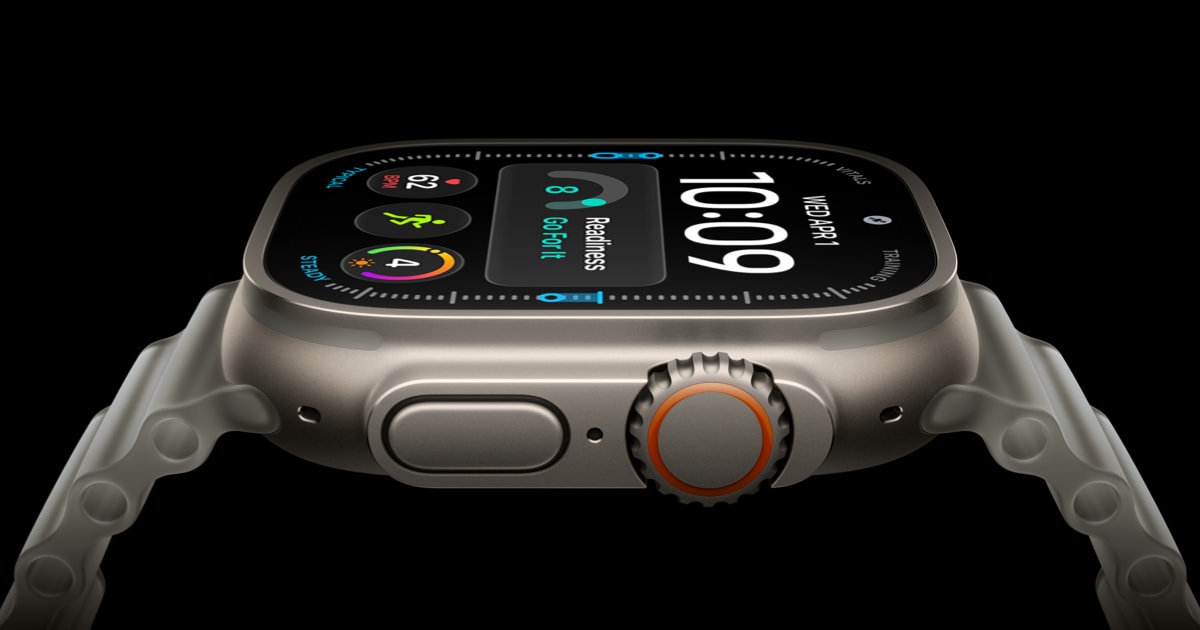
Apple Watch Ultra 4 Review 2026: $799 Price, Battery, Health Accuracy, HSA/FSA Status
Apple’s toughest watch now runs for two days on a charge and promises better health tracking. The rhythm alerts behind it have some of the strongest evidence in consumer health, but the sleep, heart rate variability and VO2 max numbers deserve more caution than the marketing suggests.
Presented By Our Partners


Apple unveiled the Apple Watch Ultra 4 in September 2026, describing it as the ultimate sports and adventure watch, now with new health, fitness and audio intelligence capabilities (Apple Newsroom). Pre-orders opened at $799 (NewsBytes), and MacRumors led its launch coverage with two-day battery life and upgraded health tracking (MacRumors). This review looks past the launch to what Apple’s sensors have been shown to measure in published studies.
First look. No peer-reviewed study has tested the Apple Watch Ultra 4 itself yet; a PubMed search on October 27, 2026 found none. The accuracy section draws on studies of the Ultra 2 and of Apple Watch Series models that share Apple’s sensors and algorithms, and the Ultra 4 may perform better or simply differently.
The short answer: The Apple Watch Ultra 4 is Apple’s September 2026 rugged smartwatch, priced at $799. Its atrial fibrillation tools rest on real evidence, including the 419,297-person Apple Heart Study, where 84 percent of repeat notifications matched atrial fibrillation on an ECG patch. Its resting heart rate is accurate, but heart rate variability, sleep stages and VO2 max estimates carried large errors in independent studies of earlier models.
- Best for: iPhone owners who run, hike, dive or travel far from help and want the longest battery and brightest screen Apple makes, plus FDA-cleared rhythm and sleep apnea alerts.
- Not for: Android users, anyone who needs a diagnosis, or buyers who mainly want health features, which the cheaper Apple Watch Series 12 also offers.
- Price (October 2026): $799 at launch, 49mm with cellular, in black or natural titanium; it has been seen at $699.99 in a sale.
- Regulatory status: Apple’s ECG app and irregular rhythm notifications were FDA cleared in 2018, sleep apnea notifications in September 2024 and hypertension notifications in September 2025. We found no clearance specific to the Ultra 4 hardware. Confirm which features your model and region support.
- Evidence: Strong for atrial fibrillation screening; good for resting heart rate; limited for heart rate variability, sleep stages, blood oxygen and VO2 max; none published for the Ultra 4 itself or for the hypertension alerts.
What Is the Apple Watch Ultra 4?
The Apple Watch Ultra 4 is Apple’s rugged, 49mm titanium smartwatch, announced in September 2026, that tracks heart rate and rhythm, sleep, blood oxygen and fitness, works with an iPhone, and adds cellular and satellite connectivity. It sits above the Apple Watch Series 12 in Apple’s lineup.
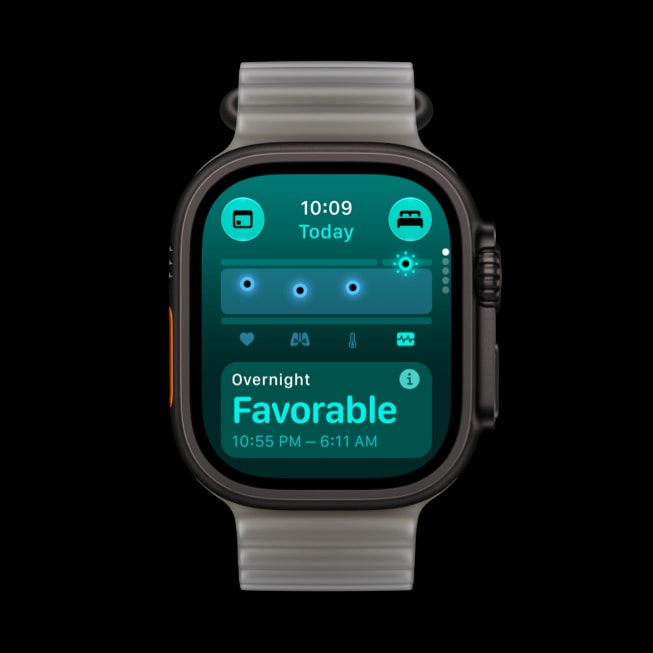
MacObserver’s spec roundup lists a 63 gram case, a 3,000 nit display, a 100 meter water rating and satellite features (MacObserver), and its comparison with the Ultra 2 puts battery life at up to 50 hours versus 36, with a newer S11 chip (MacObserver). Those figures come from the publication’s headlines and were not tested by Healthcare Discovery.
Early reviews are strongly positive. TechRadar called it once again top of the heap, with revamped health tools and another battery boost; Gizmodo called it still the best health buddy for your wrist; and Tom’s Guide, after a 22-mile run, called it the best Apple Watch Ultra yet. MacRumors titled its review roundup “Look Out, Oura Ring.”
Can your doctor see this data? Partly, if you share it. Apple Health can share chosen data with participating health systems (Share with Provider), and ECG recordings export as a PDF.
How Does the Apple Watch Ultra 4 Work?
Like other smartwatches, the Ultra 4 reads the body through light, electricity and motion. An optical sensor on the back tracks each pulse for heart rate and rhythm, electrodes in the crown and back record a single-lead ECG, red and infrared light estimate blood oxygen, a temperature sensor tracks overnight changes, and an accelerometer tracks movement, sleep and breathing disturbances.
The optical sensor does most of the work. Each heartbeat pushes blood into the small vessels of the wrist, and the sensor sees the skin brighten and dim with every beat. Apple’s irregular rhythm notifications check the spacing of those beats in the background; when several readings in a row look irregular, the pattern atrial fibrillation produces, the watch alerts you and suggests an ECG.
Apple’s newer screening features are models built on the same signals. Sleep apnea notifications look at breathing disturbances measured by the accelerometer over 30 days, and hypertension notifications look at how the pulse wave changes over weeks. Neither gives you a number: each tells you when a pattern is worth checking with a clinician.
How Accurate Is the Apple Watch Ultra 4? What the Research Shows
No study has tested the Ultra 4 yet. On earlier models, Apple’s rhythm notifications were confirmed by ECG patch 84 percent of the time, the ECG app’s accuracy ranged from excellent to missing about one in three episodes depending on the study, and resting heart rate was accurate. Heart rate variability, sleep stages, blood oxygen at low levels and VO2 max carried large errors.
Atrial fibrillation alerts. The Apple Heart Study enrolled 419,297 adults without known atrial fibrillation. Only 0.52 percent received an irregular pulse notification. Among those who returned an analyzable ECG patch, 34 percent had atrial fibrillation on the patch, and when the watch flagged a rhythm again during patch monitoring, the patch confirmed atrial fibrillation 84 percent of the time (PMID 31722151). In a Canadian simulation using implanted cardiac monitor data from 346 patients after ablation, Apple’s AFib History burden feature would have caught 82.2 percent of recurrences, compared with 70.6 percent for irregular rhythm notifications alone (PMID 41208416).
The ECG app. Results vary with who is tested and how unreadable tracings are counted. In a Belgian study of 122 patients, the Apple Watch detected atrial fibrillation with 100 percent sensitivity and 97.8 percent specificity, with 10.7 percent of recordings too poor to read (PMID 39791483). The BASEL Wearable Study of 201 patients found 85 percent sensitivity and 75 percent specificity for the Apple Watch 6, with 18 percent of tracings inconclusive (PMID 36858690). A three-center UK study of 483 patients was harsher: counting unclassified tracings as failures, sensitivity was 69.1 percent and specificity 72.6 percent, rising to 86.4 and 91.7 percent once unclassified tracings were set aside, and the authors wrote that the watch missed about one in three episodes (PMID 40717865). A Heart Rhythm analysis of 296 patients showed how much the method matters, with sensitivity from 78.1 to 96.1 percent depending on how inconclusive results were handled (PMID 41207649).
Resting heart rate and heart rate variability. In 39 healthy adults who took 316 measurements over two weeks with the Series 9 and Ultra 2, resting heart rate was close to a Polar H10 chest strap, with a mean absolute error of 3.73 beats per minute. Heart rate variability was not: the watches underestimated it by 8.31 ms on average, with a mean absolute error of 20.46 ms, and failed the study’s equivalence test (PMID 39409260).
Blood oxygen. In a Duke controlled hypoxia study, an Apple Watch Series 7 overestimated oxygen saturation, with an error (Arms) of 5.82 percent below 88 percent saturation, compared with 3.52 percent for a Masimo fingertip oximeter; both exceeded the FDA threshold at those low levels (PMID 41894520).
Featured Partner
Invest in the Infrastructure Behind Modern Medicine
As healthcare expands beyond hospital walls, the buildings and campuses supporting that shift are generating compelling returns for investors who move early. The Healthcare Real Estate Fund offers qualified investors direct access to a curated portfolio of medical office, outpatient, and specialty care facilities.
Learn More →
Sleep and sleep apnea. In a 2026 home polysomnography study, the Apple Watch underestimated light sleep by 73.8 minutes and overestimated REM sleep by 30.3 minutes, although it ranked best of the three devices tested (PMID 42258963). A research model that combined Ultra 2 wrist data with mattress and audio sensors told REM from non-REM sleep 81 percent of the time, which tests that model rather than Apple’s own sleep stages (PMID 41336930). For sleep apnea, a Korean study of 69 Apple Watch 7 wearers found average overnight oxygen flagged apnea with 75.6 percent sensitivity and 70.8 percent specificity (PMID 39664308); that study used oxygen readings, not Apple’s FDA-cleared breathing disturbance notification, which we found no independent study of.
VO2 max. In 19 adults compared with lab gas analysis, an Apple Watch Series 7 underestimated VO2 max by about 4.5 mL/kg/min on average, with a mean absolute percentage error of 15.79 percent and poor agreement (PMID 39083800).
Hypertension notifications. We found no independent, peer-reviewed validation of Apple’s hypertension notifications on PubMed as of October 27, 2026.
Company ties: the Apple Heart Study was funded by Apple and lists Apple authors (PMID 31722151), and the Heart Rhythm framework paper comes from PulseAI, a company that compared its own competing ECG algorithm with Apple’s (PMID 41207649). The other studies list academic or hospital affiliations only. PubMed affiliations are not a full disclosure of funding or conflicts.
What the Apple Watch Ultra 4 Gets Right
The Ultra 4 gets the essentials right: atrial fibrillation screening with very large studies behind it, accurate resting heart rate, a growing set of FDA-cleared screening alerts, and battery life long enough to wear it through two days and the nights between.
Rhythm alerts with evidence behind them. Few consumer health features have a study of more than 400,000 people behind them, and a repeat notification matched atrial fibrillation 84 percent of the time (PMID 31722151). For people with a history of atrial fibrillation, AFib History tracked burden closely against implanted monitors (PMID 41208416).
Accurate resting heart rate. An average error under 4 beats per minute against a chest strap makes the Ultra a dependable way to watch resting heart rate trends (PMID 39409260).
Battery that supports sleep tracking. Sleep apnea notifications need 30 days of nightly data, and a watch that lasts two days is easier to wear to bed. Reviewers singled out battery life as the biggest change from the Ultra 2.
Where the Apple Watch Ultra 4 Falls Short
The weaknesses are heart rate variability and VO2 max estimates with large errors, sleep stages that remain approximate, blood oxygen that reads high when levels drop, an ECG app that can miss episodes, unvalidated hypertension alerts, and no independent data on the Ultra 4 itself.
Heart rate variability is off. A mean absolute error of 20.46 ms is large relative to typical day-to-day changes, so treat recovery scores built on it as rough guidance (PMID 39409260).
The ECG app can miss atrial fibrillation. One UK study found it missed about one in three episodes when unreadable tracings were counted (PMID 40717865). A normal watch ECG does not rule atrial fibrillation out if you have symptoms.
Blood oxygen reads high when it matters. At saturations below 88 percent, the watch overestimated oxygen levels and missed the FDA accuracy threshold (PMID 41894520). Divers and high altitude climbers should not rely on it to judge hypoxia.
VO2 max and sleep stages are estimates. A 15.79 percent average VO2 max error (PMID 39083800) and sleep stages off by more than an hour for light sleep (PMID 42258963) make both useful for trends, not precise numbers.
New hardware, older evidence. Every study above tested an earlier Apple Watch. Until researchers test the Ultra 4, its accuracy is inferred, not shown.
Apple Watch Ultra 4 vs Apple Watch Series 12 vs Galaxy Watch Ultra 2 vs Pixel Watch 5
The Ultra 4 and Series 12 share Apple’s health features; the Ultra adds a larger titanium case, longer battery, satellite features and dive ratings. Samsung’s Galaxy Watch Ultra 2 is the rugged Android rival, and the Pixel Watch 5 is the Android choice with the strongest rhythm alert evidence.
| Feature | Apple Watch Ultra 4 | Apple Watch Series 12 | Galaxy Watch Ultra 2 | Pixel Watch 5 |
|---|---|---|---|---|
| Form | Rugged smartwatch, 49mm | Smartwatch | Rugged smartwatch, 47mm | Smartwatch |
| Phone | iPhone | iPhone | Android | Android |
| Irregular rhythm alerts | FDA cleared (2018) | FDA cleared | FDA cleared | FDA cleared algorithm (2022) |
| Sleep apnea alerts | FDA cleared (2024) | FDA cleared | Not verified for this review | Not verified for this review |
| Blood pressure | FDA cleared hypertension notifications | FDA cleared hypertension notifications | Not verified for this review | Health Guardian trends, not FDA cleared |
| Price (October 2026) | $799 at launch | From $399 at launch | $699 | From $399 |
Our Apple Watch Series 12 review covers the cheaper Apple option with the same health features. On Android, see our Pixel Watch 5 review and Galaxy Watch 9 review. If you would rather wear a ring, see our Oura Ring 5 price and blood pressure guide. Android users wanting a rugged watch can compare our Galaxy Watch Ultra 2 review, and ring buyers our Ultrahuman Ring Pro review. Every device we track is in our healthtech wearables guide.
How Much Does the Apple Watch Ultra 4 Cost, and Is It HSA or FSA Eligible?
The Apple Watch Ultra 4 launched at $799 in a single 49mm cellular size, and iClarified reported it at $699.99 during an October sale (iClarified). We found no confirmation that the Ultra 4 is HSA or FSA eligible as a standard purchase, and insurance does not cover it as far as we found.
Some plans may accept a smartwatch with a letter of medical necessity from your clinician, so ask your HSA or FSA administrator before assuming it qualifies. Budget too for the follow-up a watch can prompt: after a rhythm or sleep apnea alert, the usual next step is a clinician-ordered ECG monitor or sleep study.
Who Should Buy the Apple Watch Ultra 4, and Who Should Skip It?
The Ultra 4 suits iPhone owners who train hard, spend time outdoors or far from cell coverage, and want Apple’s full set of FDA-cleared screening alerts with two-day battery. It is a poor fit for Android users, for people who need a diagnosis, and for anyone who mainly wants the health features, which cost less on the Series 12.
Good candidates:
- Adults over 65, or with risk factors such as high blood pressure, who want early warning of atrial fibrillation.
- People with known atrial fibrillation who want to track how much time they spend in it, with their cardiologist’s input.
- Hikers, runners, divers and travelers who need a tough case, a bright screen and satellite features.
Better served by something else:
- Chest pain, fainting, or a racing heart with shortness of breath: that is an emergency. Call 911; do not wait for a watch.
- Android users: the Apple Watch requires an iPhone, so look at the Galaxy Watch or Pixel Watch.
- Buyers focused on health tracking alone: the Apple Watch Series 12 offers the same core health features for less.
- Anyone who suspects sleep apnea or high blood pressure now: book a sleep study or use a validated cuff rather than waiting for an alert.
If a notification sends you looking for a cardiologist or sleep specialist, the Healthcare Discovery doctor directory lists clinicians by state and specialty.
What This Means for You
The Ultra 4’s most valuable health feature is also its oldest: a rhythm alert that can catch atrial fibrillation before it causes a stroke. That feature has years of large studies behind it. The newer additions, sleep apnea and hypertension alerts, are FDA cleared screening tools, but independent evidence on how well they work in everyday wear is still thin. For the wider picture of what drives heart risk, see our heart health evidence review.
Use the readiness, heart rate variability, VO2 max and sleep stage numbers as trends, not verdicts. Buy the Ultra 4 for its durability, battery and the screening alerts that have evidence behind them, and if health features are all you want, the Series 12 does the same for less.
Compiled by Healthcare Discovery from the cited PubMed studies and Apple’s launch materials. Every PMID, study size and result on this page was checked against PubMed on October 27, 2026. Launch, price, specification and review details come from the named publications’ headlines and listings and were not independently tested. This is a first look; no Healthcare Discovery hands-on testing was done.
Is the Apple Watch Ultra 4 accurate for detecting atrial fibrillation?
Apple’s rhythm alerts have strong evidence. In the Apple Heart Study of 419,297 people, a repeat notification during ECG patch monitoring matched atrial fibrillation 84 percent of the time (PMID 31722151). ECG app accuracy varies by study, and no study has tested the Ultra 4 itself yet.
How long does the Apple Watch Ultra 4 battery last?
Launch coverage describes two-day battery life, and MacObserver lists up to 50 hours versus 36 for the Ultra 2. Healthcare Discovery has not tested battery life.
Does the Apple Watch Ultra 4 detect sleep apnea and high blood pressure?
Apple’s sleep apnea notifications were FDA cleared in September 2024 and hypertension notifications in September 2025. Both flag patterns to check with a clinician and do not diagnose. We found no independent peer-reviewed study of either notification as of October 2026.
How accurate is Apple Watch heart rate variability?
Resting heart rate is accurate, with a 3.73 beats per minute average error on the Series 9 and Ultra 2, but heart rate variability was underestimated with a 20.46 ms average error and failed an equivalence test (PMID 39409260).
Is the Apple Watch Ultra 4 HSA or FSA eligible?
We found no confirmation that it qualifies as a standard HSA or FSA purchase. Some plans may accept a letter of medical necessity, so check with your plan administrator before buying with pre-tax funds.
How much does the Apple Watch Ultra 4 cost?
It launched at $799 in a 49mm cellular titanium case, and has been seen at $699.99 in a sale. Check Apple for current pricing.
Sources
- Perez MV, et al. Large-scale assessment of a smartwatch to identify atrial fibrillation. New England Journal of Medicine, 2019. PMID 31722151
- Aguilar M, et al. Wearable smartwatches for atrial fibrillation detection and burden estimation after ablation: comparison with continuous monitoring. Europace, 2026. PMID 41208416
- Wouters F, et al. Comparative evaluation of consumer wearable devices for atrial fibrillation detection: validation study. JMIR Formative Research, 2025. PMID 39791483
- Mannhart D, et al. Clinical validation of 5 direct-to-consumer wearable smart devices to detect atrial fibrillation: BASEL Wearable Study. JACC: Clinical Electrophysiology, 2023. PMID 36858690
- Briosa e Gala A, et al. Diagnostic performance of single-lead electrocardiograms from a smartwatch and a smartring for cardiac arrhythmia detection. Heart Rhythm O2, 2025. PMID 40717865
- Doggart P, et al. Accounting for inconclusive results and repeated testing: a framework for evaluating wearable electrocardiogram diagnostic performance with application to Apple Watch and artificial intelligence-enhanced interpretation. Heart Rhythm, 2025. PMID 41207649
- O’Grady B, et al. The validity of Apple Watch Series 9 and Ultra 2 for serial measurements of heart rate variability and resting heart rate. Sensors, 2024. PMID 39409260
- Jiang Y, et al. Performance of wearable pulse oximetry during controlled hypoxia induction: instrument validation study. JMIR Formative Research, 2026. PMID 41894520
- Alhejaili F, et al. Performance of three consumer sleep-tracking devices compared with actigraphy and polysomnography. Sleep Medicine, 2026. PMID 42258963
- Jaworski DJ, et al. Non-intrusive sleep staging with integration of ballistocardiography and audio signals. IEEE EMBC, 2025. PMID 41336930
- Kim MW, et al. Diagnostic performance of photoplethysmography-based smartwatch for obstructive sleep apnea. Journal of Rhinology, 2022. PMID 39664308
- Caserman P, et al. Assessing the accuracy of smartwatch-based estimation of maximum oxygen uptake using the Apple Watch Series 7: validation study. JMIR Biomedical Engineering, 2024. PMID 39083800
- Apple. Apple unveils Apple Watch Ultra 4, September 2026. Apple Newsroom
- Apple. ECG app and irregular heart rhythm notification available today on Apple Watch, December 2018. Apple Newsroom
- AppleInsider. FDA approves Apple Watch sleep apnea detection notification, September 2024. AppleInsider
- MobiHealthNews. Apple receives FDA nod for hypertension notification feature, September 2025. MobiHealthNews
- MacTrast. FDA qualifies Apple Watch’s AFib History feature as a Medical Device Development Tool, May 2024. MacTrast
- MacRumors. Apple announces Apple Watch Ultra 4 with two-day battery life and upgraded health tracking, September 2026. MacRumors
- NewsBytes. Apple starts pre-orders for Apple Watch Ultra 4 at $799. NewsBytes
- MacObserver. Apple Watch Ultra 4 full specs: 63 g, 3000 nits, 100 m water rating, satellite and every battery figure. MacObserver
- MacObserver. Apple Watch Ultra 4 vs Apple Watch Ultra 2: 36 to 50 hours, S9 to S11 and satellite added. MacObserver
- iClarified. Apple Watch Ultra 4 drops to $699.99 for Prime Big Deal Days deal. iClarified
- TechRadar. Apple Watch Ultra 4 review: once again top of the heap, with revamped health tools and another battery boost. TechRadar
- Gizmodo. Apple Watch Ultra 4 review: still the best health buddy for your wrist. Gizmodo
- MacDailyNews. Tom’s Guide reviews Apple Watch Ultra 4 with 22-mile run: the best Apple Watch Ultra yet, September 2026. MacDailyNews
- MacRumors. Apple Watch Series 12 and Ultra 4 reviews: look out, Oura Ring. MacRumors


Similar Posts
Emotiv Insight 2.0 Review: 5-Channel EEG, Price, and Real Limits
The Emotiv Insight 2.0 is a 5-channel wireless EEG headset for BCI prototyping and learning. Real raw data; unvalidated focus scores; not a medical device.
Abbott Lingo Review 2026: Price, Glucose Accuracy, HSA/FSA Status
Abbott Lingo review: what the first independent study of Lingo shows about over-the-counter glucose accuracy, how it compares with Dexcom Stelo and Libre 2, price and HSA/FSA status.
Abbott FreeStyle Libre 3 Plus: Extended 15-Day Continuous Glucose Monitoring
One extra day of sensor wear may not sound transformative. Across millions of users, it changes the economics and convenience of continuous glucose monitoring. Presented By Our Partners Updated October…

The VO2 Max Imperative: What 50 Years of Research Reveal About the Strongest Mortality Predictor in Modern Medicine
A 122,007 patient JAMA Network Open study from the Cleveland Clinic showed that low cardiorespiratory fitness conferred a 5.04 fold higher all cause mortality risk than elite fitness, a larger…

The Brain-Strength Connection: Why 2026 Research Is Making Resistance Training a Front-Line Therapy for Cognitive Aging
A new generation of human trials and mechanistic studies is converging on a striking conclusion: resistance training does not merely preserve muscle. It signals the brain. Inside the myokine biology,…

Resistance Training Is Medicine for Your Brain: What 2026 Research Reveals About Strength Training, Depression, and Cognitive Decline
A growing body of clinical evidence shows that resistance training reduces depression symptoms as effectively as frontline medications, slows cognitive decline in aging adults, and triggers neurobiological changes that no…
