

AI Can Export Mayo’s Intelligence. Can It Export Mayo’s Care?
*A Mayo Clinic model may make elite medical reasoning available far beyond Rochester. But an answer is not the same thing as care—and an API cannot reorganize a hospital by itself.*
Presented By Our Partners



Jim VandeHei’s wife, Autumn, described years of fragmented care with a sentence that should haunt every healthcare technology pitch:
> “It feels like riding a stationary bicycle when you need to be somewhere.”
Her problem was not simply a shortage of medical facts. She had multiple chronic conditions, records scattered across institutions, specialists working inside separate domains, and no reliable mechanism for assembling the whole story and moving the next step forward.
Then the family reached Mayo Clinic.
[VandeHei’s account in Axios](https://www.axios.com/2026/08/16/ai-mayo-clinic-health-care-fix-jim-vandehei) describes something that can look almost alien inside American healthcare: physicians working as teams, tests scheduled quickly, results appearing promptly, and complex information brought together around the patient. His provocative conclusion is that artificial intelligence could help bring “Mayo-quality” care to everyone.
That possibility deserves serious attention. It also needs a sharper question.
**AI may be able to export Mayo’s medical intelligence. Can it export the system that turns intelligence into care?**
Those are not the same achievement.
## What Mayo and Microsoft are actually building
In June 2026, Mayo Clinic and Microsoft [announced a collaboration](https://news.microsoft.com/source/2026/06/02/mayo-clinic-and-microsoft-collaborate-to-develop-a-frontier-ai-model-for-healthcare/) to develop a healthcare-specific frontier AI model.
The ingredients are substantial: Mayo’s clinical expertise, de-identified health data and longitudinal insights combined with Microsoft’s AI, cloud and engineering capabilities. The organizations say the model is being designed to synthesize different kinds of clinical data and support clinical reasoning across healthcare use cases.
Mayo will own the model. It will first be deployed inside Mayo’s clinical environment for testing and refinement. Microsoft says it plans to make the model available to outside organizations through Azure Foundry APIs.
Mayo president and CEO Gianrico Farrugia framed the ambition this way:
> “We are building something healthcare has never seen before and bringing more of Mayo Clinic to more patients.”
Microsoft AI CEO Mustafa Suleyman was even more direct:
> “Frontier medical intelligence is around the corner.”
These are ambitious statements, not clinical results. The announcement does not yet show improved patient outcomes, performance in community hospitals, an external rollout schedule, pricing, implementation requirements or equitable performance across populations.
The most revealing sentence in the announcement may be its own description of what healthcare AI requires:
> “Deep clinical context, longitudinal understanding, rigorous governance, and real-world validation.”
That is not marketing decoration. It is the actual test.
## Mayo-quality care contains two different products
The phrase “Mayo-quality care” compresses at least two things into one.
The first is **medical intelligence**: recognizing patterns across a complex history, retrieving relevant evidence, comparing a case with other cases, noticing contradictions, and helping clinicians consider possibilities they might otherwise miss.
The second is **care delivery**: obtaining the records, getting the right specialists into the same conversation, completing the testing, resolving medication conflicts, scheduling the next action, explaining the plan to the patient, and assigning a human being to own follow-through.
Featured Partner
Invest in the Infrastructure Behind Modern Medicine
As healthcare expands beyond hospital walls, the buildings and campuses supporting that shift are generating compelling returns for investors who move early. The Healthcare Real Estate Fund offers qualified investors direct access to a curated portfolio of medical office, outpatient, and specialty care facilities.
Learn More →
AI can plausibly improve the first product. It can also support pieces of the second. But it cannot assume that the surrounding institution is ready to act.
An AI system might identify the ideal specialist. It cannot create an available appointment.
It might flag the correct imaging study. It cannot manufacture scanner capacity or insurance authorization.
It might detect a medication conflict. It cannot decide who is responsible for calling the patient, changing the order and confirming that the change happened.
It might produce an elegant summary of a complex history. It cannot recover records it was never permitted to see—or guarantee that a rushed clinician will trust and use the summary.
This is the gap between an answer and completed care.
## The five tests for exporting Mayo
Any claim that AI can scale the Mayo model should pass five tests.
### 1. Knowledge
What can the system actually know or infer? A healthcare model may help connect findings across specialties, surface relevant evidence and organize a differential diagnosis. But the public announcement does not establish how accurately the new model performs, for which conditions, or compared with which clinicians and tools.
### 2. Context
Can the system see a complete, sourced longitudinal record?
Complex patients rarely arrive as clean data sets. Their histories live across portals, scanned PDFs, medication lists, imaging systems, lab interfaces and notes written for different purposes. Missing information and conflicting documentation are normal.
For patients like Autumn, the useful AI product is not merely a confident summary. It is an auditable patient story: a timeline linked to its sources, with contradictions, missing records and unresolved questions plainly exposed.
### 3. Coordination
Can the right humans collaborate around the output?
Mayo’s advantage is not only that experts exist. It is that the institution is designed to bring expertise together. In much of American healthcare, incentives, credentialing, schedules, referral rules and organizational boundaries push clinicians apart.
A portable model may offer Mayo-derived insight. It does not automatically create Mayo-style teamwork.
### 4. Action
Can the organization do what the model recommends?
This is where many healthcare AI stories become vague. A recommendation has value only when someone can order the test, secure the referral, reach the patient, resolve the barrier and confirm completion.
“Available through an API” is not the same as “available as care.”
### 5. Accountability
Who owns the outcome when the AI is wrong, the record is incomplete or the recommended action never happens?
Healthcare cannot outsource this question to a model vendor. A safe system needs clinical ownership, human override, local monitoring, incident review and evidence that benefits and errors are not being distributed unequally.
## The local hospital problem
Farrugia identified the obstacle bluntly in VandeHei’s account: Mayo could give its technology to every hospital, but many could not use it.
That is not an argument against distribution. It is an argument for treating implementation as part of the product.
A community hospital does not need to employ thousands of Mayo specialists to benefit from Mayo-derived intelligence. But it does need usable patient data, technical integration, cybersecurity, trained staff, clinical governance, referral capacity and a payment model that supports acting on the output.
Without those pieces, the best systems may adopt the best AI first. Technology marketed as a democratizing force could widen the gap between institutions that can operationalize it and those that cannot.
The access question is therefore not simply, “Can this hospital call the model?” It is, “Can this hospital turn the model’s output into safe, timely, completed care?”
## AI should make the care feel more human
The most credible future is not a robot replacing a physician. It is a healthcare system in which technology absorbs more of the searching, reconciling, documenting, routing and monitoring that currently consumes human attention.
In a [KFF interview about what AI can and cannot do](https://www.kff.org/other-health/what-ai-can-do-and-what-it-cant/), Mayo Clinic Platform president John Halamka described the human goal behind reducing documentation work:
> “The reason they went into nursing was active listening, empathy, contact with patients, service.”
That should be a design requirement, not a sentimental afterthought.
If AI gives nurses more time with patients, helps physicians enter a visit already understanding the case, catches a dangerous conflict and makes follow-up visible, it may make care more human.
If it simply increases message volume, adds alerts, accelerates throughput or creates another screen clinicians must manage, it may make a broken system faster without making it better.
## What success would look like
The Mayo–Microsoft collaboration should not ultimately be judged by benchmark scores, model size or the number of organizations with API credentials.
It should be judged by patient-level delivery measures:
– Did the system shorten the time from an unresolved problem to the right specialist?
– Did it reduce duplicated tests and contradictory plans?
– Did clinicians receive a more complete, source-linked patient story?
– Did recommended actions actually happen?
– Did patients understand who owned the next step?
– Were errors, delays and benefits measured across different hospitals and patient populations?
– Did the technology return meaningful time to clinicians and patients?
AI could make a profound contribution to healthcare by distributing capabilities that once required physical proximity to an elite medical center. Mayo and Microsoft may be building an important piece of that future.
But Mayo-quality care is not stored inside a model. It emerges from knowledge, context, coordination, action and accountability working together.
Exporting the intelligence would be a breakthrough.
Rebuilding care around it is the harder—and more important—job.


Similar Posts

Fitbit Aria Air: Simple Body Composition Scale for the Fitbit and Google Ecosystem
Sometimes the most useful health device is the simplest one, the one you actually step on every morning without thinking about it. Presented By Our Partners Health technology has a…
Inito Fertility Monitor: Four-Hormone Cycle Analysis From Your Smartphone
A validation study of 100 women found that quantitative urinary hormone monitoring achieved 100% specificity for confirming ovulation, with correlation to laboratory assays within 5% variance. Presented By Our Partners…
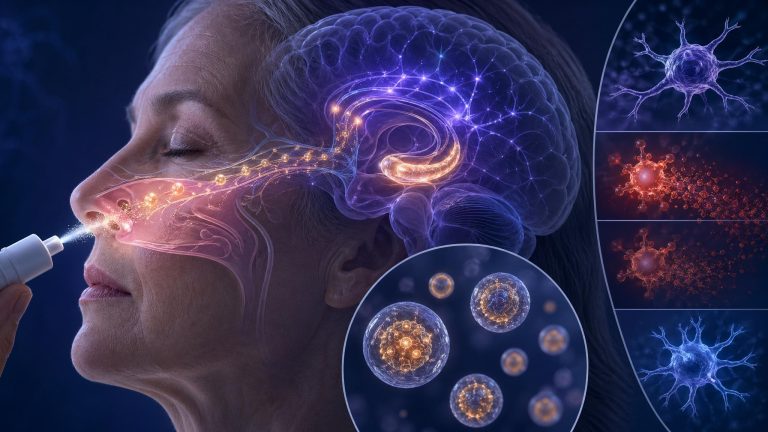
A Nasal Spray That Reverses Brain Aging: The Texas A&M Breakthrough Reshaping Alzheimer’s Research
A two-dose nasal spray built from human neural stem cell-derived particles silenced the inflammation signals that drive cognitive decline, restored memory in aged mice, and is now being positioned for…

The Sauna Prescription: What 30 Years of Finnish Research Reveal About Heat Exposure, Cardiovascular Mortality, and the Recovery Science That Rewrites Hormesis
Three decades of Finnish cohort research, anchored by the Kuopio Ischemic Heart Disease cohort and a 2015 JAMA Internal Medicine paper, have transformed sauna bathing from a cultural ritual into…
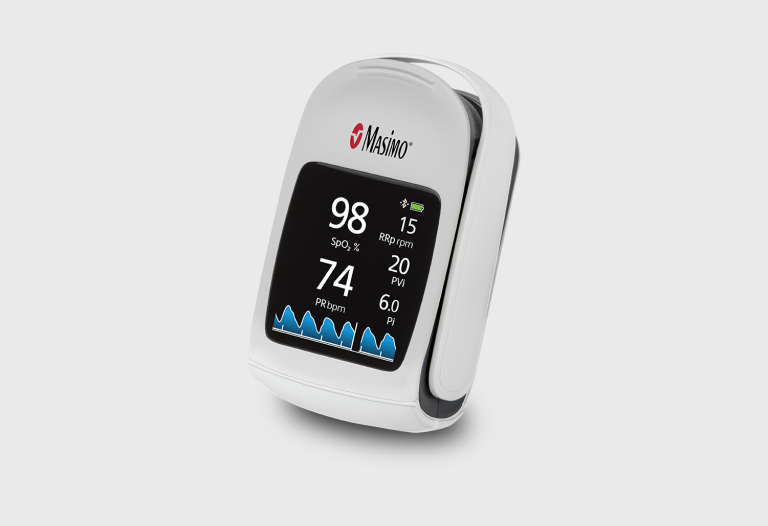
Masimo MightySat: Clinical Grade Pulse Oximetry in a Consumer Fingertip Device
The consumer version of the pulse oximetry technology used in hospital ICUs worldwide, delivering clinical grade SpO2, perfusion index, and pleth variability measurements from your fingertip. Presented By Our Partners…
Samsung Galaxy Watch Ultra: Titanium Durability Meets Clinical Grade Heart and Sleep Monitoring
A rugged titanium smartwatch built for extreme conditions that also carries FDA cleared sleep apnea detection and irregular heart rhythm notifications, bridging adventure fitness with clinical cardiovascular monitoring. Presented By…
